
In the Springs, the classic comedy sings in a well-done production.
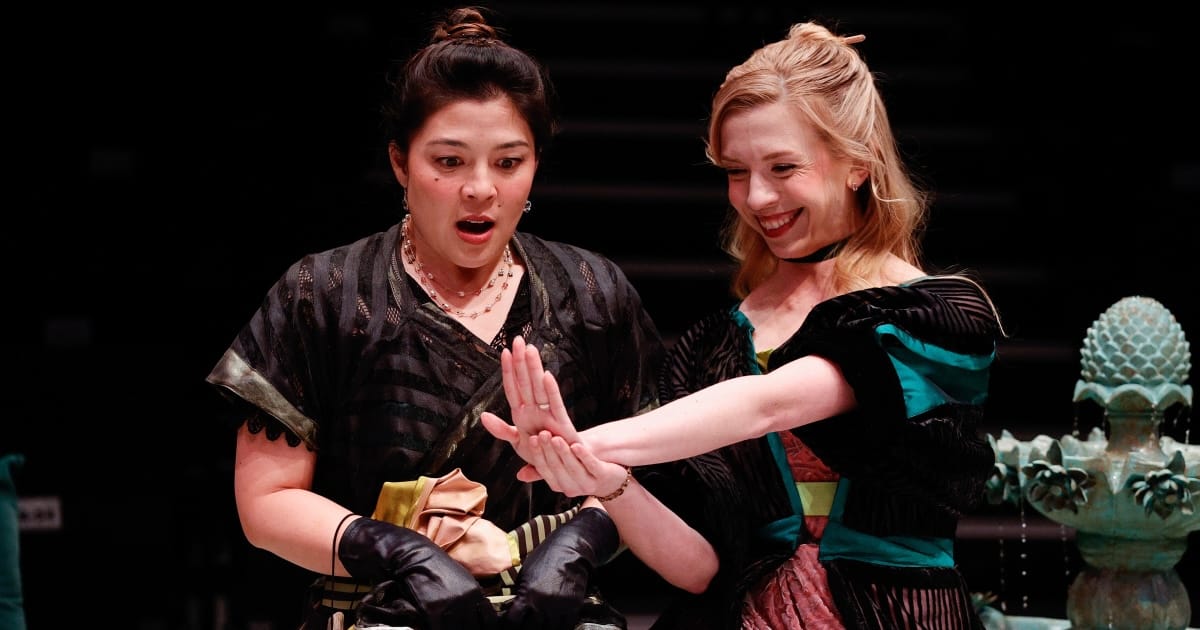
Theatreworks has created a virtuosic showcase for The Importance of Being Earnest, Oscar Wilde’s “trivial comedy for serious people.” The production sings and zings as an Oscar Wilde play must.
Algernon Moncrieff (August Forman) and John “Jack” Worthing (Rakeem Lawrence) two bachelors in late 19th century London, are both leading double lives to escape social burdens. Algernon has invented a sickly friend, “Bunbury,” whom he visits in the country when he wants to cut loose or shirk social obligations in London.
Jack, who lives in the country and is a responsible guardian to Cecily (Annie Barbour), frequently journeys to London, where he assumes the identity of a fictional younger, rakish brother “Ernest,” to act out the role of carefree man about town.
Jack wins the heart of Gwendolen (Erika Mori), daughter of Lady Bracknell (Birgitta DePree), who is Algernon’s aunt. Algernon travels to Jack’s country residence where he sweeps a very willing Cecily off her feet.
But the young men’s double lives greatly complicate their romantic aims. There are multiple tempests in teapots — and not bearing the name of “Ernest” turns out to be a deal breaker. Lady Bracknell holds a veto over the romantic proceedings while the governess, Miss Prism (Lynne Hastins), holds the key that unlocks the happy ending.

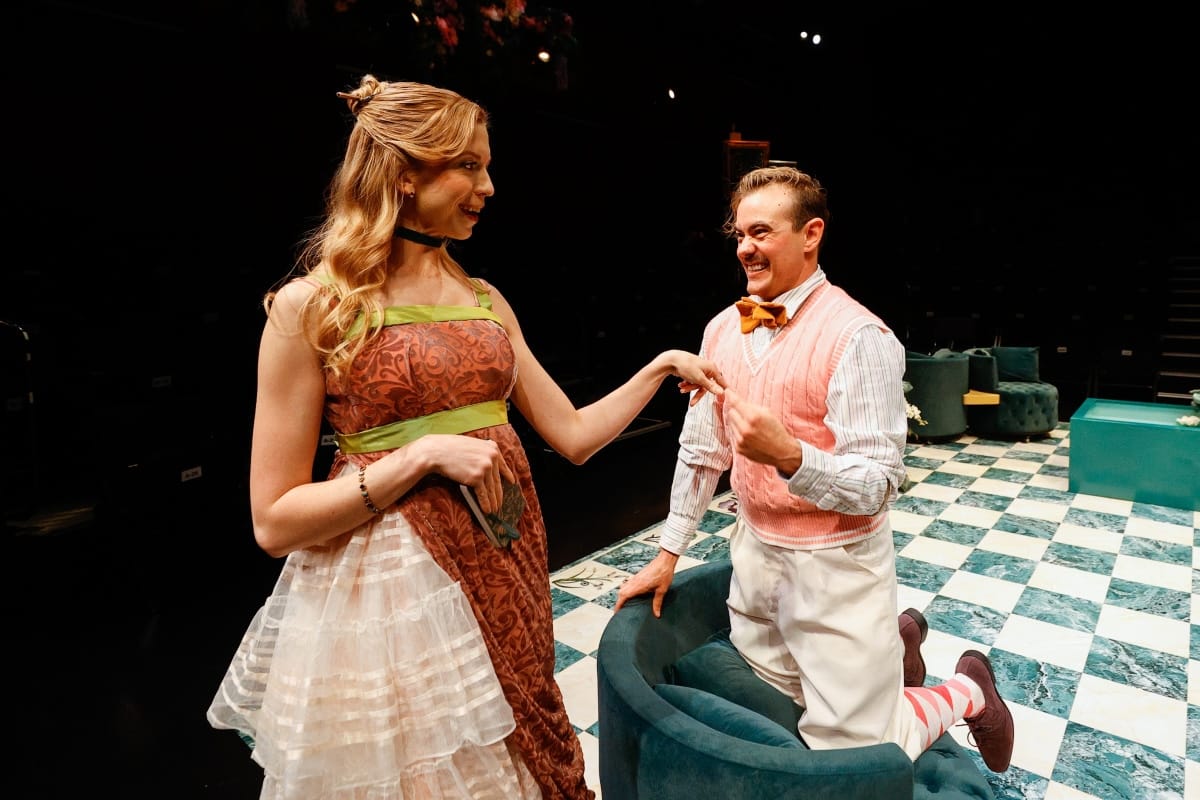
Photo: Isaiah Downing
Firm direction and a strong cast
Kathryn Walsh directs an outstanding production. Highly choreographed movement characterizes and drives home the point of dialogue. Some high points included Algernon mincing and twirling in his dressing gown or swiveling Jack around in a chair while interrogating him about his false Ernest persona. Cecily repeatedly strikes a pose when told she’s being inspected, and Jack continually adopts an en garde pose when social challenges loom.
Even the scene changes – executed by the cast in full view of the audience – contribute to the narrative. For example, as tables and other props are rearranged prior to Act II, Cecily pages through and discards a thick book, which later is revealed as her German lesson, which she feels makes her look “quite plain.”
The cast is excellent. As Cecily, Annie Barbour shifts easily from flirtation to swordplay. Birgitta DePree’s Lady Bracknell manages to make the ridiculous intimidating. August Forman’s Algernon has a particularly cringeworthy moment by eating muffins that have been thrown all around the stage. It is truly an above-and-beyond commitment to a role.
Sound design by Bryse Boynton established the madcap atmosphere from the beginning with Algernon’s self-professed “wonderful expression” on the piano as chaotically atonal as his life. Later, eerie piano notes accompany the scurrying of the governess, Miss Prism (Lynne Hastins) as she confronts revealing a lifelong secret.
Scenographer Pheobe H. Boynton has favored Cecily with a hair pin that also serves as a writing pen and then as a miniature sword for fighting. It’s the kind of witty detail found everywhere in this production.
Oscar Wilde’s play is a fast, funny, and insightful look at how we all attempt to navigate social expectations. 19th century English societal conventions turn out to be completely relevant to a global online world where people adopt personas tailored to a particular audience.
Wilde leaves the audience with two impressions: people are irretrievably foolish, and our saving grace is we can laugh at ourselves.


Judith Sears has had a 25-year career in marketing and corporate communications. Over the last several years, she has pursued playwriting, and several of her short plays have received staged readings at Colorado theatres.

Leave A Comment