
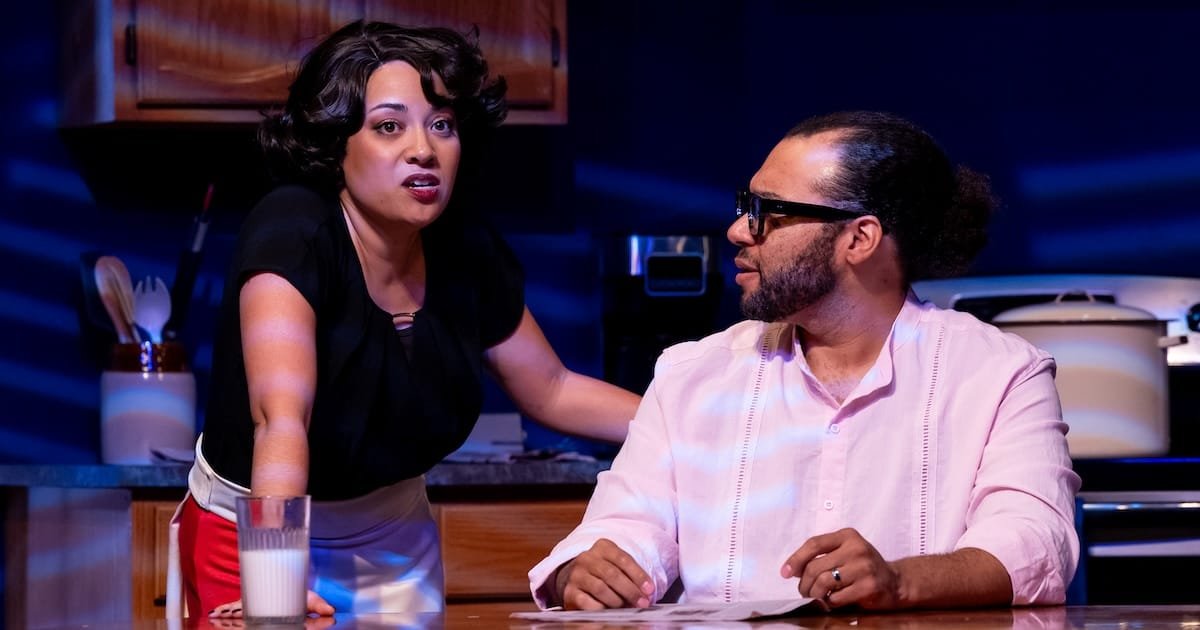
A racist ghost demands fealty from a Black couple in this creepy tale.
A common trope in haunted house stories is a hapless couple ignoring all the warnings the audience clearly sees. Typically, the menace grows in intensity as it slowly reveals itself, but in Feeding Beatrice, the threat announces itself early rooting the story more in the here and now rather than in impending doom.
Although there’s also plenty of that, too.
Kirsten Greenidge’s script goes far beyond the basic ghost story and tackles everything from racism and marital strife to child abuse, murder and, yes, home repair. Along the way, it delivers plenty of creeps and shocks, but its subplots dilute the escalating dread that makes for a satisfying horror tale. Still, Betty Hart’s firm direction and strong performances from the cast ultimately deliver a disturbing package that’s a nice kickoff for spooky season.
Getting un-settled
The show opens with a bang: Lurie and June, a young Black couple, are working their way through their new fixer-upper, and they’re christening a spare bathroom with some steamy dry-tub sex. We soon learn they’ve moved into a mostly white neighborhood and are recovering from the loss of a baby. While arguing over how much to spend and on what, Lurie discovers that loose tiles in the bathroom floor are concealing some hair and … is that a scalp? Along with many other flaws, their new home apparently has a dead white person buried upstairs.
Rather than call the police, June simply suggests they cover over the area with concrete. It’s the first of many broken norms, mostly driven by June, who’s determined not to let anything — not even buried corpses — interrupt her dream of the perfect home in the perfect neighborhood. Lurie protests but goes along in the interest of marital harmony. As the stakes rise, their willingness to look the other way becomes increasingly absurd.

Our ghost, Beatrice, shows up soon after the first scene in a ’50-style dress with long blonde hair. Tossing out words like “negro” and “colored,” she rolls over June’s protestations and demands milk and jam — which she starts eating greedily with her hands before June gives her a spoon. Deflecting questions about whether her parents know where she is, she installs herself as the house guest who won’t leave.
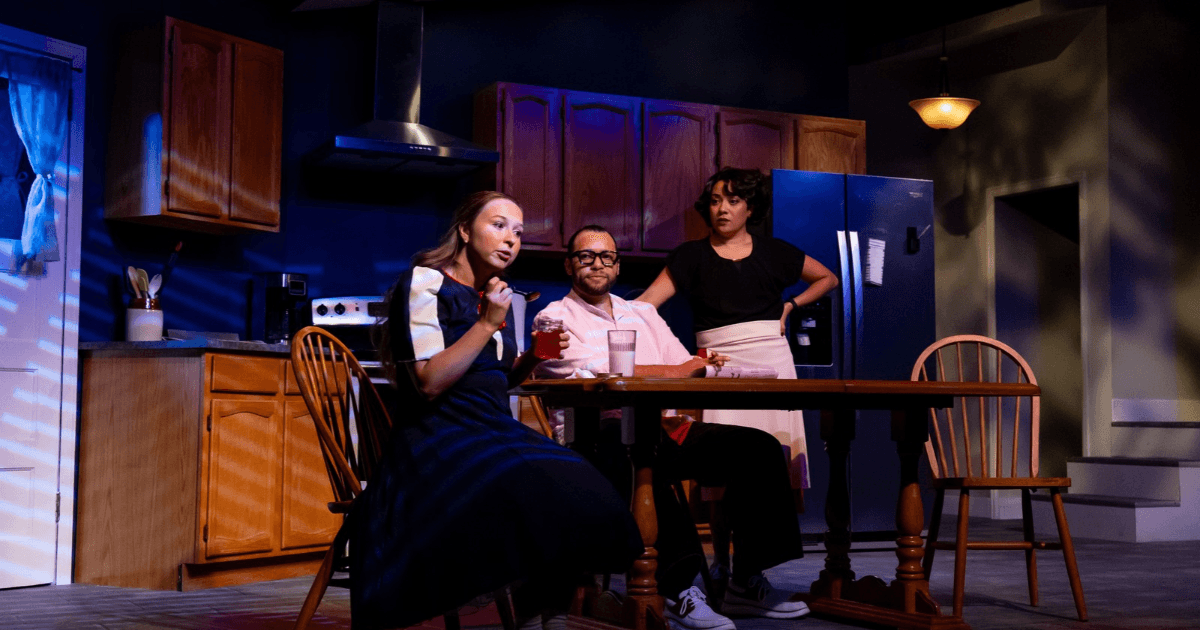
Kaylee Hawkins is Beatrice, with Jysten Atom and Kristina Fountaine as the Walkers in ‘Feeding Beatrice.’ | Photo: RDGPhotography
Power couple
As June and Lurie, Kristina Fountaine and Jysten Atom must balance the expected horror of haunted-house ownership with a script that demands they accept things as they are well into Act 2. It’s a treat to see these two accomplished actors onstage together, and Hart makes the most of it by pitting them against one another while simultaneously keeping them on the same team.
Kaylee Hawkins is perfectly cast as Beatrice, a spirit more likely to annoy than scare the couple to death. As her demands grow more strident and demeaning, the racism becomes more blatant, and at one point Lurie gets roped into a sexy situation he has trouble escaping.
Rounding out the cast is Ké Ne’dée as LeRoy, Lurie’s plumber brother with unresolved feelings for June. He doesn’t have much to do, but he provides comic relief and a recurring reminder that there’s still a world outside the three-way psychological drama unfolding in the house.
It’s simple enough to see the monster house as a stand-in for America — a place with lots of potential but very real skeletons in the closet. Tina Anderson’s set is a perfect microcosm of the rundown home, down to the shabby kitchen cabinets and Pepto-Bismol paint in the bathroom. And while Sound Designer Wren Tran Ryder and Lighting Designer Riley Nicole may go a bit overboard with knocks, groans and flickering lights, the overall effect reinforces the show’s dominant theme of “unsettling.”
Another left turn comes in the form of dance. Terrell Davis beautifully choreographs several dance scenes that tie into the plot and Beatrice’s fondness for old Shirley Temple films. It’s another layer of creepiness that makes Beatrice unlike most other ghost stories while adding welcome movement amid the drama.
As Beatrice’s entitled brattiness morphs into more emphatic malice, Feeding Beatrice shifts into second gear and ends with a shock that puts it on more traditional horror footing. While the unexpected ending may not feel entirely earned, it does support the idea that nothing’s fair in this world. Watching ordinary people driven to extreme, illogical actions sends the audience out feeling delightfully creeped out — yet wondering what just happened.
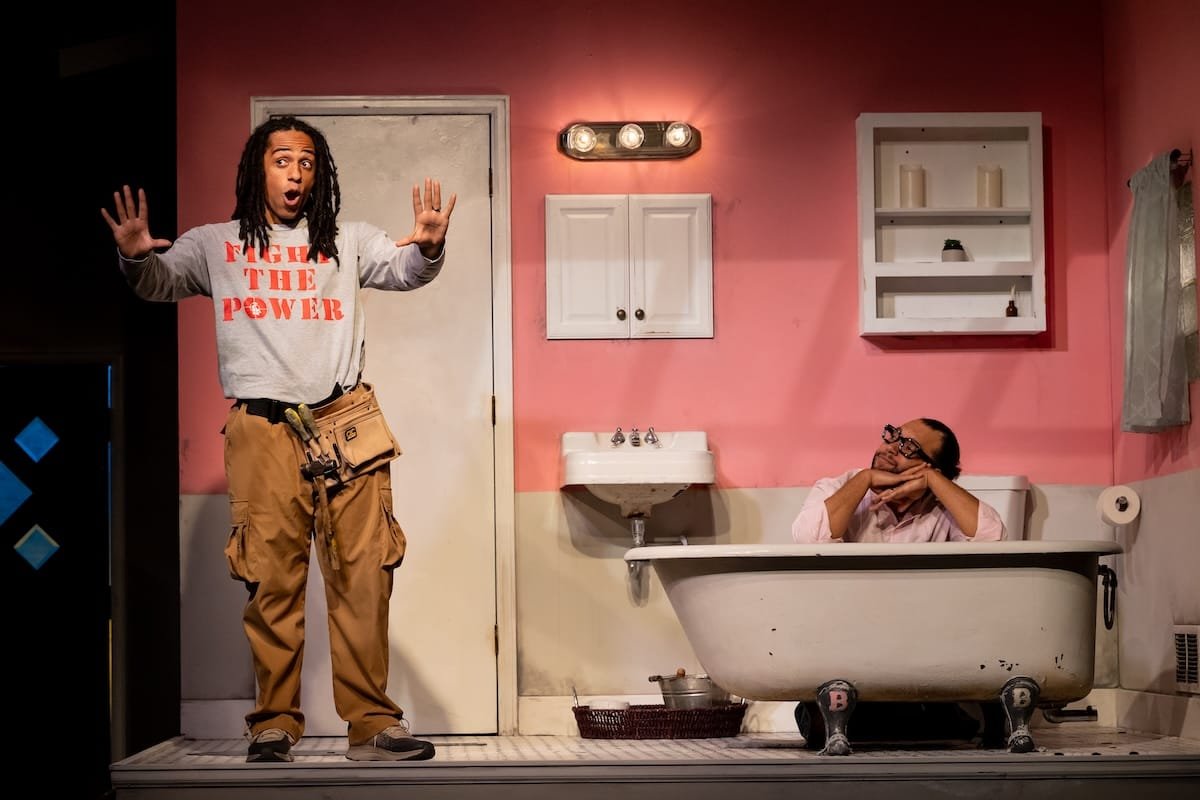
Ké Ne’dée as LeRoy and Jysten Atom as Lurie in ‘Feeding Beatrice.’ | Photo: RDGPhotography


Alex Miller is editor and publisher of OnStage Colorado. He has a long background in journalism, including stints as the top editor at the Vail Daily, Summit Daily News, Summit County Journal, Vail Trail and others. He’s also been an actor, director, playwright, artistic director and theatre board member and has been covering theatre in Colorado since 1995.

Leave A Comment