

Tartuffe
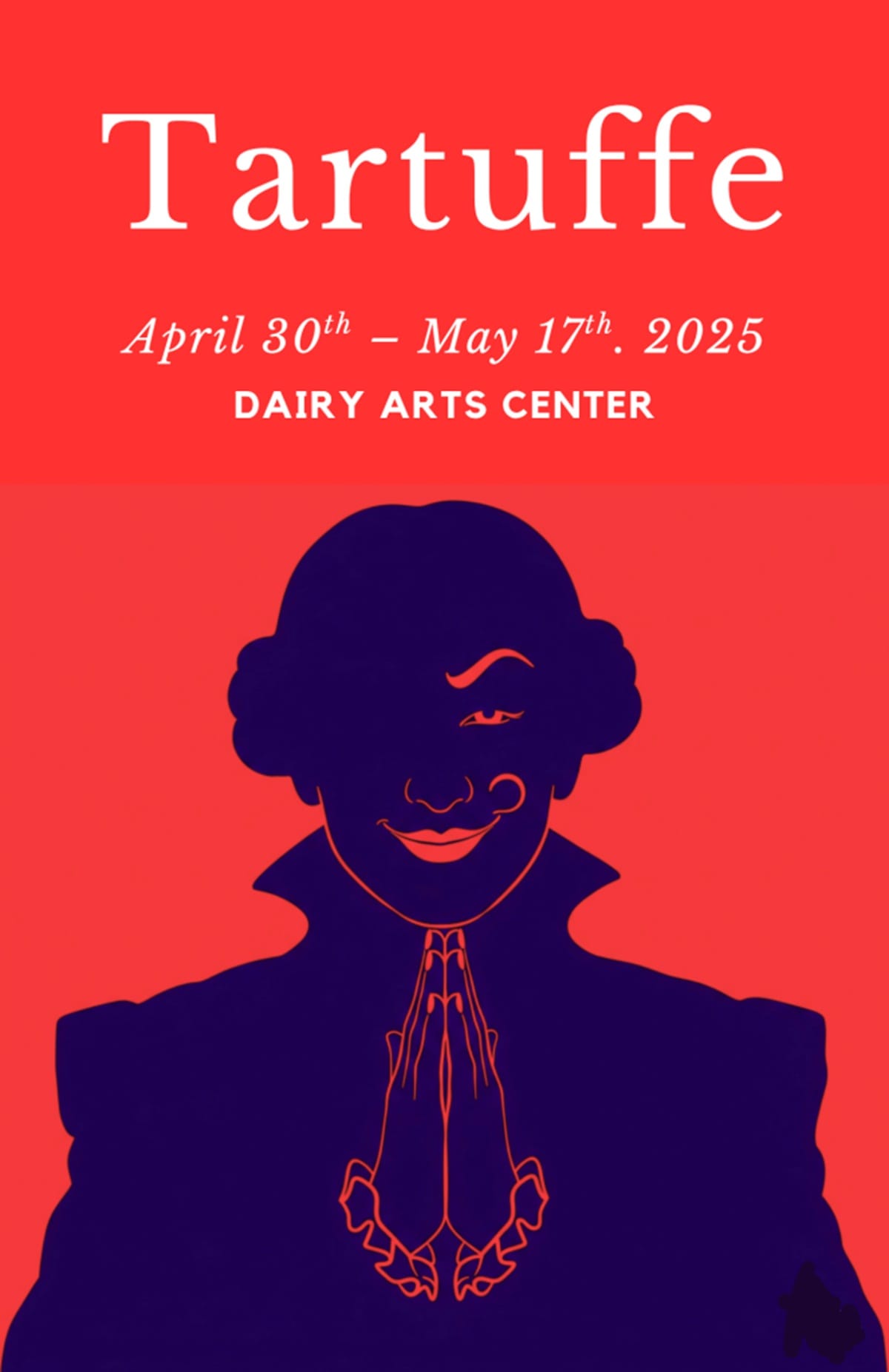
A classic French comedy written by Molière, centers on the character Orgon, who becomes infatuated with Tartuffe, a conman posing as a pious man. The play opens with Orgon’s family living harmoniously, including his younger wife Elmire and his children from a previous marriage. However, the arrival of Tartuffe disrupts their happy home, as he ingratiates himself with Orgon and manipulates him into adopting a strict, puritanical lifestyle. Tartuffe’s ulterior motives unfold as he seeks to marry Orgon’s daughter, Mariane, while harboring desires for Elmire.
Molière performed his first version of Tartuffe in 1664. Almost immediately following its performance that same year at Versailles’ grand fêtes (The Party of the Delights of the Enchanted Island/Les fêtes des plaisirs de l’ile enchantée), King Louis XIV suppressed it, probably under the influence of the archbishop of Paris, Paul Philippe Hardouin de Beaumont de Péréfixe, the King’s confessor and former tutor. While the king had little personal interest in suppressing the play, he did so because, as stated in the official account of the fête:
Although it was found to be extremely diverting, the king recognized so much conformity between those that a true devotion leads on the path to heaven and those that a vain ostentation of some good works does not prevent from committing some bad ones, that his extreme delicacy to religious matters can not suffer this resemblance of vice to virtue, which could be mistaken for each other; although one does not doubt the good intentions of the author, even so he forbids it in public, and deprived himself of this pleasure, in order not to allow it to be abused by others, less capable of making a just discernment of it.
This show presents adult themes.
