
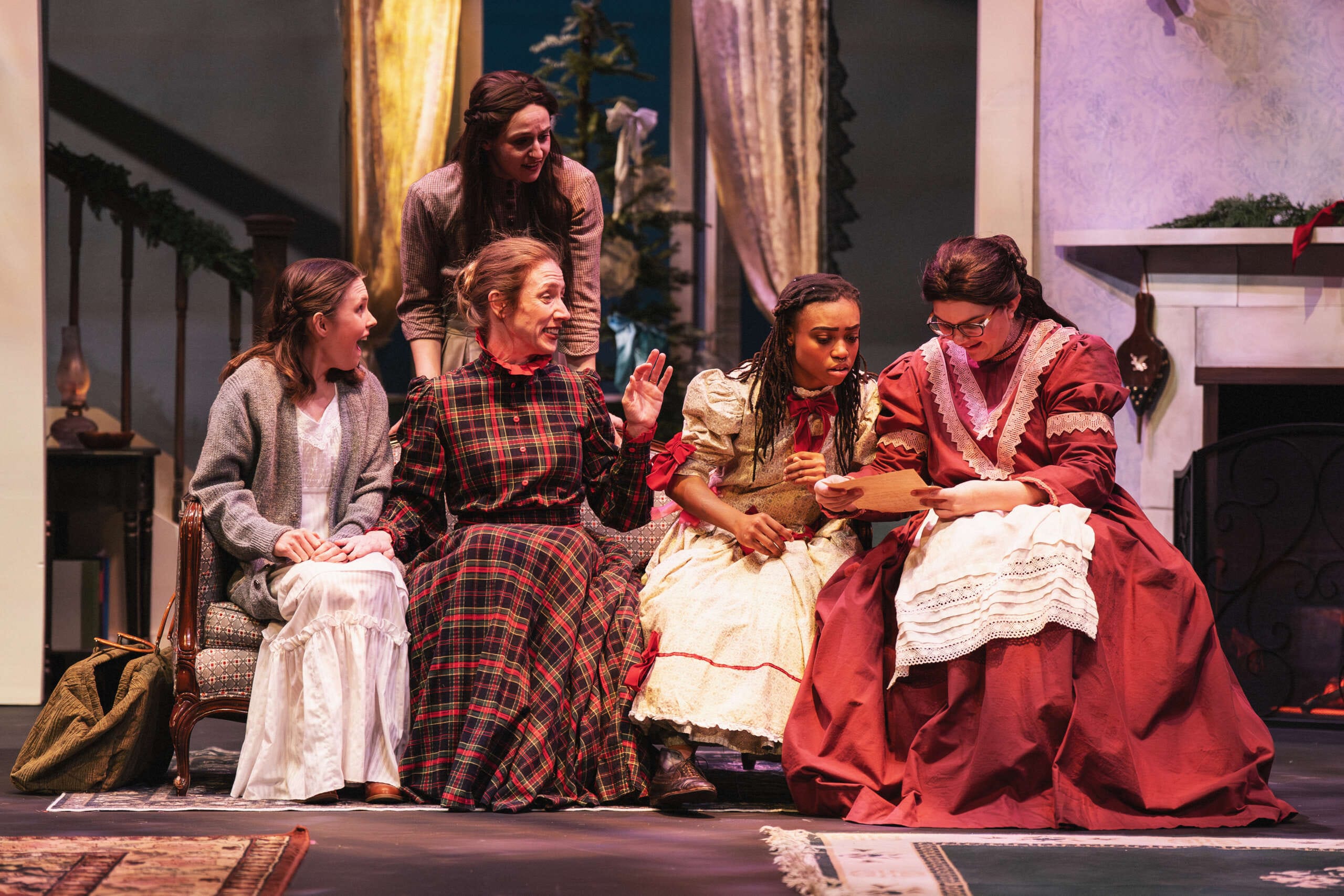
Phamaly Theatre’s Little Women delivers a warm, accessible and moving take on Alcott’s classic.
I had just walked into the Parsons Theatre in Northglenn when Phamaly Theatre Company’s artistic director, Ben Raanan, greeted me with a grin and a question: “How many Little Women have you seen in your lifetime? 100?”
While the answer is closer to 20, I’ve spent a lot of time with this story, including stage productions, film adaptations, repeated readings of Louisa May Alcott’s novel and even a strange theatrical offshoot called You on the Moors Now, in which I once played Marmee. And yet Little Women remains one I return to gladly. Its themes of growing up, grieving, loving and trying to keep a family together in an unstable world haven’t faded and, in fact, feel more relevant than ever.
That familiarity made Phamaly’s regional premiere of Erin Riley’s 2019 adaptation both comforting and intriguing. Would it simply offer another dutiful pass through a classic, or would this disability-affirmative company find fresh life in a text that has already been adapted so many times?
Under director Shelly Gaza, the answer lands somewhere beautifully in between. This is not a radical reimagining of Alcott’s novel. Instead, it’s a deeply sincere, approachable, and life-affirming evening that, while mostly faithful to the orignal novel, allows this particular ensemble to leave a clear imprint on it.
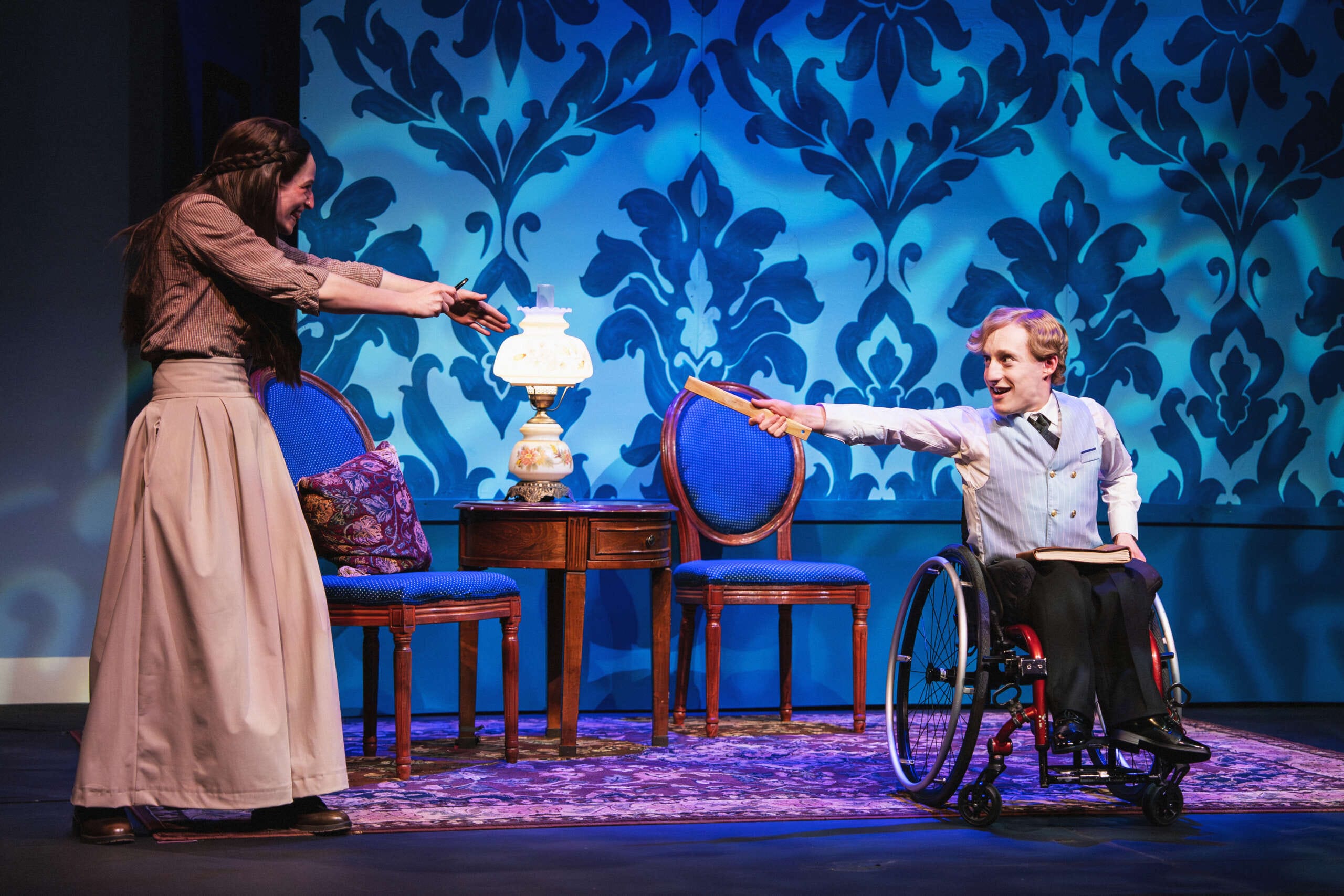
Mel Schaffer as Jo with Casey Myers as Laurie. Image by Amanda Tipton Photography
A familiar story, gently reframed
Riley’s script is a faithful, linear adaptation that begins at Christmas during the Civil War, with the March sisters waiting for their father’s return, and then follows them as they move through adolescence into adulthood. This version softens some of the novel’s harsher edges. Certain conflicts pass more quickly than they do on the page, and the overall tone tilts a bit more rosy and reassuring than some adaptations.
That lighter tone culminates in a fairy-tale framing (with Jo literally saying the family lived “happily ever after” at the end, which is only true if you ignore the fact that Beth is dead), focusing on resolution and connection over contradiction. It’s not the most searching interpretation of Little Women, but it is an inviting one. And in Gaza’s staging, that approach works: the production moves briskly, with a sense of continuous motion that mirrors the passage of time.
Gaza’s staging uses the full breadth and depth of the Parsons space, with performers moving not only across Nicholas Renaud’s handsome interior set but through the aisles as well. The scenic design evokes a lived-in home without becoming cluttered: a staircase, doors, furniture and shifting wall pieces create enough architecture to define the March household while still allowing scenes to move quickly. It is a practical, elegant design that supports the story’s flow through time.
That momentum matters because Riley’s adaptation is, by design, literary and episodic. The show depends on the audience being carried from one emotional beat to the next without getting bogged down. Gaza manages that well. Scenes arrive and dissolve with an ease that mirrors memory, and Haley Hartmann’s lighting helps isolate moments of reflection, especially when Jo steps outside the main action to share her private thoughts. Alex Romberg’s sound design and Jo Lieb’s props work quietly but effectively in support of a world that feels active, domestic and intimate.
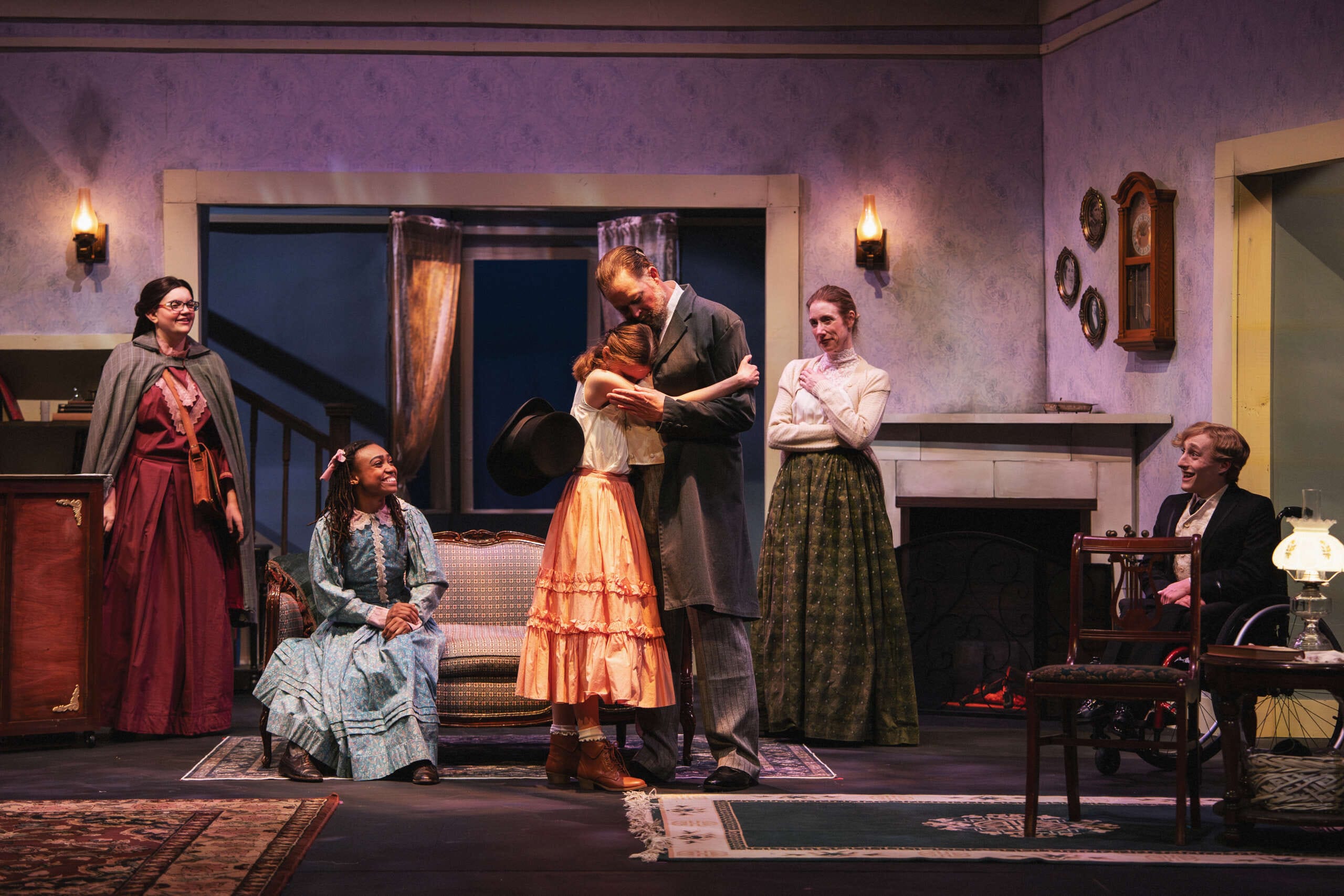
The cast of Phamaly’s Little Women. Image by Amanda Tipton
Strong performances give the story its pulse
At the center of it all is Mel Schaffer’s engaging Jo, who also serves as a kind of narrator. Schaffer has the right spark for the role, conveying Jo’s wit, impatience and imaginative energy while also revealing the sadness underneath about her struggles to fit in as time passes. This Jo is not just the family firebrand; they are also someone painfully aware that time is moving forward whether they are ready for it or not. Schaffer handles those shifts with impressive fluidity, especially in the moments when Jo turns outward and admits feelings the character tries to conceal from her family.
Kennedy Isaac gives the production’s most delightful performance as Amy. Too often Amy is played either as a brat or as an afterthought. Isaac makes her funny from the outset, with line deliveries that land cleanly and confidently, but also charts the character’s growth with care. By the time Amy matures into the sister most fluent in society’s expectations, Isaac has already made clear the intelligence and emotional sensitivity beneath the youthful vanity.
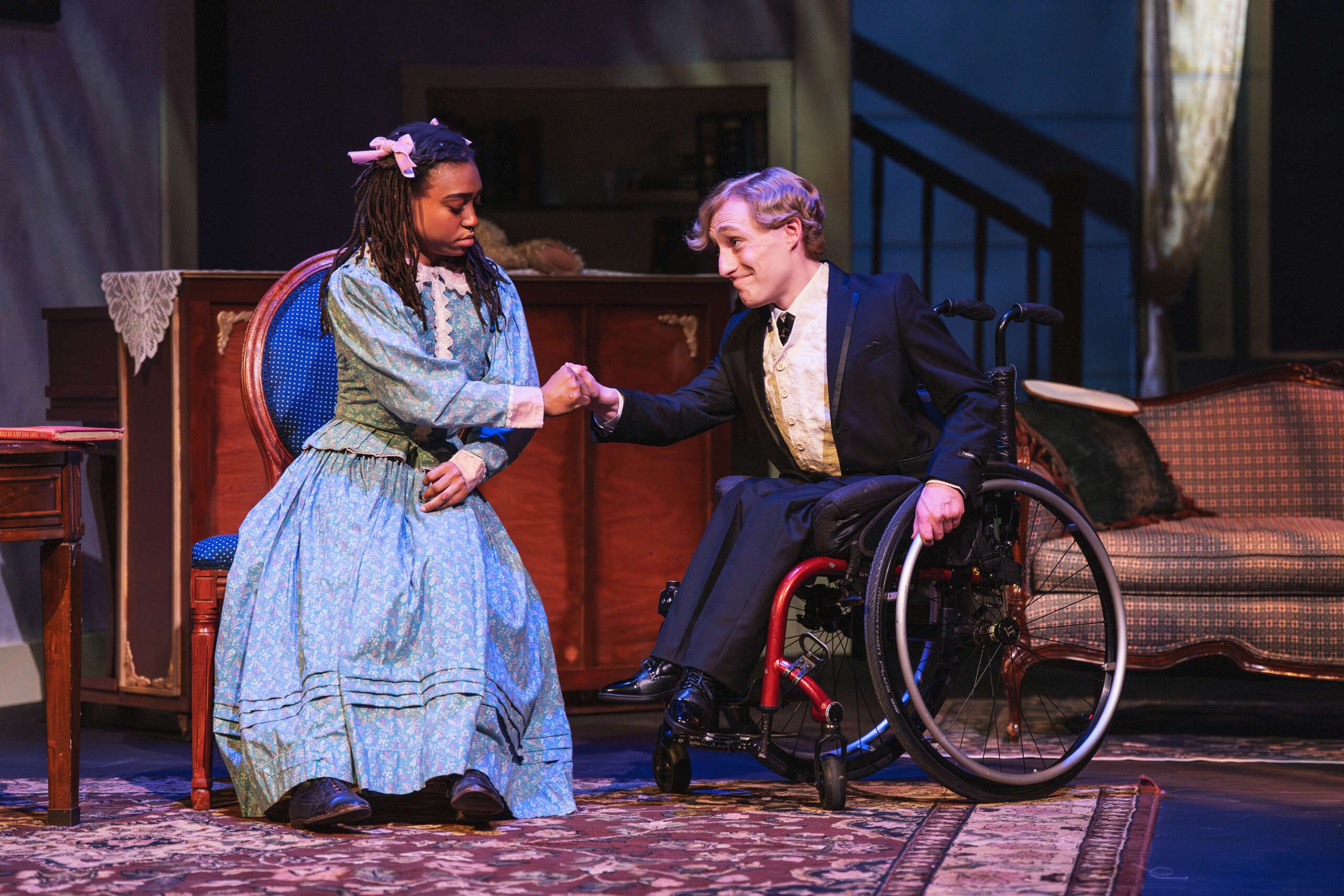
Kennedy Isaac as Amy and Casey Myers as Laurie. Image by Amanda Tipton Photography
Casey Myers is a thoroughly likable Laurie. His declaration of love to Jo lands with genuine ache because Myers lets Laurie’s hope and humiliation exist side by side. Just as importantly, he makes Laurie’s eventual bond with Amy believable, which helps the production sustain its more romantic, fairy-tale leanings.
Aspen K Somers is a lovely Beth, finding the sweetness of the role without letting it turn cloying. Beth’s gentleness here is rooted in real attentiveness to others, not just saintliness, which makes her final scenes all the more moving. Somers brings a plainspoken acceptance to Beth’s decline that hit the audience hard on the night I attended.
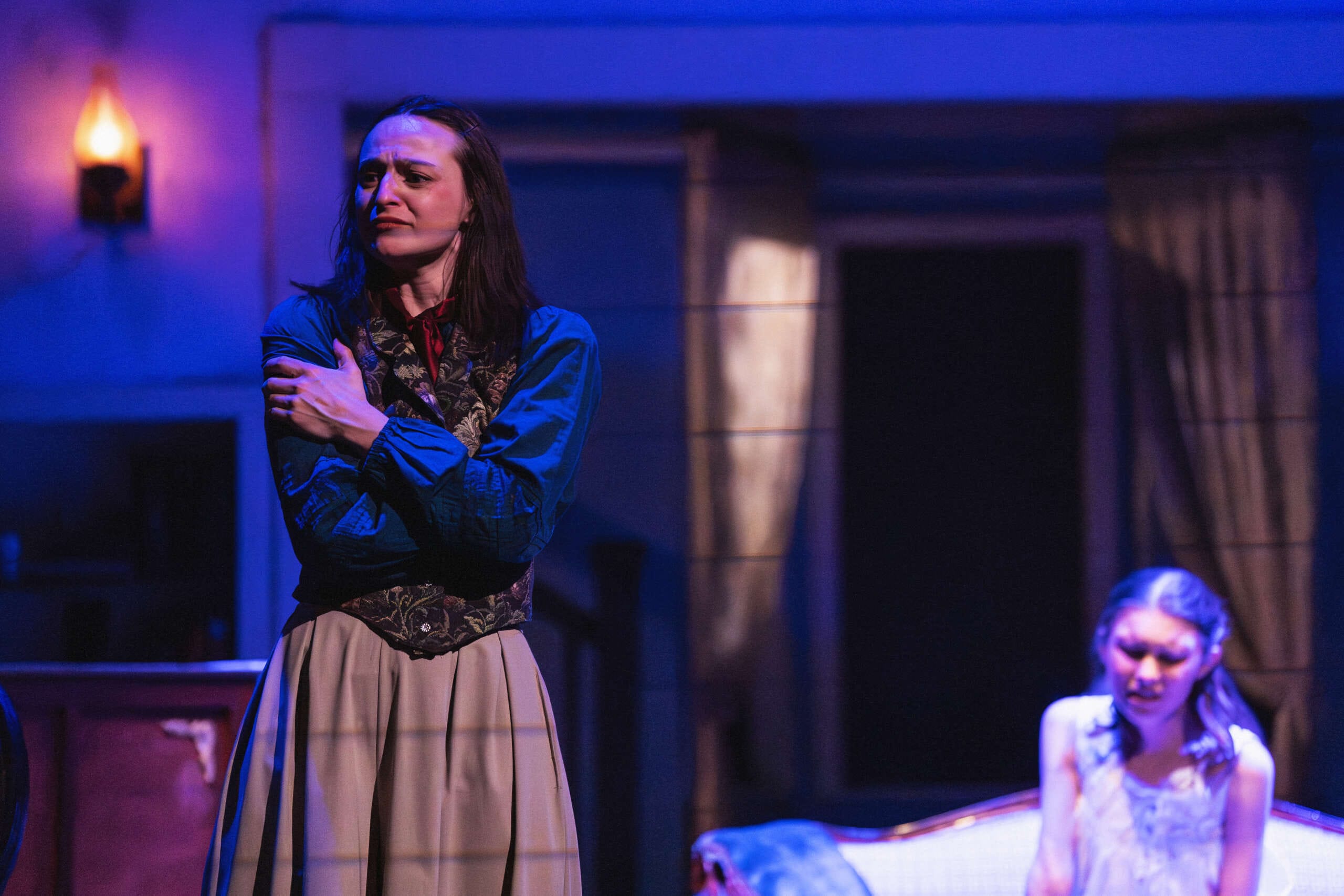
Mel Schaffer as Jo with Aspen K Somers as Beth. Image by Amanda Tipton Photography
The ensemble, many of whom take on multiple roles, remains sturdy and appealing. Linda Wirth who brings a satisfyingly sharp authority to Aunt March, while Andrew Small imbues a gentleness into the girl’s paternal figures and Grey Dumois gives John Brooke a tenderness that deepens his courtship with Meg.
Phamaly’s long-practiced approach shapes this telling
Now in its 37th season, Phamaly has spent decades refining an approach to theater that places disabled artists at the center of storytelling. That experience shows here. Rather than feeling like a reinterpretation of Alcott’s text, the inclusion of the cast’s lived experiences is built into the production’s foundation.
As Gaza notes in her director’s statement, “after casting, the creative team worked directly with the playwright to incorporate the specific disabilities and lived experiences of our actors into the fabric of the script itself.” The result is a version of Little Women that feels shaped by the people performing it, not simply performed by them.
The clearest and most affecting example is Lily Blessing’s Meg. In this staging, Meg is deaf, and the March family signs with her as a matter of course. That choice does not call attention to itself as a concept; it simply becomes part of how this family loves one another. The relationship between Meg and John Brooke is especially touching because his learning to sign becomes one of the ways he demonstrates devotion. Blessing gives a poised, expressive performance, and the production’s captions ensure that audiences can follow both spoken dialogue and signed exchanges without difficulty.
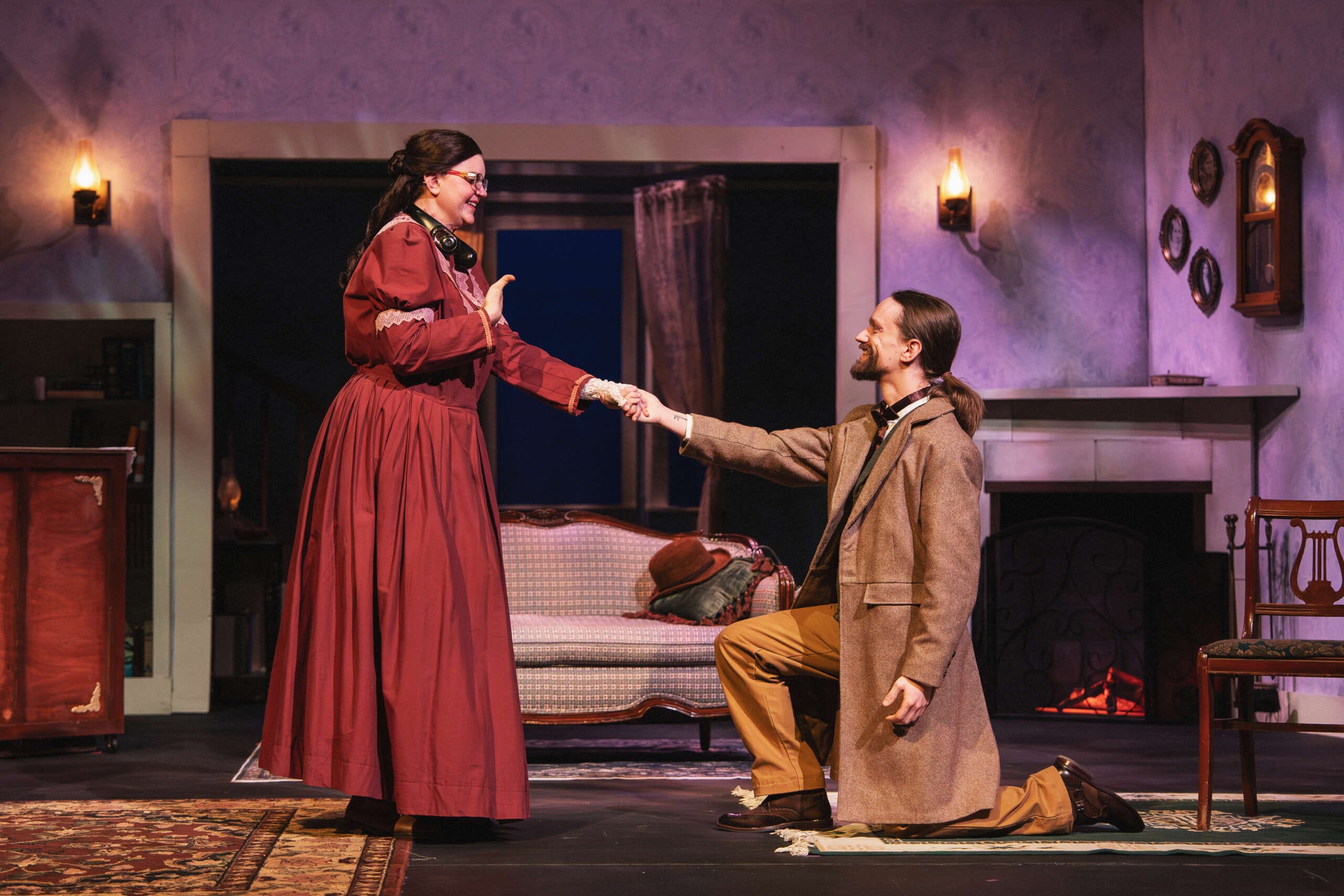
Lily Blessing as Meg with Grey Dumois as John Brooke. Image by Amanda Tipton Photography
More broadly, the staging embraces multiple modes of movement and communication as part of its theatrical language. Performers walk or roll through the space. Information is carried visually as well as aurally. Accessibility becomes an essential component of the play’s theatrical language. That matters, because it allows the production’s most resonant idea to emerge naturally: the March family’s strength lies in how they care for one another’s differences rather than in any idealized sameness.
That is why this Little Women lingers. It is not especially daring, and audiences looking for a formally experimental or revisionist take may find it too straightforward. But straightforward does not mean shallow. Phamaly has crafted a tender, funny and moving production that understands why generations keep returning to this story in the first place while grounding it in a performance style that reflects the company’s mission and history.
In a moment when so much feels fractured, Phamaly’s Little Women makes a persuasive case for connection and the idea that family, however it is formed, remains a place where difference is not just accommodated but held with care. As the first production of Phamaly’s 37th season, Little Women is a strong choice and a winning start to what appears to be a stacked year of programming from the company.

A Colorado-based arts reporter originally from Mineola, Texas, who writes about the changing world of theater and culture, with a focus on the financial realities of art production, emerging forms and arts leadership. He’s the Managing Editor of Bucket List Community Cafe, a contributor to Denver Westword and Estes Valley Voice, resident storyteller for the Bonfils-Stanton Foundation and co-host of the OnStage Colorado Podcast. He holds an MBA and an MA in Theatre & Performance Studies from CU Boulder, and his reporting and reviews combine business and artistic expertise.

Leave A Comment