
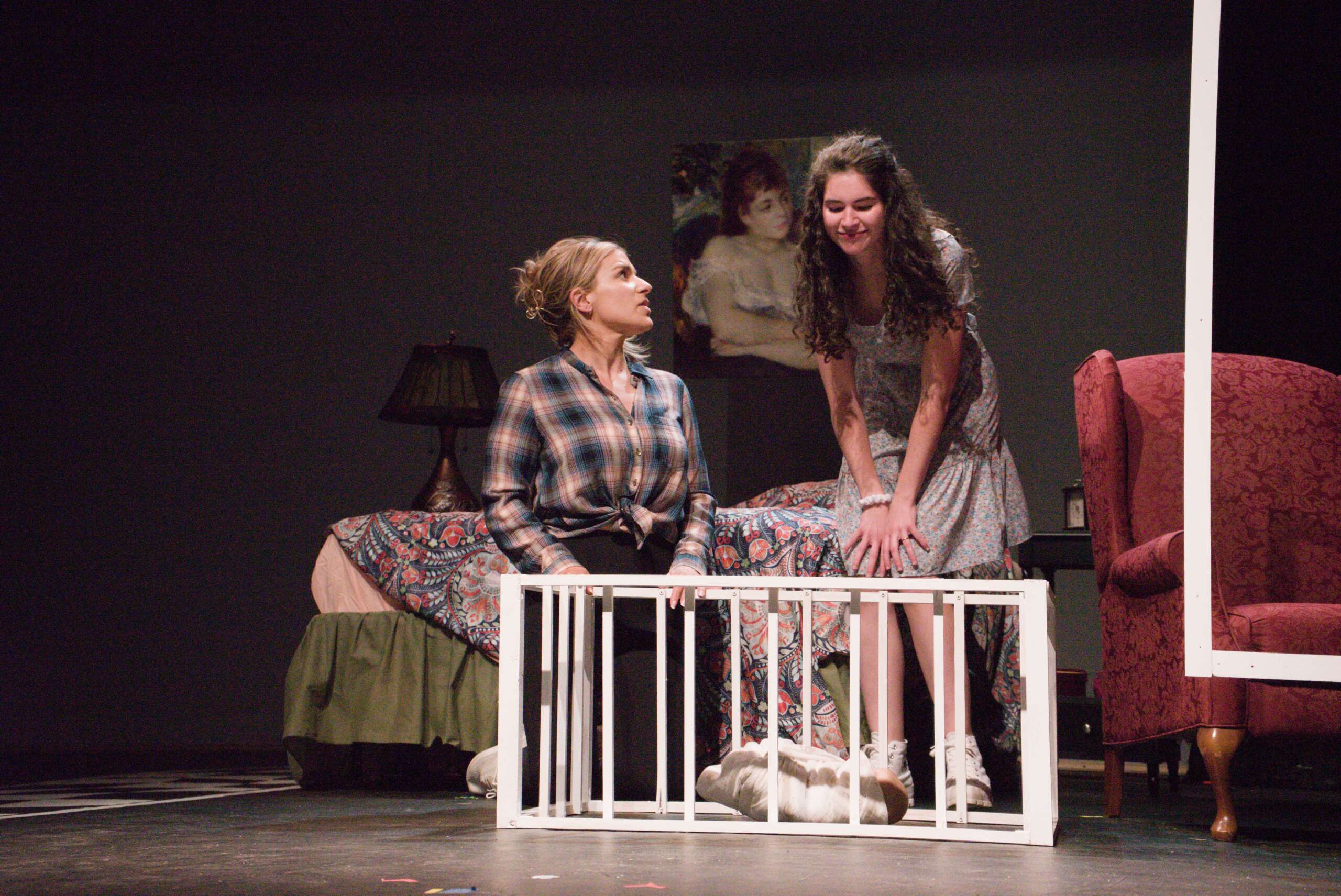
Beloved mother-daughter story lands emotionally even as staging issues slow the production.
Larry McMurtry’s Terms of Endearment has endured for decades because it captures the complicated, stubborn love that binds families together.
First published as a novel in 1975 and later adapted into James L. Brooks’ Academy Award–winning 1983 film, the story traces the evolving relationship between a fiercely protective mother and the daughter determined to live life on her own terms. Playwright Dan Gordon’s stage adaptation condenses that sweeping narrative into an episodic theatrical structure, following the characters across decades of marriages, disappointments and reconciliation.
Longmont Theatre Company’s current production, directed by Sarah Krom at the Longmont Performing Arts Center, approaches the material with clear affection for the story. Yet while the emotional core occasionally shines through, the overall staging feels rough around the edges, hampered by pacing issues and technical issues that frequently interrupt the play’s momentum.
Decades-long family story
The play opens in Houston in the early 1960s with a quiet domestic moment that reveals everything about Aurora’s personality. Lying awake beside her husband with their newborn daughter Emma sleeping nearby, Aurora anxiously wakes the baby to make sure she is still breathing. The moment sets the tone for their relationship: Aurora’s fierce love filtered through constant worry and a controlling streak that Emma will spend much of her life pushing against.
From there, the story jumps forward through a series of snapshots that chart Emma’s adulthood. Emma (Maia Flat) grows into a young woman eager to escape her mother’s orbit, eventually marrying the mediocre academic Flap Horton (Jeremiah Reid) despite Aurora’s reservations. Their marriage brings its own challenges as the couple struggles financially and navigates the compromises of early family life.
Parallel to Emma’s journey is Aurora’s evolving personal life, including a late-in-life romantic entanglement with her charming but somewhat disreputable neighbor Garrett (Christopher Brian), a former astronaut with a fondness for alcohol and flirtation.

Erica Gunaca as Aurora and Christopher Brian as Garrett kissing in Terms of Endearment. | Photo: Longmont Theatre Company
At the center of the production is Erica Gunaca’s sharply drawn Aurora. Gunaca captures the character’s prickly confidence and habitual self-centeredness while still allowing glimpses of the vulnerability that lies beneath it. Aurora is not always likable, especially when she inserts herself into situations that are not about her, but Gunaca gives the character enough emotional complexity to make her contradictions believable.
Her strongest scenes come opposite Brian’s Garrett. The pair establish an easy chemistry that makes their hesitant romance feel genuine, even as Garrett’s swaggering charm masks a fair amount of insecurity. Their interactions add warmth and humor to the production, particularly in the second act when Garrett accompanies Aurora to a tense consultation with Dr. Maise (Stefi Adams). The scene briefly lightens the mood while revealing the depth of Garrett’s loyalty.
Maia Flat’s Emma serves as the emotional spine of the story. For much of the first act, the character functions as the patient daughter navigating early marriage struggles and her mother’s constant opinions. Flat brings warmth and patience to the role, though the character only fully gains dramatic weight later in the play as Emma faces the devastating diagnosis that drives the story’s final act.
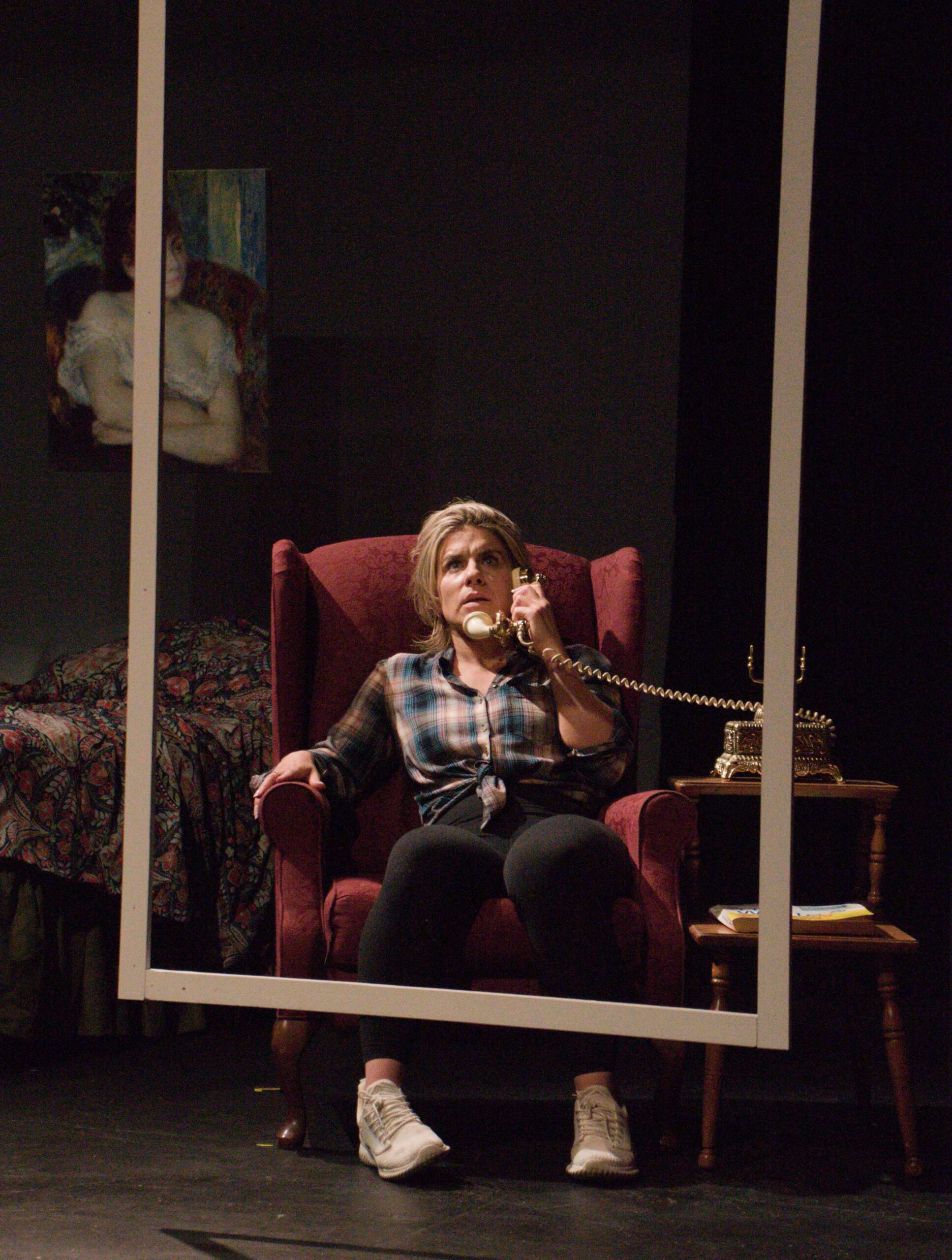
Erica Gunaca as Aurora in Terms of Endearment. | Photo: Longmont Theatre Company
Technical issues slow the storytelling
The supporting cast provides solid contributions, though several performances suffer from audibility issues. The production is performed without microphones inside the sizable Longmont Performing Arts Center auditorium, and the space demands strong vocal projection. At times, Jeremiah Reid’s Flap speaks so softly that key lines are difficult to hear, and Dominique Windsor as Patsy and Brittany Roberts, who plays both Doris and a nurse, face similar challenges.
Those acoustic challenges are compounded by staging choices that frequently disrupt the play’s rhythm. Nearly every scene transition is punctuated by a full blackout followed by extended pauses while the set resets. These breaks often last long enough to stall the emotional flow of the narrative. Given the size of the stage and the relatively minimal scenic requirements, more fluid lighting transitions or overlapping stage movement could have maintained momentum while still allowing for necessary changes. Instead, the repeated start-and-stop rhythm creates a choppy viewing experience, particularly during the already lengthy first act.
Krom’s staging employs a sparse arrangement of furniture and symbolic elements, including a single doorway stage left, a suspended rectangular frame resembling a photograph or window, a movable structure stage right that transforms into a hospital bed in the second act and film stripes with photos lining the proscenium. The design concept suggests an attempt to evoke snapshots from a family album, though the visual metaphor never fully develops beyond its initial impression.
Technically, the design elements are functional. Amber Lucas’ costumes, Brian Curtiss’ lighting and Robert Boxer’s sound design focus primarily on establishing the various domestic and hospital environments required by the script rather than offering elaborate theatrical flourishes. The approach suits the intimate emotional tone of the story but leaves little room to disguise the mechanical nature of the frequent scene changes.
Where the production ultimately finds its footing is in the story’s final stretch. The second act moves with greater urgency as Emma’s illness progresses and the characters confront the limits of what love can fix. The climactic hospital scenes between Emma and Aurora are difficult to watch in the best possible way, revealing the aching honesty at the heart of McMurtry’s story.
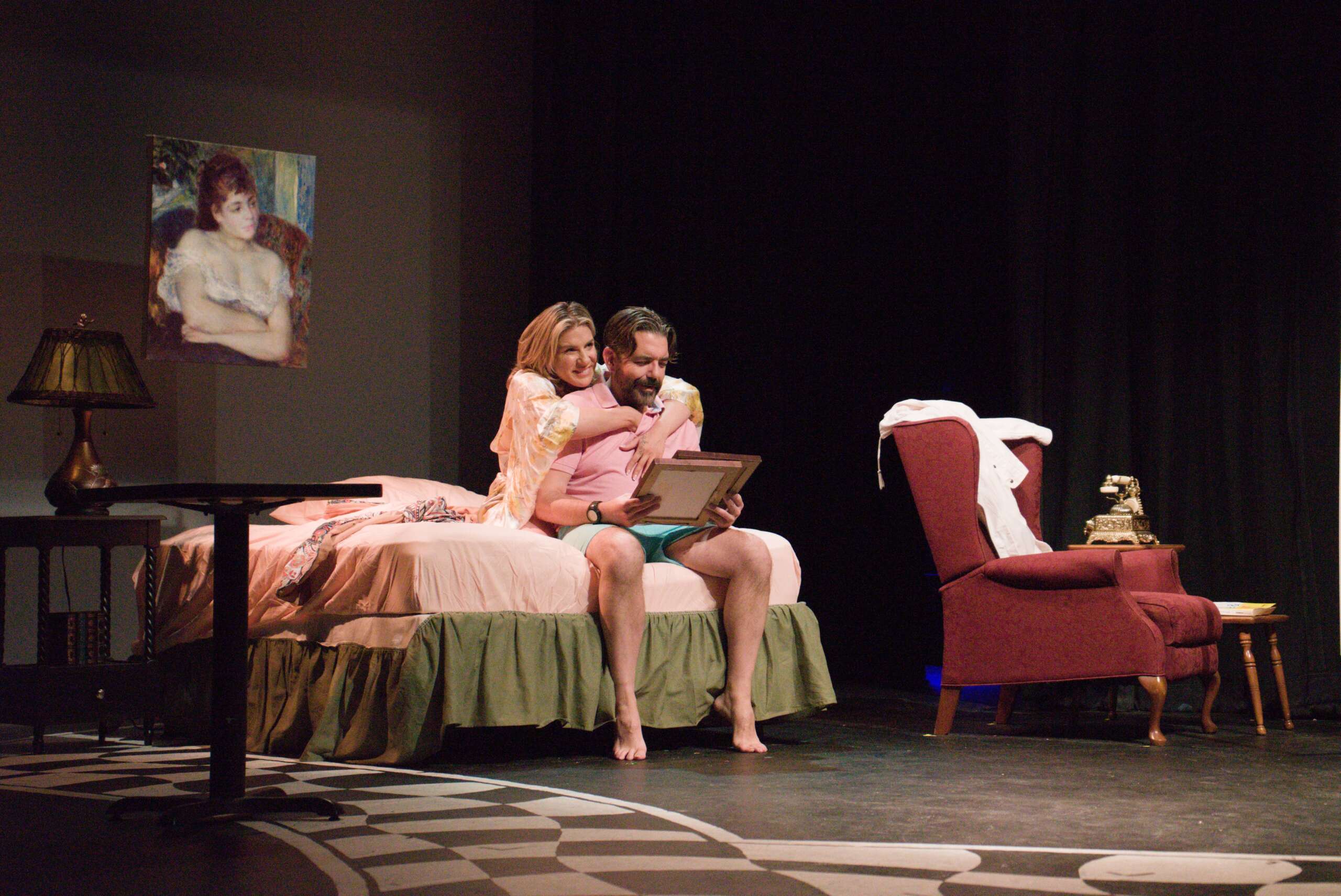
Erica Gunaca as Aurora and Christopher Brian as Garrett in Terms of Endearment. | Photo: Longmont Theatre Company
A company still finding its footing
For Longmont Theatre Company, the production also represents a moment of transition. The organization has undergone significant leadership changes in recent years following internal disputes that spilled into public view. This production of Terms of Endearment feels like a company looking to reconnect with audiences while also refining its artistic processes.
Choosing a familiar and beloved story is a sensible step in that rebuilding process. Judging by the strong audience turnout during the performance I attended, the material clearly resonates with the local community. And there is something undeniably pleasant about attending a show at the Longmont Performing Arts Center, located just off Main Street and surrounded by restaurants and bars that make for an easy afternoon or evening out.
What needs more work is a stronger emphasis on theatrical fundamentals. Cleaner transitions, stronger vocal projection and tighter pacing would go a long way toward allowing the play’s emotional power to land more consistently. Nonetheless, the production’s heartfelt performances, particularly by Gunaca and Brian, ensure that the story’s central truth remains intact: family relationships are rarely tidy, but the bonds they form last long after the arguments fade.

A Colorado-based arts reporter originally from Mineola, Texas, who writes about the changing world of theater and culture, with a focus on the financial realities of art production, emerging forms and arts leadership. He’s the Managing Editor of Bucket List Community Cafe, a contributor to Denver Westword and Estes Valley Voice, resident storyteller for the Bonfils-Stanton Foundation and co-host of the OnStage Colorado Podcast. He holds an MBA and an MA in Theatre & Performance Studies from CU Boulder, and his reporting and reviews combine business and artistic expertise.

Leave A Comment