
Bryony Lavery’s chilling drama gets a committed cast, but the script doesn’t always deliver on its weighty premise.
Bryony Lavery’s Frozen asserts that “the difference between a crime of evil and a crime of illness is the difference between a sin and a symptom.”
That distinction is worth contemplating, and Springs Ensemble Theatre offers an often compelling production of the play.
Ironically, the play itself has had a brush with sin. The playwright, Lavery, was accused of drawing aspects of her work, including the line contrasting sin and symptom, directly from real-life psychiatrist Dorothy Otnow Lewis. When the play was published in 2007, Lavery acknowledged this inspiration.
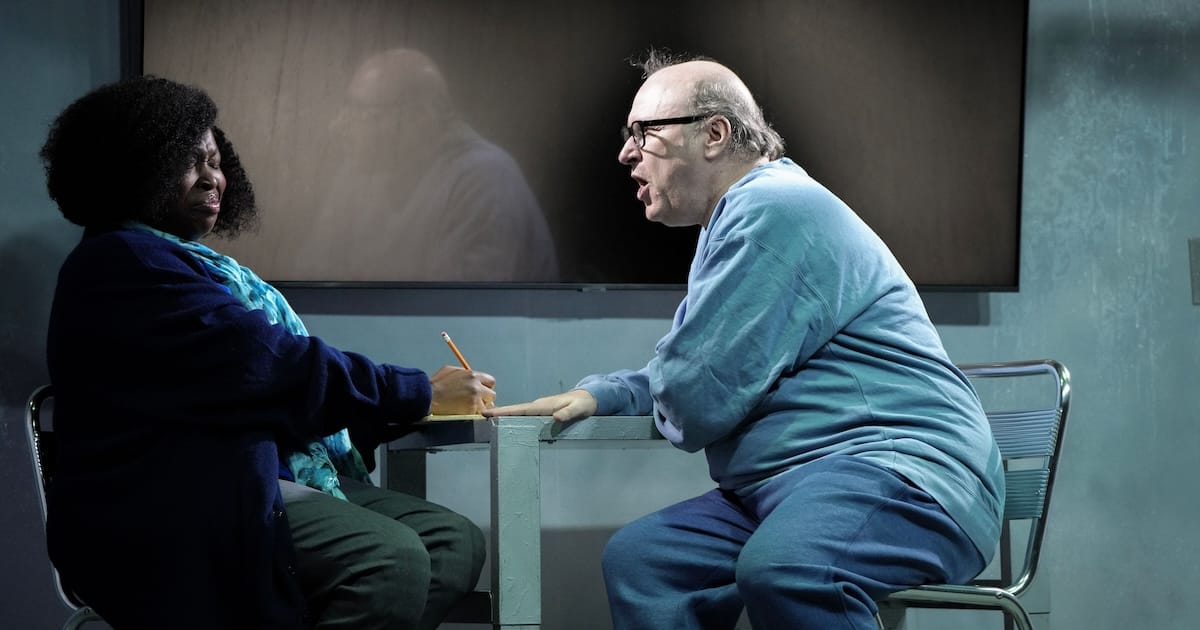
The play is composed largely of monologues delivered by the three main characters: Ralph, a serial killer, Nancy, mother of one of Ralph’s victims, and the psychiatrist Agnetha, who studies Ralph and other serial killers. The play is about 40 minutes in before two characters, Ralph and Agnetha, share a scene.
This puts a lot of pressure on the actors and in this case, SET is exceptionally well-served by Steve Emily (Ralph), Jane Fromme (Nancy), and Desirèe Myers (Agnetha). Fromme is deeply moving. She commands an impressive vocal instrument that ranges expressively through the vortex of feelings of the mother who grieves a missing and then murdered child.
For his part, Emily manages to communicate Ralph’s incomprehension of how he’s expected to feel remorse — or even what remorse is — with shrugs, nods, and sketchy eye contact.
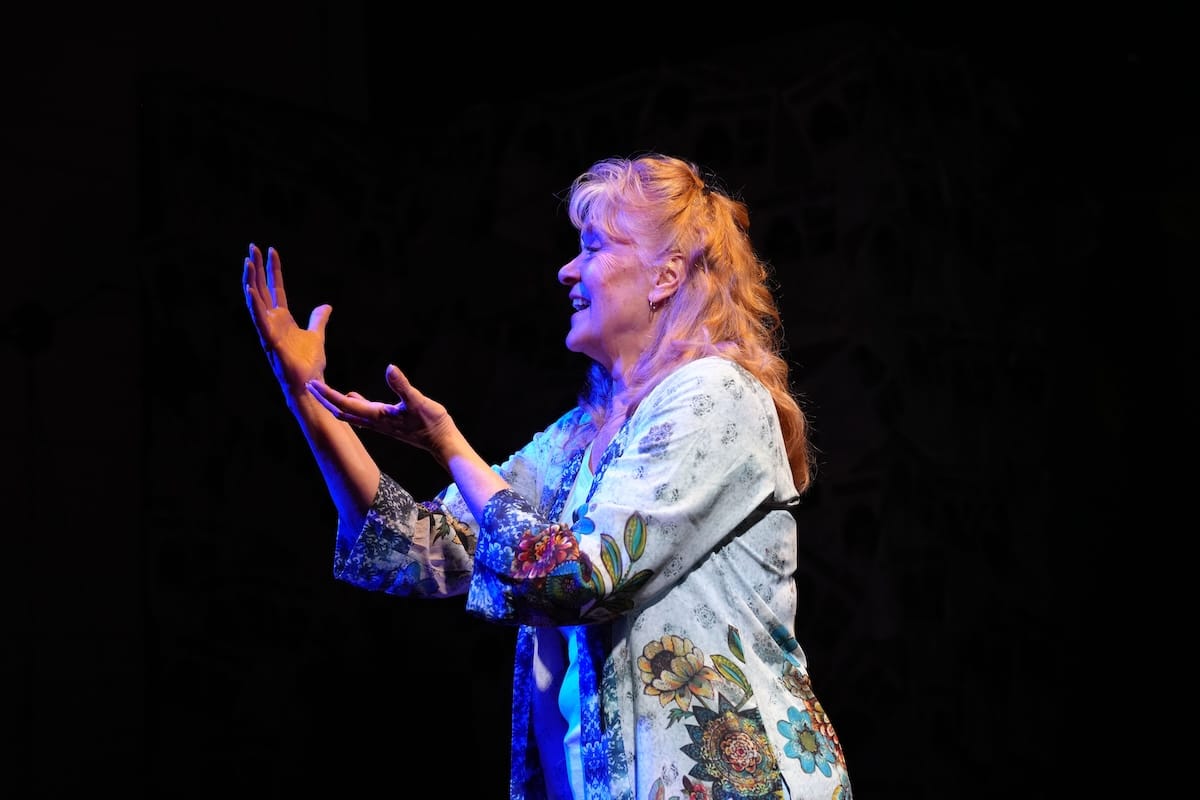
Jane Fromme in ‘Frozen’ | Photo: Adam Stepan
Sound boost
Daniel Robbins’ sound design plays a key role in this production’s success. Ordinary cues, such as beeps calling a flight attendant on an airplane, precisely anchor the scenes’ action. More importantly, the sound bolsters the emotionality of the play. For example, we hear a pounding heart as Agnetha copes with a panic attack, the sounds of a storm as the predator moves on his prey, and an electronic sound collage as the grieving mother finally packs away her daughter’s belongings.
The use of a TV screen at the back of the stage occasionally added to the impact, such as when slides of various real-life serial killers, e.g., Ted Bundy, transitioned to a photo of the play’s serial killer, Ralph. In other instances, such as signaling that a scene was taking place in an airplane or a prison cell, the screens didn’t contribute much to the ambience.
The costumes offered little insight into the characters and added little to the drama.
Disconnects in the script
Because a child’s death is at the heart of the work, Frozen stakes a claim on our attention. In the end, though, the drama is less than the subject deserves. Agnetha holds forth on sin versus disease. It’s the point of her research and we eventually learn that, in contrast to her patient, Ralph, Agnetha herself is guilty of a moral transgression, a sin.
But Agnetha’s problems and her wrongdoing, although serious enough in ordinary terms, pale next to the horrific evil Ralph has committed and Nancy suffers. Despite Myers’ committed performance, Agnetha’s transgression seems relatively trivial. This keeps the sin versus disease argument from really hitting home.
Additionally, Nancy’s pivot from outrage to forgiveness, another raison d’etre of the play, isn’t dramatized. One scene culminates with the character raging against the expectation to forgive. Lights down. Next scene, lights up, Nancy meets Ralph, and sets about the business of forgiving. What changed for her? The play never shows us. It feels like the characters and the play’s premise have been shortchanged.
The monologue device itself silos the characters. Each has compelling concerns, but the limited interaction limits the drama. The play always seems to be ramping up but rarely delivering.
Springs Ensemble Theatre maintains its usual level of professionalism and perhaps the small cast and staging requirements made this work an attractive choice. In this case, the company’s strengths exceed those of the material.

Judith Sears has had a 25-year career in marketing and corporate communications. Over the last several years, she has pursued playwriting, and several of her short plays have received staged readings at Colorado theatres.

Leave A Comment