
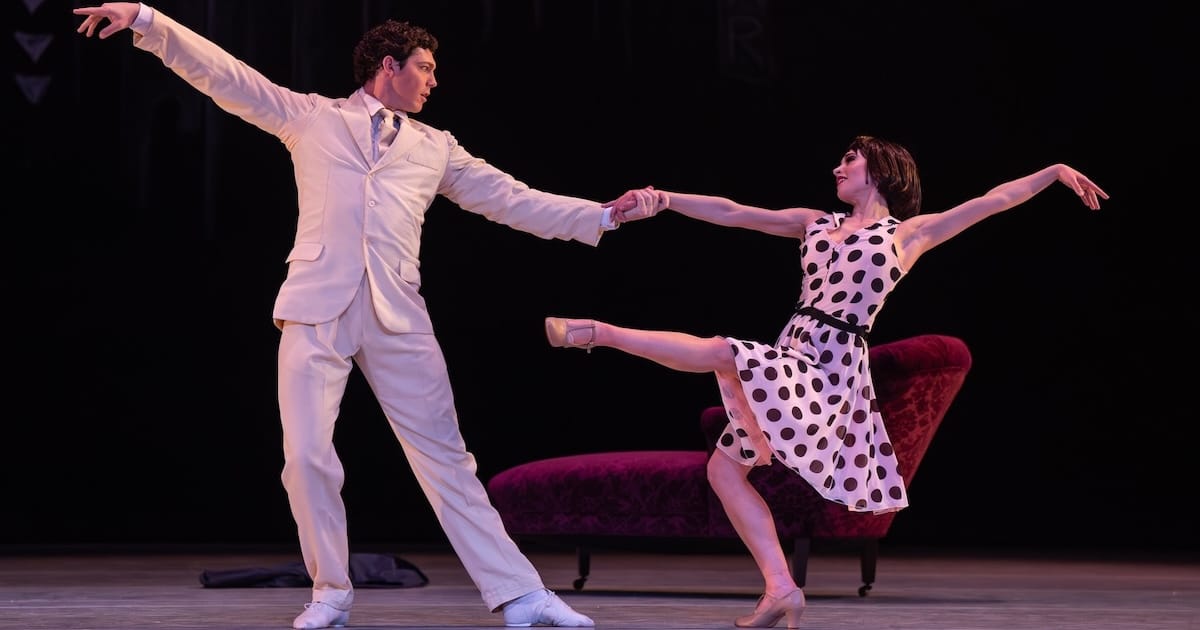
Production at the Ellie Caulkins Opera House is a visual feast replete with stellar performances.
One of the greatest pleasures of Denver’s performing arts scene is the continuing growth of Colorado Ballet as a significant regional ballet company. For the past half dozen years or so, Artistic Director Gil Boggs has been pushing his dancers to greater technical and artistic heights — and the troupe’s current production of The Great Gatsby proves just how successful Boggs has been.
In a ballet full of expansive choreography and high emotion as befitting F. Scott Fitzgerald’s iconic novel, the production gives the entire company a chance to demonstrate its physical prowess, acting talent and musicality. Jennifer Grace (Daisy Buchanan), Leah McFadden (Myrtle Wilson) and Jonnathan Ramirez (Nick Carraway) are particular standouts, but virtually every member of the cast gives his or her role their all. The dynamic ensemble scenes are consistently among the most engaging, showcasing how far the corps de ballet has come in first-rate unison dancing.
Although Jorden Morris’ choreography is not groundbreaking, it readily captures the grand sweep of the novel’s story and the energy of the Jazz Age. Carl Davis’ original score, with its seamless mix of jazz, social dance and even Broadway show influences, has a cinematic quality, especially in the large group party scenes. Under the expert direction of Music Director Adam Flatt, the Colorado Ballet Orchestra easily manages Davis’ infectious tunes, adding to the way in which Morris’ steps and Davis’ notes work in perfect sync to move the drama forward.
With set and costumes borrowed from Pittsburgh Ballet Theatre the production is a visual feast of color, sparkle and glamour, always providing something appealing to look at.
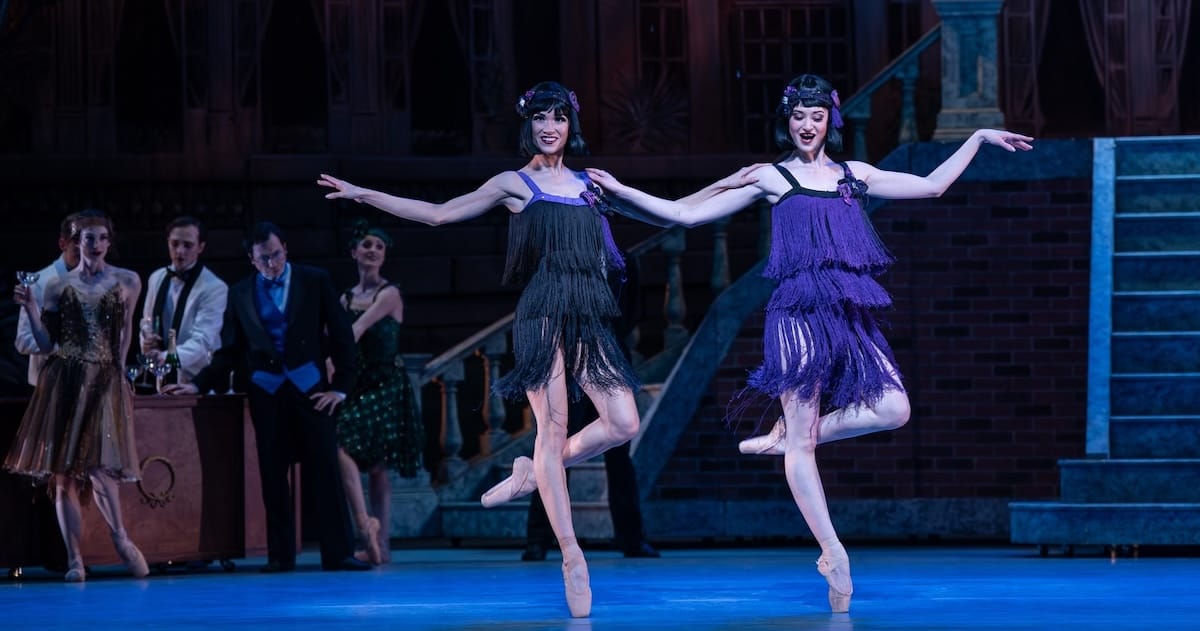
Photo: Amanda Tipton Photography
Plot points
It’s no mean feat to bring what some consider The Great American novel to life as a full-length ballet, and Morris hasn’t entirely succeeded. The ballet follows the complex plot of the book a little too closely (reading the synopsis in the program book helps), which makes a number of individual scenes and the production in general feel overlong. The two party sequences, as engaging as they are, contain overly repetitive steps and not enough drama to merit the amount of time Morris devotes to them.
The fact that Fitzgerald’s narrative in the ballet is conveyed in a long series of vignettes, like chapters in the book, feels disruptive at times. It also requires too many scenery changes. Though the production team handles these without a hitch, the constant raising and lowering of scrims become tiresome after a while. A simple solution would have been to eliminate a few of the episodes from the book. Two that especially stand out are those providing a glimpse into how Gatsby made his fortune and a fight at the Plaza Hotel between Gatsby and Daisy’s husband Tom. Both are unnecessary to move the plot along and could easily be deleted without undermining the story’s dramatic thrust.
Despite these shortcomings, Colorado Ballet’s talented troupe is so technically strong and the company’s energy so contagious it’s easy to forgive The Great Gatsby’s failings. Best to just sit back and appreciate what is ultimately a beautiful performance and a tribute to the increasing proficiency of Colorado’s most important professional dance company.
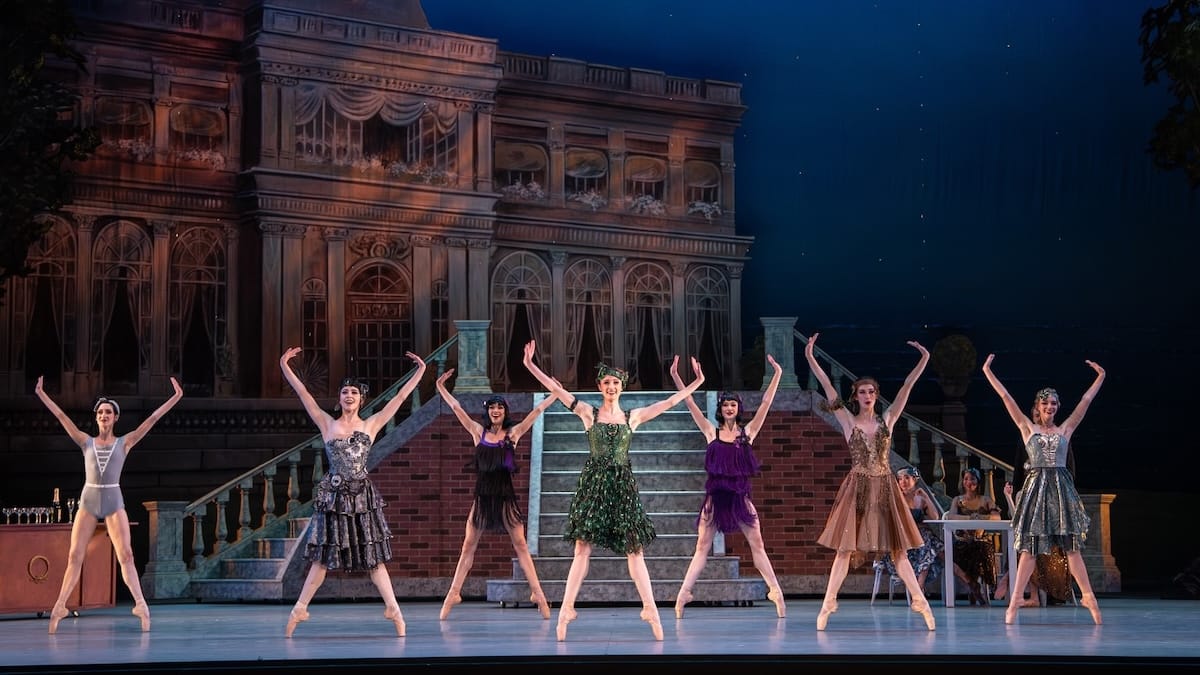
Photo: Amanda Tipton Photography

Alice Kaderlan is a long-time dance and theatre critic and general arts writer. She has written for newspapers and online news sites in Seattle, Washington D.C., Pittsburgh and other cities for more than 40 years. She has also appeared on various public radio stations including WAMU-FM in D.C. and KUOW in Seattle and covered arts for NPR. She currently lives and writes in Denver.

Leave A Comment