
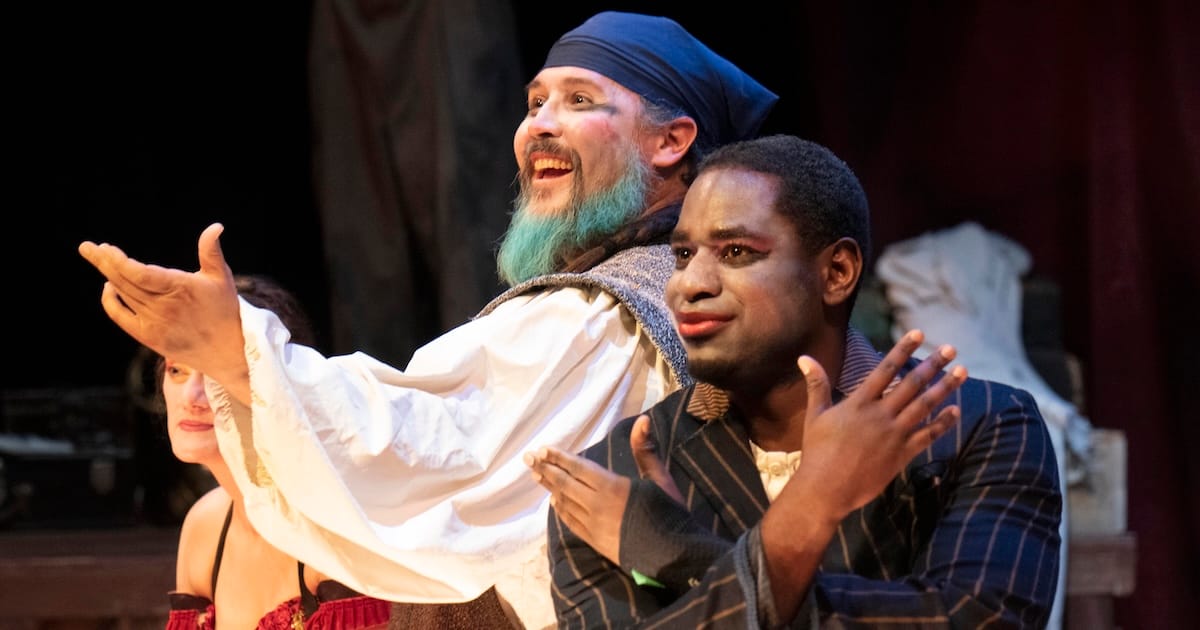
The Catamounts’ Colorado premiere of Jay Torrence’s Burning Bluebeard transforms the Carsen Theater into a playful, unsettling meditation on why live performance matters.
In Burning Bluebeard, the performers already know how the story ends. They are trapped inside the Iroquois Theatre in Chicago on the night of the infamous 1903 fire in a loop where the only way forward is to perform the pantomime of Mr. Bluebeard again, hoping that if they can just make it to the second act this time, something might change.
That strange, meta-theatrical premise fuels The Catamounts’ Colorado premiere of Jay Torrence’s play at the Dairy Arts Center, where director Amanda Berg Wilson turns the Carsen Theater into a shared space of lively, carnivalesque reckoning and remembrance.
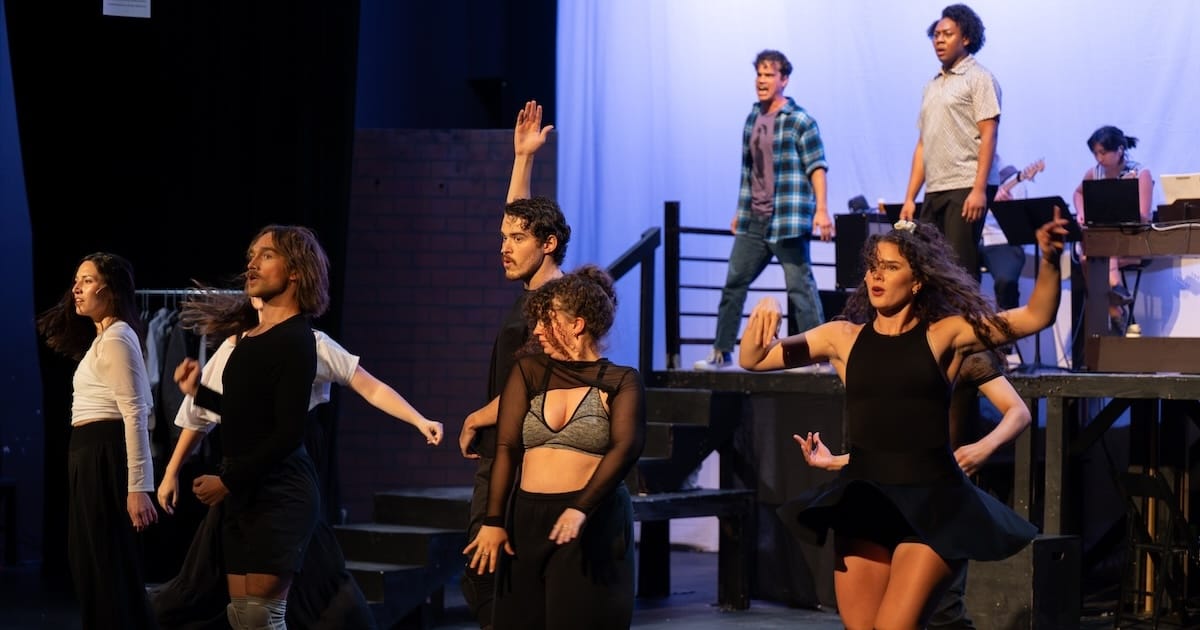
Before the ensemble fully springs to life, Mark Collins, playing stage manager Robert Murray, welcomes the audience into the story. Soon, bodies rise from beneath sheets scattered across the floor and launch into an anachronistic dance number set to recognizably modern music. It is surprising and immediately establishes the show’s tone as irreverently self-aware, even as it centers on something profoundly grim.
There is no fourth wall here. Audience members are given props, lanterns, and even asked to sign a “contract” agreeing to participate in a show in which, as the performers remind us with a wink, we are sitting in for an audience that has been burned alive. It’s dark humor, but it works because Berg Wilson keeps the production moving with such buoyant momentum that you don’t have time to dwell — at least not yet; that will come later.
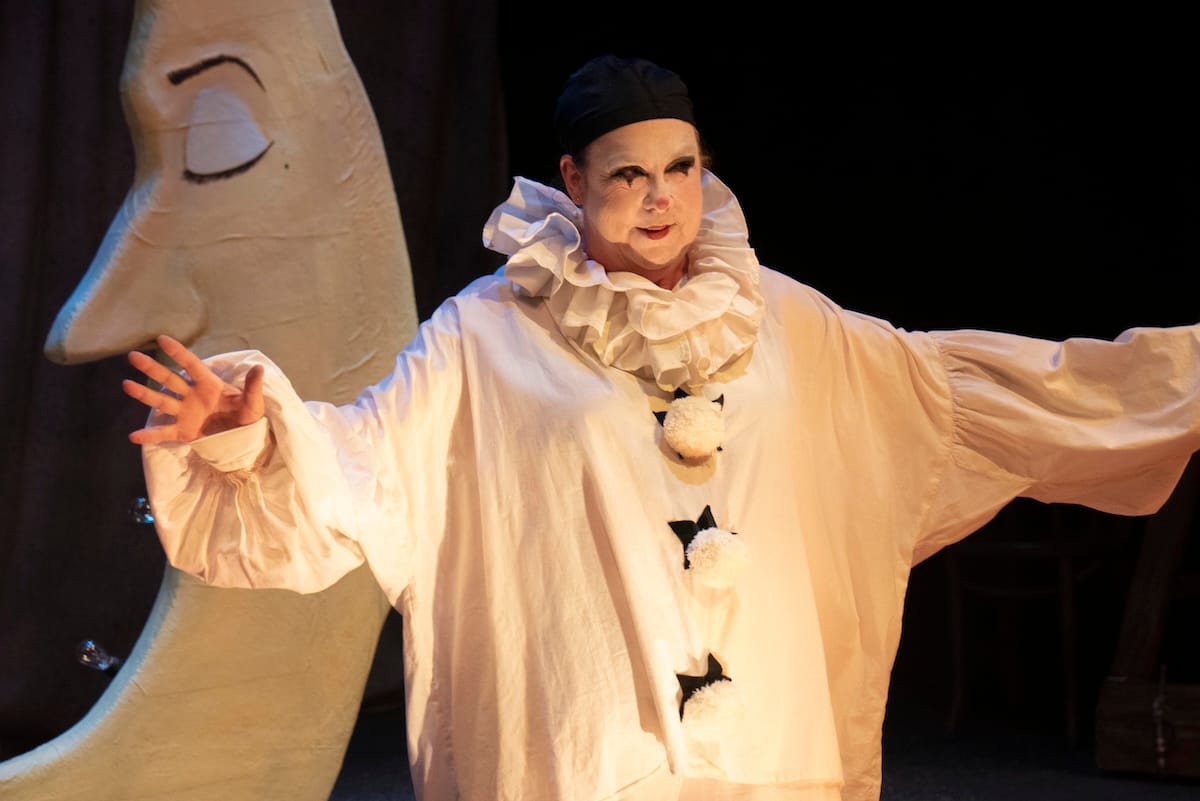
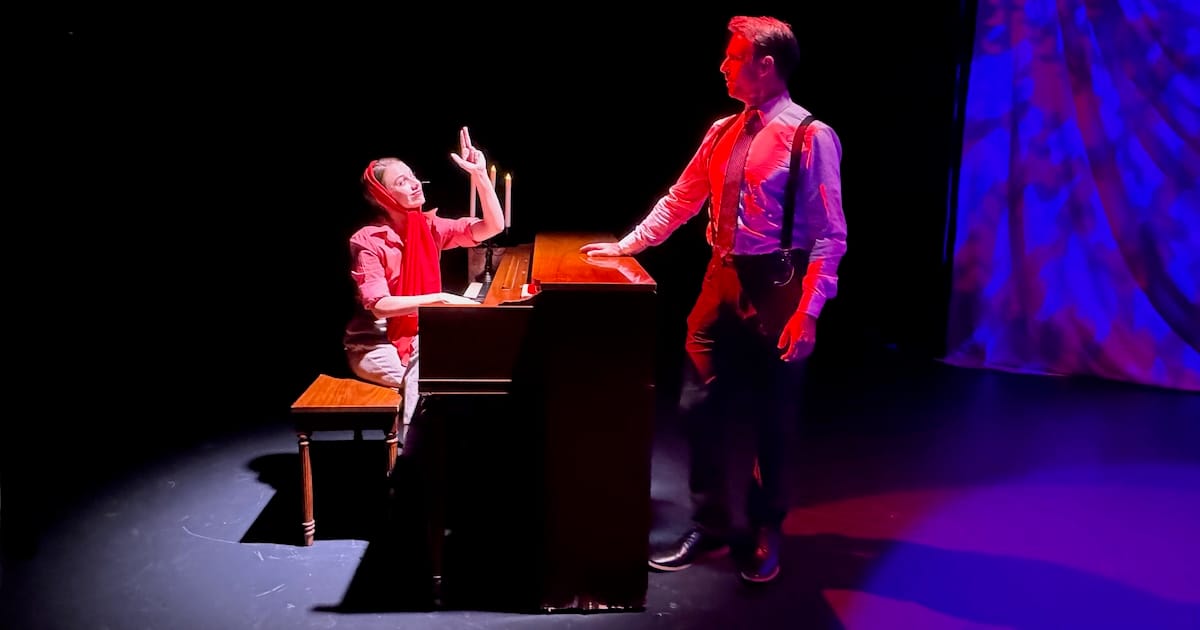
Joan Bruemmer-Holden in ‘Burning Bluebeard.’ | Photo: Michael Ensminger

Playful staging that never stops shifting
The show constantly toggles between two worlds: the exaggerated pantomime of Mr. Bluebeard and the actors stepping out to share pieces of themselves and their looming fate. One moment features a techno-club-style dance as Bluebeard dispatches his wives; another includes a rapid-fire rap explaining the theatre’s fatal exit layout.
The theatrical vocabulary is vast, including clowning, vaudeville, song, dance and meta-commentary, and Berg Wilson orchestrates it with fluid precision.
What makes this work is how tightly the six-person ensemble functions as a unit. There is a sense throughout that these performers are deeply attuned to one another’s rhythms. They pass props, trade focus, support bits of physical comedy and pivot into emotional stillness with remarkable precision. Even as the tone careens from absurd to sobering, the group moves with the cohesion of a seasoned troupe who trust each other completely.
Collins grounds the production as the steady Robert Murray before gleefully cutting loose in a drag lip-sync number that provides a sharp comic counterpoint to his otherwise sober presence. Joan Bruemmer-Holden’s Fancy Clown is a mischievous instigator who seems to delight in forcing the story forward, even when others resist revisiting the trauma. Sam Gilstrap hams it up delightfully as Bluebeard in the pantomime while still maintaining strong ensemble chemistry.
Rakeem Lawrence makes a show-stopping entrance, flipping into a split, and later delivers the production’s most emotionally devastating moments as Eddie Foy, the performer whose attempt to keep the audience calm contributed to the disaster’s scale. Maggie Tisdale’s Nellie Reed, the fairy aerialist who historically died in the fire, becomes the emotional heart of the piece, desperate not to be forgotten.
Noelia Antweiler’s Faerie Queen presides over it all with eerie playfulness, silently manipulating the space through theatrical magic. No one performer dominates for long; the story is carried collectively, as if the troupe itself is trying to hold this moment together through sheer force of collaboration.
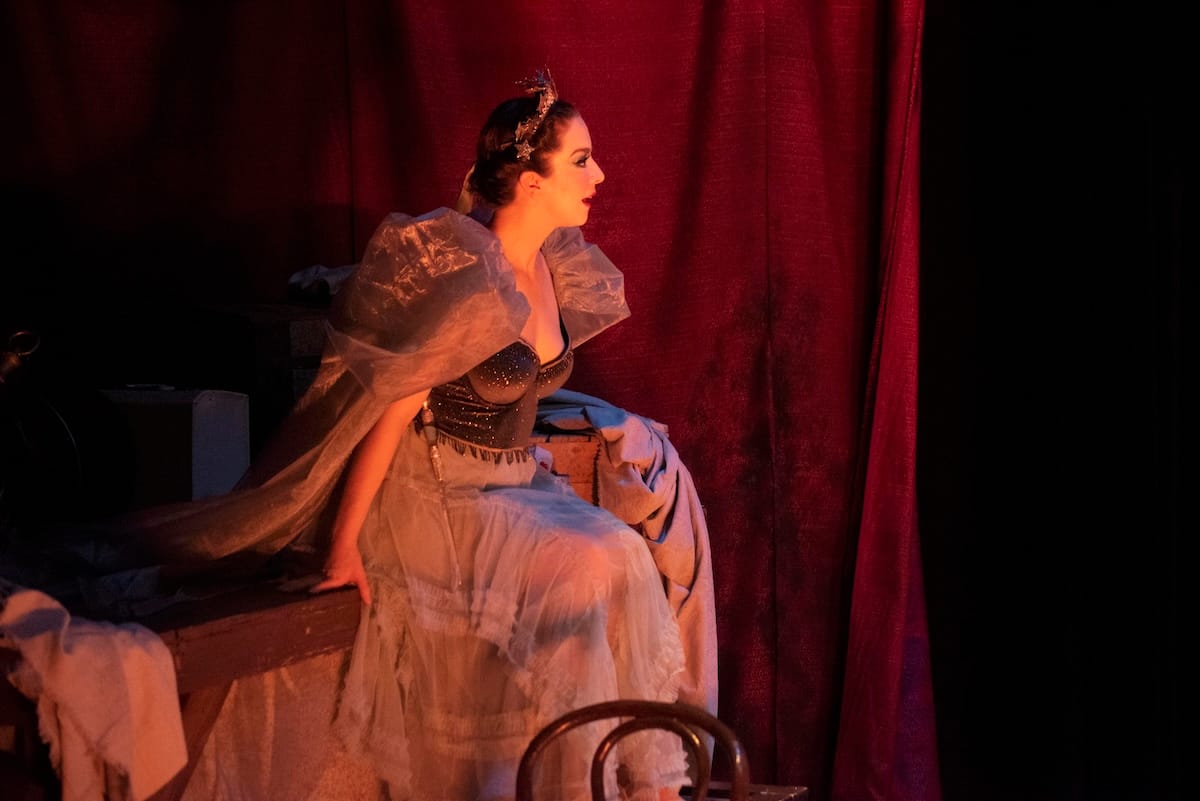
Noelia Antweiler as the Faerie Queen in ‘Burning Bluebeard.’ | Photo: Michael Ensminger
Design that engulfs the audience
Scenic designer Hayley Delich creates a sparse but highly dramatic environment: red and white curtains against a black upstage wall, chandeliers hanging overhead, a glowing moon, a rolling ladder and the mysterious box from which the Faerie Queen emerges. It’s simple, flexible and perfectly suited to the Carsen Theater’s intimacy.
That environment is made richer by the costume design from Mads Levin, which feels as though every piece was pulled from the same well-worn theatre costume closet. The pantomime looks are boldly colored, exaggerated and delightfully silly, while Collins’ stage manager is dressed in a more restrained, refined palette that visually separates him from the chaos around him. The cohesion of the wardrobe helps sell the idea that these characters truly belong to the same troupe.
Makeup plays an equally important role in defining the world. The Faerie Queen’s stylized face, Bruemmer-Holden’s striking white face and the rest of the pantomime company’s commedia dell’arte-esque looks command attention, heightening their presence before they even move.
These visual choices, paired with Jonathan Dunkle’s constantly shifting lighting and layered sound design from Jay Torrence and Mike Tutaj, create a stage picture that is always alive. Light spills from chandeliers, lanterns, footlights and from behind the audience. Sound cues slide us between pantomime absurdity and creeping dread.
And then, almost imperceptibly, that liveliness drains away as soon as the fire starts. Up to this point, Burning Bluebeard moves with a kind of gleeful theatrical momentum. The jokes land quickly. The performers bounce between styles with dexterity. Berg Wilson keeps everything moving so the audience is constantly entertained, if slightly off balance.
Then, the show slows. The ensemble begins to sit. The jokes stop. The movement that has defined the first hour gives way to stillness as the performers calmly describe how the fire spread through the theatre. A backstage door opens and real light spills into the Carsen Theater as the actors rush out, leaving Nellie alone onstage.
For a long moment, she does not move. That’s when the perspective shifts. A red glow blooms from behind the audience. The sound of flames and screams fills the room. Without anyone changing seats or locations, the audience’s role transforms. We are no longer watching a troupe of performers recount a tragedy. We are the audience trapped inside the theatre as it burns.
It is a stunning piece of staging that lands precisely because of how playful everything has been up to this point. The contrast is jarring in the best possible way, forcing the audience to sit in the horror rather than observe it from a safe narrative distance.
What follows is a quiet, beautiful act of restoration as the performers return, shaken, trying to find a way to make the story end differently. They can’t undo what happened, but they can offer Nellie Reed something she never received: the chance to complete her aerial routine. Lying atop the rolling ladder, she is pushed slowly around the stage, handing flowers to audience members as if finishing a long-delayed performance. It’s theatrical redemption, fragile and deeply moving.
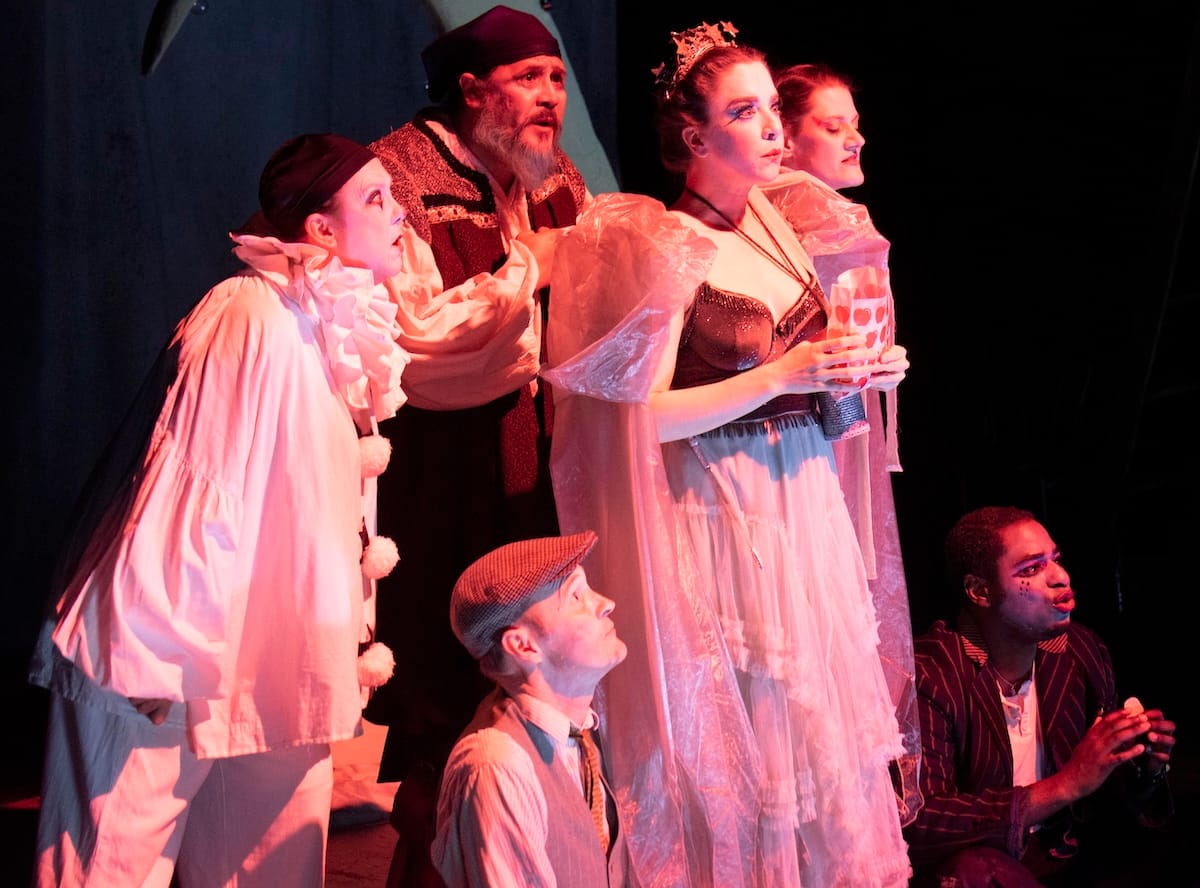
Photo: Michael Ensminger
Why we keep gathering in the dark
Burning Bluebeard ultimately asks whether it’s foolish, even irresponsible, to keep gathering in dark rooms to tell stories when so much can go wrong.
The Catamounts’ answer is not sentimental but communal. Theatre, this production argues, is risky, ephemeral and deeply dependent on trust between performers and audience. That vulnerability is not a flaw. It’s the point.
This is immersive theatre in a distinctly Catamounts way. The immersion is emotional and psychological rather than merely spatial. Though the majority of the audience never leave their seats, they are constantly implicated in the action by being handed props, asked to participate and forced to feel the shift from spectator to participant in the final moments.
For Boulder audiences, this Colorado premiere is both another strong Catamounts production and a reminder of what live performance can accomplish when audiences trust the artists enough to follow them into the flames.

A Colorado-based arts reporter originally from Mineola, Texas, who writes about the changing world of theater and culture, with a focus on the financial realities of art production, emerging forms and arts leadership. He’s the Managing Editor of Bucket List Community News, a contributor to Denver Westword and Estes Valley Voice, resident storyteller for the Bonfils-Stanton Foundation and co-host of the OnStage Colorado Podcast. A member of the American Association of Theatre Critics, he holds an MBA and an MA in Theatre & Performance Studies from CU Boulder.


Leave A Comment