
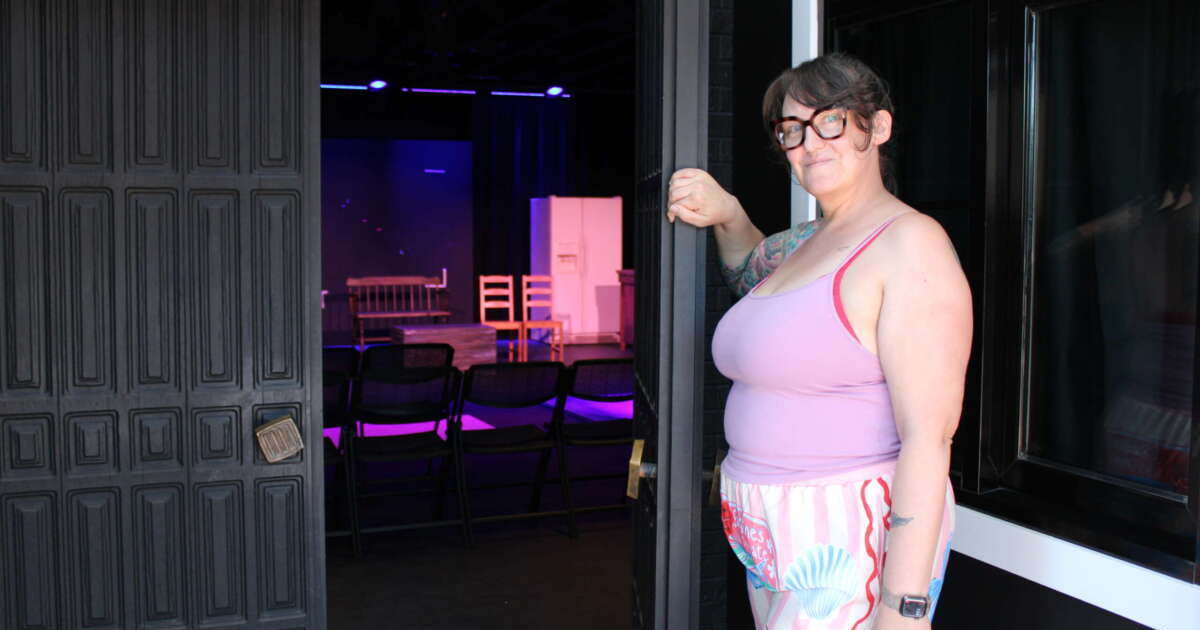
The Storyteller Theater opens July 17 on East Colfax, offering an accessible, flexible home for local artists.
9905 E. Colfax Ave. has been a bank, a chocolate factory, a church and a hair salon. On Friday, July 17, the Aurora building will add “theatre” to its résumé.
The Storyteller Theater opens across the street from the Aurora Fox Arts Center and on the same block as The People’s Building, bringing another performance venue to the Aurora Cultural Arts District. Its first production, Impact Theatre’s Stupid Fucking Bird, begins a season of plays and musicals from several small Colorado companies.
For Storyteller Theater founder Lexie Lazear — also the artistic director of the adventurous Shifted Lens Theatre Company — opening the intimate black box fulfills an ambition that began when she was a child. It also addresses a problem she encountered after starting her own company: finding a place to perform that a small theatre could actually afford.

“I realized really quickly the venue rentals around here are not only few and far between, but what does exist is extremely cost-prohibitive,” Lazear said while leading OnStage Colorado on a July 15 tour of the building.
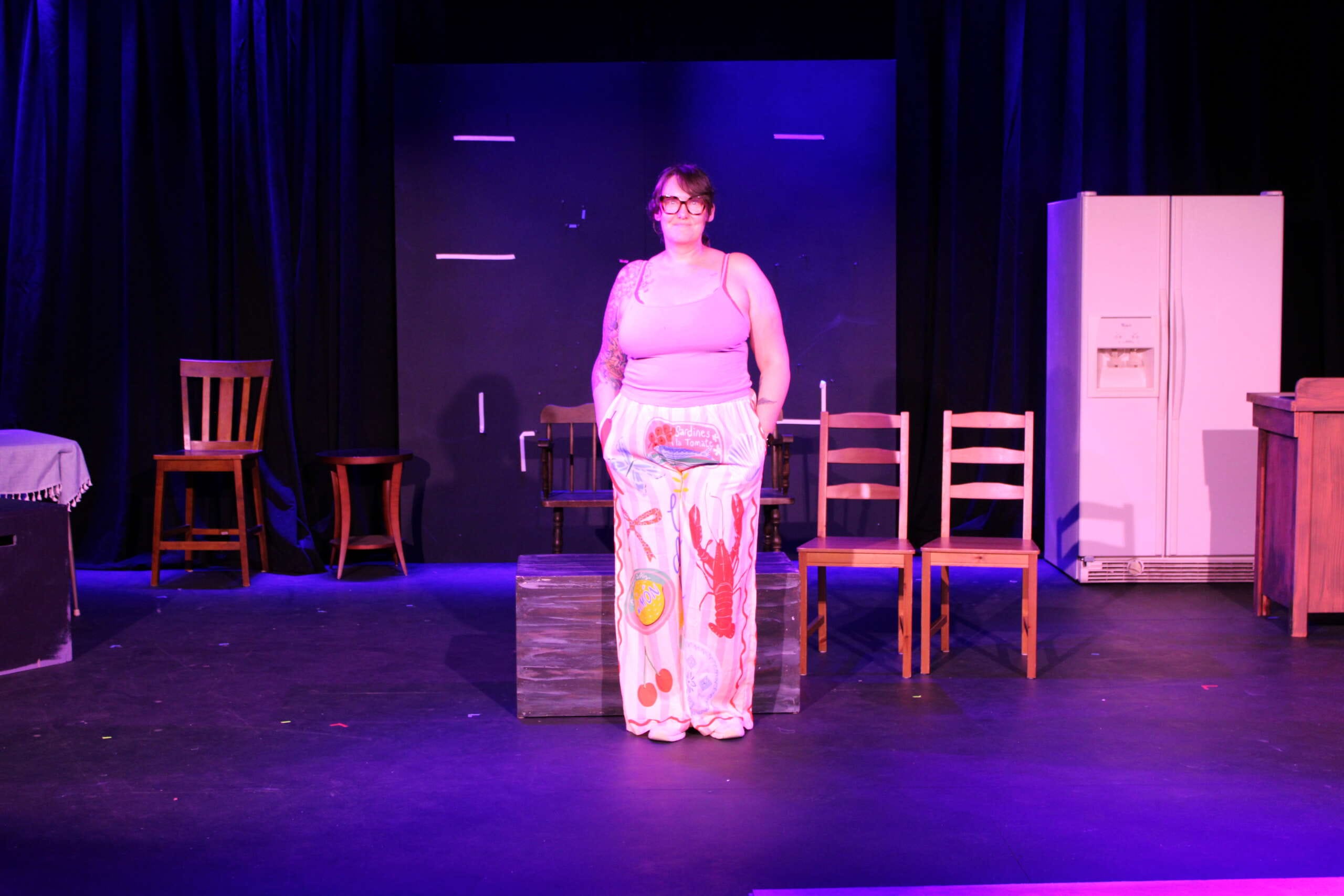
Lexie Lazear, the Storyteller Theater’s co-owner, takes center stage in her new venue. | Photo: Toni Tresca
She began telling her husband, Matthew Rogers, that they did not need an elaborate theatre or hundreds of seats. They needed a small building that could be transformed into the enterprising and sometimes edgy work she wanted to produce.
“I’m always going to do shows that are weird, so I’m never going to need 200-400 seats,” Lazear said. “If we just had a building, we could turn it into a little black box.”
Lazear wanted a room artists could reshape around each production rather than a venue that forced every show into the same configuration.
“We didn’t want to put in a permanent stage or put in permanent seating so that if you wanted to do an immersive show in here, you could turn the room into whatever you were looking to turn it into,” she said. “The ability to turn the space into whatever you needed for whatever your performance was important.”
A commercial realtor eventually approached the building’s former owner about a sale, even though the property was not on the market. Lazear and Rogers bought it in February 2025 for $1.045 million. Rogers, who serves as Storyteller’s technical manager, said a financial windfall from the newly public company where he works gave the couple an opportunity to invest in the project.
“We decided that we’d give back to the community,” Rogers said.
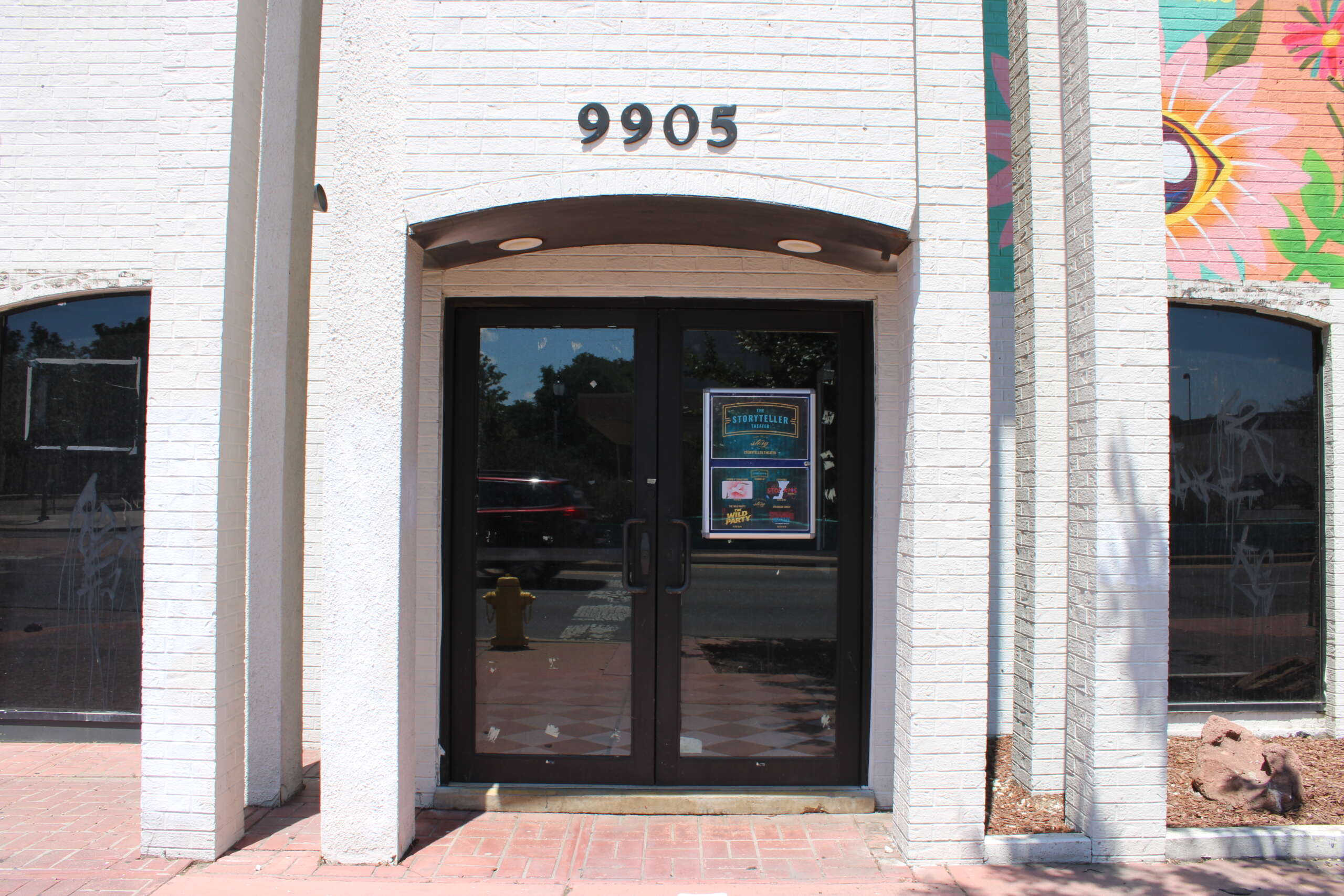
A street view of the entrance to The Storyteller Theater on East Colfax in Aurora. | Photo: Toni Tresca
The purchase was only the beginning. Rogers estimated that the couple spent close to $700,000 on construction, lighting, sound and the other equipment required to turn an empty commercial building into a functioning performance venue.
They worked with the architecture firm CSHQA on a renovation that required removing and repositioning walls, adding bathrooms and determining how to hang theatrical lighting and speakers safely. The permitting process also meant repeatedly explaining why a performance venue has different needs than a retail shop or office.
“It’s not like a lot of people are building theatres, so it’s not a familiar task,” Lazear said. “Most construction people and architects have never done a theatre before.”
The building’s large street-facing windows became one point of negotiation. Lazear initially wanted to remove many of them, but the city required the exterior to retain its glass. The solution was tinted security glass, blackout shades and curtains that can create near-total darkness for performances while still letting daylight into rehearsals.
“You don’t usually get access to windows in a theatre,” Lazear said. “If you’re having a rehearsal in here and you’re not doing lights, you can lift all the shades and bring in the sunlight.”
The finished lobby combines new black-and-white tile with doors and fixtures that are original to the 1961 building. A ticket window stands beside the entrance, while a vintage-looking bar and an elevated tech booth line the performance room. Artist River Hetzel is beginning a mural in the bathroom hallway that Lazear expects will take several weeks to complete.
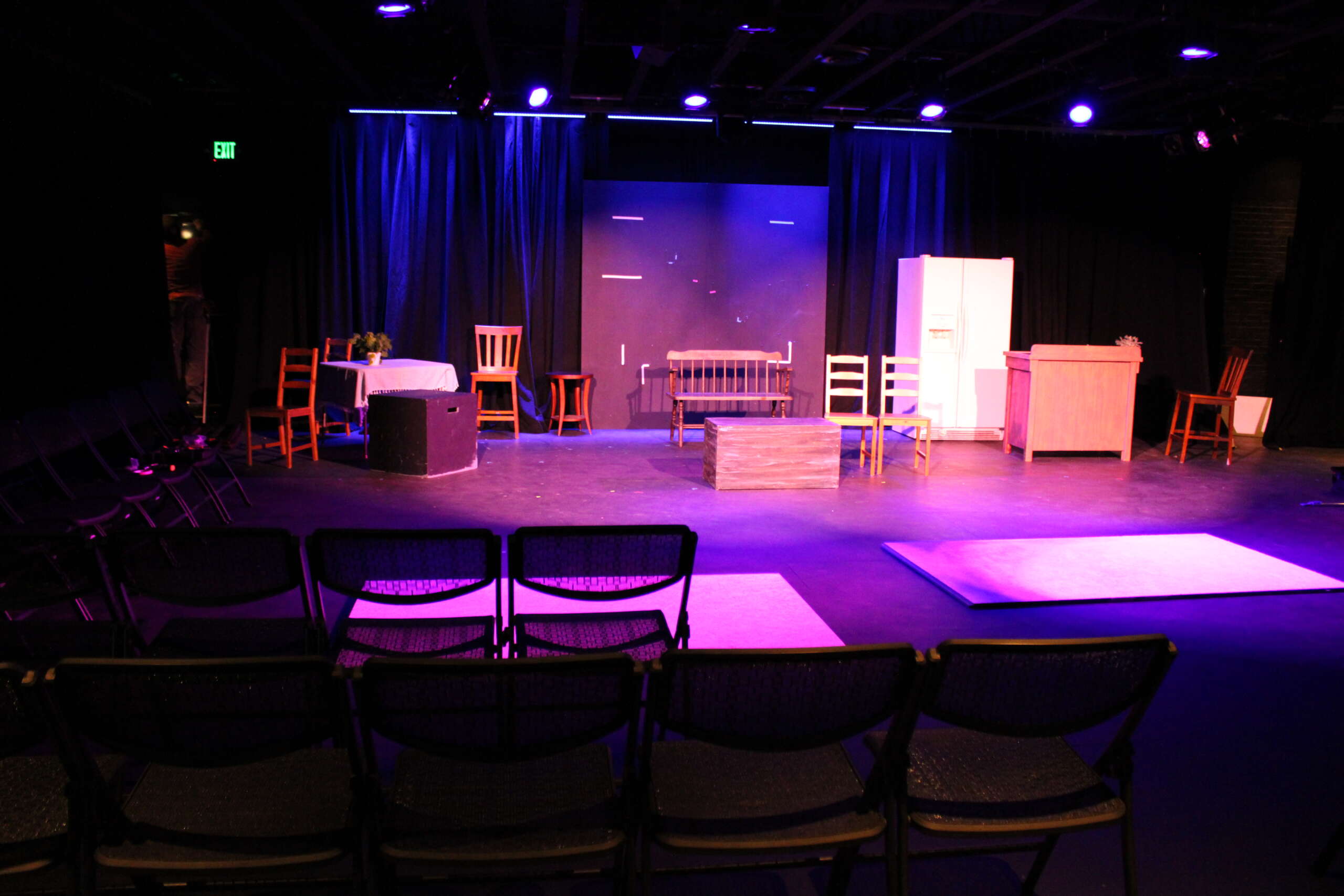
The Storyteller Theater’s versatile black box stage is currently being prepared for Impact Theatre’s performance in the space on Friday, July 17. | Photo: Toni Tresca
The main floor also includes accessible bathrooms and a room that can function as storage, a dressing room or a green room for performers who cannot use the stairs. Downstairs, remnants of the building’s chocolate-factory era remain among two dressing rooms, additional bathrooms, a kitchenette, storage and a flexible room that can serve as either rehearsal space or a large-cast dressing room.
How many people the 4,653-square-foot facility can hold depends on what an event needs the room to become. Storyteller’s initial seating inventory includes 84 chairs, with a few still on back order. That allows for a roughly 28-by-28-foot thrust playing space and a 38-by-5-foot upstage area for a set or band.
The full standing-room capacity is 220, although a crowd that large would leave room for little more than a podium. Storyteller can purchase additional chairs as events require them, but every added row reduces the available performance area. Lazear expects theatrical configurations to top out around 100 to 110 seats before the stage becomes too small for anything more elaborate than stand-up comedy or another event with minimal space requirements.
Shifted Lens and Bright Heart Stages plan to use variations on the 84-seat configuration for Andrew Lippa’s The Wild Party and Stranger Sings! The Musical Parody. Lazear has discussed staging The Wild Party with the audience on three sides of the action and attempting to present Stranger Sings! completely in the round.
“I had a friend come here, and she was like, ‘This is not a black box theatre. This is an arts facility,'” Lazear said. ‘And I was like, ‘I’ll take it.’ As long as you don’t need more than 100 seats, we can be what you need.”
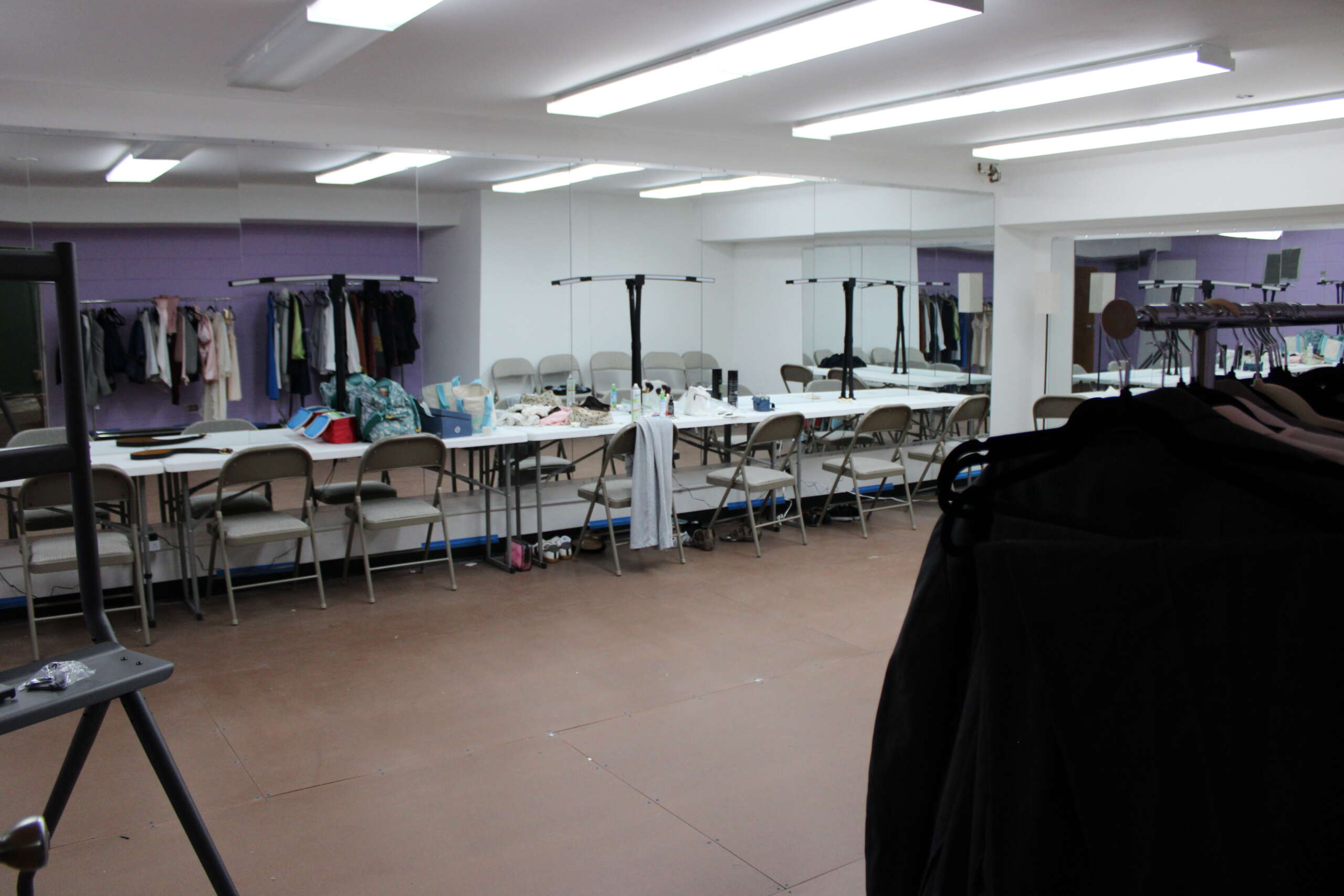
The Storyteller Theater’s downstairs dressing room, or extra space for rehearsals and classes. | Photo: Toni Tresca
Storyteller Theater is a for-profit business separate from Shifted Lens, which will serve as the venue’s resident theatre company. Lazear and Rogers said the structure was chosen for tax and ownership purposes, not because they expect the venue to become a significant source of income.
They paid cash for the building to avoid the pressure of a mortgage and keep monthly operating expenses relatively low. Rogers estimates that electricity, water, insurance, cleaning and other basic costs will total around $3,300 to $3,500 per month.
“That’s what’s going to allow us to keep the price to rent the building so low,” Lazear said.
Community theatre groups can rent Storyteller for $300 per day, while companies using the venue for business purposes will pay $500. Renters receive first right of refusal on the days between performances but do not have to pay for those dark days. Another group could use the room on a Monday, for example, as long as it did not alter the existing production’s set.
Lazear sees Storyteller as a smaller, affordable complement to The People’s Building and another piece of the Aurora Cultural Arts District’s performance infrastructure. She wants the venue to support companies that need something between a basement-sized room and a larger traditional theatre.
“Community theatre and small, scrappy theatre, fringe theatre, that kind of stuff is an incredibly important part of the ecosystem,” she said. “It’s how we get really good Broadway shows. For them to have any place to get started, figure it out and decide how big of a space they need only happens when they can afford to do it.”
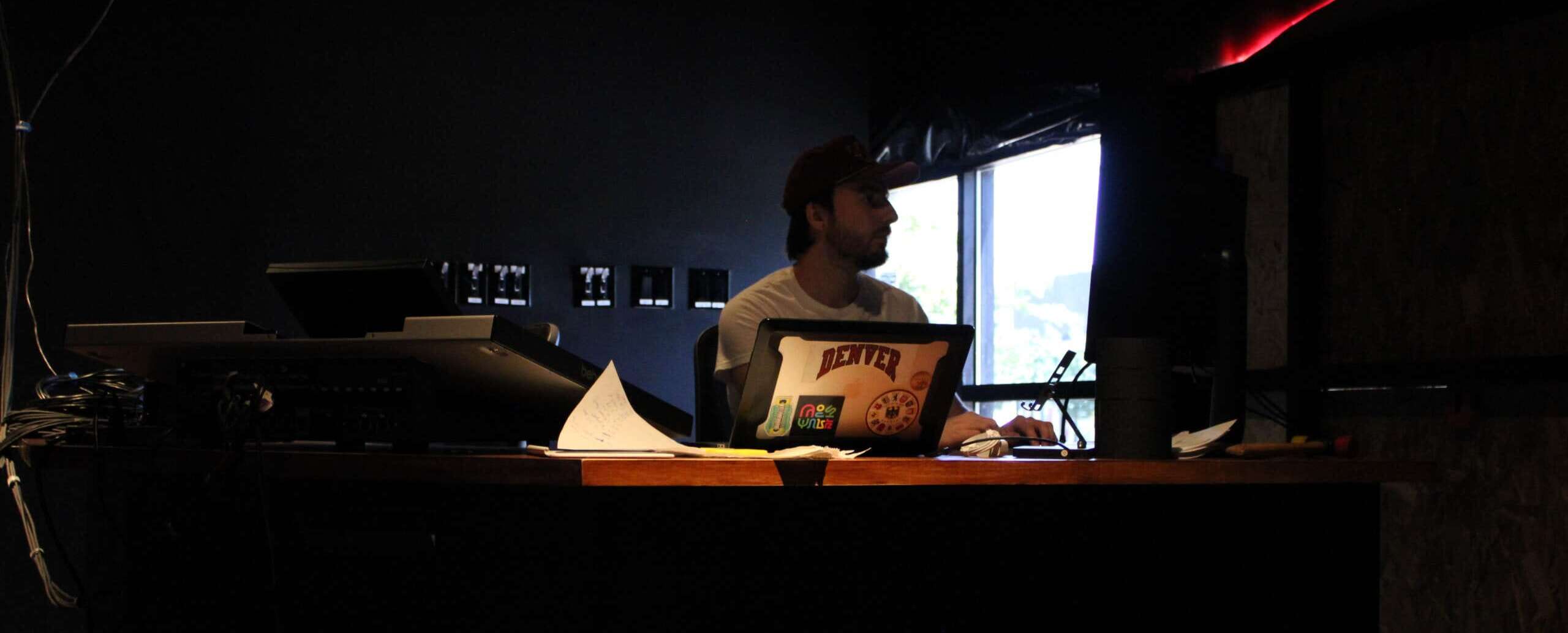
In The Storyteller Theater, a tech programs cues for Impact Theatre’s show. | Photo: Toni Tresca
What happens next will depend less on any single production than on who walks through the door and what they choose to create once they’re inside.
“Success for us is a combination of being regularly booked and providing access to smaller theatre companies that maybe would not have been able to survive without us,” Lazear said. “That’s really my main goal: to be a place where if you are young or new or need a place and you don’t feel like you fit in anywhere, you could come have a home here.”

An award-winning Colorado arts and culture reporter originally from Mineola, Texas. Tresca is the chief theatre critic for OnStage Colorado and managing editor of OnScreen Colorado. He’s the editor of Bucket List Community News, a contributor to Denver Westword and Estes Valley Voice, a resident storyteller for the Bonfils-Stanton Foundation and the co-host of the OnStage Colorado Podcast.

Leave A Comment