
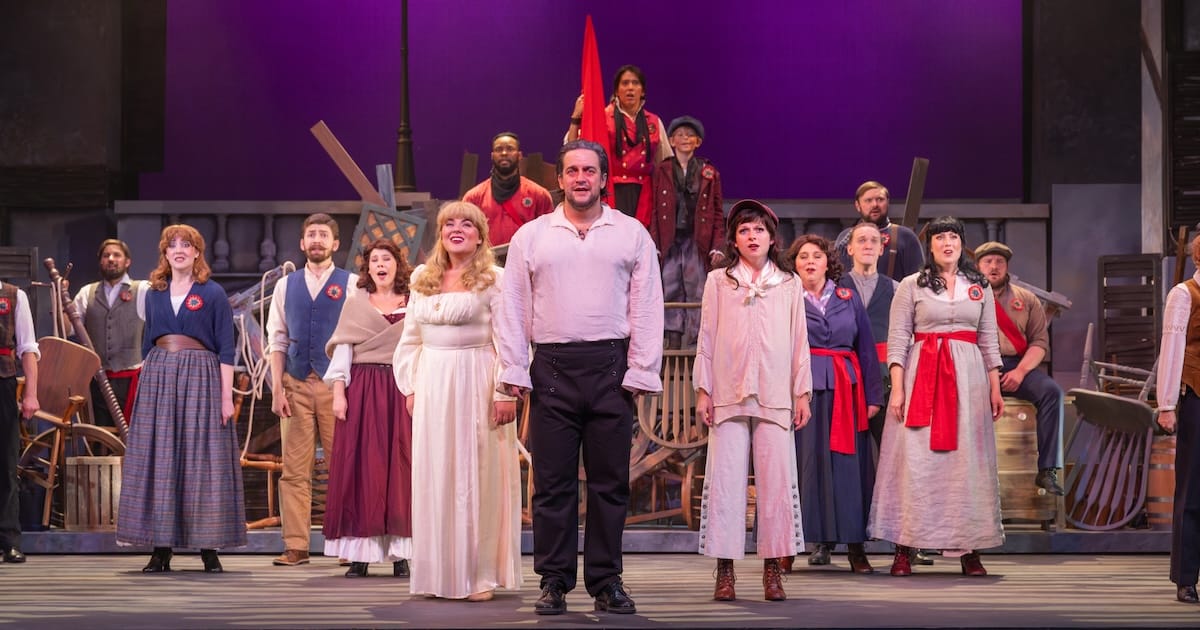
Johnstown dinner theatre stretches itself technically and artistically with one of its most awe-inspiring productions yet.
For a musical about injustice and suffering, Les Misérables is having an awfully good year.
With the latest national tour finished and regional licensing available for the first time in 10 years, The New York Times reports that Music Theatre International has already approved 107 new productions in the US and Canada. It makes obvious business sense. Few musicals come with this much name recognition, this many beloved songs or an audience so willing to return.
At Candlelight Dinner Theatre, that newly available blockbuster becomes an opportunity to show what the company can do at full stretch.
Les Misérables is a substantial leap in scale for a company whose surest territory has often been comedic Golden Age musicals. Alain Boublil and Claude-Michel Schönberg’s sung-through adaptation of Victor Hugo’s novel requires a huge ensemble, formidable singers, relentless scene changes and enough technical muscle to carry audiences from a prison camp to Parisian streets, a sewer and an armed rebellion without losing momentum.

Co-directors Cathy Salaymeh and Jalyn Courtenay Webb take that challenge seriously. Their lavish, emotionally direct production is among the most demanding Candlelight has mounted and among its best.
Candlelight Dinner Theatre’s production of Les Misérables. | Photo: The Creative Agency
Building an epic
If you haven’t read Hugo’s original novel, seen the musical or watched the 2012 film, Les Misérables follows Jean Valjean, a former prisoner who rebuilds his life after an act of mercy, only to be pursued by Inspector Javert, whose rigid understanding of justice leaves no room for redemption. Their conflict eventually intersects with Fantine and her daughter, Cosette, as well as idealistic students mounting the doomed June Rebellion of 1832.
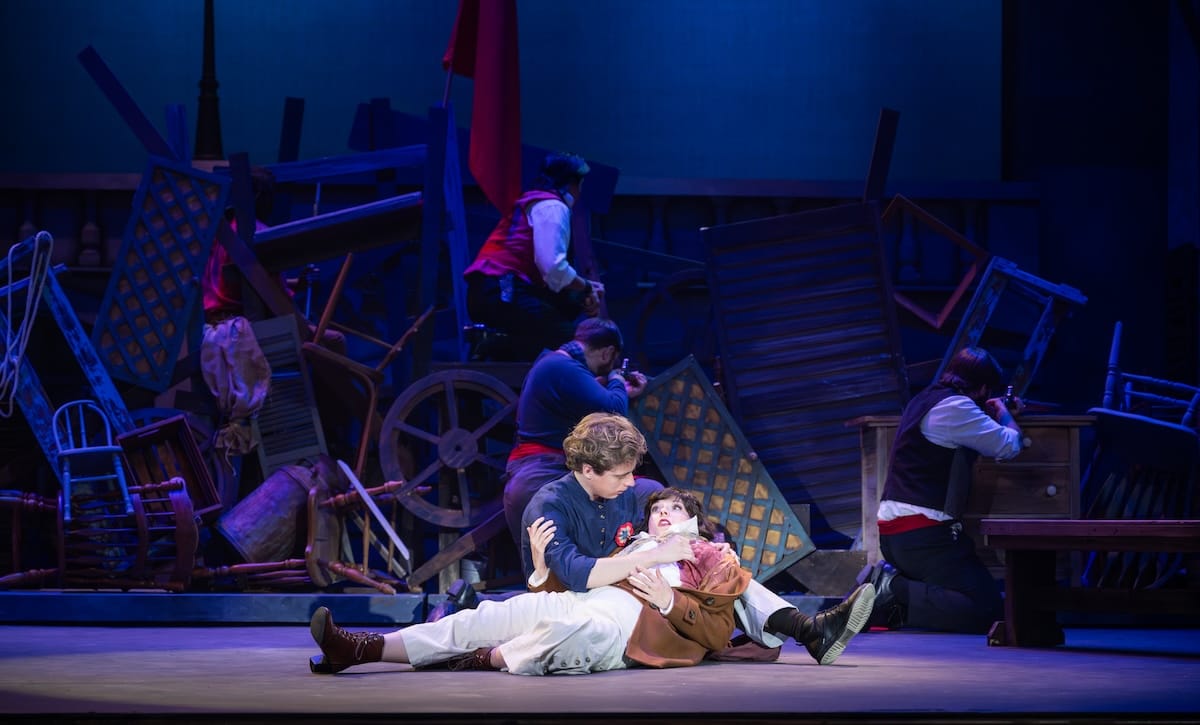
Casey Kearns’ scenic design is central to Candlelight pulling off this megamusical. Large pieces glide, roll and descend into place: beds, tables, the ABC Café, Cosette’s gate and eventually the barricade itself. The production rarely pauses to accommodate them, which is crucial in a musical whose score almost never stops.
The barricade sequence is especially impressive. Gunshots, smoke, Vance McKenzie’s lighting and Brandon Bruce’s fight choreography create convincing chaos without overwhelming the stage. Javert’s suicide goes further than expected, with Sosna literally dropping from the elevated scenery.
Savana Leveille’s costumes contribute substantially to the scale. The 24-person ensemble cycles through prisoners, laborers, prostitutes, soldiers, students, inn patrons and aristocrats, giving the world a splendidly realized population beyond its principal characters.
Just as important is the sound. Mason Siders conducts a 12-player orchestra that gives Schönberg’s score remarkable sweep. Its melodies recur and transform as characters and circumstances change, while the ensemble attacks numbers including “At the End of the Day,” “Master of the House” and “Do You Hear the People Sing?” with enormous collective force.
Chas Lederer, Jalyn Courtenay Webb and ensemble in Les Misérables. | Photo: The Creative Agency
A cast equal to the scale
All that machinery would mean little without performers who make the suffering underneath it feel specific.
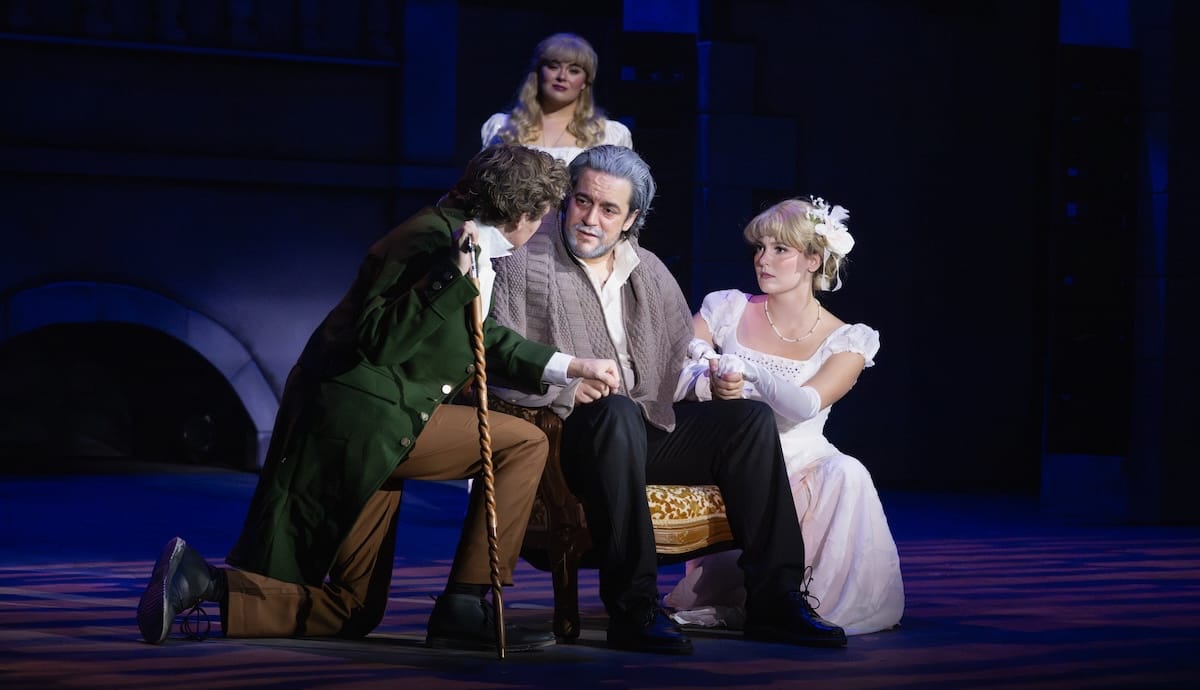
Patric Case is commanding as Jean Valjean, convincingly transitioning from embittered ex-convict to aging father. His clear, expressive voice is especially effective when brute force gives way to vulnerability. “Who Am I?” starts as a genuine moral crisis, which Case builds into an empowered declaration of his true identity. Later, Case makes “Bring Him Home” resonate deeply as a frightened plea asking God for enough mercy to save somebody else.
John Sosna provides an imposing counterweight as Javert. His booming voice and stoic physicality embody Javert’s uncompromising understanding of law and morality. While mercy can transform Valjean, Javert cannot reconcile it with the world he understands.
Jennasea Pearce makes Fantine’s relatively brief stage time linger long after the character is gone. Her heartbreaking “I Dreamed a Dream” grows naturally from the humiliation preceding it, while her descent through “Lovely Ladies” is all the harsher because Pearce establishes Fantine’s resistance first.
Madison Bode is another standout as Éponine, a young woman caught in a devastating love triangle. She finds humor and toughness before opening the character completely in “On My Own,” which lands as an aching recognition that the love sustaining Éponine exists largely in her imagination. “A Little Fall of Rain” pushes the anguish somewhat too quickly; heavy sobbing occasionally muddies the lyrics. Still, Bode earns the heartbreak surrounding it.
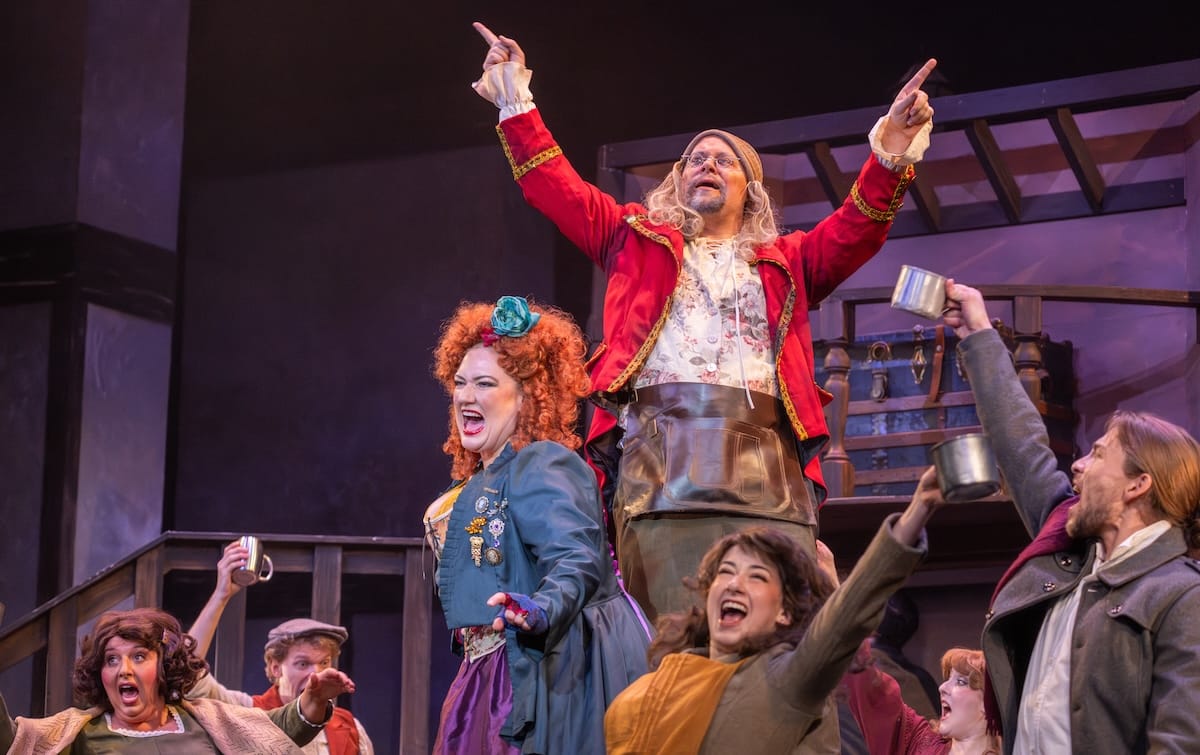
Jerod Mose’s formidable voice gives Enjolras the necessary authority to ignite “Red and Black” and “Do You Hear the People Sing?” Chas Lederer and Webb, meanwhile, attack the innkeepers with appropriately vulgar gusto. “Master of the House” supplies badly needed comic oxygen, although the exaggerated accents occasionally make Lederer’s lyrics difficult to catch.
Candlelight Dinner Theatre’s production of Les Misérables in Johnstown, Colo. | Photo: The Creative Agency
Why it matters now
The rush to stage Les Misérables may be good business, but its renewed relevance goes deeper.
Les Misérables is not about a revolution succeeding. This one fails spectacularly. Young idealists die. Marius survives to discover that nearly all of his friends are gone. Poverty persists. Institutions remain.
That idea hardly needs updating to feel urgent. Questions about law, power, punishment, resistance and our obligations to one another remain stubbornly contemporary. Les Misérables acknowledges that collective action can fail and individual goodness may not fix the world. Then it asks people to try anyway.
Salaymeh and Webb succeed in making this production simultaneously both massive and deeply human. The revolution fails, but Candlelight makes you understand why the people sing anyway.

A Colorado-based arts reporter originally from Mineola, Texas, who writes about the changing world of theater and culture, with a focus on the financial realities of art production, emerging forms and arts leadership. He’s the Managing Editor of Bucket List Community News, a contributor to Denver Westword and Estes Valley Voice, resident storyteller for the Bonfils-Stanton Foundation and co-host of the OnStage Colorado Podcast. A member of the American Association of Theatre Critics, he holds an MBA and an MA in Theatre & Performance Studies from CU Boulder.

Leave A Comment