
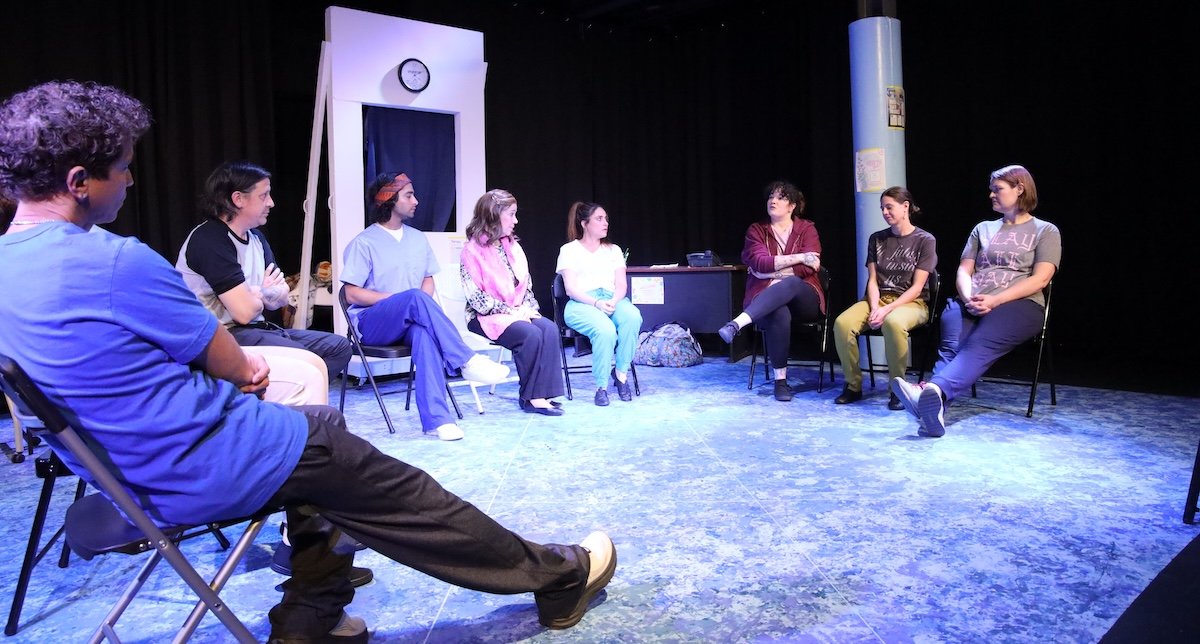
Sadie Shepard delivers an arresting performance in The Three Leaches’ addiction drama, but repetitive staging dulls its impact.
The first thing we see in Duncan Macmillan’s People, Places and Things is an actress drunkenly stumbling through a performance of Chekhov’s The Seagull, leaving her scene partner visibly befuddled. Moments later, she’s checking into a rehabilitation facility under a false name.
It’s a disorienting opening to a grueling drama about addiction and the seemingly endless cycle of recovery and relapse. Macmillan, whose Every Brilliant Thing also tackles difficult subject matter, isn’t interested in easy answers. Unfortunately, The Three Leaches’ production, playing in Lakewood through Nov. 14, struggles to make the nearly three-hour journey consistently compelling.
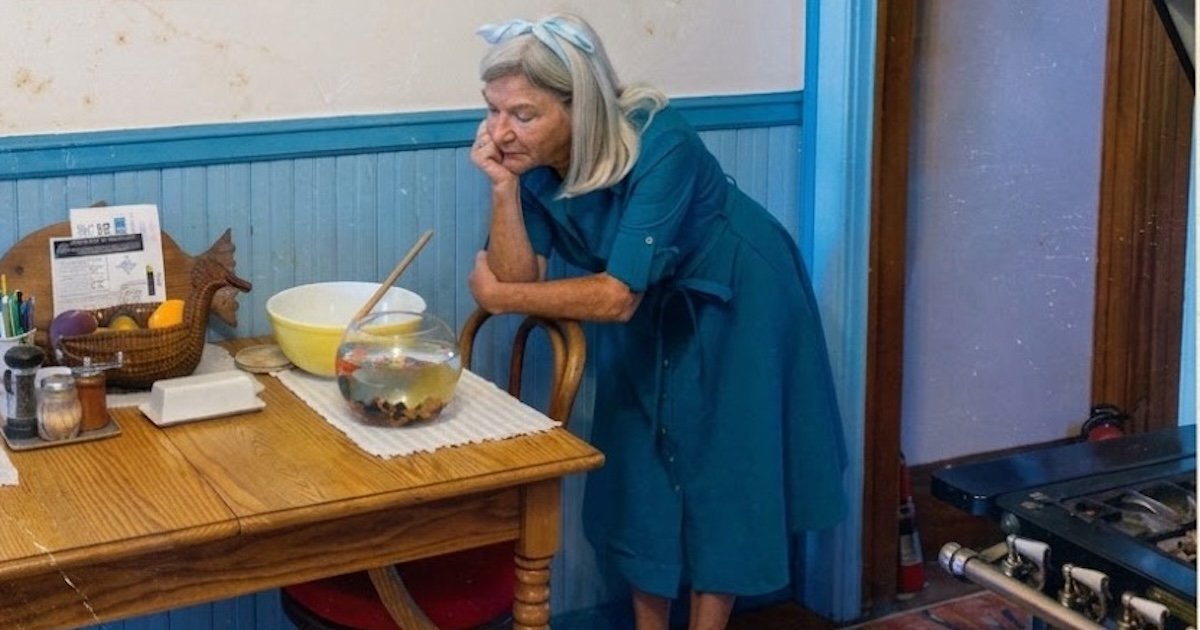
Sadie Shepard plays Emma, an actress whose substance abuse has derailed her career and personal relationships. Initially resistant to treatment, Emma refuses to participate meaningfully in group therapy, challenges her counselors and questions the entire premise of recovery.
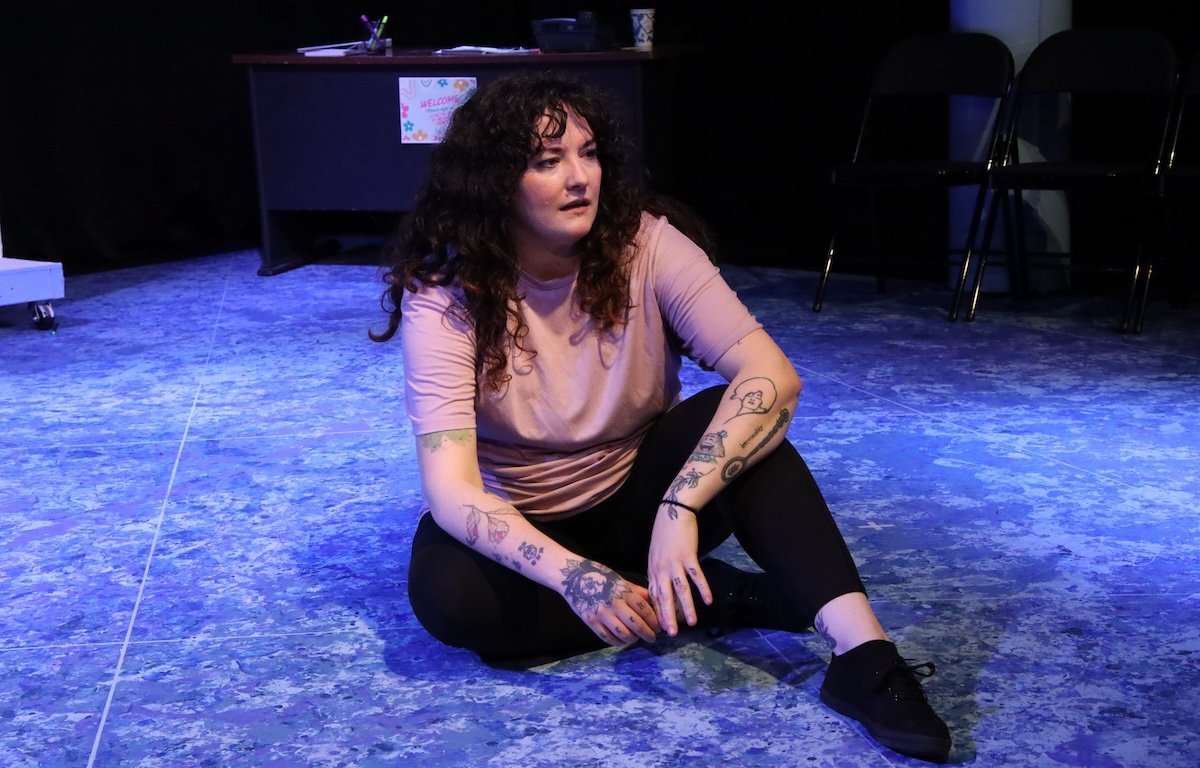
Sadie Shepard as Emma in People, Places and Things. | Photo: Veronica Straight-Lingo
Director Melissa Leach keeps the action moving efficiently within the company’s intimate space. John-Christian Maheu’s economical scenic design allows the large ensemble to transition seamlessly between therapy sessions, bedrooms and nightclubs. His lighting, paired with Veronica Straight-Lingo’s sound design, externalizes Emma’s psychological turmoil through flashing lights and disorienting sensory effects.

Yet the first act becomes frustratingly repetitive. Whether Emma is confronting a counselor or participating reluctantly in group therapy, the scenes repeatedly settle into a similar emotional rhythm: Someone tries to reach her, and she resists. The staging rarely varies the intensity enough to reveal new dimensions of her resistance. The cumulative effect is exhausting without becoming particularly illuminating.
Shepard is a commanding presence, convincingly navigating Emma’s defensiveness, desperation and flashes of vulnerability. Her British accent also feels considerably more natural than those of several castmates, whose inconsistent dialect work occasionally distracts.
Susan Conceicao plays Emma’s doctor, therapist and mother, a deliberate doubling that suggests how authority figures become entangled in Emma’s understanding of herself. Conceicao approaches these characters with similar stiffness, rarely finding the emotional variety needed to distinguish their relationships.
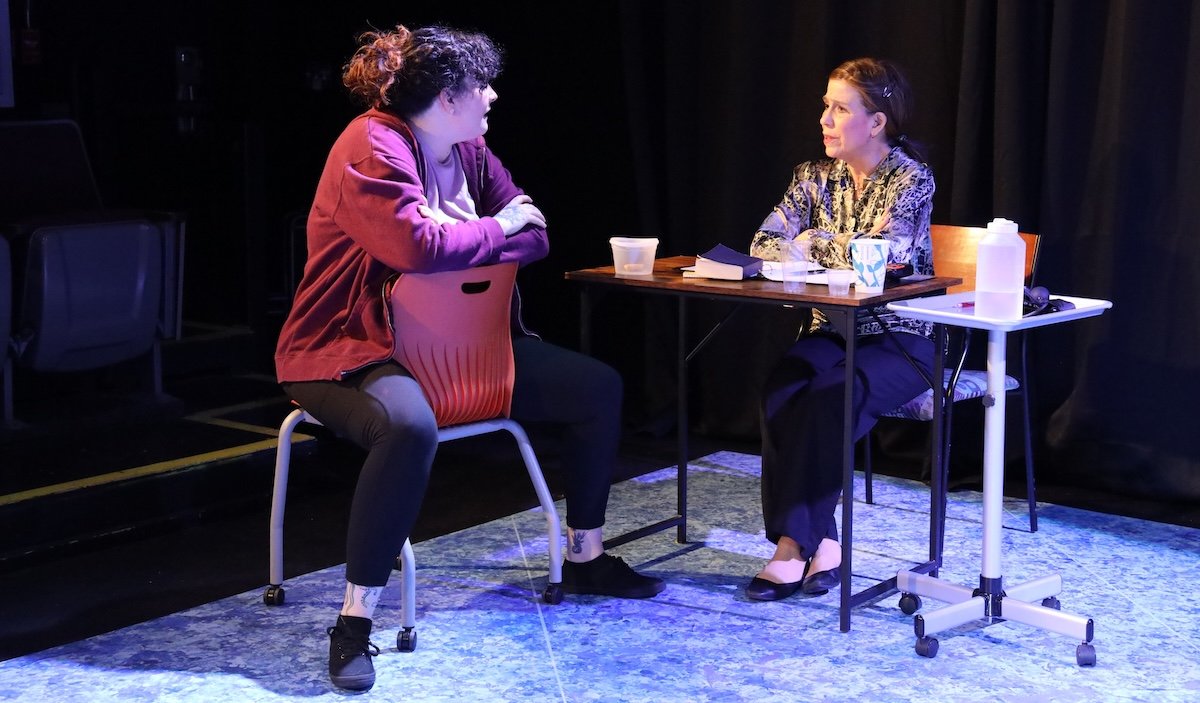
Susan Conceicao and Sadie Shepard in People, Places and Things. | Photo: Veronica Straight-Lingo
Jacob Smith makes an impression as Mark, a fellow patient whose support Emma painfully rebuffs. Patrick Leach brings welcome volatility to Paul, while Amit Yadav gives Foster, a recovering addict working at the facility, a nurturing presence increasingly strained by Emma’s resistance.
When words aren’t enough
The production finally achieves its greatest emotional force during Emma’s confrontation with her parents. Having delivered a lovely, carefully constructed speech about her recovery, Emma discovers that her parents remain unconvinced. Of course she can deliver a convincing speech. She’s an actress. What they want is evidence that her actions have changed.
Shepard’s reaction to that realization is wrenching. Equally startling is Emma’s discovery of drugs and alcohol in her parents’ home, and her mother’s blasé response to their presence despite knowing her daughter’s struggle with addiction. The scene exposes the painful disconnect between Emma’s efforts to change and the expectations of those around her.
However, the production takes too long to reach that level of emotional complexity. With a first act running approximately an hour and 45 minutes and the scond act nearly an hour, the production demands considerable patience. The Three Leaches deserves credit for tackling such challenging contemporary drama, even if its execution doesn’t always match its ambition.
There are flashes of genuine inspiration, particularly when Emma’s hallucinations bring multiple versions of herself onto the nightclub floor, each sporting the same costume and wig. The confrontation with her parents is similarly gripping, relying on the subtleties of Shepard’s performance rather than theatrical spectacle. These sequences reveal the production’s considerable potential, making the stretches between them all the more frustrating.

An award-winning Colorado arts and culture reporter originally from Mineola, Texas. Tresca is the chief theatre critic for OnStage Colorado and managing editor of OnScreen Colorado. He’s the editor of Bucket List Community News, a contributor to Denver Westword and Estes Valley Voice, a resident storyteller for the Bonfils-Stanton Foundation and the co-host of the OnStage Colorado Podcast.

Leave A Comment