
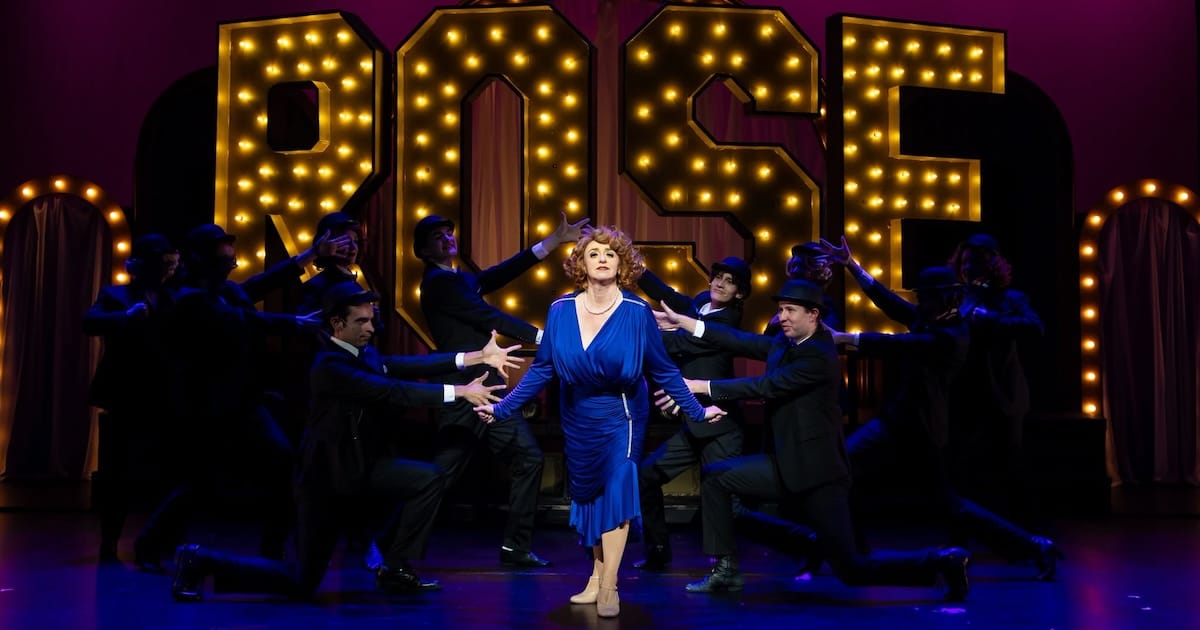
The Lakewood revival is delightful when Rose’s vaudeville act takes over, yet its quieter scenes lack the same zing.
Performance Now Theatre Company’s Gypsy has a strange problem: the fake vaudeville interludes that punctuate the musical are more convincing than its human drama.
Director Brandon Bruce has a terrific feel for the deliberately corny vaudeville routines Rose forces her daughters to perform across the country. Bruce is less assured in the scenes between them, where relationships need time to deepen and resentments need room to fester.
Arthur Laurents’ 1959 musical, featuring music by Jule Styne and lyrics by Stephen Sondheim, gives those resentments plenty of room. Gypsy follows the formidable Rose as she drags her daughters through a dying vaudeville circuit in pursuit of the stardom she craves as much as they supposedly do.
The routines are meant to become increasingly stale as the children outgrow them. Here, they are what you keep wanting to return to.
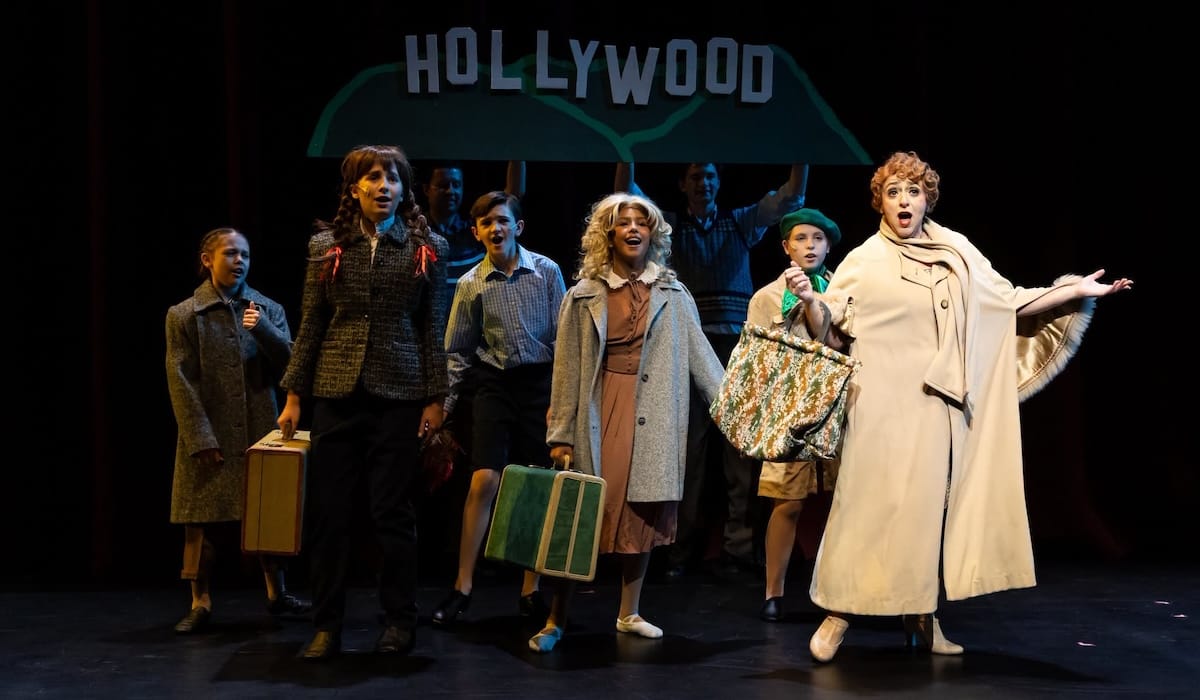
A scene from Performance Now’s Gypsy. | Photo: RDGPhotography
Putting on a show
Rose’s act starts with June planted firmly at its center and Louise pushed toward the edges. As the girls age and vaudeville changes around them, Rose keeps dressing up essentially the same material as something new, stubbornly refusing to acknowledge that her children — and the business — are moving on without her.
Bruce, choreographer Rebecca Dean and costume designer Cole Emarine make that repetition one of the production’s best running jokes.
“Baby June and Her Newsboys” begins as a bright, aggressively wholesome routine, complete with marching energy, broad smiles and an absurd patriotic finale. Then Bruce lands a terrific visual transition: the child performers disappear and their older counterparts emerge in nearly identical costumes, still selling the same number years later.
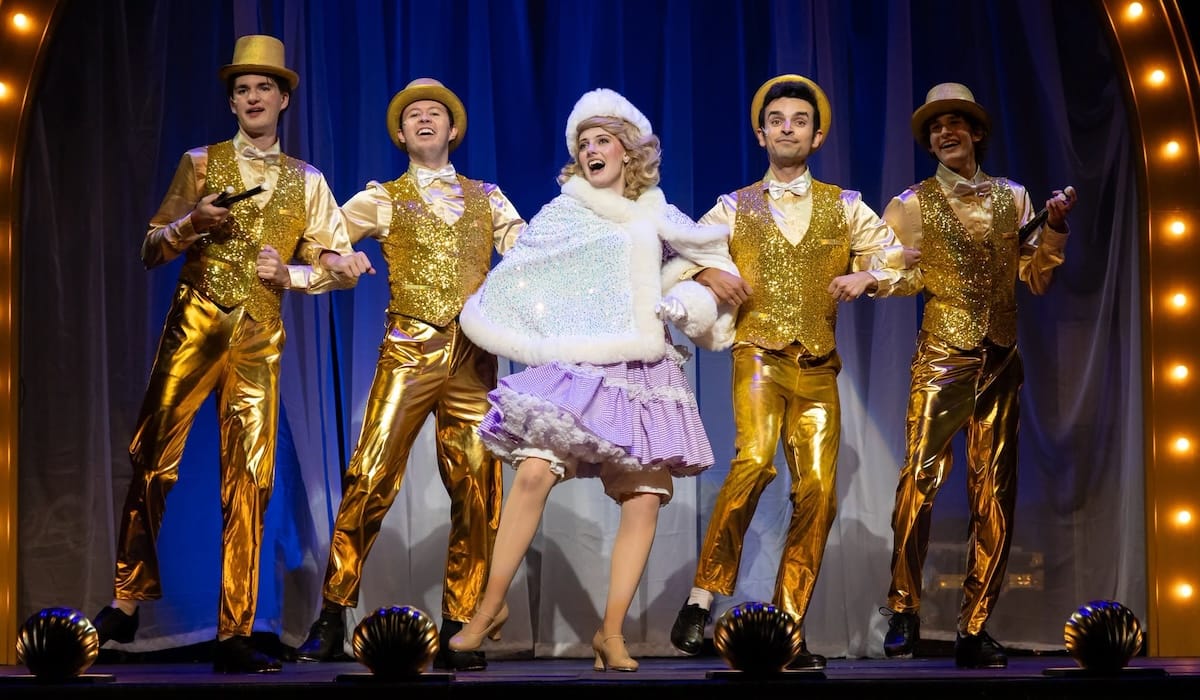
A vaudeville number in Performance Now’s Gypsy. | Photo: RDGPhotography
Rose keeps repackaging the act from there. The “Farm Sequence” swaps newsboys for grinning country folk and sticks Louise inside a comic two-person cow suit, while the “Toreadorables” give the same creaky machine another cosmetic makeover. Dean’s choreography preserves enough of the old movement vocabulary to make the recycling obvious, while Emarine’s increasingly elaborate costumes sell Rose’s logic: if the material is getting old, add more decoration.
They reach their gaudiest peak with “You Gotta Get a Gimmick,” when three veteran strippers demonstrate what Rose refuses to accept: survival requires reinvention. Feathers, sparklers, capes, trumpets and streamers turn the number into a gloriously tacky master class in selling what you have.
Those sequences feel alive because every visual choice reinforces the storytelling. The book scenes rarely have the same immediacy.
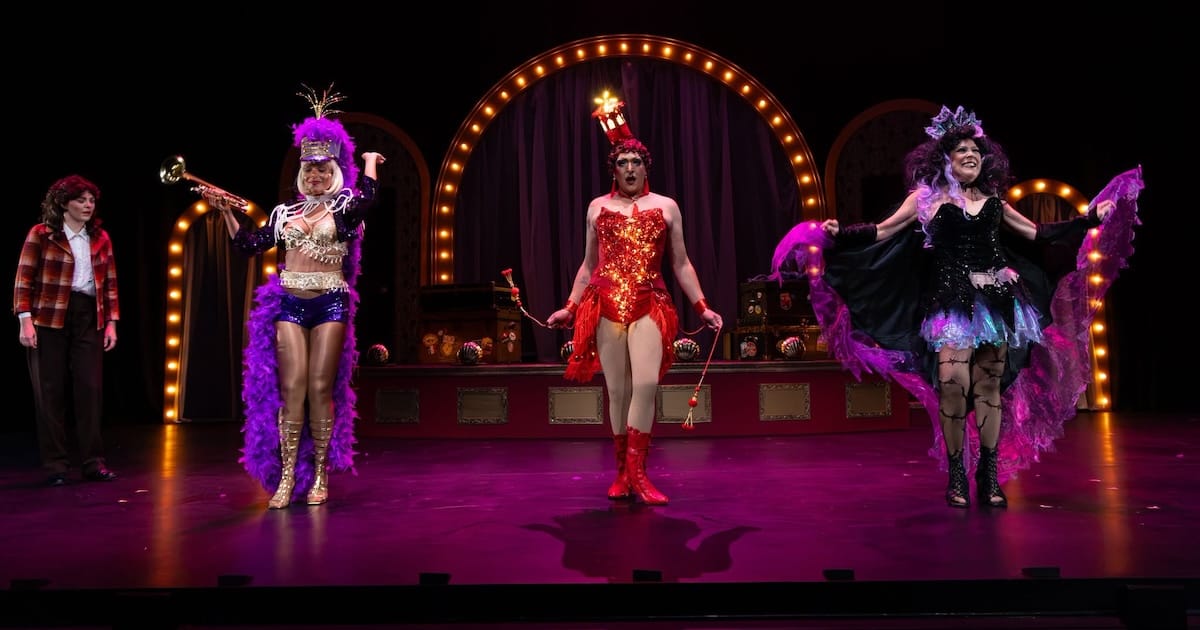
“You Gotta Get a Gimmick” from Performance Now’s Gypsy. | Photo: RDGPhotography
Louise finally gets seen
Jennifer Burnett has the necessary force as Rose. During “Some People,” she barrels through the room, physically moving people and obstacles aside as if the world simply needs rearranging around her ambition. Yet this Rose keeps her deeper desperation buried for so long that the emotional revelations of “Rose’s Turn” arrive without quite enough groundwork beneath them.
Victoria Holloway fares best as Louise because she allows the character to change slowly. She begins almost apologetically, frequently shunted aside while June gets the spotlight, and never signals too early the woman Louise will become.
More importantly, Holloway makes Louise’s central wound clear: she wants her mother to see her. That emotional throughline gives their later confrontations some of the vulnerability missing elsewhere.
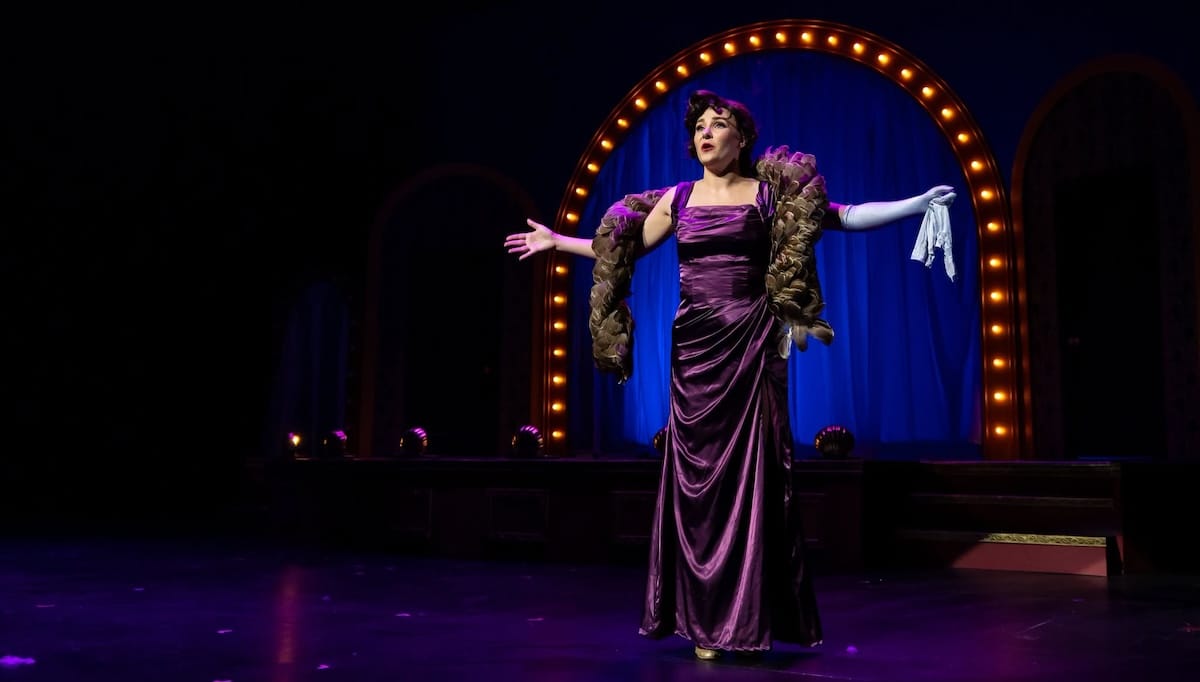
Victoria Holloway as Louise in Performance Now’s Gypsy. | Photo: RDGPhotography
Joel Silverman similarly grows into Herbie as the evening progresses. His eventual decision to stop yielding to Rose lands because Silverman has spent so much of the evening quietly giving her ground.
Opening-night musical problems made those quieter connections harder to sustain. Under music director Heather Iris Holt, the orchestra was a bit shaky; percussion occasionally lagged, brass sounded thin and the mix sometimes turned tinny enough to obscure lyrics.
Andrew Bates’ handsome vaudeville set reinforces Bruce’s central idea that the stage has swallowed this family’s life whole, although using essentially the same theatrical environment for homes, theaters and stops along the road can muddy where scenes are taking place.
That image ultimately captures both the appeal and limitation of this Gypsy. Bruce makes Rose’s artificial world irresistible. The production just needs more life when the curtain comes down.

A Colorado-based arts reporter originally from Mineola, Texas, who writes about the changing world of theater and culture, with a focus on the financial realities of art production, emerging forms and arts leadership. He’s the Managing Editor of Bucket List Community News, a contributor to Denver Westword and Estes Valley Voice, resident storyteller for the Bonfils-Stanton Foundation and co-host of the OnStage Colorado Podcast. A member of the American Association of Theatre Critics, he holds an MBA and an MA in Theatre & Performance Studies from CU Boulder.

Leave A Comment