
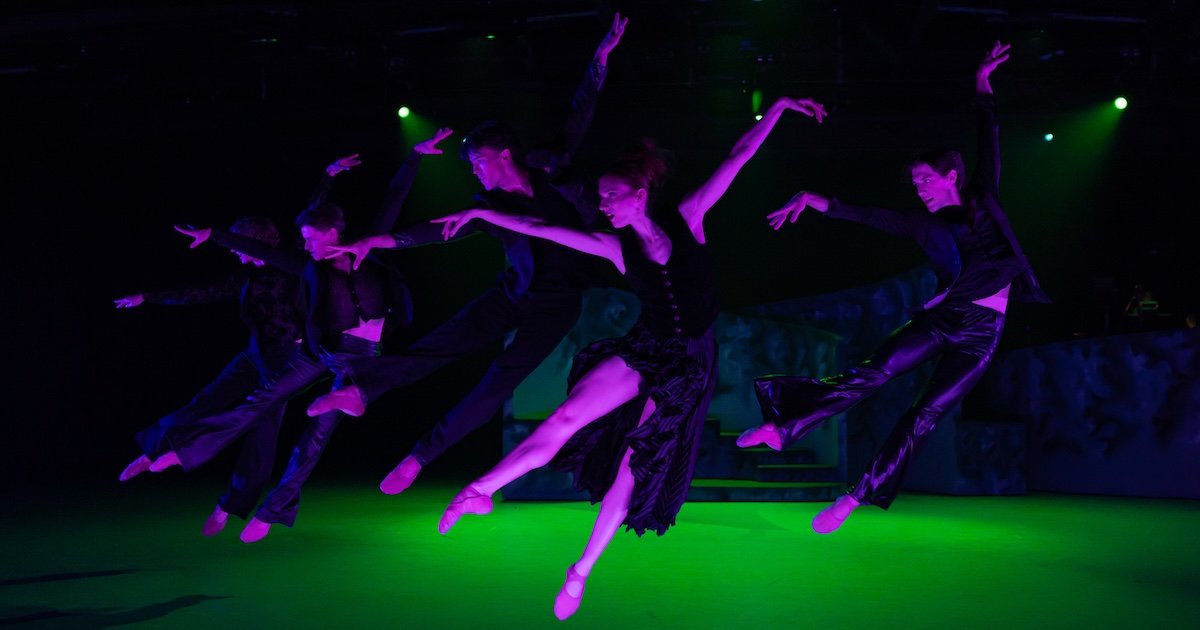
Wonderbound’s accessible dance drama follows two siblings through grief, memory and magic, scored live by The Clay Rose Band.
Wonderbound’s dancers whirl across the stage yearning for connection, while live musicians croon upstage. The company’s latest production thrusts the audience into darkness, rising to the occasion of staging an evocative performance during the spooky season.
Garrett Ammon’s The Witching Hour follows the two grown children — brother and sister — of a man tormented by his wife’s passing. As the children navigate the death of their father, they embark on a journey through memory, pain and magical lands to feel closer to him. The production takes a haunting turn when we learn that the men of the family aren’t only haunted by the demons found at the bottom of a bottle, but also by an evil witch.
Though the synopsis hints at disorientation, The Witching Hour’s plot is coherent and approachable. The production explores the human experience — longing, sibling rivalry and love, and darker urges — with more depth than the average ballet and skirts the abstraction so commonly found in contemporary performance. Throughout the show, the milestones of the journey and intentions of the sibling protagonists are strikingly clear, though some of the characters — namely, the corps of magical creatures — could use more development. Where the mental institution and creepy townspeople inspire intrigue, the woodland and deep-sea creatures fall flat.
The storyline is compelling, but it is the choreography and set design, both by Ammon, that propel the narrative forward. The dancers, set and props spiral — setting the show in constant motion from beginning to end. As the performance unravels, the sense of distortion one expects from a grief-fueled journey through fantastical lands twists the mind into the depths of relationships that ended too soon, but never causes dizziness or distaste.
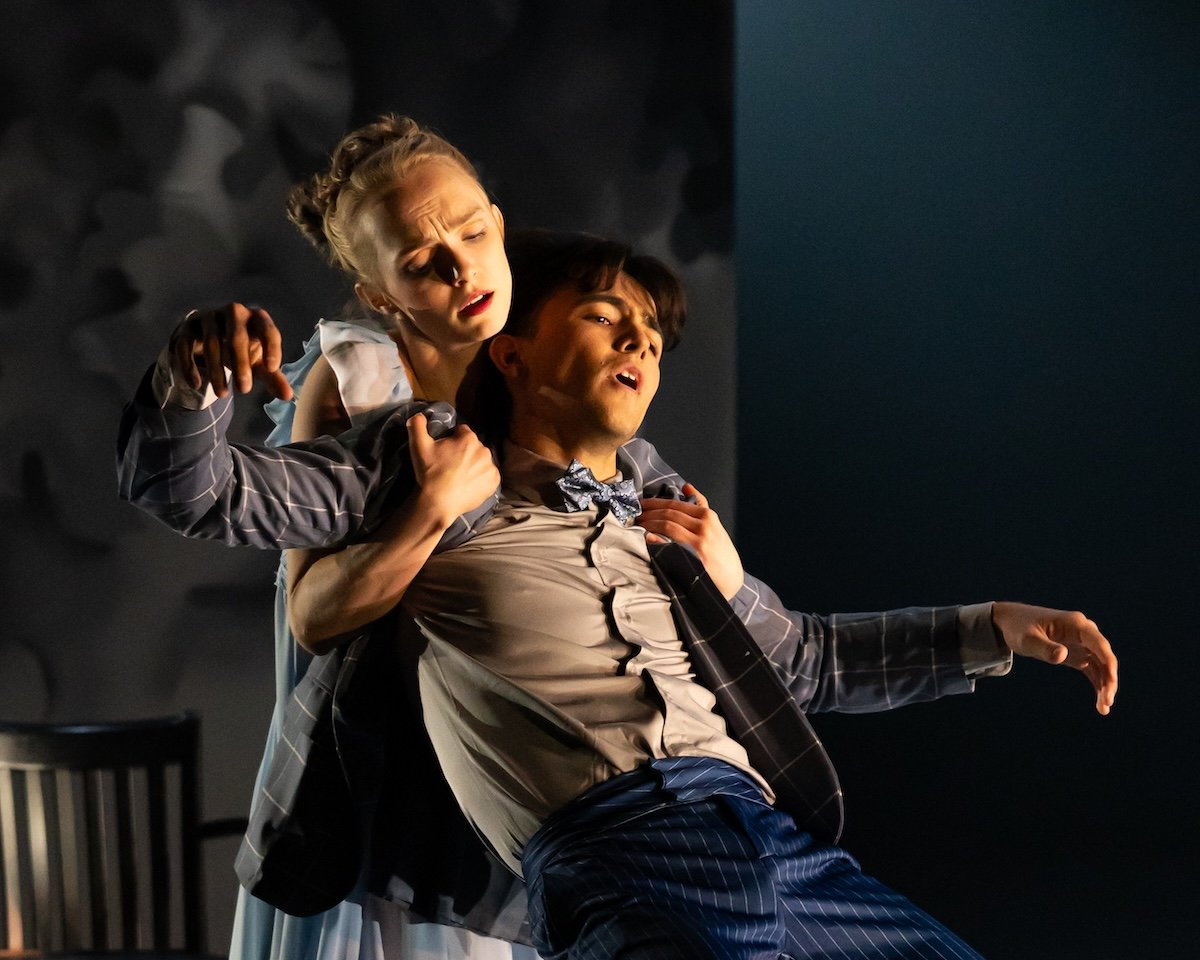
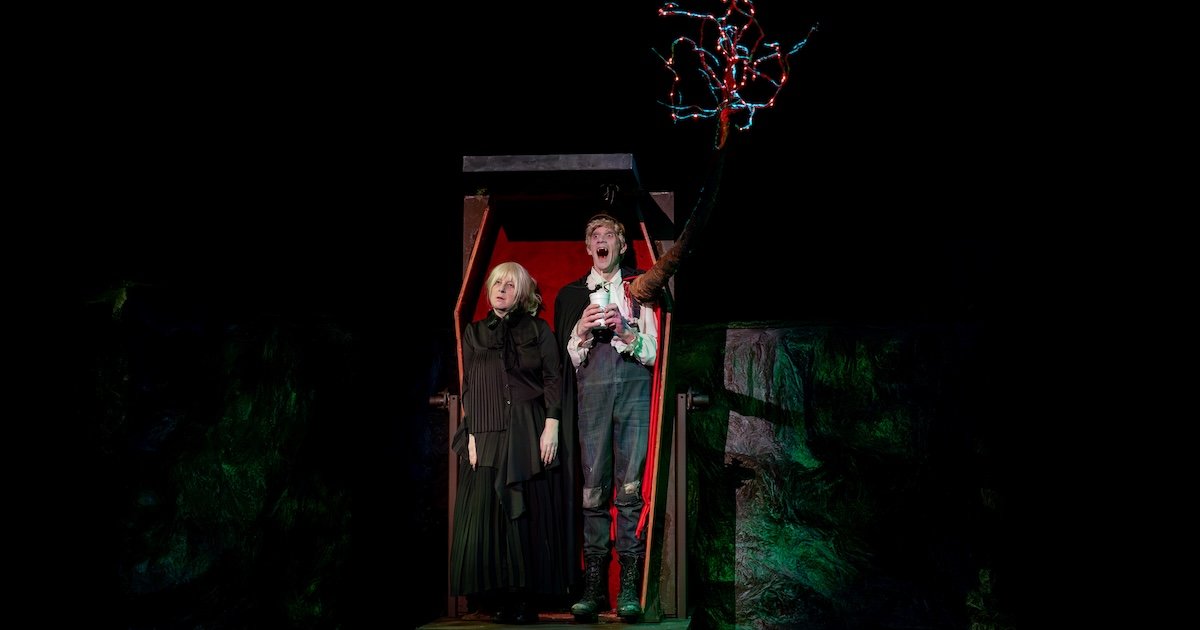
Hailey Stinchcomb and Ben Hannum in ‘The Witching Hour.’ | Photo: Martha Wirth
Sibling rivalry, spirits and a folk score
The company brings Ammon’s vision to life with stunning technique. The daughter, one part of the principal duo, played by Azelle Chang, shines in her solos. Her precise, measured execution of the choreography satisfies and validates her position in the lead. In Chang’s pas de deux with onstage sibling counterpart Henrique Neumann, the movements are taut and shortened, masterfully communicating the tension of a sibling squabble.
The widower, played by Ben Hannum, and his wife’s spirit, performed by Hailey Stinchcomb, deserve more time onstage. Their pas de deux expresses a yearning that could add depth to other scenes. When she appears, Stinchcomb’s light, ethereal movements and delicate lines offer a refreshing balance to the darkness that encompasses the rest of the stage.
Perhaps we don’t see these dancers as much because they also help fill out corps scenes. Ammon skillfully uses costume changes and multiple roles per dancer to give the illusion of a much larger company. Like the choreography, the dancers relentlessly twirl from one character and scene to the next. The success of this device is supported by meticulous costumes, designed by Wonderbound president Dawn Fay and Sloane Crazybear. Though they lack bells and whistles, the costumes are uniform and refined, an accomplishment that doesn’t always grace the stage in contemporary performance.
While the witch attempts to trick the protagonists, the audience is getting an absolute treat listening to original, live compositions by Clay Rose Band. Rose’s scruffy voice and the band’s folky strums amplify the eeriness and longing coursing through the choreography.
Creating a contemporary dance performance that entertains the masses and pays tribute to the spooky season, without being derivative, is no small feat. Ammon’s The Witching Hour achieves this through accessible choreography, a coherent storyline and haunting live music.
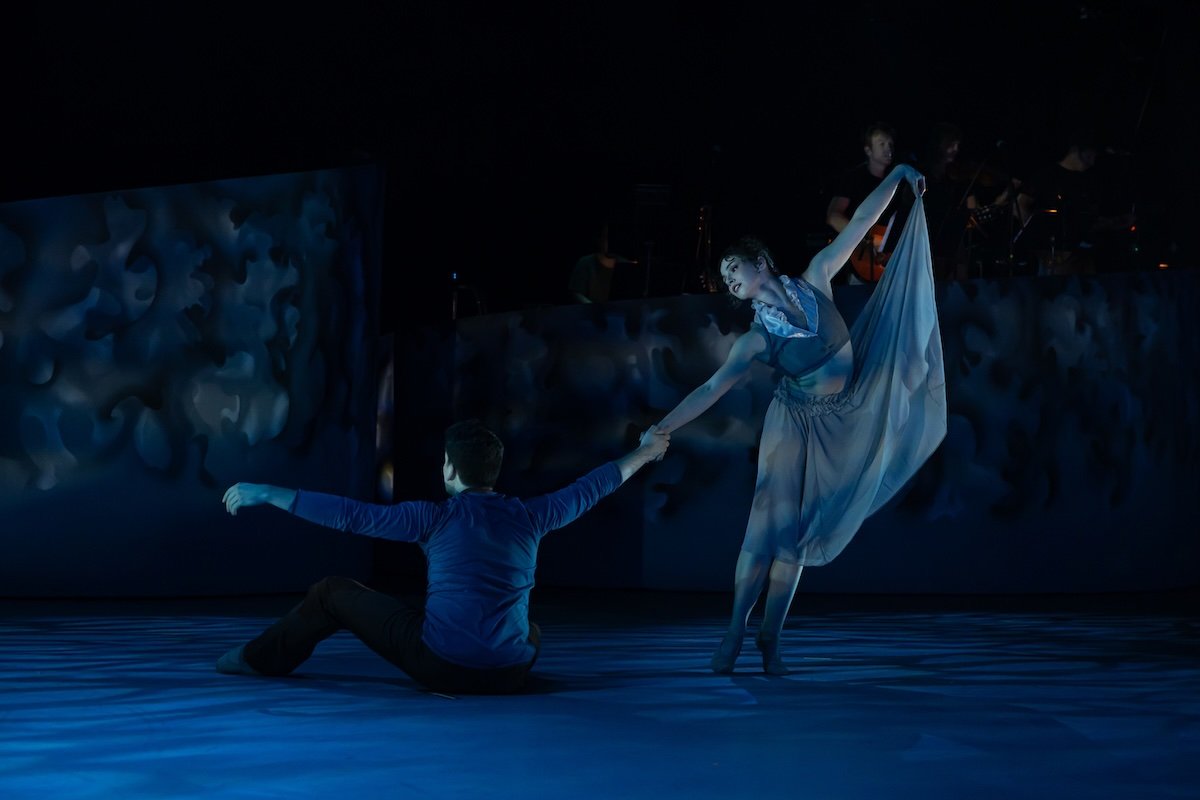
Henrique Neumann and Samatha Sherry in ‘The Witching Hour” with Clay Rose Band. | Photo: Martha Wirth
Jacqui Somen is a Denver-based culture reporter, covering dance, performance, and emerging artists. Also a poet, her work has appeared in Ballast Journal, Deep Wild Journal, and Humana Obscura, among other publications.

Leave A Comment