
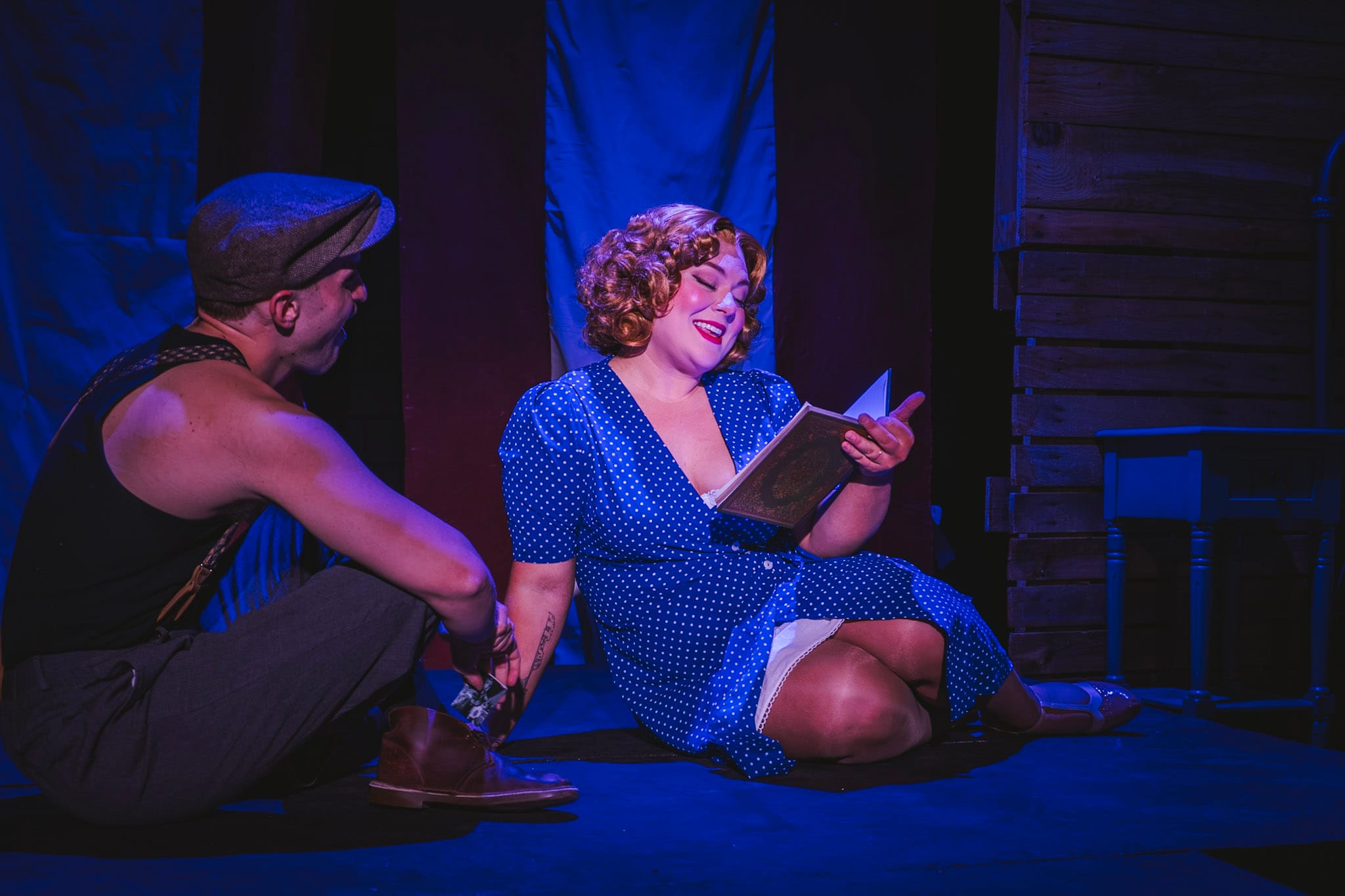
Bright Heart Stages delivers a sleek, vocally thrilling ‘Bonnie & Clyde’ with magnetic leads and bold staging.
There’s something undeniably electric, and yes, a little dangerous, about Bright Heart Stages’ Bonnie & Clyde: The Musical, now running for one more weekend at The People’s Building in Aurora. Director Amy Warner’s production leans into the show’s pulpy allure and bluesy backbone, delivering a staging that feels polished while still pulsing with kinetic energy.
Based on the real-life Depression-era outlaws Bonnie Parker and Clyde Barrow, the musical traces the pair’s rise from restless small-town dreamers to infamous criminals whose exploits captivated the nation. With a Frank Wildhorn score that combines gospel, rockabilly and country, the show tells their story as a romantic reckoning, asking how two young people chasing fame and freedom became symbols of rebellion and tragedy.
That tension fuels Warner’s staging, which balances intimacy with mythmaking and gives this rarely produced musical a welcome return to the Colorado stage. This is no small feat for a company on just its third production. Founded as part of Warner’s graduate school work and committed to producing under-mounted musicals, Bright Heart Stages continues to carve out a distinct niche in Colorado’s theatre ecosystem. If this production is any indication, it’s a company to keep on your radar.
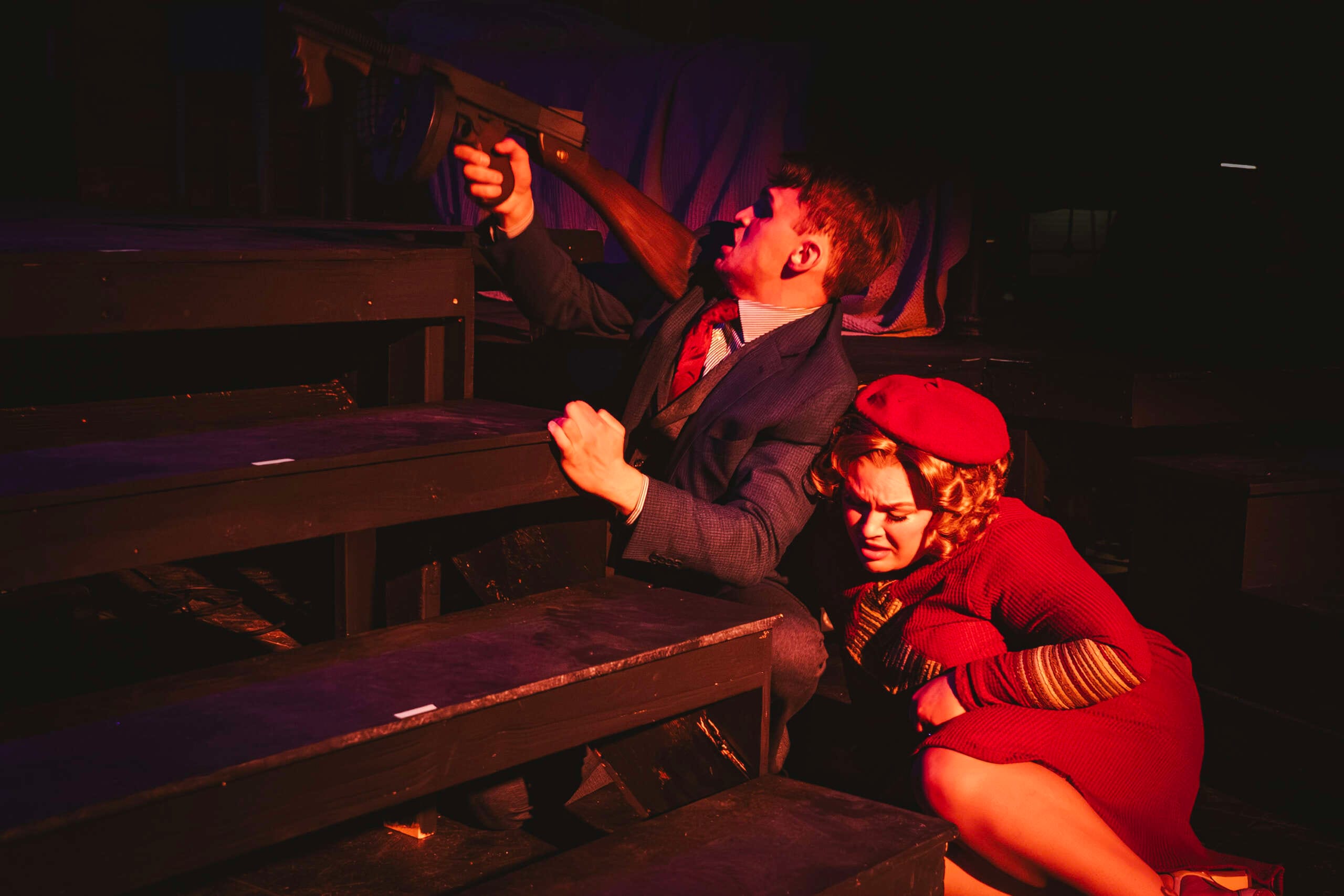
Jazz Meuller as Clyde Barrow and Jennasea Pearce as Bonnie Parker. | Photo: Cohagen Wilkinson
A volatile romance, anchored by star power
At the center of the production is a pair of performances that give the show its pulse. Jazz Mueller portrays Clyde Barrow as a restless, wounded outsider who has long stopped expecting fairness from the world around him. Mueller leans into that fatalism without flattening the character, allowing flashes of charm and vulnerability to break through. His vocal work is equally compelling, particularly in “Raise a Little Hell,” where bravado and desperation intertwine.
Opposite him, Jennasea Pearce brings warmth and complexity to Bonnie Parker. Her Bonnie is not simply seduced by notoriety; she’s a woman with dreams of stardom who finds herself rerouting that ambition into something far more dangerous. Pearce’s performance captures that internal conflict with clarity, especially as Bonnie grapples with the escalating violence around her. She also has an excellent voice, which is on full display in songs like “How ‘Bout a Dance?” and “Dyin’ Ain’t So Bad.”
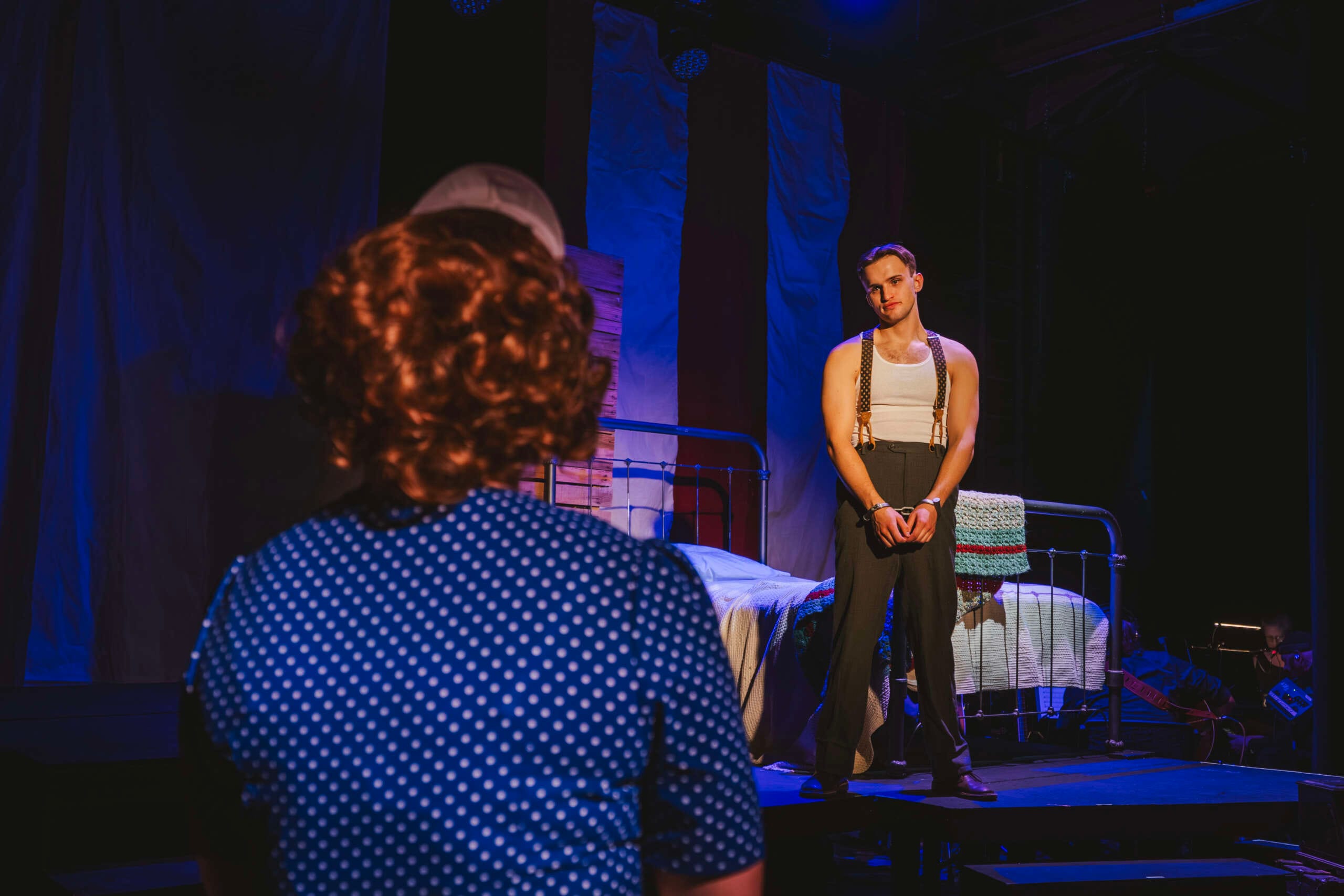
Jennasea Pearce as Bonnie Parker and Jazz Meuller as Clyde Barrow. | Photo: Cohagen Wilkinson
Together, Mueller and Pearce generate a chemistry that feels immediate and lived-in. Having previously starred opposite each other in Bright Star at Candlelight Dinner Playhouse last season, they bring a preexisting rapport that deepens the credibility of Bonnie and Clyde’s volatile connection. A moment early on, where Bonnie and Clyde test each other’s boundaries through violence and attraction, succinctly establishes the dynamic: this is a partnership built on equal parts love and danger.
A muscular ensemble with standout character work
Warner’s scenic design, paired with Connor Baker’s lighting, uses multi-level platforms framed by segmented American flags to create a flexible playing space that shifts fluidly across locations. Reanna Rohrer’s props and Cole Emarnie’s costumes help fill in the world, while TJ Wagonner’s sound design keeps the live band-driven score clear and propulsive.
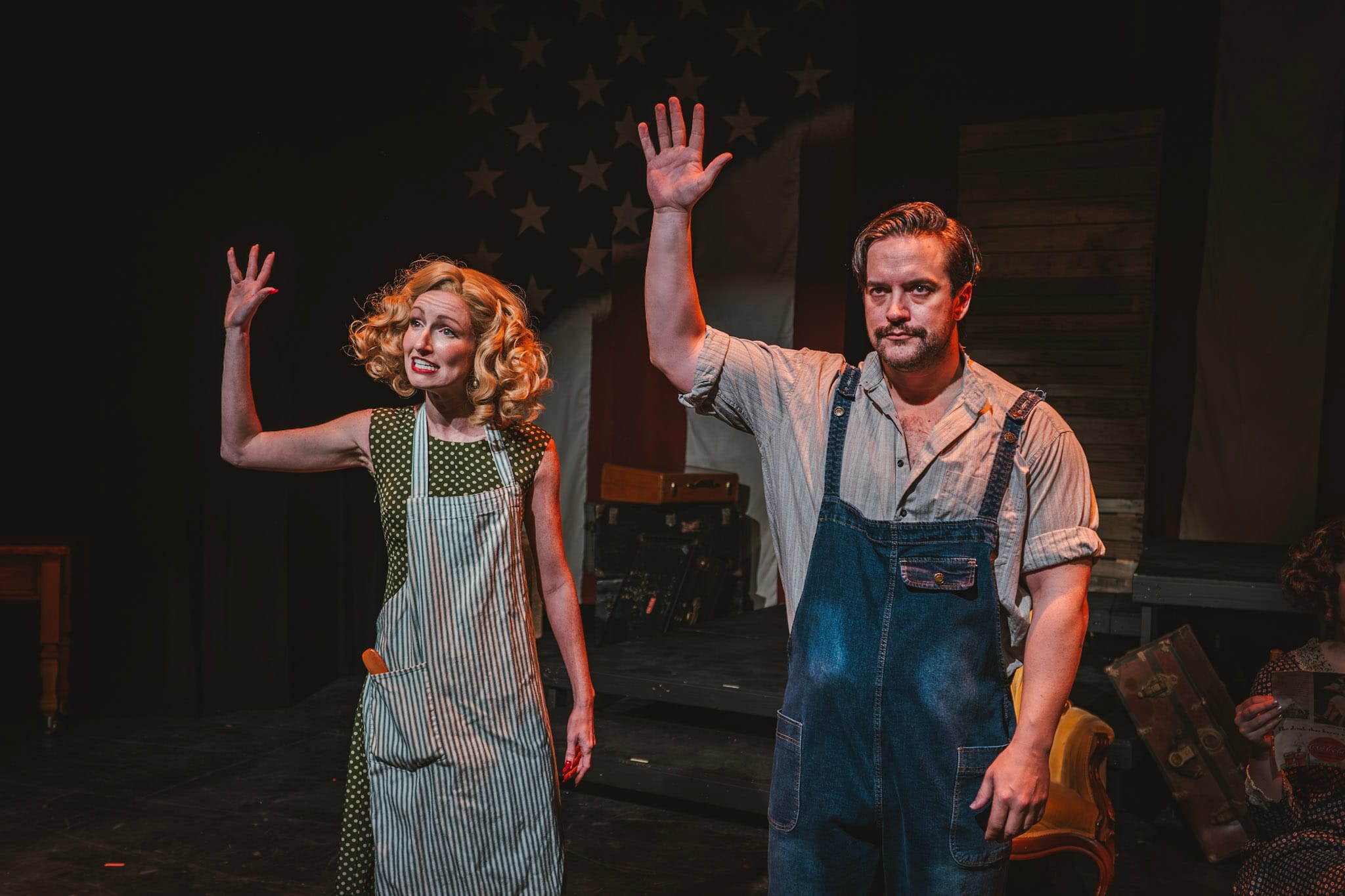
Amelia Rose as Blanche Barrow and Patric Case as Buck Barrow. | Photo: Cohagen Wilkinson
The ensemble rises to meet that framework with energy and specificity. Patric Case (Buck Barrow) and Amelia Rose (Blanche Barrow) emerge as a standout comic and emotional duo, threading humor through their scenes without undercutting the stakes. Their salon-set number “You’re Going Back to Jail” lands with sharp comedic timing, while later moments reveal the strain beneath their marriage as Blanche’s faith collides with Buck’s loyalty to Clyde.
Jalyn Courtenay Webb (The Preacher) delivers some of the production’s most thrilling vocal work, particularly in “God’s Arms Are Always Open” and “Made in America,” bringing a gospel intensity that elevates the score’s spiritual undercurrents. Meanwhile, Matthew Taylor’s Ted Hinton threads an effective emotional line between spurned admirer of Bonnie and determined lawman. Hinton’s duet with Mueller, “You Can Do Better Than Him,” and its reprise in the second act highlight the tension between his romantic longing and moral resolve.
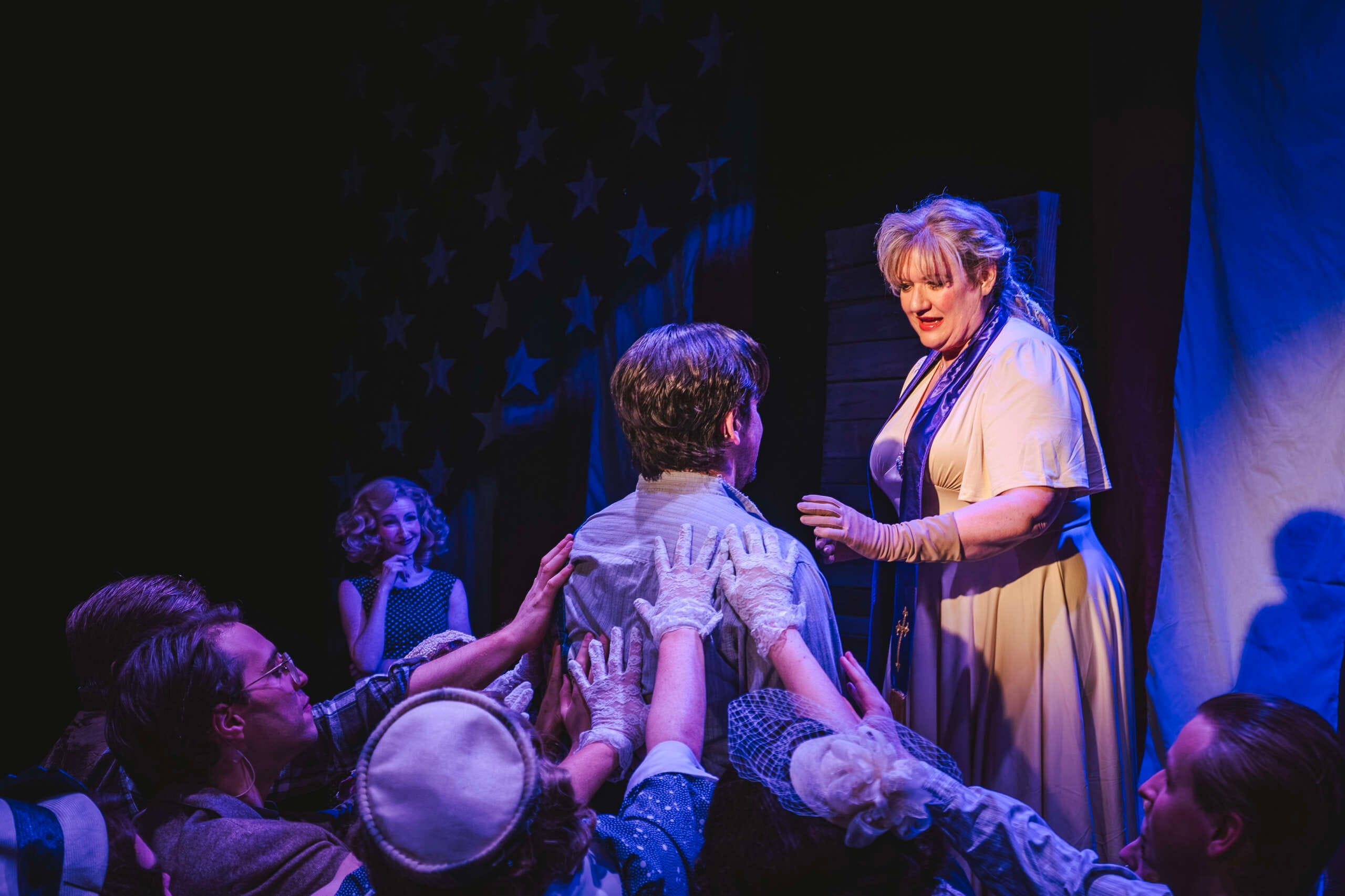
The cast of Bright Heart Stages’ production of Bonnie & Clyde. | Photo: Cohagen Wilkinson
Across the board, the spirited ensemble moves fluidly through roles as townspeople, family members, congregants and law enforcement, helping to expand the scope of the story without overwhelming its central relationships.
A tonal gamble that doesn’t fully cohere
If there is a weakness, it lies in the show’s tonal balance, particularly in its depiction of law enforcement. Characters like the Sheriff (Eric Crawford) and Governor Ferguson (Ayden Armstrong) lean into a heightened, almost caricatured style that occasionally clashes with the more grounded emotional realism of the central story.
At times, that contrast feels intentional, even provocative. In others, it creates a disconnect, especially when scenes of genuine trauma are juxtaposed with exaggerated physicality or stylized menace. The result isn’t necessarily unsuccessful, but it does introduce a friction that the production doesn’t fully resolve.
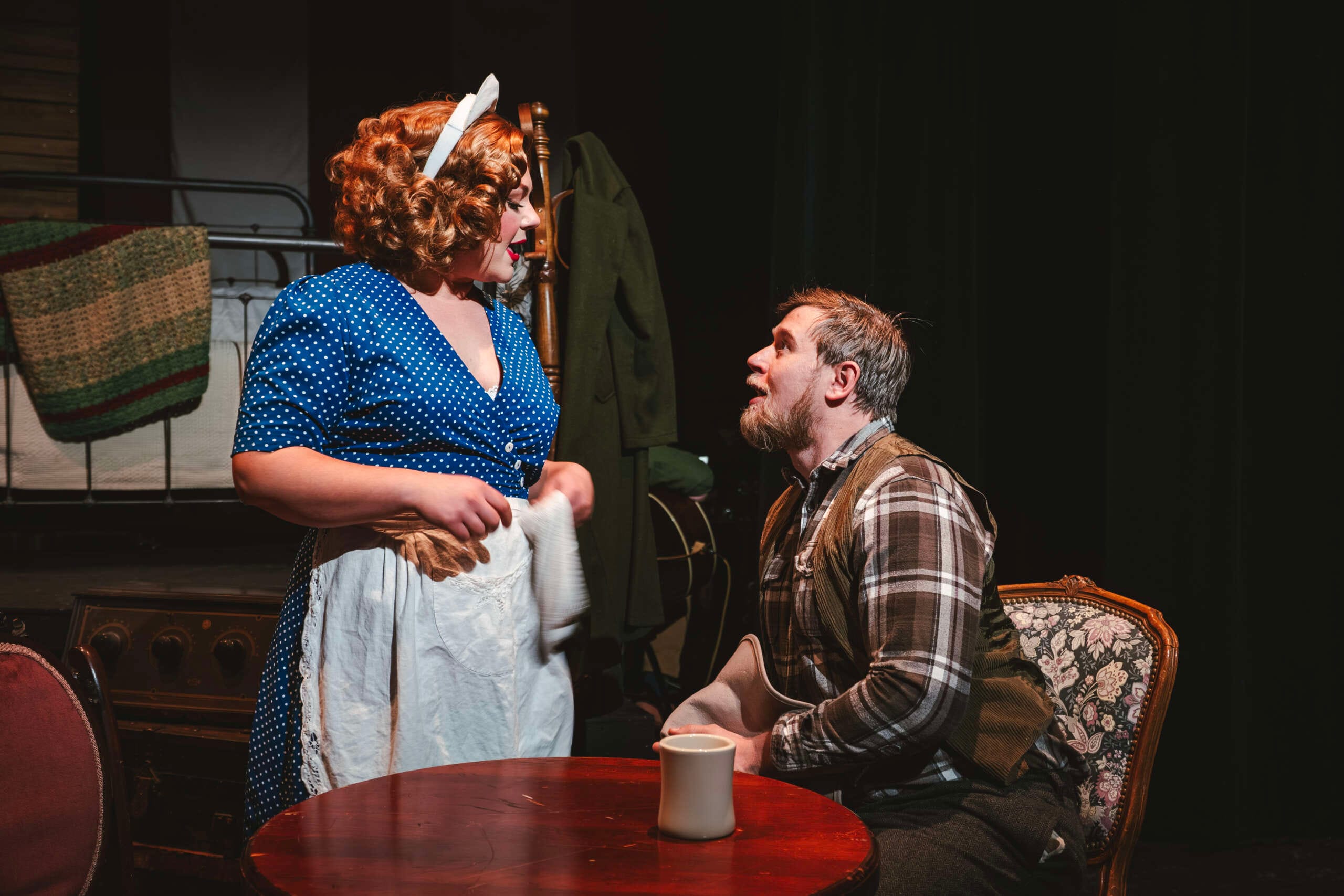
A scene from Bright Heart Stages’ production of Bonnie & Clyde. | Photo: Cohagen Wilkinson
There are also minor technical inconsistencies. Baker’s lighting occasionally leaves actors underlit on the upper platforms, slightly muddying otherwise strong stage pictures. Still, these are relatively small quibbles in an otherwise cohesive design.
A company to watch
What lingers most is the sense of momentum. This is a production that understands its strengths and plays to them. Warner’s direction keeps the story moving with clarity and urgency, while the cast delivers performances that ground the show’s more sensational elements in emotional truth.
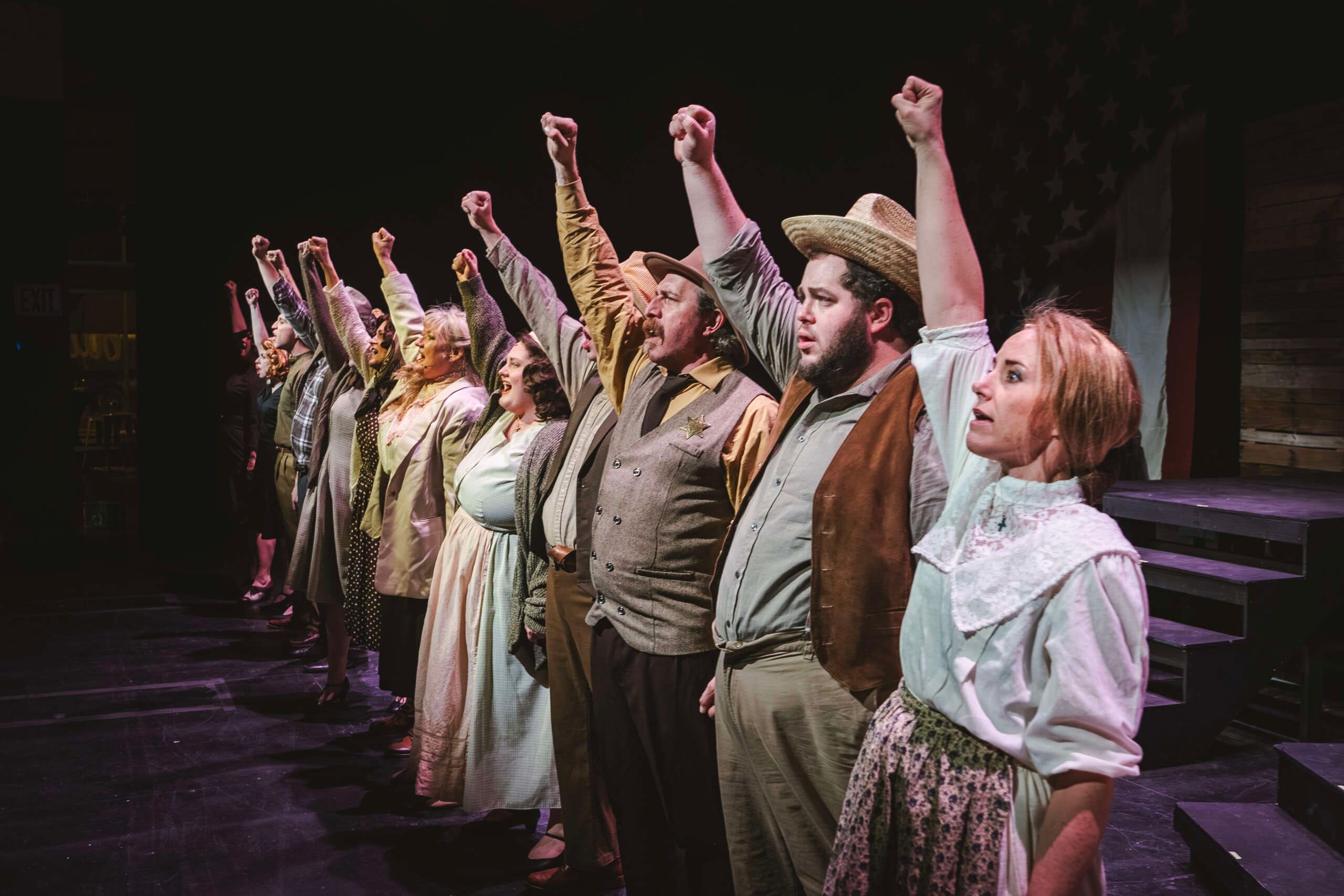
The ensemble of Bright Heart Stages’ production of Bonnie & Clyde. | Photo: Cohagen Wilkinson
For a musical that hasn’t been widely produced in Colorado in over a decade, this Bonnie & Clyde feels like a reintroduction that foregrounds the score’s power and the story’s enduring pull. Most importantly, it signals that Bright Heart Stages is building something meaningful: a space for ambitious, vocally driven musicals that might otherwise slip through the cracks.
With only a short run remaining, it is worth catching before it disappears. This is a production that burns hot, moves fast and leaves a mark.

A Colorado-based arts reporter originally from Mineola, Texas, who writes about the changing world of theater and culture, with a focus on the financial realities of art production, emerging forms and arts leadership. He’s the Managing Editor of Bucket List Community Cafe, a contributor to Denver Westword and Estes Valley Voice, resident storyteller for the Bonfils-Stanton Foundation and co-host of the OnStage Colorado Podcast. He holds an MBA and an MA in Theatre & Performance Studies from CU Boulder, and his reporting and reviews combine business and artistic expertise.

Leave A Comment