
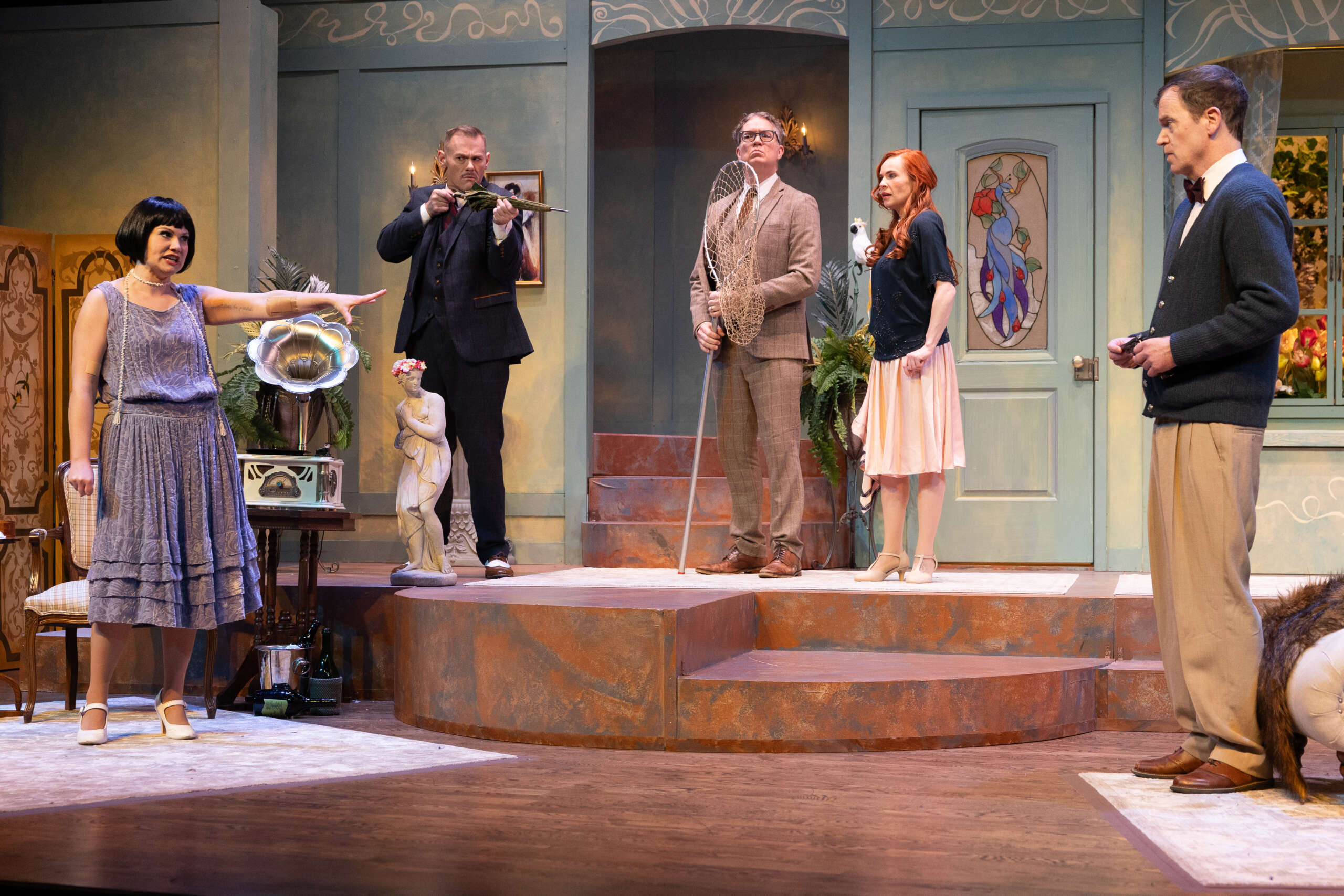
OpenStage’s energetic staging of The Cottage features fun design, but the script is lacking.
Sandy Rustin has built a reputation as part of a new generation of playwrights, alongside writers like Kate Hamill and Lauren Gunderson, who reinterpret classic theatrical forms through a contemporary lens. Her 2023 Broadway comedy The Cottage aims squarely at the drawing-room tradition associated with Noël Coward and Oscar Wilde, updating its genteel scandals and romantic entanglements with a modern sensibility.
The play also has a notable Colorado history. One of the earliest professional productions of The Cottage took place at Theatre Aspen in 2014, where it was praised for its playful spin on Coward-style drawing room play before eventually making its way to Broadway. Following Platte Valley production last May in Brighton, The Cottage returns to the state with OpenStage Theatre & Company’s production at the Magnolia Theatre inside Fort Collins’ Lincoln Center.
Under director Jessica Jackson, the staging moves with plenty of energy and theatrical flair. Yet despite the cast’s commitment and the production’s handsome design, the evening ultimately struggles to generate the kind of sustained comic momentum that farce requires.
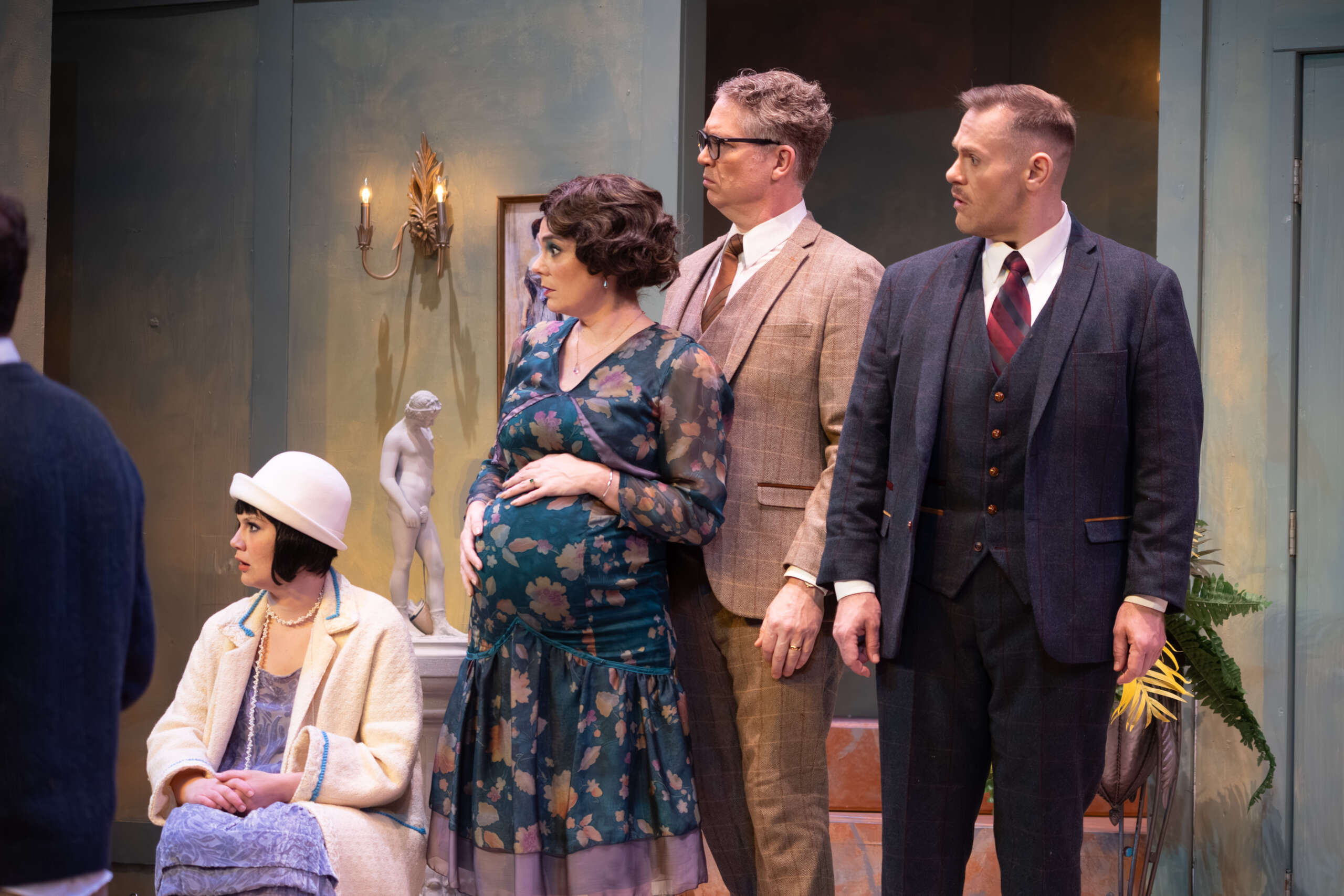
Lexi Wilson as Deirdre, Molly McGuire as Marjorie, James Burns as Clarke and Jacob Offen as Beau in The Cottage. | Photo: Soleil Lean Geddes
Stylish cottage in the English countryside
OpenStage’s technical team provides the production with a strong visual foundation. Scenic designer James Brookman creates an inviting 1920s English country house interior that anchors the entire show. Because the action unfolds in a single room, the set becomes the audience’s constant visual companion, and Brookman gives it plenty of detail to explore.
The stage is arranged across multiple levels, with stairs leading upward, doorways framing entrances and exits, and a well-stocked bar that sees frequent use throughout the evening. Plush chairs, ornate statues, paintings and scattered decorative flourishes fill the space, creating a lush environment that feels convincingly lived in. The set’s layered architecture also allows for physical comedy, especially as actors dash up staircases and enter and exit doors in classic farce fashion.
Sound design by Jackson adds a playful tonal bridge between past and present, blending electro-swing music with the show’s period setting. The result aligns with Rustin’s intention to mix the old-fashioned drawing-room structure with contemporary theatrical energy.
If the visual world of the production is consistently engaging, the performances match that commitment. The six-person cast attacks the material with enthusiasm, leaning into the show’s brisk pacing and frequent bursts of physical comedy.
The play centers on Sylvia (Katy White), who has been conducting an annual affair with Beau (Jacob Offen) at a secluded cottage in the English countryside. When Sylvia realizes she can no longer keep the charade going, she sends messages revealing the affair to both her husband/Beau’s brother, Clark (James Burns), and Beau’s pregnant wife, Marjorie (Molly McGuire), who are also having an affair.
Further chaos arrives with Deirdre (Lexi Wilson), another woman intimately involved with Beau, and her anxious husband Richard (Dan Tschirhart). Hidden relationships emerge, long-lost connections resurface and accusations fly as the characters attempt to untangle the web of deception.
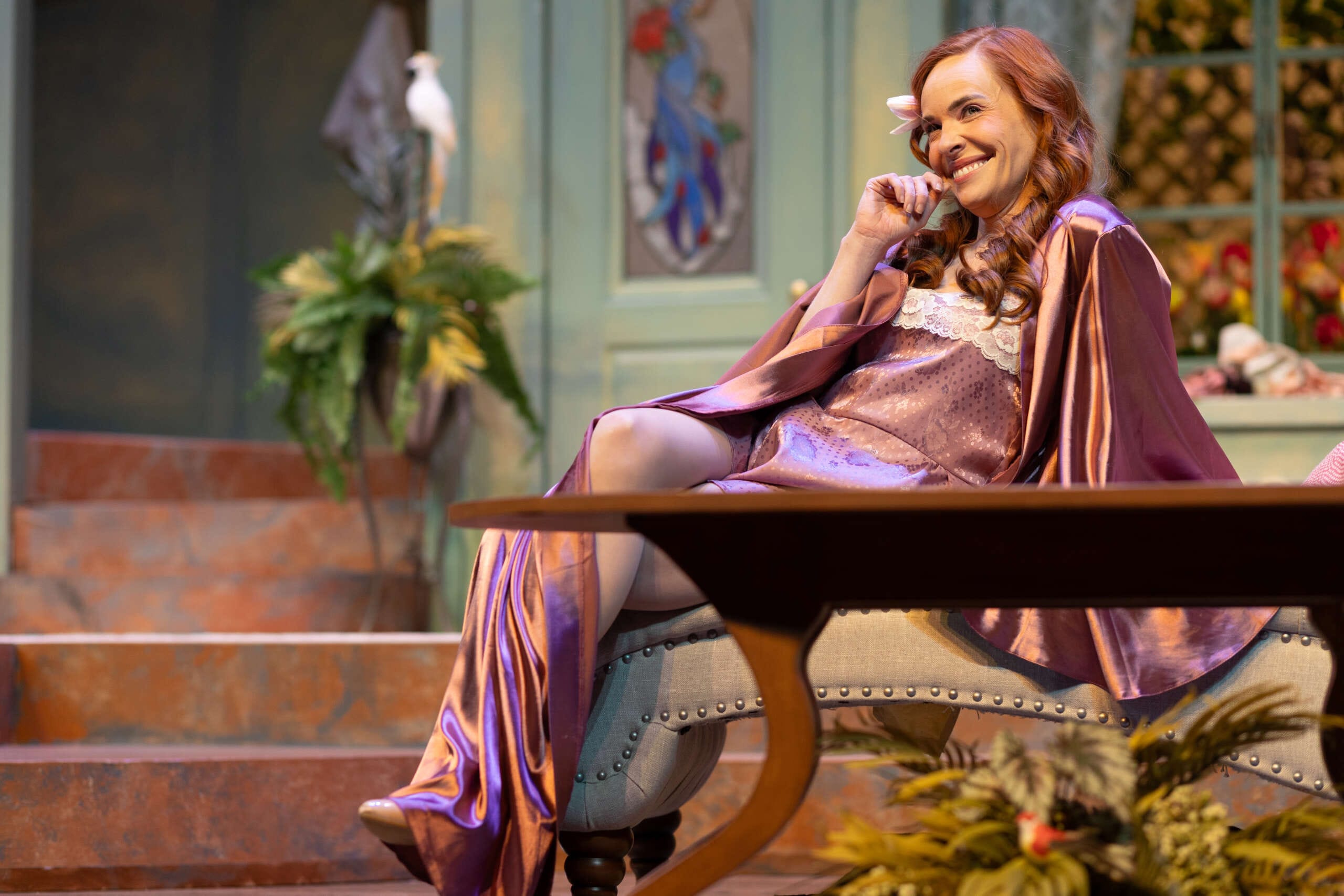
Katy White as Sylvia in The Cottage. | Photo: Soleil Lean Geddes
Strong performers working against a thin script
The premise has the ingredients of classic farce: overlapping affairs, mistaken assumptions and characters scrambling to maintain their carefully constructed lies. Rustin’s script also gestures toward a feminist reframing of the genre by placing Sylvia at the center of the narrative.
Yet while the premise promises escalating comedic stakes, many of the play’s revelations arrive so quickly that the tension dissipates before it has time to build. Key twists appear and resolve almost immediately, leaving the story searching for additional momentum that never arrives.
Despite those challenges, the cast consistently works to bring vitality to the stage. White plays Sylvia with heightened emotional urgency, leaning into the character’s growing frustration with the situation she has helped create. At times the performance veers toward the manic, but that intensity underscores Sylvia’s desperation to break free from the life she feels trapped within.
Offen finds some of the evening’s most effective comic moments as the pompous Beau. Early in the play, an unintentional physical stumble down the stairs, handled with impressive poise, becomes a highlight. Later sequences involving a revolving doorway showcase his knack for precise physical timing.
Burns brings a grounded presence as Clark, skillfully shifting between wounded dignity and newfound romantic enthusiasm once his own secret relationship emerges. McGuire offers sharp reaction work as Marjorie, though the role itself provides relatively limited opportunities for development.
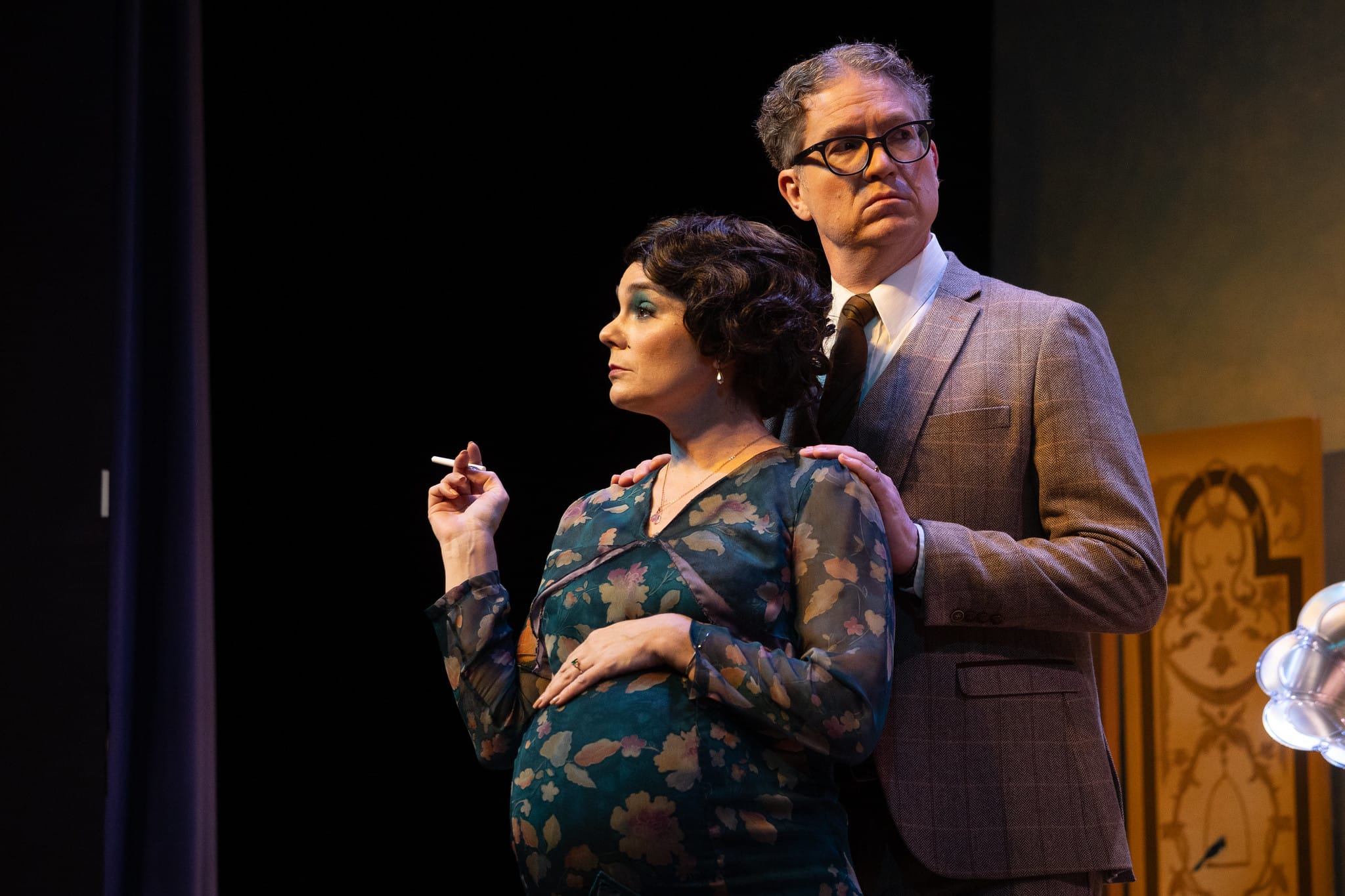
Molly McGuire as Marjorie and James Burns as Clarke in The Cottage. | Photo: Soleil Lean Geddes
Wilson injects lively energy into Deirdre, embracing the character’s exaggerated Cockney persona and delivering a particularly amusing drunken scene in the second act. Tschirhart rounds out the ensemble as Richard, a nervous and somewhat hapless figure whose mysterious past initially suggests darker possibilities before the play steers back toward comedy.
Jackson’s direction keeps the performers in constant motion, emphasizing door gags, stairway entrances and prop-driven bits of physical humor. These moments occasionally generate genuine laughs, particularly when the cast’s timing clicks, but many of the evening’s biggest reactions come from these staging choices rather than from the script itself.
A comedy still searching for its bite
Where the production struggles most is in the play’s comic writing. The story hints at sharp satire about marriage, class and gender expectations, but those ideas rarely deepen beyond surface-level jokes. Several gags, including a prolonged joke involving flatulence, feel surprisingly broad for a play positioned as a witty update of the Coward tradition.
The script’s attempt to frame Sylvia’s journey as a feminist assertion of independence also lands somewhat awkwardly. Although she ultimately claims ownership of the cottage and sends the others packing, the resolution arrives largely through exposition of events that happened offstage rather than through decisive actions taken during the play itself. The character’s victory therefore feels more declared than earned.
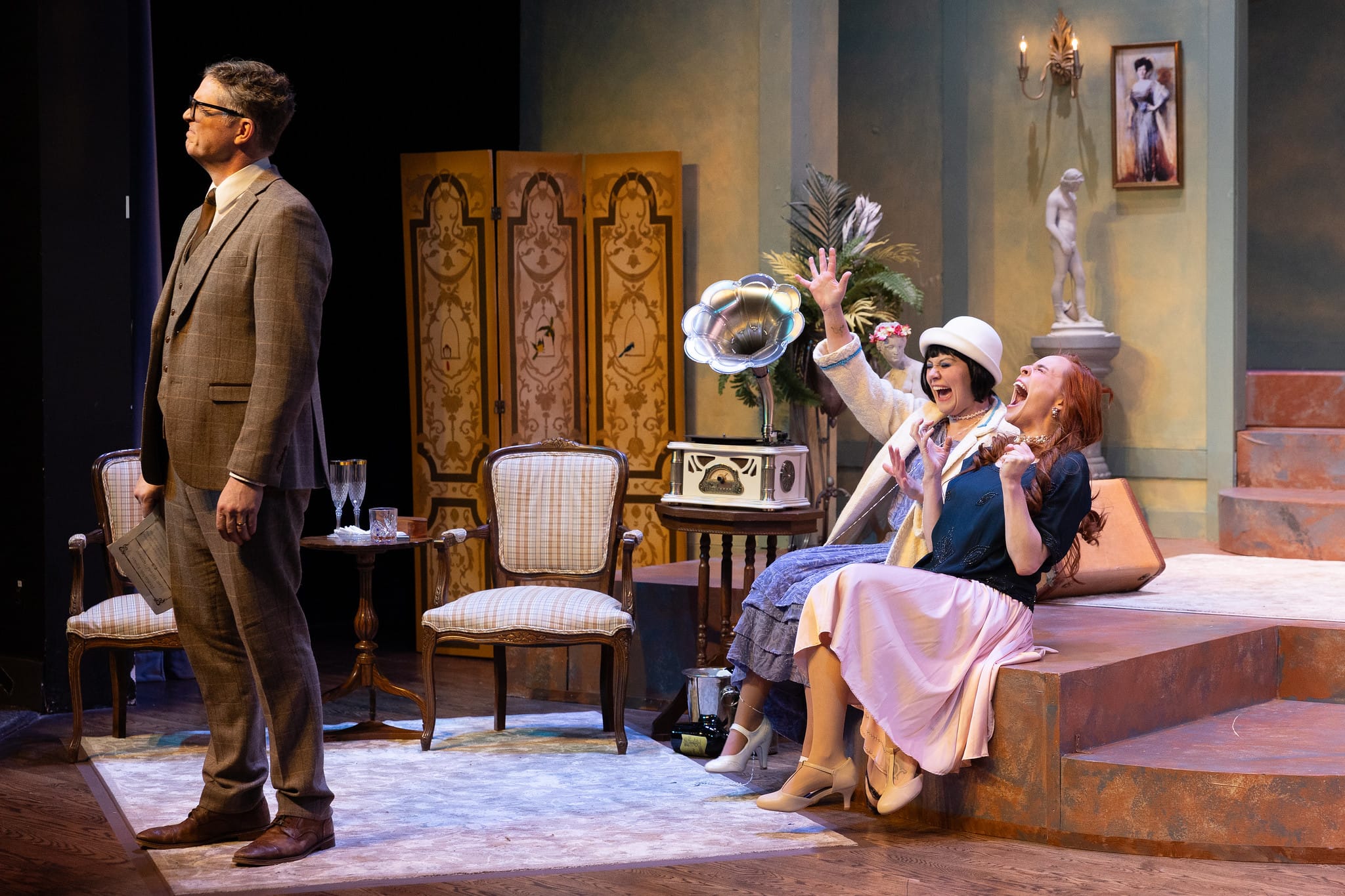
James Burns as Clarke, Lexi Wilson as Deirdre and Katy White as Sylvia in The Cottage. | Photo: Soleil Lean Geddes
None of this is the fault of the performers or the production team, who clearly approach the material with care and enthusiasm. Brookman’s elegant set, the lively pacing and the ensemble’s commitment all demonstrate OpenStage’s continued professionalism.
Still, the evening raises a larger question about why The Cottage continues to receive frequent regional productions when the script itself offers relatively modest rewards. OpenStage recently staged Agatha Christie’s The Mousetrap, and that straightforward classic seemed to align naturally with the company’s strengths. By contrast, Rustin’s contemporary farce never quite finds the comedic rhythm needed to sustain its elaborate premise.
For audiences eager for a lighthearted evening of drawing-room chaos, OpenStage’s production delivers plenty of theatrical energy and visual polish. But even with such committed performers at the helm, The Cottage ultimately feels like a farce still searching for the sharper wit that might make its scandals truly sparkle.

A Colorado-based arts reporter originally from Mineola, Texas, who writes about the changing world of theater and culture, with a focus on the financial realities of art production, emerging forms and arts leadership. He’s the Managing Editor of Bucket List Community Cafe, a contributor to Denver Westword and Estes Valley Voice, resident storyteller for the Bonfils-Stanton Foundation and co-host of the OnStage Colorado Podcast. He holds an MBA and an MA in Theatre & Performance Studies from CU Boulder, and his reporting and reviews combine business and artistic expertise.

Leave A Comment