
In this episode of the OnStage Colorado Podcast, hosts Alex Miller and Toni Tresca turn the critical lens on themselves, digging into the craft — and the controversy — of writing honest theatre reviews. As Toni’s criticism has grown sharper over five years of covering Colorado’s stages, so has the response: from grateful notes to hurt feelings aired on social media. What does it mean to be kind and honest at the same time? And where is the line between candor and cruelty?
Along the way, Toni catches up on a busy stretch of shows — Steven Dietz’s intricate Fiction at Three Leeches in Lakewood, the bracingly timely Just Like Us at Su Teatro, a strong but imperfect A Chorus Line at the Lakewood Cultural Center, and the world premiere of Nina Alice Miller’s lyrical multigenerational family drama Daughtering from Dirty Fish Theatre at the Dairy Arts Center in Boulder. Alex, meanwhile, has been sidelined — first by a trip to Mexico City for a family event, then by illness.
Later in the episode, Alex sits down with Rhianna DeVries and Tess Neel, the artistic director and producing director of Denver Theatre Ensemble — a young, DU-rooted company now in its third season and gearing up for an all-world-premieres lineup that includes a collaboration with Picnic Theatre Company in Steamboat Springs.
Chapter Summary
00:00 — Introduction — Alex and Toni preview the episode: recent show catchup, theatre news, a deep dive into theatre criticism, an interview with Denver Theatre Ensemble and the Top 10 Colorado Headliners.
01:27 — Recent shows catchup — Alex has been off the circuit, sidelined by a trip to Mexico City and then illness. Toni covered considerable ground: Fiction at Three Leeches in Lakewood, Steven Dietz’s intricate love triangle about writers, dying spouses and the blurry line between truth and lies, tautly directed by Melissa Leach. He also reviewed Just Like Us at Su Teatro, based on Helen Thorpe’s book about four immigrant women navigating documented and undocumented status — one of the stronger productions he has seen from the company, and notably the first time Denver audiences can see a Denver-based cast tell this Denver story. At the Lakewood Cultural Center, A Chorus Line from Performance Now features exceptional dancing and standout performances, though Toni flags some puzzling camera use and sound board failures during the second act. And he attended the world premiere of Daughtering from Dirty Fish Theatre at the Dairy Arts Center — Nina Alice Miller’s lyrical multigenerational family drama, which has some first-act pacing issues but enough beautiful theatrical moments to mark Miller as a writer to watch.
10:08 — News: Arvada Center 2025–26 season — The center announced a commercial, crowd-pleasing lineup: Misery (September, main stage) and Neil Simon’s Barefoot in the Park (black box), Joseph and the Amazing Technicolor Dreamcoat (holiday season), Doubt by John Patrick Shanley (February) and the regional premiere of Dear Evan Hansen (March).
12:02 — News: Yates Theatre moves forward — Decades of effort to reopen the historic 1926 Yates Theatre in Denver’s Berkeley neighborhood took a major step forward when the Denver Board of Adjustments approved a zoning change allowing the long-vacant building to reopen as a 300-seat indie cinema. Owners Macy Lao and Kyle Hagan, who signed a 10-year lease in 2025, plan to open it with an attached lounge called Waystation. A Good Neighbor Agreement with the surrounding neighborhood addresses hours, signage, parking and capacity limits.
14:52 — News: Can anyone make a living in theatre? — Actor Justin Pappas posted on Facebook in the Colorado Theater People group asking whether theatre alone can support a family — specifically, enough for a ski trip once a year. The post generated 115 comments. John Moore at the Denver Gazette dug in, arguing most sustainable arts jobs go to administrators, not artists, and profiled director/actor Jenna Moll Reyes as a case study of someone cobbling together a full-time living through multiple creative income streams.
18:15 — Main topic: Theatre criticism — As Toni’s reviews have grown sharper over five years, so has the response — including a performer who posted about their depression after a negative notice. Alex reads from the OnStage Colorado manual: criticism should be kind and constructive, never cruel, and must always explain the why. They discuss why whitewashing reviews is dishonest, how standards differ between a $150 touring Broadway show and a community production (while neither gets a free pass), and two pieces from the OnStage Blog — Skip Maloney’s 2024 argument that brutally honest community theatre reviews serve everyone better, and Chris Peterson’s 2025 counterpoint that there is a meaningful difference between honest critique and cruelty.
31:59 — The art of constructive critique — How to write a critical review that is specific, fair and useful: naming exactly what didn’t work, why it mattered and whether it can be fixed. The distinction between glitches (live theatre happens) and baked-in problems like script or design choices, which deserve extra care.
37:09 — Community theatre standards — Do community productions deserve honest reviews? Yes, with appropriate context. No one expects equity-level sets or casts, but a baseline of competence and a reason for doing the show is still a fair ask.
39:38 — Editorial integrity and advertising — OnStage Colorado takes advertising from some of the theatres it covers. Theatres have pulled ad buys over negative reviews. Alex’s position: thanks for the business, nothing changes. Toni notes the particular challenge of Alex holding both the editor and publisher roles simultaneously.
42:18 — The value of honest criticism — Pulling punches serves no one. Directors and cast members usually know where the weak links are. A tough review, done right, is a form of respect — and one bad show does not a bad company make.
43:07 — Interview: Denver Theatre Ensemble — Alex talks with artistic director Rhianna DeVries and producing director Tess Neel about the company they co-founded with mentor Ina Marlowe, a Chicago theatre legend now teaching at DU. Now in its third season, DTE doubled its audience from year one to year two. Their approach — “reinvent tradition,” changing one creative variable per season — leads to an all-world-premieres lineup this year, including a devised piece and an adapted Romeo and Juliet running in rep with Picnic Theatre Company in Steamboat Springs, plus Closing Times by Derek Murphy and The Orbital Decay of Saturn by Rook Riley back at DU.
- 1:06:41 — Top 10 Colorado Headliners
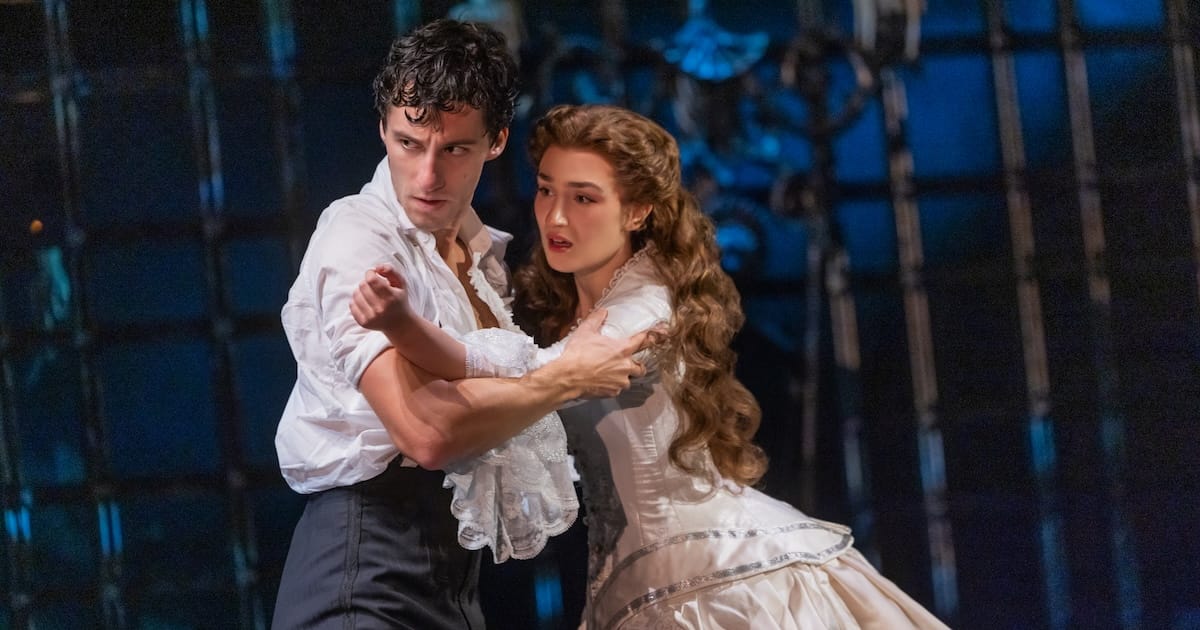
Phantom of the Opera — Denver Center Buell Theatre, March 18–April 5
Goodnight Moon — Parker Arts (stage production + Fiber Tale exhibit), through March 29
Pen Pals — Theatre Aspen, March 20–21 only
Little Women — Phamaly Theatre Company, Parsons Theatre, Northglenn, March 19–April 4
The Cottage — OpenStage Theatre, Fort Collins, March 21–April 18
Cheap Thrills — Telluride Theatre, Sheridan Opera House, March 20–21
Proof — Magic Circle Players, Montrose, through March 28
Bonnie & Clyde — Bright Heart Stages, The People’s Building, Aurora, March 20–29
Women’s Theatre Festival — Millibo Art Theatre, Colorado Springs, through March 22
Red Willow — Control Group Productions, South Platte Park, Littleton, March 20–April 4
1:15:59 — Upcoming reviews and sign-off — New on the site: Fiction (Three Leaches), Just Like Us (Su Teatro), A Chorus Line (Performance Now), Birthday Candles (Curious Theatre), Daughtering (Dirty Fish Theatre). Coming soon: Love Letters (Backstage Theatre), The Wiz (Town Hall), Little Women (Phamaly) and Bonnie & Clyde (Bright Heart Stages).
Full Transcript
Alex Miller (00:01)
Hey, hey, hello. Happy St. Patrick’s Day and welcome to the OnStage Colorado Podcast. I’m Alex Miller.
Toni Tresca (00:08)
And I’m Toni Tresca. As usual, we are going to be discussing some of the recent shows we’ve seen, talking through some theatre news, and then we’ll also be discussing our Top 10 Colorado Headliners, which are a roundup of upcoming shows that we think are of interest. And for our main topic this week, we are going to be diving deep into the subject of theatre criticism itself.
Alex Miller (00:35)
Yeah, we’re going to critique the critiquers ourselves and dig into some of what goes into our process of reviewing theatre here in Colorado. So stick around for that in just a little bit. Later in the show, we have an interview I did with Rhianna DeVries and Tess Neel from Denver Theatre Ensemble. This is a relatively new theatre company started by these two DU alums, along with Ina Marlowe — a well-known Chicago theatre artist who’s now a theatre professor at DU. It’s an interesting conversation about how they came to form the company, what they want it to be, their upcoming season and some of the challenges that come with starting something new.
Toni Tresca (01:16)
Yeah, absolutely. Looking forward to hearing that conversation a little bit later in the episode. But as usual, let’s kick things off with what we’ve seen recently.
Alex Miller (01:27)
Well, you’ve seen more than me — not by design, but just the last couple of weeks I have not gotten out to shows. I was sick last weekend, and then the weekend before I was in Mexico City for a family event. So I’ve been kind of off the circuit. What have you been out to see?
Toni Tresca (01:46)
Quite a few different things, some really interesting stuff. I started my theatre activities off this week by going over to the Three Leeches space in Lakewood to check out Steven Dietz’s production of Fiction. Now, Steven Dietz is probably a familiar name to folks — he’s a Denver boy, born and raised, and many of his plays are produced quite a bit. Friend of the pod — he was on a while ago.
Alex Miller (02:07)
Yeah, friend of the pod. He was on a while ago.
Toni Tresca (02:14)
This is not really one of those frequently produced ones, but I would say it’s a really fantastically intricate love triangle about really complex love. You’re following these two writers who you watch meet and develop a really seemingly honest relationship. Then the wife gets a diagnosis that she’s about to die — it’s terminal cancer — and she asks to read her husband’s journals.
As played by Paul J. Queath, his face falls when she asks, because he knows there’s something in that journal that is going to destroy all of their years of trust. You then watch his wife read the journals, and on separate parts of the stage, scenes from the past are played out. It’s complicated because, as it’s established early on, writers are natural liars. So you’re never fully sure if what you’re reading or hearing is the truth or a lie — and that goes all the way to the very end of the show.
I found this to be very entertaining. It was really tautly directed by Melissa Leach. Three-person cast, good use of the small thrust space over there — this is formerly the Benchmark Theatre space, and before that it was the Edge Theatre. Familiar to folks in Colorado, and it can be a tricky space to use correctly. I think this is a really good match for it.
Alex Miller (03:47)
Cool. So that’s Fiction at Three Leeches in Lakewood. And then you saw Just Like Us at Su Teatro, which you just had your review posted yesterday. That was another one you thought was a pretty strong show.
Toni Tresca (04:00)
It was. The original production dates back to 2013. It’s based on a book by Helen Thorpe, who was a journalist and the wife of then-Denver Mayor John Hickenlooper. The book follows four immigrants she chronicled from high school through college — two documented, two undocumented — originally thinking she’d write articles about their friendship and how their mixed statuses affect them as they apply to schools and try to acquire jobs. But it really becomes this complicated question about who gets to be an American and why we scrutinize immigrants more than our own politicians, who also commit terrible crimes. That particular part of the show rang out to me especially as we sit here in 2026.
I found this to be a really well-done production. It’s co-directed by Mika Garcia, daughter of Tony Garcia who runs the company, and Fidel Gomez. Just a really sharp production — one of the better things I’ve seen from the company. And it’s a great chance to see a Denver story told by a Denver-based cast. When it was done at the Denver Center, it was largely out-of-state folks in the cast. As Mika Garcia told the audience on opening night, this is the first time people in Denver are able to see a Denver-based cast do this show about Denver.
Alex Miller (05:31)
That’s great. And then another, more familiar title — A Chorus Line.
Toni Tresca (05:54)
Yeah, this was done over at the Lakewood Cultural Center. The 1975 musical about what it takes to be a Broadway dancer will always be relevant to the theatre community, because it’s about putting yourself out there and either getting accepted or rejected — something you’re constantly doing in that field.
This musical requires a bunch of dancers, and you’re watching 17 of them who are selected for this audition. Performance Now has put together a really strong ensemble of really powerful movers. This is a show I quite like, and there is a lot to appreciate here. I have a couple of quibbles that I’ll get into in my review — one is a camera element employed at the back of the stage that’s sometimes on, sometimes off, without a clear reason. And there were a couple of pacing issues in the second act. But overall this is a really strong production of A Chorus Line with some exceptional dancing and standout performances.
Alex Miller (07:29)
And I’m also looking forward to seeing your review of Daughtering — another new work by a female playwright here in Colorado. That’s three or four new plays by female playwrights in the last month or so.
Toni Tresca (07:45)
That’s right. This is by Nina Alice Miller. It’s a Dirty Fish Theatre world premiere over at the Dairy Arts Center in Boulder. It follows three generations of women — a four-person cast. You have the grandmother, Olga; her daughter, Lisa; Lisa’s daughter, Natalie; and Maya, who is Natalie’s cousin and the daughter of Lisa’s deceased sister. The conceit of the show is that you’re watching all these daughters gather together at the ten-year anniversary of the death of their grandfather and Maya’s mother, Julie. Two urns are at the center of the show, and the grandmother believes the ashes are coming to life. There’s a sense of unease in the house, and you’re watching this awkward homecoming in which a lot of things that have never been said are finally being put on the table.
It’s really intimately staged — there’s a very believable kitchen set, the grandmother is constantly baking cookies for everyone, and there’s a room elevated above that’s not discussed for most of the show. It eventually becomes clear it’s Julie’s room, preserved exactly as it was.
There are some things that didn’t 100% work — not a ton of action until the second act. But there were really incredibly poignant moments. Nina is a really gifted writer. There are a lot of lyrical, poetic passages I’ll be thinking about for a while. There’s this incredible moment of simultaneous yoga between mother and daughter at the end of Act One that is just a really beautiful piece of theatre making. While there are a couple of bumps along the way, this was a really exciting new work with a lot going for it.
Alex Miller (10:08)
All right, great. Look forward to reading that review. Moving on to the news — we had a season announcement from the Arvada Center. They’re doing Misery in September on their main stage. In the black box, they’ll be doing Neil Simon’s Barefoot in the Park. For the holiday season, Joseph and the Amazing Technicolor Dreamcoat. Then in February, Doubt by John Patrick Shanley, and they’ll close out their season in March with Dear Evan Hansen. Nothing too groundbreaking, but crowd-pleasing shows. I’ve never seen Doubt, so I look forward to that — it’s been produced quite a number of times here in Colorado.
Toni Tresca (10:54)
It has, but it is a really good show. Definitely looking forward to seeing that produced with the budget behind it at the Arvada Center. Joseph and the Amazing Technicolor Dreamcoat is apparently something the center used to do a ton around the holiday season and was a big box office hit for them. This is a very commercial season overall — they’re definitely trying to build back audiences by programming titles that people are at least familiar with, like Stephen King’s Misery or Neil Simon’s Barefoot in the Park. Probably the most interesting thing on the season is the regional premiere of Dear Evan Hansen. I wouldn’t exactly call that super risky — it’s a musical that’s already come through the Buell and has a proven track record — but it’ll be nice to see it staged at the center with some pretty substantial resources behind it.
Alex Miller (12:02)
And then you had news from Denver’s Berkeley neighborhood about the Yates Theatre. What’s this all about?
Toni Tresca (12:10)
Yeah, there have been decades of efforts to reopen the historic Yates Theatre in Denver’s Berkeley neighborhood, and as of last week, it took a major step forward. The Denver Board of Adjustments approved a critical zoning adjustment that will allow the long-vacant space to reopen as an independent cinema at 44th Avenue and Yates Street.
It’s this really cool cottage-style building that blends in seamlessly with the homes and architecture that surrounds it. It was originally built in 1926 and officially opened the next year as a 500-seat silent movie house, but has largely sat vacant since the 1980s. There have been several projects that tried to organize over the years to fill the space. Now married couple Macy Lao and Kyle Hagan — who signed a 10-year lease in 2025 — can move forward with their plans to open the Yates as a 300-seat indie cinema with an attached lounge they’re calling Waystation.
Alex Miller (13:18)
That’s really cool. So it’s the Berkeley neighborhood — kind of on the northwest side of town?
Toni Tresca (13:26)
Yeah, definitely on the northwest side of Denver. It’s more of a residential neighborhood, which is part of why there have been a lot of hiccups around reopening the building. A lot of the neighbors don’t want an event space because of noise, alcohol sales and potentially late events. In order to get this approved, the couple signed a Good Neighbor Agreement with the neighborhood association. They’ve agreed to no events past midnight, and there are limitations on signage, lighting, parking, traffic flow and maximum capacity. They made a lot of concessions to make it happen, which I think is honestly good — a good-faith way to approach the neighborhood. The GNA was really a core part of why this vote was able to go off without a hitch.
Alex Miller (14:39)
All right. The next piece here — you titled it “Breaking News: It’s Hard to Be an Artist.” And I saw some of this action on Facebook too. Do you want to describe this?
Toni Tresca (14:52)
Yeah, I wrote that title a little tongue-in-cheekly because it’s not exactly breaking news. But there was some pretty significant chatter on Facebook in early March when local actor Justin Pappas posted in the Colorado Theater People group asking: “Is anyone actually able to make a decent living off of theater alone? I’m not talking acting and waiting tables. I’m talking enough to take a family on a ski trip one time a year working on stage.” That question went off like a bomb. As of recording, there are 115 comments. Many responded that yes, it is possible to make a living as an actor, but admitted it’s incredibly hard without another source of income. And they answered a definitive “no” to the ski trip part of the question.
Alex Miller (15:51)
Yeah, nobody can afford to go on a ski trip anymore. John Moore, in his piece in the Denver Gazette, talked about how most of the people making it are in full-time positions in administration, fundraising, education and marketing — but only a handful of actors manage to cobble together a full-time living with no supplemental income. As writers, we know you can’t just survive on one type of writing. We do theatre writing, but we also do other types of writing to supplement our income, some of which is not nearly as fun.
Toni Tresca (16:47)
Absolutely. This conversation is honestly happening across a lot of different parts of the economy — it’s not very different from what I think through as a journalist these days. You kind of have to have multiple streams of income in order to make it work. It’s just the fickle state of the world we’re in right now.
Alex Miller (17:23)
Yeah, absolutely. I’d still add the caveat that I wish actors and people doing great work on stage could somehow be paid a living wage. They should all get $100,000 a year or more and have ski vacations. It’s just, unfortunately, not the reality. People doing other types of work are always going to get paid more, and that’s just the way the world is.
Alex Miller (18:15)
All right, let’s move on to our main topic: theatre criticism. To set the stage, Toni, you’ve recently been getting a lot of feedback on some of your reviews. Part of that is that as you’ve matured as a theatre critic in the last few years, you’ve felt more comfortable writing sharper reviews. And as the person who’s editing your pieces, I think you do a really good job of explaining your criticism — if you say something isn’t good, you take pains to describe why. But you’ve been getting some blowback. Can you talk about what that’s been like?
Toni Tresca (18:35)
Yeah. When I first started critiquing in 2022, I didn’t really have as strong a frame of reference — I was just getting to know the theatre community. Now that I’ve been doing this for about five years, I’ve been able to see multiple productions from most companies, different designers, different actors around town. That’s allowed me to raise the critical bar because I have a stronger sense of what’s going on in the community. Is this really an exceptional production for this company? Is this more of the same, or is this a step back for them?
My role as a critic — particularly over the past couple of years — has been to spotlight the good and identify what’s holding things back when those elements exist in a production. I’ve been really excited to hear engagement from the community. A lot of people are supportive and find the criticism helpful. At the same time, I’ve had quite a few people reach out and say things like, “Hey, this was mean,” or “I wish you had been just a little nicer in how you said that.” I really appreciate those comments — I read pretty much everything everybody sends me, and it helps me think more critically about what I write and its impact out in the world.
Alex Miller (20:35)
Yeah. And just like people putting things on stage open themselves up to criticism, we’re publishing publicly and we’re open to criticism as well. Sometimes we get something wrong. The nature of criticism is that it’s subjective — it’s one person’s opinion, and not everyone is going to agree. We noted just recently a performer who didn’t like one of your reviews and posted on Facebook about their depression, saying they thought you hated them. Obviously you don’t — but it speaks to how impactful a review can be on someone’s feelings, their ego, their self-worth as a theatre artist.
That’s why we try very hard to ensure that when we criticize things negatively, we explain why. All of our reviewers get our manual of style and procedure. I’ll just read a part of it on this topic: “It is OK to point out flaws, but do so in a respectful manner. Criticism should be kind and, if possible, constructive — never cruel. Our goal is to help a production be a better version of itself. Our goal is never to tear anyone down or point out flaws in a hurtful way. If you are criticizing the show, it’s important to explain why, exactly, you’re doing so. Simply saying something is ‘bad’ or whatever is not sufficient.”
Toni Tresca (21:58)
Yeah. Never being cruel and focusing on being constructive is a key part of what we try to do at OnStage Colorado. A principle I adhere to personally: I’m not going to write anything in a review that I would not be comfortable reading out loud to whoever I wrote it about. It might be really awkward. It might be uncomfortable. They may say, “I really disagree with you.” All of those are valid. But it’s going to come from a fundamental level of respect for you as an artist and as a human being. This is my genuine, honest, authentic reaction to the show. You can take it or leave it. I am one person with an opinion. I hope it’s helpful — that’s ultimately how I approach it. I want to provide feedback so that the next show can be even better. But if you don’t want to hear it, at least I’m going to be incredibly respectful about it.
Alex Miller (23:16)
I think I can speak for both of us when I say we would always much prefer to write glowing reviews and let people know a show is awesome. But clearly, that can’t always be the case. The alternative — to whitewash every show and ignore any flaws we notice — is dishonest. The whole premise of a review, whether it’s for a theatrical production or a toaster on Amazon, is to share your true opinion about something with the goal of informing the public: get this thing, watch that show, or don’t.
Toni Tresca (23:48)
Yeah, and for theatres, if all they ever hear from critics is how wonderful they’re doing — even if that’s not necessarily true — it leads to a false sense of the quality of what they’re delivering, and I should add, charging people for. In 2026, audiences are discerning. If you have a technical hiccup, they notice. I definitely factor in the live experience — if you’re able to make a mistake into a moment and move forward, bonus points for that, as long as the error doesn’t happen again. But if it’s a consistent thing — like the audio mixing issues and massive feedback during the second act of A Chorus Line at the Lakewood Cultural Center, with audience members turning around to look at the booth — people notice. And when you’re charging full price for a ticket, you need to deliver an experience that’s up to that price.
Alex Miller (25:10)
Yeah. Another factor is how we evaluate professional productions versus those from community theatre. When we review something like a professional Broadway touring show coming through the Denver Center, we’re looking at it a little differently than a community production from, say, Elemental Theatre. And that’s fair.
Toni Tresca (25:20)
One thousand percent. A touring production at the Buell has exponentially more resources, and those shows are so much more expensive for audiences — tickets are often upward of $100 just to get in the door. Factor in parking, transportation, a date night — that gets expensive quickly. For instance, I was extremely critical of the touring production of The Notebook that came through, and I don’t feel bad about it. That production was really expensive, had multiple technical failures that caused the show to literally stop and hold on opening night, and I saw audience members leaving throughout. But if I see a community theatre production where things aren’t firing on all cylinders, I’m going to give them a lot more grace. Not say it’s perfect — that’s also dishonest — but I don’t expect an amazing set that costs hundreds of thousands of dollars or a cast of seasoned Equity actors. I do, however, expect a baseline of competence. Why did you do this show? Is there a reason for it? Does it say something about our moment? Does it move? Is there unnecessary clunky blocking? Those are simple things that, no matter your size or scale, you can deliver on.
Alex Miller (27:58)
Right. But they’re still putting something on stage for public consumption and inviting us to review their show. We occasionally get requests not to review a show, which we always honor. Also rare: there have been a few times we chose not to review a show we’ve seen — usually because it was a disaster from start to finish with nothing good to say, or because it was so off the wall that at least for me, I didn’t feel qualified to write about it intelligently. Have you ever had any of those, Toni?
Toni Tresca (28:38)
I can’t say that I have yet. If I’ve been assigned a show, I usually try to find something to say about it, or do some research if I’m totally lost so that I can help guide audience members — and acknowledge: I was also lost, but here’s some additional context to fill in the gaps on what I wish the play had said or done.
Alex Miller (29:12)
So when I was thinking about this topic, I poked around a bit in the OnStage Blog, which is a national blog about theatre. They’ve written about this a number of times, specifically about community theatre reviews. In 2024, their writer Skip Maloney, in a piece titled “We Should Review Community Theater Honestly,” said overly nice reviews are the norm and they hurt everyone. The assumption that unpaid performers can’t be held to professional standards is, in his words, “nonsense” — budget doesn’t determine quality. Soft reviews mislead audiences and let performers think they’re doing good work when they’re not. He also noted that many community theatre reviewers lack the background to assess a production properly, especially the director’s role. His bottom line: brutal honesty serves the community better than just kindness.
And then in 2025, Chris Peterson wrote “How Honest Is Too Honest?” — talking about the meaningful difference between honest critique and cruelty. He talked about how good reviews meet the work in context, not comparing a community theatre production to a Broadway revival, but also not giving it a free pass. He also wrote: “Inviting a critic means opening yourself up to the possibility that they might not like your show. And that does not make them wrong. It does not make them the bad guy. It does not even make them unkind. It just means they had an experience with the work you put into the world, and their job is to speak truthfully about it. Sometimes that truth feels great. Sometimes it stings. Both are valid.”
Toni Tresca (31:23)
Yeah. That’s kind of part of anything when you put yourself out there. Like we said at the start, we both put ourselves out there every time we write a review — our names are on it, and we get engagement from people who say it’s good and people who say it’s bad. That’s all valid. It’s just a part of the process of putting yourself into the public sphere, and building a tolerance for that is an important part of existing in the real world.
Alex Miller (31:59)
Can you talk a little bit about when you’re writing a less flattering review — or maybe it’s an overall great show but there’s something you’re critiquing — what are the pains you take to explain the critique, and how hard is that to do?
Toni Tresca (32:15)
That is definitely the hardest part of the job. It’s much more fun to write reviews where you’re getting to share an incredible experience and just gush — “This is something you cannot miss.” Whenever I’m having to write a more critical review, I take a lot more care because I really want to make sure that if I’m being critical, I’m being specific and I’m being fair. I think of it in three parts: I lay out exactly what went wrong. For instance, during A Chorus Line, there were multiple sound board failures during the second act that interfered with the audibility of the production and were noticeably disruptive for the audience. That is incredibly specific. Then I explain why that impacted the show. Then I try to contextualize it — “Despite that, this is something they can clean up as they go on. I hope that they do. And here is a lot of other stuff that’s working in the show. Here is who I think will enjoy this experience.”
Even when you’re being critical, you have to think about: who, if it didn’t work for you, might it work for? And can the thing you’re criticizing get better?
Toni Tresca (34:09)
Because there are some things that can’t change — like the costume design or the script. Those are not going to be able to change mid-run. So I’m going to be incredibly thoughtful about those elements. With the sound failure, I just lay that out there — that happened, it’s undisputable, and it’s one of those things about live theatre that you hope gets cleaned up. There is a difference between glitches and things that are baked in — the more fundamental text or design issues that are really tricky to change. You have to be really thoughtful about those.
Alex Miller (35:00)
Yeah, the negative stuff is the hardest part of what we do, for sure. I know I agonize over those reviews where I know the theatre worked really hard on their production, but I just find things that weren’t good. The easy road is to gloss over them or ignore them altogether. To be completely honest, we do have a handful of theatre bloggers in Colorado who do just that. But as we’ve grown OnStage Colorado into the top site for theatre reviews in the state — 165 reviews last year — our goal is to provide honest, thorough reviews of everything we see. That’s the mission.
Toni Tresca (35:43)
Yeah. And nodding back to those OnStage Blog posts about community theatre reviews — in the Colorado market, I don’t think we’re in a place where we’re having those overly mean, cruel reviews right now. I err much more on the Skip Maloney side — that we do need to review community theatres honestly, as I’ve articulated throughout this, while still respecting the artistry that goes into it.
Here at OnStage Colorado, I’ve heard from folks that we used to be a lot nicer. And I think there have been some growing pains. OnStage did, I think, rightly start from a place of just uplifting the theatre community — there were no other critical voices here. As we’ve matured and there are other theatre blogs now doing that kind of cheerleader work, OnStage is maturing and taking on a more critical voice, filling the void left in the Colorado marketplace since pretty much every single newspaper outlet in the state has pulled back from theatre criticism. That’s gone from everywhere except for the occasional piece that gets into the Post or Westword every now and then.
Alex Miller (36:39)
Exactly.
Toni Tresca (37:09)
So I think I speak for both of us when I say we really do see OnStage Colorado maturing into the leading critical voice for the state. And as we go through that process, we really appreciate getting feedback from folks along the way. My personal contact information is pretty publicly available — my phone number’s even on my website. People call me and I’ll pick up pretty much as long as people want to engage in a good-faith, honest conversation about the work. I love the engagement.
Alex Miller (37:44)
You’re crazy.
Toni Tresca (37:53)
Particularly if they want to say, “I quibble with you on this — why did you say that? Can you explain more?” I’m always happy to talk through that. Hearing from folks, good or bad, is always really rewarding because it means they’re engaging with the work.
Alex Miller (38:00)
Yeah. Those emails — whether they’re critical or, sometimes, thanks for something that was critical but that they thought was fair. The reality is that directors and usually the cast members know better than anyone how well a show is put together and where the weak links are. So we may be telling them something they already know but were hoping others wouldn’t notice. And sometimes their reaction is to get a bit pissed about it, and that’s human nature.
Toni Tresca (38:46)
Yeah. I know sometimes I hear from people who tell me I got it completely wrong, which is perfectly fair. I’ve had people provide behind-the-scenes information that I could not have possibly known — actor A was sick, a designer quit three days before tech. And I understand that on a human level — maybe it’s worthy of a feature story, depending on the circumstances. But as a reviewer, I write about what I see as an audience member, not in my role as a reporter.
Alex Miller (39:38)
Absolutely. One other thing I wanted to touch on is the conflict of interest piece. We do take advertising from some theatres, and it can be tricky to navigate at times. Yes, we’ve had some theatres stop their ad buys because they didn’t like a review. Even if I regret that lost revenue, to me it’s well worth it to never compromise the editorial integrity of OnStage Colorado for a few bucks. Generally speaking, I think our advertisers would rather see an unbiased, honest forum for theatre criticism rather than one that does any kind of pay-to-play.
Toni Tresca (40:14)
But isn’t it more challenging when that separation between editorial and advertising is fuzzy — like you’re operating at OnStage both as editor and publisher?
Alex Miller (40:25)
Yeah, absolutely. OnStage Colorado is the first time I’ve ever held a publisher role. In my years as a newspaper editor, I was often on the wrong side of the publisher, and there were occasions where things I’d written or allowed to be published resulted in advertisers pulling ads and lost revenue. For the most part, I was also fortunate to have publishers who stood behind the newsroom, and that push and pull is something that’s part of my DNA. So even if it hasn’t happened very often, if a theatre says we’re pulling our ads because we didn’t like your review, my only response is: thanks for your business, but it changes nothing.
Toni Tresca (41:11)
That certainly is great to hear as a writer who — as we’ve been talking about — has perhaps written some divisive takes. It really means a lot as a writer and journalist in 2026, when there is a lot of scrutiny on this industry and profession, to know that OnStage Colorado has my back. I want to be able to speak my mind without worrying about that.
Alex Miller (41:50)
Yep, absolutely. To wrap this up: theatre criticism only has value if it’s honest — to the audience trying to decide how to spend their evening, to the art form itself, and to the practitioners who want to grow. The goal is never to be the bad guy or the good guy. Pulling punches doesn’t serve anyone, and the theatres we cover deserve to be taken seriously enough to receive a real opinion. Done right, a tough review is a form of respect.
Toni Tresca (42:18)
I absolutely think so. That’s the right way to think about it. And just know that even if I write a bad review about you this time, I’m going to keep showing up for you. I’m here for the theatre community. One bad show does not a bad company make. It’s one night, one experience, and I respect you enough as an artist to tell you honestly that it did not work this one time around — but I’m going to come back the next time and give you another chance, because it’s a new show and you deserve that respect as an artist.
Okay, now we are going to throw to the conversation you had with Tess Neel and Rhianna DeVries from Denver Theatre Ensemble.
Alex Miller (43:07)
All right, today we are talking to some folks from Denver Theatre Ensemble. On the podcast we’ve got artistic director Rhianna DeVries and producing director Tess Neel. Welcome to the OnStage Colorado Podcast.
Tess Neel (43:20)
Thank you.
Rhianna DeVries (43:21)
Thanks so much for having us.
Alex Miller (43:24)
Yeah, absolutely. I wanted to start by asking how you two work together — it’s not often we see an artistic director and a producing director. Can you explain how that works at Denver Theatre Ensemble?
Tess Neel (43:42)
Yeah, absolutely. As producing director, my role is really more on the technical side — bringing together design teams, making sure contracts are signed. Producing director and managing director are kind of interchangeable for my job title. I help manage all of the admin and technical side of things, help source all of our materials and make sure sets are being built and everything’s working. And then Rhianna as our artistic director handles all things artistic.
Rhianna DeVries (44:34)
I get to do the fun creative stuff — deciding what we do with our season, deciding how the art we make aligns with our vision and continues to explore the way that we center process in everything that we do. As artistic director, my job is to center the artistry and make sure that we can do everything we do in an ethical, kind, excellent, artist-centered way.
Alex Miller (45:11)
And then the third person who’s not with us today is Ina Marlowe, who’s the board president for DTE. She’s got quite an impressive resume — she founded Touchstone Theatre, ran the Organic Theater Company, worked with Edward Albee, won a Jeff Award. The theatre grew out of Dream Scenes, a scene study class that Ina and Rhianna led together. Can you talk about how the theatre came into being?
Tess Neel (45:48)
So Rhianna and I met freshman year of college at DU. We were pretty unique in our class because we were both double-majoring in theatre and business. We quickly became friends and found out we both wanted to start our own theatre company. We started daydreaming about what that could be throughout college. Then junior year, Ina was a guest professor and we both took her class. We all kind of cosmically fell in love with each other, and Ina became our collective mentor — which was really lovely and honoring, that someone with her repertoire would pick us out of the group and put a lot of love and care into her relationship with us.
After college, the three of us would daydream about what the company could be. We worked on the board of a different theatre company briefly after college that Ina brought us onto. Then one thing led to another, and in 2023, all of our lives just kind of lined up perfectly. We were sitting at brunch one day catching up — at that time Rhianna was living back and forth between LA and New York, professionally acting, and I was having my own career in theatre in Colorado. Things were cosmically lining up where I was looking to change my trajectory and Rhianna was getting ready to move back to Colorado. I said, “I think it’s time to start this thing.” And that’s kind of how the three of us fell into each other’s lives and became the trio that we are.
Rhianna DeVries (48:22)
Yeah. Like Tess said, we met Ina during our education at DU. Ina has always been a huge advocate for artists and protecting the artistic spirit and the artistic process. She’s always emboldened us to continue the tradition of upholding and empowering artists. I’m so overwhelmed with all that Ina has given us. She is a total embodiment of how, as part of the artistic process, it’s all about uplifting others, continuing to create, emboldening the people coming after you and making sure you’re leaving the door open so that any artists who want to come through can. Ina has opened so many doors for so many people — and kicked some of those doors open.
Dream Scenes was our way of dipping our toes into what it would look like to create that kind of artistic space. It was a scene study class where we would take actors, bring them into the fold and ask, “What do you want to do? What do you want to make? Don’t wait to make it — we will help you make it now. Explore characters and scripts that maybe you’ve never gotten to dive into.” And you get to do that in a passionate, safe, creatively charged environment. After Dream Scenes happened, it just snowballed into: this should be a theatre company. It should be process-based, artist-driven, and we should make sure that everyone involved feels creatively invigorated.
Alex Miller (51:10)
Looking through your website, I noticed that the phrase “reinvent tradition” is all over your materials. Can you give an example of what that means — whether it’s a casting choice, the kind of material you want to do, or how you run the company?
Rhianna DeVries (51:26)
Reinventing tradition — when we came to that mission, it was sort of inspired by the relationship we have with Ina. We have this intergenerational mentorship happening, where she is emboldening us with all of this wisdom and empowering us with inspiration to make a space we feel proud of being part of.
Reinventing tradition is about taking what works and leaving what doesn’t. I like to apply a sort of scientific method to the processes we have at hand. Each season, I play with a different variable inside the artistic process when I’m choosing our programming. Our first season, we did something old, something new — a world premiere and a solo performance of The Waste Land by T.S. Eliot. In our second season, we played with the variable of time — how long a rehearsal process is, or how long any one person on the creative team has spent working on a single piece. This year, the variable we’ve changed is that we’re doing all world premieres.
Reinventing tradition is about upholding the things that make art the most human experience it can be — universal, allowing escape, reflection and connection — and leaving behind anything that could harm the artists or audiences involved. It’s about diverse casting choices, altering the artistic process in the rehearsal room, moving with kindness and grace and staying creatively open.
Alex Miller (53:36)
So you mentioned The Waste Land in your first season, and then season two included A Doll’s House, Part 2 and White Rabbit, Red Rabbit. Now that you’ve got two seasons behind you — how did it go, what surprised you, and what might you do differently in season three?
Rhianna DeVries (54:00)
Building this thing — even though we have this incredible leader in Ina, who founded Touchstone Theatre, and even though we have a wealth of information and wisdom available to us through her — it’s still an absolute learning curve. Wouldn’t you say, Tess?
Tess Neel (54:25)
Yeah, absolutely. I’m really proud of our theatre company and how much we have grown in just two seasons. If I were to throw out numbers: we doubled the amount of audience attendance between season one and season two. We were also able to significantly expand our ability to hire more artists. With White Rabbit, Red Rabbit, we hired 12 actors to perform that show, and it was our longest run — 12 performances. It’s been really wonderful to see this thing we’ve dreamt about for so long grow and be received with such excitement. Starting your own business in general is really hard, but starting a theatre company is especially hard, and being able to see that growth so quickly has just been an absolute dream.
Alex Miller (56:04)
That’s great. You mentioned you both have a business background alongside your theatre background. How is that informing things? I’m assuming you’ve got a business plan and you’re trying to hit some numbers. Can you describe a little bit of what that looks like to ensure the company’s long-term success?
Tess Neel (56:26)
Yeah, absolutely. For our first year, we spent a lot of time on our business plan, our vision and our long-term goals. What’s also really wonderful is that we did a full company check-in this past October — me, Rhianna and Ina — where we sat down and revisited the business plan, because as much as you can put your hopes and dreams and goals on paper, life happens and things sometimes don’t go exactly as planned. What I think is really wonderful about our team is that we are always checking in with each other and with our individual goals as artists, as well as our company goals as a collective — really figuring out how this company can grow in a way that is fulfilling to us, for the artists we employ, while maintaining a work-life balance that is sustainable.
There’s a mentality in theatre where you just have to put your head down and work, work, work to get the art done. And yes, there are elements of that in any business. But it’s also about making sure we’re taking care of our people and creating a business that can sustain us too. Ideally in our absolute dream world, we want this company to be lifelong — Rhianna and I talk about doing this in 10, 20, 30, 40 years from now. We want this company to grow into something people can come to and seek out and feel a part of in a way that is new, refreshing and attainable. And a big part of that is not burning ourselves out.
Rhianna DeVries (59:45)
With that also comes how we prioritize where the money goes. Every single time, we prioritize making sure we can compensate our artists, at least competitively. We really want to work up to being able to pay folks Equity rates. But from the beginning, it’s always been our priority to make sure that folks are compensated for their time — any amount that we can give, we give.
Alex Miller (1:00:14)
You have this strong DU connection and you’ve been using the University of Denver’s black box and white box spaces — they’re great little spaces, but on the smaller side. Is that something you’re going to continue, or are you looking at a permanent or bigger space?
Tess Neel (1:00:34)
We are so grateful for our connections to DU. Our professors from when we were students there have been so wonderful and supportive that some of them are on our board and are always actively working with us. Stephen McDonald, one of my personal mentors since college, has been a godsend — he helps in every way he possibly can and is a huge advocate for us outside of DU as well. We do plan on continuing to grow that partnership this summer, but we’re also working towards expanding beyond that and finding spaces that fit the company’s growth. And that’s actually starting to happen this season.
Rhianna DeVries (1:01:51)
We have a really exciting season coming up. One of our partnerships is with Picnic Theatre Company out in Steamboat Springs. We’re partnering on two shows — only one will take the DTE stage. We have a devised piece and we have Romeo and Juliet adapted for a cast of five. The devised piece and Romeo and Juliet are going to run in rep, with the same cast used for both. The devised piece will hit the DTE stage and then we’ll go up to Steamboat, where the cast will perform both shows in repertory for the month of July. Then we’ll come back down to DU and do Closing Times by Derek Murphy — a world premiere, very, very good, I’m very excited for that. And after that, we have a benefit performance directed by DU professor Brandon Bruce called The Orbital Decay of Saturn by Rook Riley.
So we’re starting to expand into different spaces and forming partnerships with different arts organizations around Colorado. It’s been a real joy to hold hands across theatre organizations.
Alex Miller (1:03:16)
All right. You’re operating in a market with the Denver Center, Curious Theatre, the Boulder Ensemble Theatre Company, Aurora Fox and some other established companies. Where do you see Denver Theatre Ensemble fitting into that ecosystem? What are you offering that audiences maybe can’t get at some of those other theatres?
Rhianna DeVries (1:03:19)
That’s such a good question. Honestly, the goal of Denver Theatre Ensemble is to be a home for artists. Artists find homes in all of the theatres you listed. But more art is always good, and having more artistic spaces across the Denver landscape is always a good thing. It’s about adding to the abundance of artistic sensibility that Denver has going for it. It’s about creating more opportunities for artists, designers, theatre workers, production managers and everyone involved in this absolute team sport. And it’s about creating more variety of culture and more opportunities for audiences to sit down and enjoy.
Alex Miller (1:04:33)
Great. Any parting thoughts before we wrap up? Tess?
Tess Neel (1:04:42)
First, just thank you, Alex, for having us. We greatly appreciate the time to share a little bit more about our small but mighty theatre company that is actively growing. I’m really excited for this season and for people to see the work we have planned. We have some really amazing artists involved from a design aspect, and we’re actively working on auditions right now. I really hope that people are excited to see something new and different — especially with our season focusing on world premieres and new works. It’s going to be a really amazing season and I’m really excited for people to see it. Thank you so much for having us.
Rhianna DeVries (1:06:02)
I thought Tess dropped the mic! I would just mimic everything Tess said — we’re just so grateful to be here making art, and thank you for having us.
Alex Miller (1:06:05)
Rhianna DeVries, artistic director, and Tess Neel, producing director, with Denver Theatre Ensemble. Break a leg out there. Thanks for coming on the podcast, and we look forward to seeing what you come up with.
Tess Neel (1:06:31)
Thank you.
Rhianna DeVries (1:06:31)
Thank you so much.
Toni Tresca (1:06:32)
That was a really awesome interview from a new up-and-coming company in Colorado.
Alex Miller (1:06:38)
Yeah, absolutely. It was fun to talk to them.
Toni Tresca (1:06:41)
All right, well now we are going to close out our show as usual with our Top 10 Colorado Headliners — some shows coming up in the next week or so that we think you should consider checking out. Alex, what do you have to start us off?
Alex Miller (1:06:57)
The big boys rolling into town — Phantom of the Opera. This is one that just comes around every year or two, the touring Broadway production at the Buell. This runs March 18th through April 5th. And you’ve got to remember that there are still plenty of people who haven’t seen it — newer, younger people for whom there’s always time to get familiar with the Phantom.
Toni Tresca (1:07:21)
I’ve never seen Phantom of the Opera, Alex. I’ve seen the movie, and I was considering getting out to see it, but tickets are pretty expensive — starting around $150 for one person, and I’m buying for two. So I’m not sure about that.
Alex Miller (1:07:51)
Yeah, it is a lot. All right, well, for those who can afford it. What have you got?
Toni Tresca (1:07:57)
My first pick is the stage production of Goodnight Moon / Goodnight Moon: A Fiber Tale over at Parker Arts this March. This is a two-part thing. They’ve got the Fiber Tale part, which is a life-size, hand-stitched replica of the iconic Great Green Room from Goodnight Moon, meticulously crafted by Colorado artists Dundee and Lee, on display through March 27th. When they say life-size, they very literally mean it — it takes up the full scope of the room and out of yarn they’ve meticulously made every single aspect you remember from this book.
That in itself is reason to go over to Parker Arts, but they’re pairing that with a stage production of Goodnight Moon that’s over from the Denver Center. They did it pre-pandemic, I believe, then brought it back last year, and now it’s here at Parker Arts. If you’ve got some young ones or you’re a lover of this book, get over to Parker Arts while it’s still in the metro area.
Alex Miller (1:09:21)
All right, sounds great. My next headliner is a blink-or-you’ll-miss-it kind of show — Pen Pals at Theatre Aspen. It’s playing just this weekend, March 20th and 21st. It stood out to me because I haven’t seen Theatre Aspen announce a show in a while — they have a pretty robust summer program but not as much in the winter. This is a limited engagement: a story of a 50-year correspondence between two women, one in England and the other in New Jersey. So if you happen to be in Aspen, check out Pen Pals.
Toni Tresca (1:09:55)
Nice. My next pick is the regional premiere of Erin Riley’s 2019 adaptation of Little Women, being staged by Phamaly Theatre Company at the Parsons Theatre in Northglenn. Louisa May Alcott’s beloved story, The March Sisters, directed by Shelly Gaza. I’m going to check it out this weekend so I’ll be able to report back.
Alex Miller (1:10:35)
Next up is The Cottage at OpenStage Theatre in Fort Collins, March 21st through April 18th. This is Sandy Rustin’s take on Noël Coward–style comedy — a wacky farce set in 1923 in an English countryside inn. When I saw it at Platte Valley last year, I was a little tepid on the script itself, but it’s got a lot of opportunities for great costumes and fun. It’s pretty funny. Probably worth checking out. Toni, you’re going up to review that one, aren’t you?
Toni Tresca (1:11:11)
That is correct. I’m not able to make it to opening night next Saturday, but I’m going the following weekend to check it out. I love a drawing room comedy in theory — it’s all about execution in this case. I’ve heard from you and a couple of other people that the script may not be the best, but on the same token, it keeps getting produced. So clearly some folks in the theatre community see a lot of value in it, and I’m curious to check this production out in Fort Collins.
Alex Miller (1:11:47)
Yep. It makes me think that playwrights need to jump on this apparent appetite for new drawing room comedies so they can wield all those British accents and fancy costumes.
Toni Tresca (1:12:00)
Yeah, otherwise companies are just going to keep doing The Importance of Being Earnest because it sells out.
Alex Miller (1:12:03)
It does, yes. All right, what have you got next?
Toni Tresca (1:12:10)
Very, very different from a drawing room comedy — it’s Cheap Thrills by Telluride Theatre over at the Sheridan Opera House. This is their two-day annual fundraiser that resurrects the raucous and raunchy variety shows of Telluride’s vaudeville era, featuring dancing, comedy, acrobatics and beautiful local women — their words, not mine. And Cheap Thrills is the graduation of their beginning class, so there are going to be performances, comedy, boylesque and plenty of pasties.
Alex Miller (1:12:44)
I think that would be so much fun to check out — it’s just so far away. Speaking of far away, Magic Circle Players in Montrose are doing Proof, David Auburn’s play, through March 28th. It’s about Catherine, a young woman who spent years caring for her brilliant but unstable father, Robert — a mathematician who has recently passed away. She’s grappling with his death and worrying that she might have inherited her father’s mental illness along with his mathematical genius. That’s a pretty cool play for Magic Circle Players to do out there in Montrose.
Toni Tresca (1:13:22)
My next pick is a musical — Bonnie & Clyde. This is Frank Wildhorn’s adaptation telling the story of the infamous Depression-era outlaws Bonnie Parker and Clyde Barrow, blending rockabilly, blues and gospel music. It’s being produced by Bright Heart Stages at The People’s Building in Aurora. I’ve not seen a production by Bright Heart Stages before, which alone piqued my interest. And the cast includes Jennasea Pearce — who we gave an Oscar award for her performance in Bright Star at Candlelight — Jazz Mueller, also in that production, Patric Case, who many might recognize as Olaf most recently in Frozen at the Arvada Center, and Jalyn Courtney Webb, just to name a few. So I absolutely have to get over to The People’s Building. I’ll be there on Denver Actors Fund night to check this out.
Alex Miller (1:14:29)
Great, look forward to hearing about that. My last headliner is the second weekend of the Women’s Theatre Festival that Millibo Art Theatre does every year down in Colorado Springs. This runs through March 22nd — original short plays, poetry, monologues, movement and dance created for the theatre. If you’re in the Springs and want to check out some new and different works by women, head over to Millibo.
Toni Tresca (1:14:57)
My final pick is a new immersive work — Red Willow, being produced by Control Group Productions. It’s their first entirely new in-house work since 2022. This performance is a ritual preparation for communal resistance, shared over a two-and-a-half-mile journey with audiences through the woods at South Platte Park in Littleton, at dusk. The piece is designed to confront surging fascism, climate catastrophe and the escalating brutality against the environment. They also note it is the first work they’ve created with an all-male cast, designed to probe at the burgeoning social crisis around embodiments of masculinity.
Alex Miller (1:15:28)
Wow. There’s a lot going on there.
Toni Tresca (1:15:53)
Yeah, they certainly have a lot of themes at play. No denying that.
Alex Miller (1:15:59)
All right. New reviews on the site include Fiction from Three Leeches, Just Like Us at Su Teatro, A Chorus Line at Performance Now — all Toni Tresca’s — Birthday Candles coming up at Curious Theatre, and Daughtering from Dirty Fish Theatre at the Dairy Arts Center, which we just talked about. Upcoming, we’ll have a review of Love Letters at the Backstage Theatre — they’re skipping the traditional February timeframe and doing it in March, which is interesting. Also coming: The Wiz at Town Hall, Little Women at Phamaly, and Bonnie & Clyde at The People’s Building.
Toni Tresca (1:16:38)
Yeah. Well, that is all for this episode of the OnStage Colorado Podcast. If you want to stay up to date on what is going on in theatres across the state, be sure you are subscribed to the OnStage Colorado Theatre Blast — the weekly newsletter that comes out every single Thursday and includes all the new reviews, as well as the calendar entries for the upcoming weekend so you can plan your theatrical outings.
Alex Miller (1:17:05)
Yeah. All right. As always, thanks so much for listening. I’m Alex Miller.
Toni Tresca (1:17:10)
And I’m Toni Tresca, and we’ll see you at the show.




News about live shows in Colorado, press releases 'n' such


Thank you for your discussion on reviewing in Colorado. My primary thought about the state of reviewing here is that reviewers have sided too far into the “cheerleader” camp. One reviewer in particular appears to have worn out the page in their thesaurus for “terrific”. I don’t read their reviews because they are fundamentally dishonest.
An honest review, though it may sting, is one of the very few ways an artist may get the feedback they need to improve their craft.