
Elemental Theatre Company’s old-time-radio take on The Scarlet Pimpernel has lively Foley work but little dramatic urgency.
On the same weekend that Spider-Man: Brand New Day delivered the second-largest worldwide opening in film history, Elemental Theatre Company introduced Aurora audiences to an earlier variation on the same idea.
Baroness Orczy’s 1905 novel The Scarlet Pimpernel helped establish the secret identity template later followed by Zorro, Batman and Spider-Man. Although Sir Percy Blakeney appears to be a silly, wealthy Englishman, he secretly saves French aristocrats from the guillotine as the heroic Scarlet Pimpernel.
That historical connection could give Mellisa Taylor’s The Scarlet Pimpernel: An Old Time Radio Production an intriguing starting point. Her world-premiere adaptation, however, never determines what an old-time-radio frame reveals about this double life or why this particular adventure needs to be retold now.
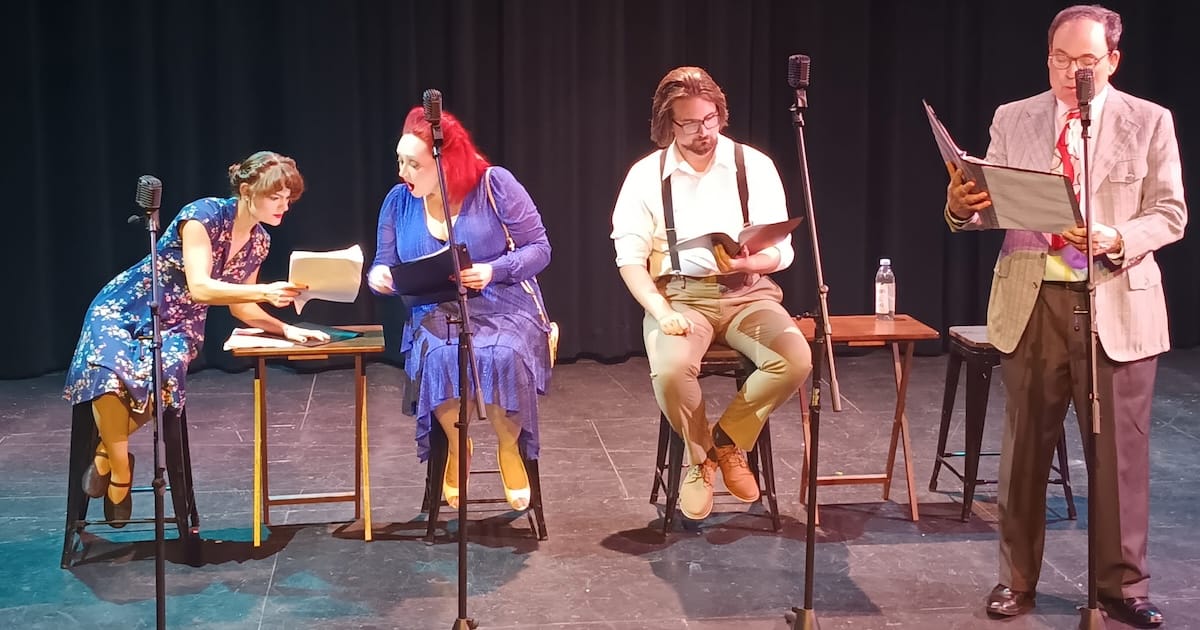
A scene from The Scarlet Pimpernel: An Old Time Radio Production. | Photo: Leah Grossman
The drama never tunes in
Taylor, who also directs, incorporates material from a 1938 Lux Radio Theatre broadcast into a play-within-a-play about a struggling Denver station attempting to impress prospective advertisers. The premise promises two complementary forms of suspense: Will Sir Percy complete his rescue mission, and will the station survive a live broadcast in which nearly everything can go wrong?
Neither question generates much tension.
The production opens with Michael Howard, played by Tyler James, welcoming the audience as the station prepares to go on the air. When the broadcast begins, he moves to the Foley station, where he creates live sound effects with a variety of objects, such as drumsticks for hoofbeats. Other cast members frequently join him when they are not in a scene to perform more complicated effects. The microphones, stools, scripts, coffee table and KETC banner establish the world economically, while James and Char Worthey’s sound design captures the handmade ingenuity associated with radio’s Golden Age.
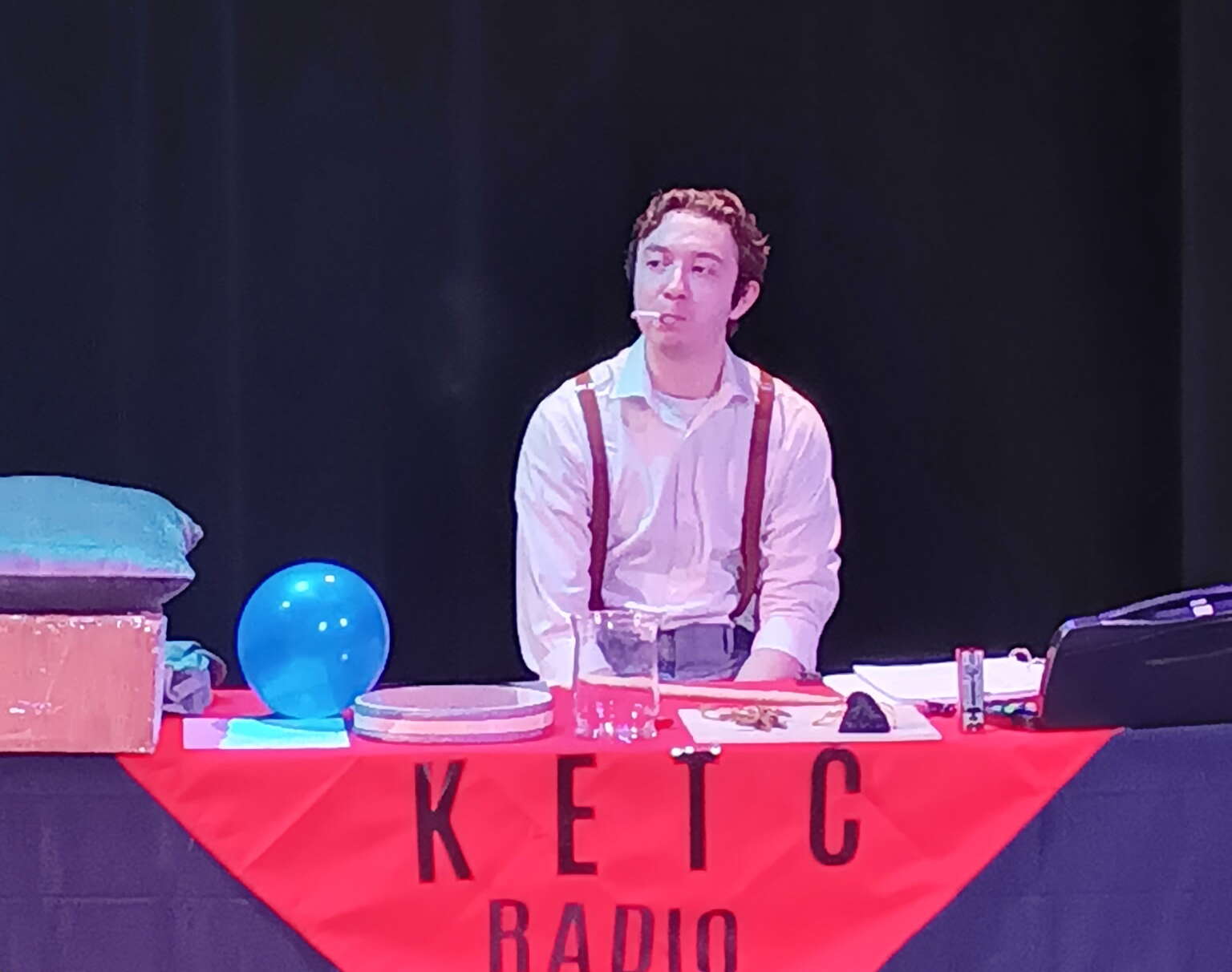
Tyler James in The Scarlet Pimpernel: An Old Time Radio Production. | Photo: Leah Grossman
The original Lux script already has a strong broadcast structure, complete with act breaks, station identification, recaps and extravagant advertisements for soap flakes. Taylor’s new frame therefore needs to make the people producing the program as compelling as Percy and Marguerite. Instead, their circumstances remain thin.
Station boss Barrett Cockburn (Chris Brown) needs the show to attract advertisers, but the consequences of failure remain abstract. His son Eddie (Atticus Levy), who plays Sir Percy, arrives with his new girlfriend, Darla Williams (Jackie Maddox), while station employee Silvia Sanders (Emi Newton) is pressured into playing Marguerite after another performer drops out. These substitutions should cause panic, but both women enter the broadcast with little difficulty, making the promised backstage mayhem largely theoretical.
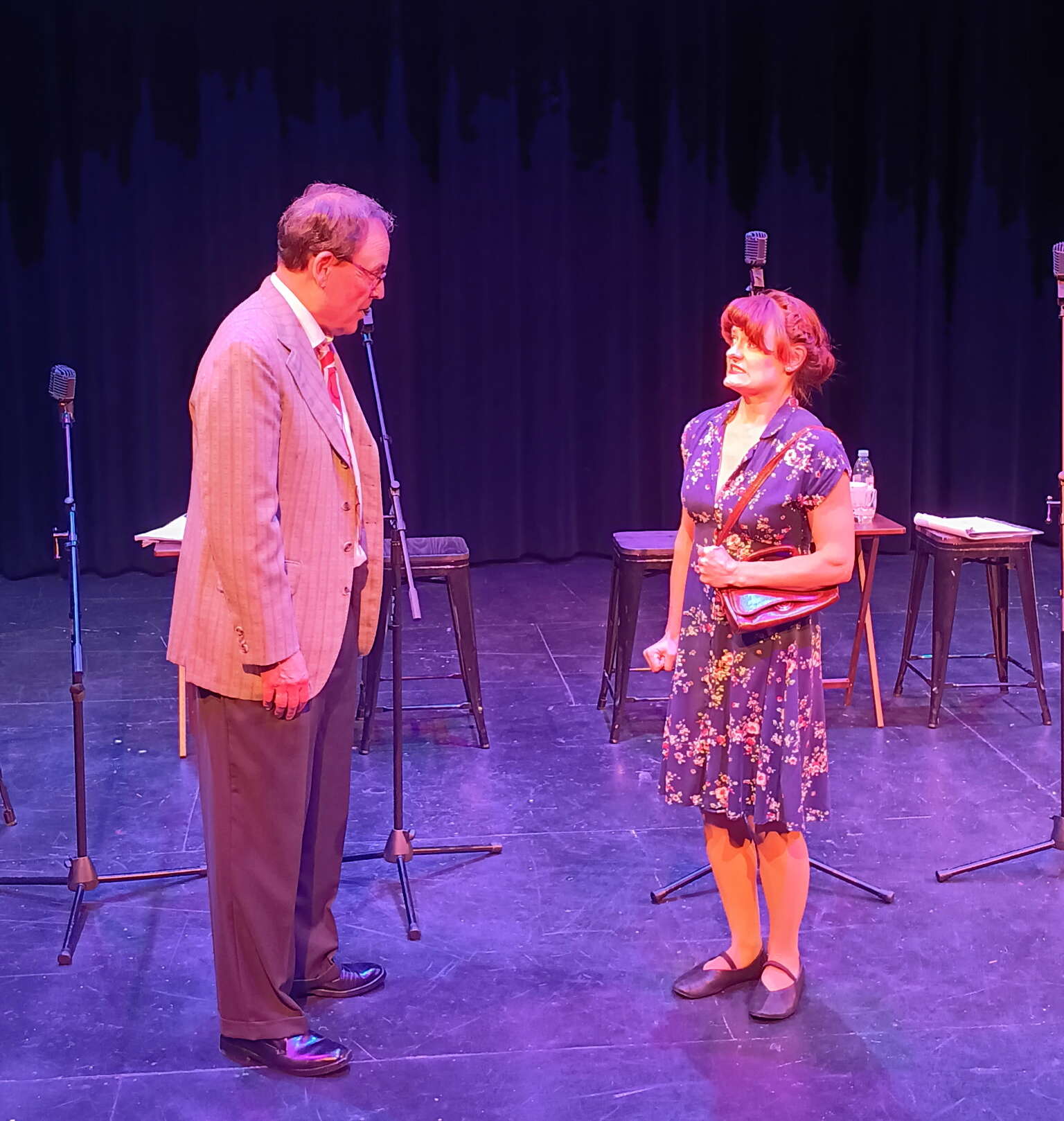
Chris Brown and Emi Newton in The Scarlet Pimpernel: An Old Time Radio Production. | Photo: Leah Grossman
Static behind the microphones
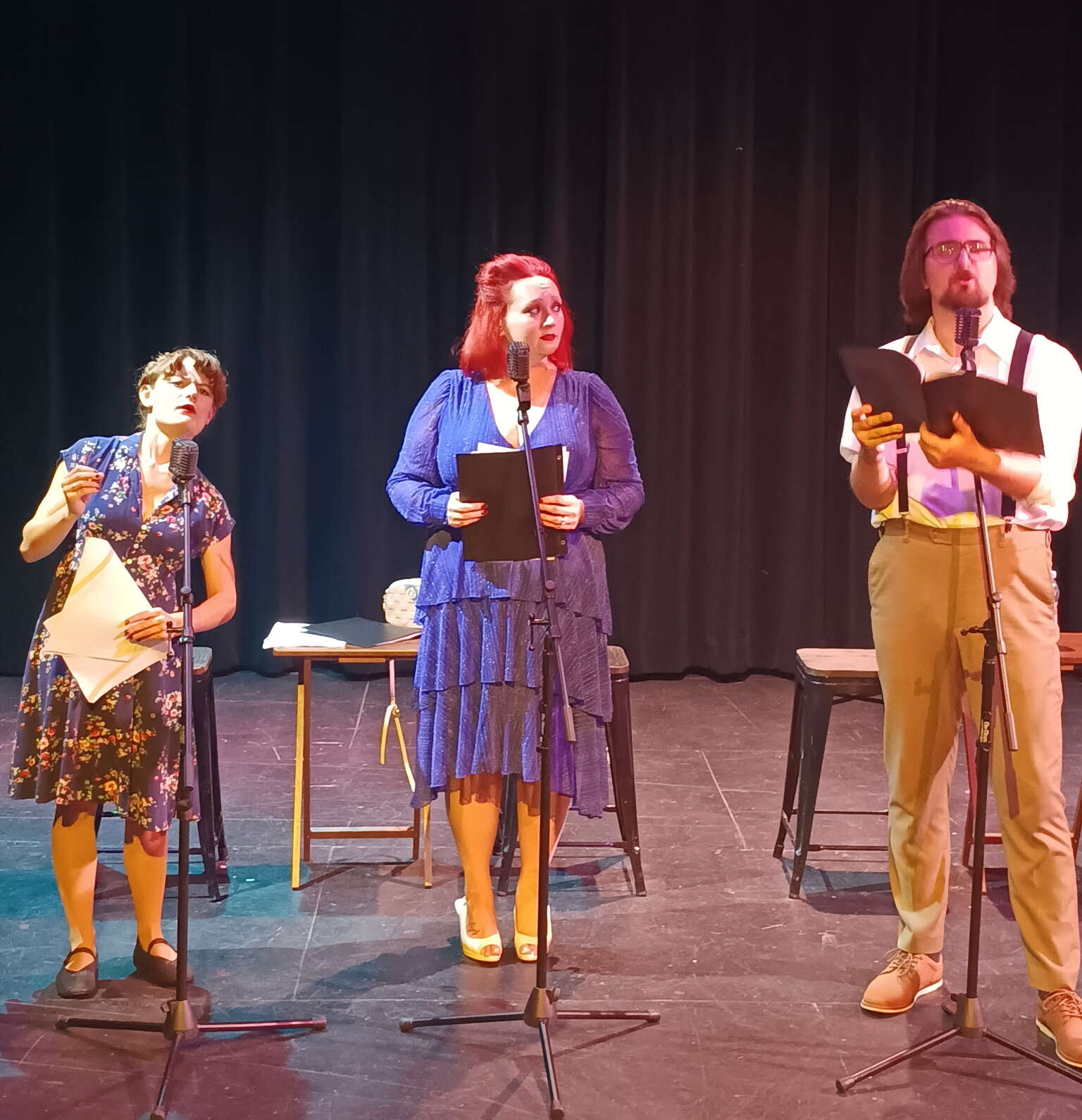
The actors are understandably holding scripts and speaking into microphones. Yet a theatrical production of a radio play must give the in-person audience something captivating to watch. Taylor too often directs the company to stand still and perform character voices rather than explore the physical comedy of people desperately trying to keep a live broadcast running.
Levy clearly separates Percy’s exaggerated foolishness from the Pimpernel’s more commanding voice, while Maddox creates a range of comic voices for supporting characters. Those vocal choices help distinguish the crowded cast of the radio drama. However, because the actors rarely change how they stand, move or respond to one another, the transformations remain more interesting to hear than to watch.
Newton shows how a more physical approach could work. As Silvia and Marguerite, she leans toward and away from the microphone, reacts to the actors around her and uses small gestures to make the relationships clearer. Even when she is reading from a script, she looks engaged with what is happening in the room rather than focused only on delivering the next line.
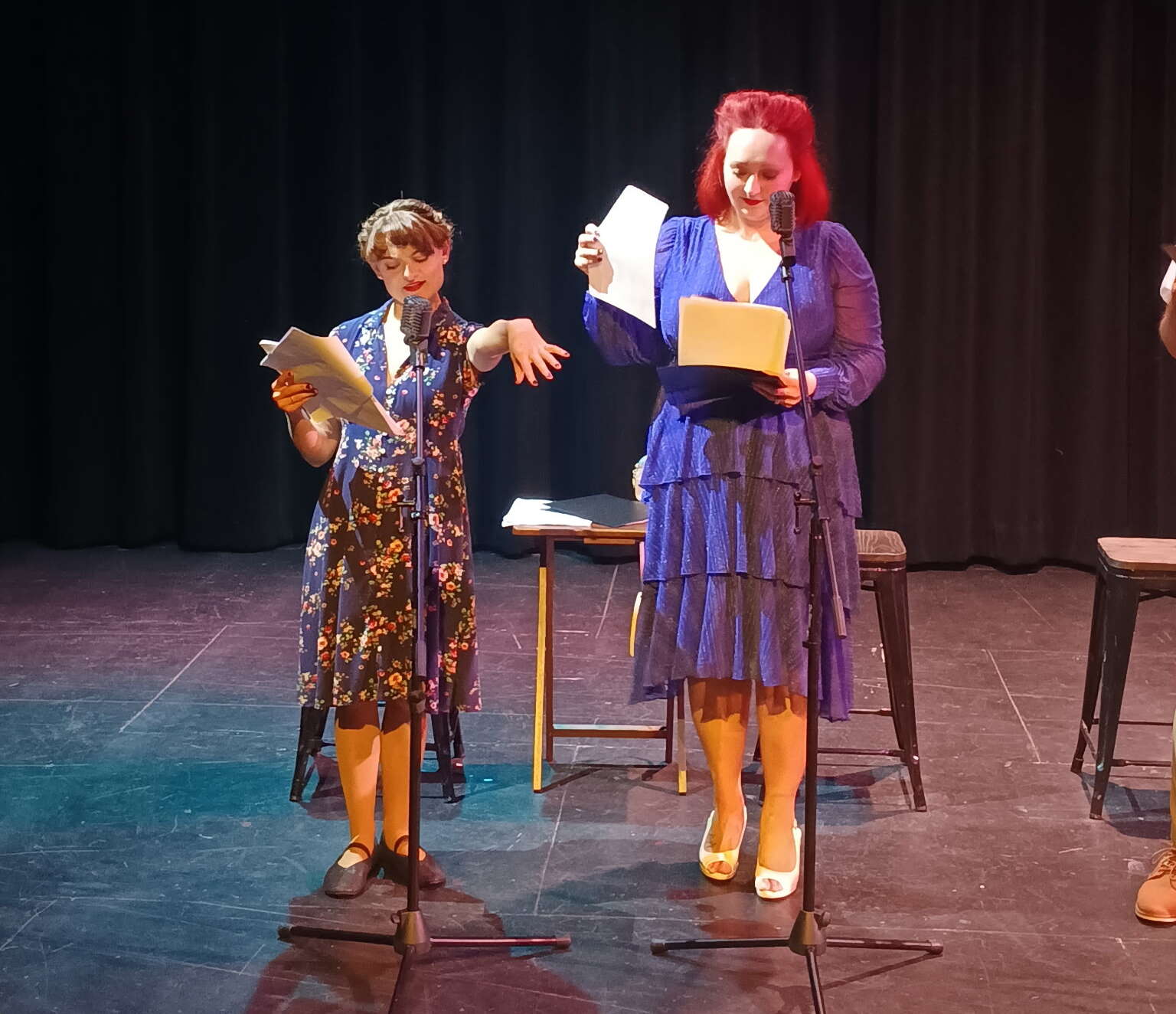
Emi Newton and Jackie Maddox in The Scarlet Pimpernel: An Old Time Radio Production. | Photo: Leah Grossman
The production also struggles to make Orczy’s adventure legible. Percy’s disguises, Marguerite’s suspicions and the dangers surrounding the Reign of Terror blur together, particularly after an intermission interrupts the 90-minute evening. An earlier pause, staged like a sponsor break while Cockburn demands coffee and the employees scramble around him, keeps the fiction alive. The formal intermission drains the momentum and makes the story harder to reenter.
By the ending, the workers turn against their bullying boss, but that rebellion arrives before Taylor has fully connected their workplace resentment, the pressure to secure advertisers and the Pimpernel’s concealed identity. The production gestures toward a comedy about underestimated people taking control of the story without developing that idea enough to make the payoff feel earned.
Elemental’s actors approach the material with evident goodwill, and audiences nostalgic for vintage broadcasts may enjoy watching the Foley effects take shape. Yet this world premiere remains caught between audio drama and stage comedy.
Sir Percy’s secret identity helped establish a formula that later heroes such as Spider-Man would carry to global success. Elemental’s production recreates Sir Percy’s adventures with the machinery of old-time radio but never finds the theatrical spark needed to make this influential secret hero feel newly alive.

An award-winning Colorado arts and culture reporter originally from Mineola, Texas. Tresca is the chief theatre critic for OnStage Colorado and managing editor of OnScreen Colorado. He’s the editor of Bucket List Community News, a contributor to Denver Westword and Estes Valley Voice, a resident storyteller for the Bonfils-Stanton Foundation and the co-host of the OnStage Colorado Podcast.

Leave A Comment