
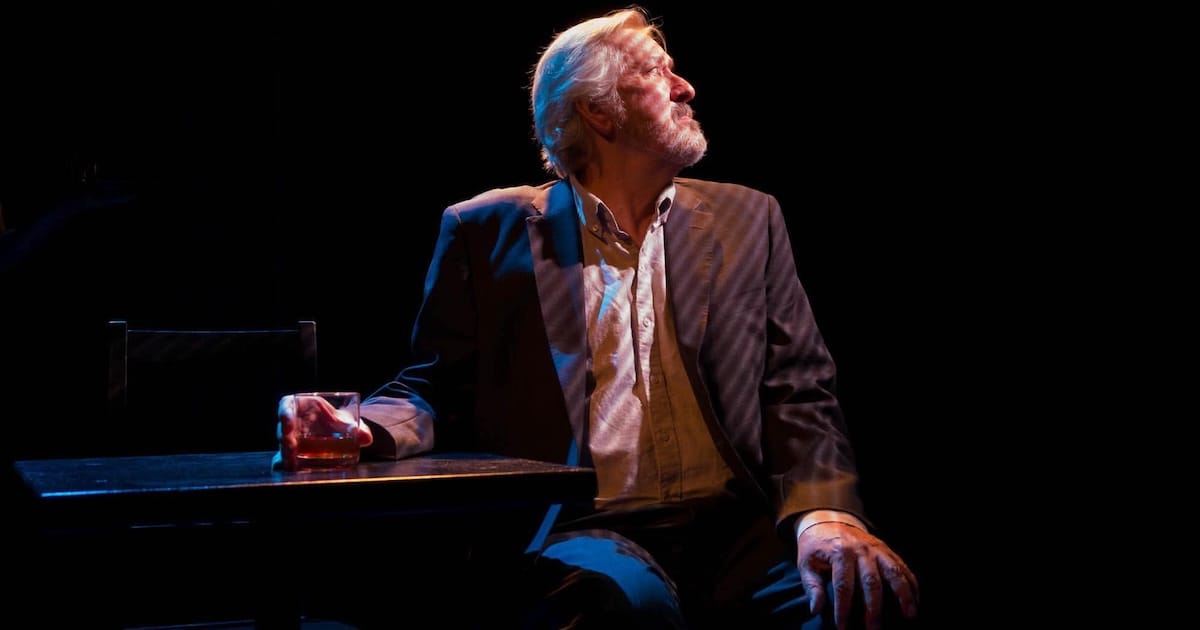
Denver Theatre Ensemble gives Derek Murphy’s Closing Times an intimate, atmospheric world premiere.
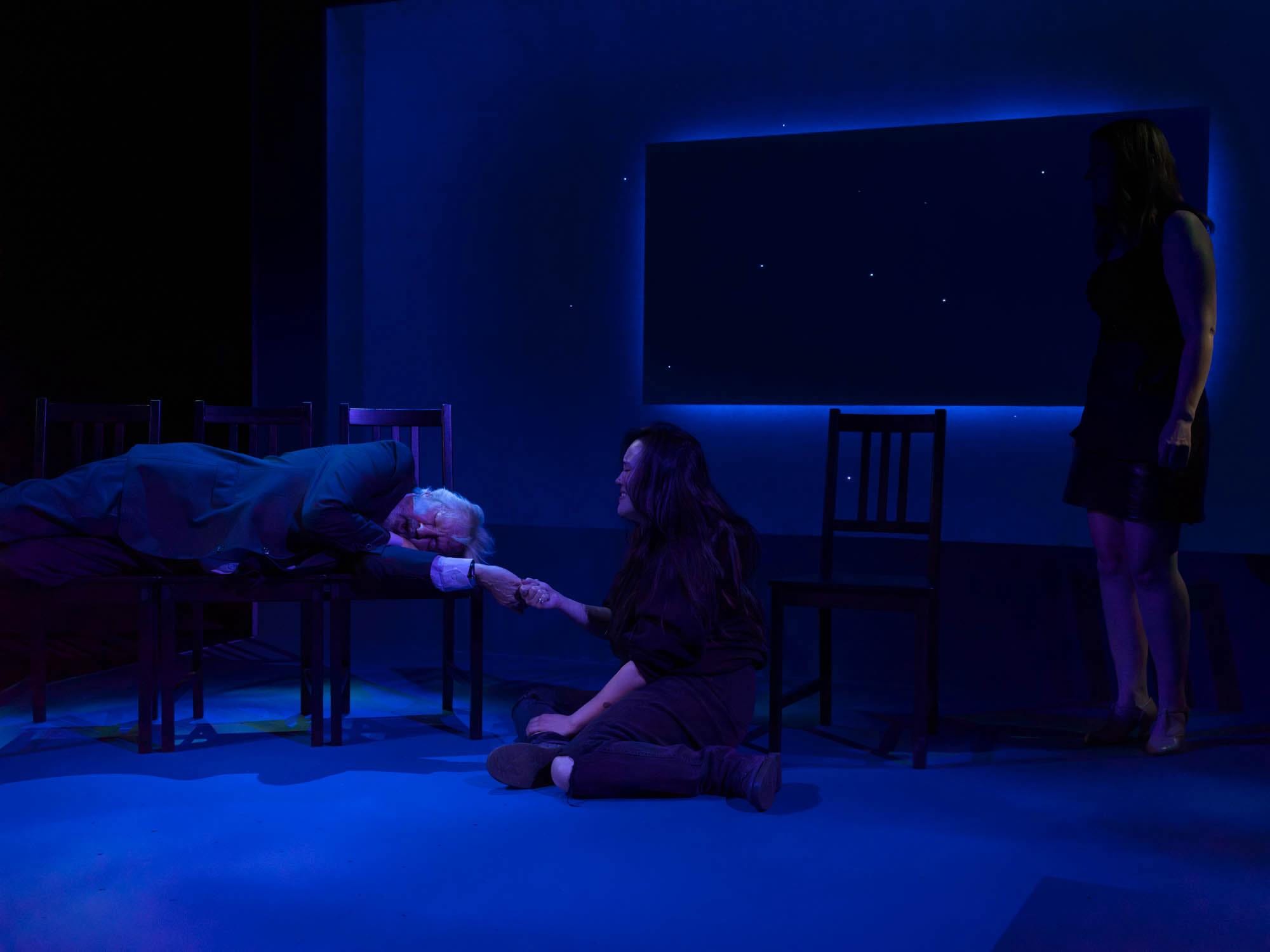
A man sits in a bar, reminiscing about the life he did not lead. He goes to a bus stop, where a young woman who clearly knows him refuses to leave him alone. Then the action slides toward an ethereal third space before returning to the bar.
Rinse and repeat.
Those are the three locations in Derek Murphy’s Closing Times, receiving its world premiere from Denver Theatre Ensemble at the University of Denver Black Box Theatre. Yet each cycle through them changes what the audience understands.
Directed by Ina Marlowe, Closing Times is a prickly existential ghost story about a man forced to confront the difference between regretting his life and accepting responsibility for it. Murphy’s repeated motifs occasionally explain more than necessary, yet the production’s shadowy atmosphere and haunting performances carry the play toward a wrenching conclusion.

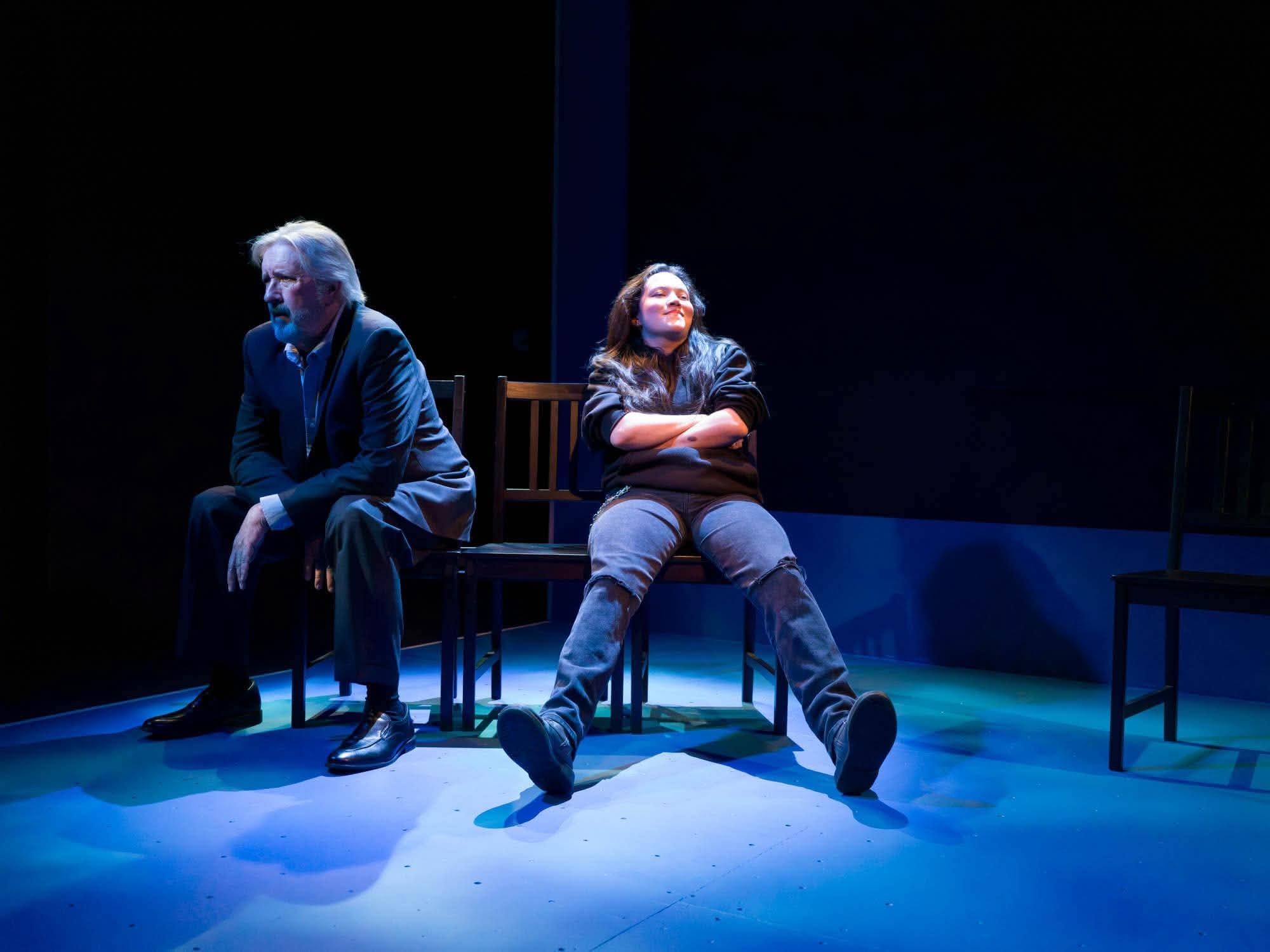
Kendall Marlowe and Rhianna DeVries in Closing Times. | Photo: Mad Montgomery
Waiting for something to happen
Murphy’s play has many of the same characteristics as Beckett’s Waiting for Godot: circular conversations, things that never appear when expected, a lonely spot where characters wait for what comes next and a lingering question about why and where this is happening. The mood, however, tilts toward noir. Molly enters in a hood, knows more than she should and keeps Eddie off balance with questions that sound casual until they draw blood.
Kendall Marlowe gives Eddie a sallow, depleted presence. He slumps through the bar scenes, then snaps to attention whenever Molly crowds him. His irritation has comic bite, particularly as he tries to enforce an invisible border around his seat, but Marlowe lets the humor drain away whenever Molly lands on something true.
Eddie once owned the rundown bar he now frequents and years ago met Pattie Murray there. They had a passionate romance, but when Pattie became pregnant, Eddie gave her money and allowed her to return to Ireland alone. He has spent decades treating that moment as a tragedy that happened to him. Molly forces him to consider the choices he made before and after the bus pulled away.
Murphy’s strongest idea is that indecision does not erase responsibility. Sometimes doing nothing becomes the action that defines one’s life.
Marlowe resists making Eddie cuddly. He’s witty but also impatient and selfish, which gives his later vulnerability weight. As Molly strips away his preferred account of the past, his posture tightens, his voice loses its swagger and the man who claims to want solitude begins to look terrified of being left alone.
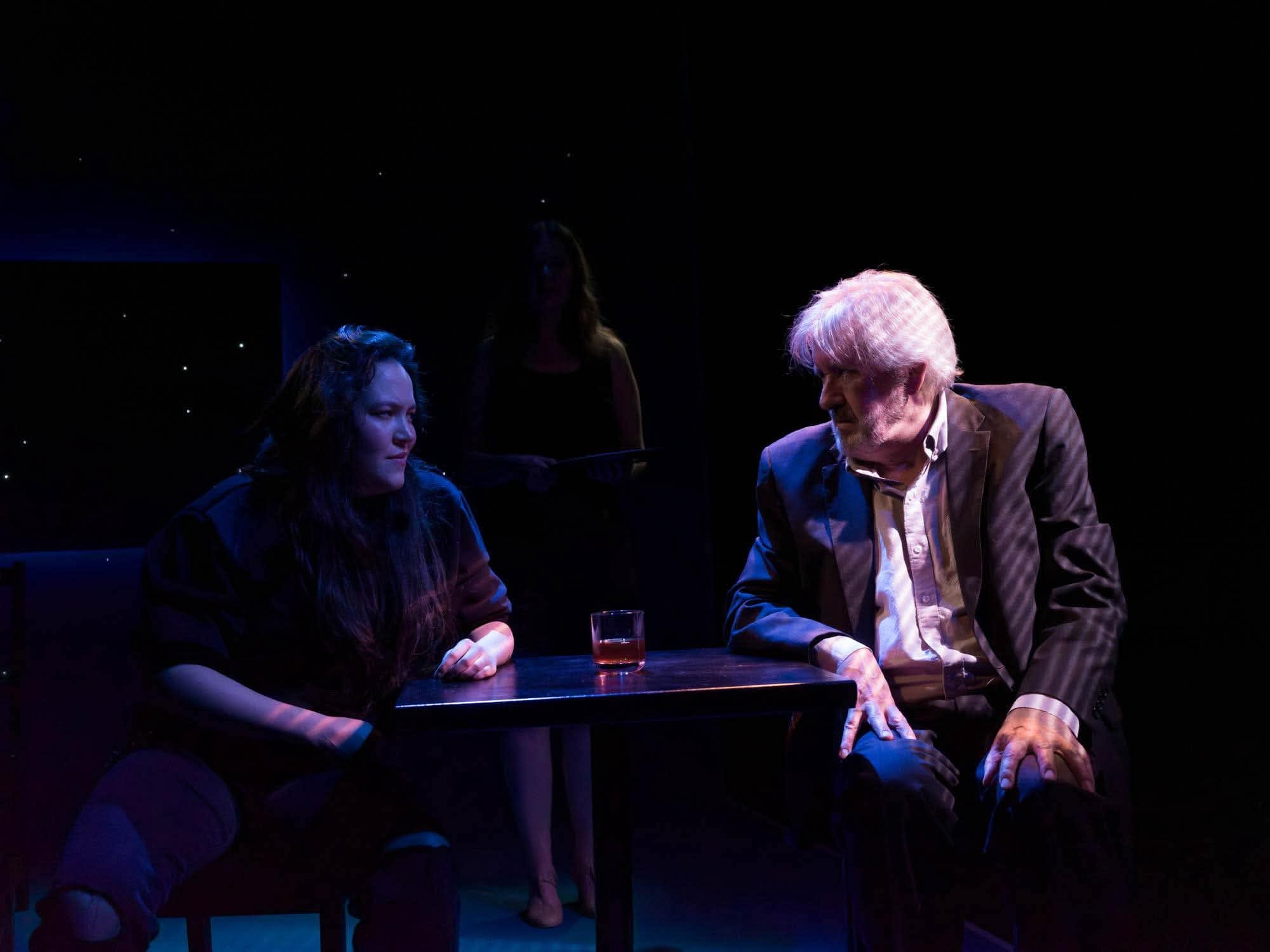
Rhianna DeVries and Kendall Marlowe in Closing Times. | Photo: Mad Montgomery
No clean getaway

An award-winning Colorado arts and culture reporter originally from Mineola, Texas. Tresca is the chief theatre critic for OnStage Colorado and managing editor of OnScreen Colorado. He’s the editor of Bucket List Community News, a contributor to Denver Westword and Estes Valley Voice, a resident storyteller for the Bonfils-Stanton Foundation and the co-host of the OnStage Colorado Podcast.

Leave A Comment