
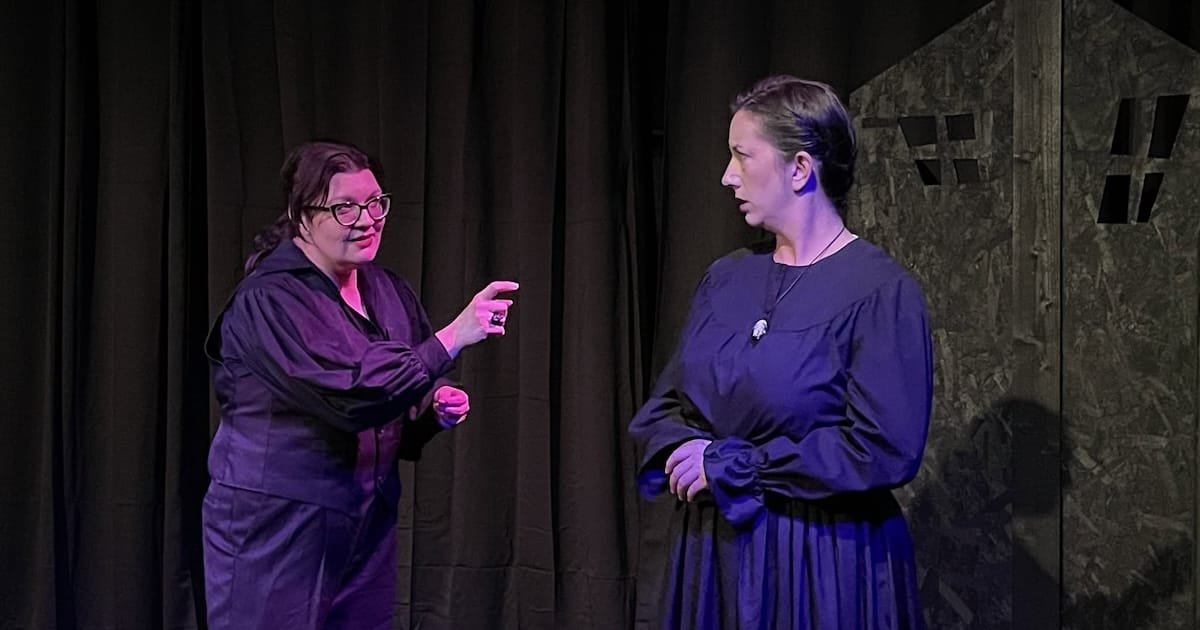
Elemental Theatre’s production of Jeffrey Hatcher’s ghost story is a taut two-person thriller.
When I interviewed 13th Floor Haunted House area manager Bryan Koop recently, I asked him whether there was a type of scare or technique that almost always gets people.
“People are scared of so many different things,” Koop said. “But there are certain things that are almost always successful, like a loud noise and some bright flashing lights is almost always going to startle someone. If we can craft that into something more theatrical, then it elevates that simple, subtle scare.”
Elemental Theatre Company’s production of Jeffrey Hatcher’s The Turn of the Screw understands the value of a well-placed loud noise, an intense blackout and a flash of light onstage.
Directed by Jeamus Wilkes, the two-hander features Jaccie Serbus as the woman and Staci York as the man, though those labels hardly describe the range of characters the pair ultimately embody. In the intimate Three Leaches Theater, they tell Henry James’ ghost story with relatively few resources, yet the result is extremely effective.
It is also the best thing I have seen from Elemental Theatre since the company emerged from Wheat Ridge Theatre Company in 2025.
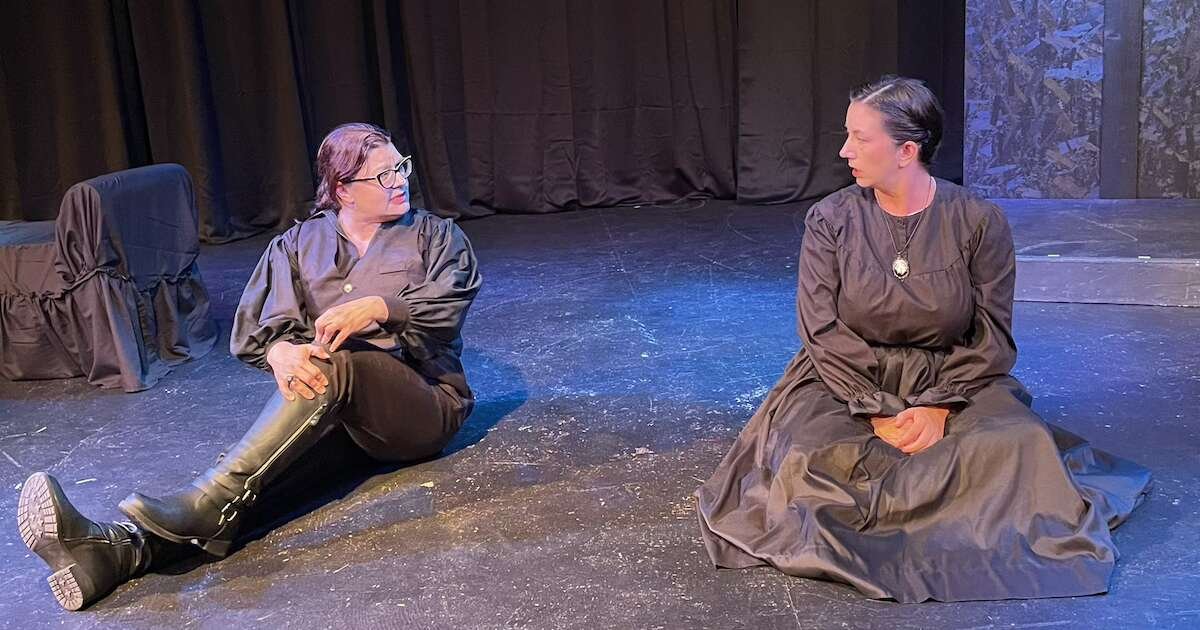
Staci York and Jaccie Serbus in Elemental Theatre’s production of The Turn of the Screw. | Photo: Selena A. Naumoff
Less is more
As you walk into the Lakewood black box, eerie music plays over a simple set made up of two black-painted wooden structures loosely suggesting Gothic buildings and a couch. Initially, I was nervous it might not be enough.
Those reservations were misplaced. This story works precisely because Wilkes keeps the focus on the words and allows the audience to become lulled into the world before snapping that comfort with a jump scare.
Hatcher’s two-person adaptation centers on a young governess hired to care for two children at an isolated English estate. She soon learns that the previous governess and another employee, Peter Quint, are both dead, and she begins seeing what she believes are their ghosts.
As the story progresses, she becomes convinced the pair are attempting to corrupt the children and somehow regain the physical intimacy they have lost in death.
The more you think about that premise, the more disturbing it becomes.
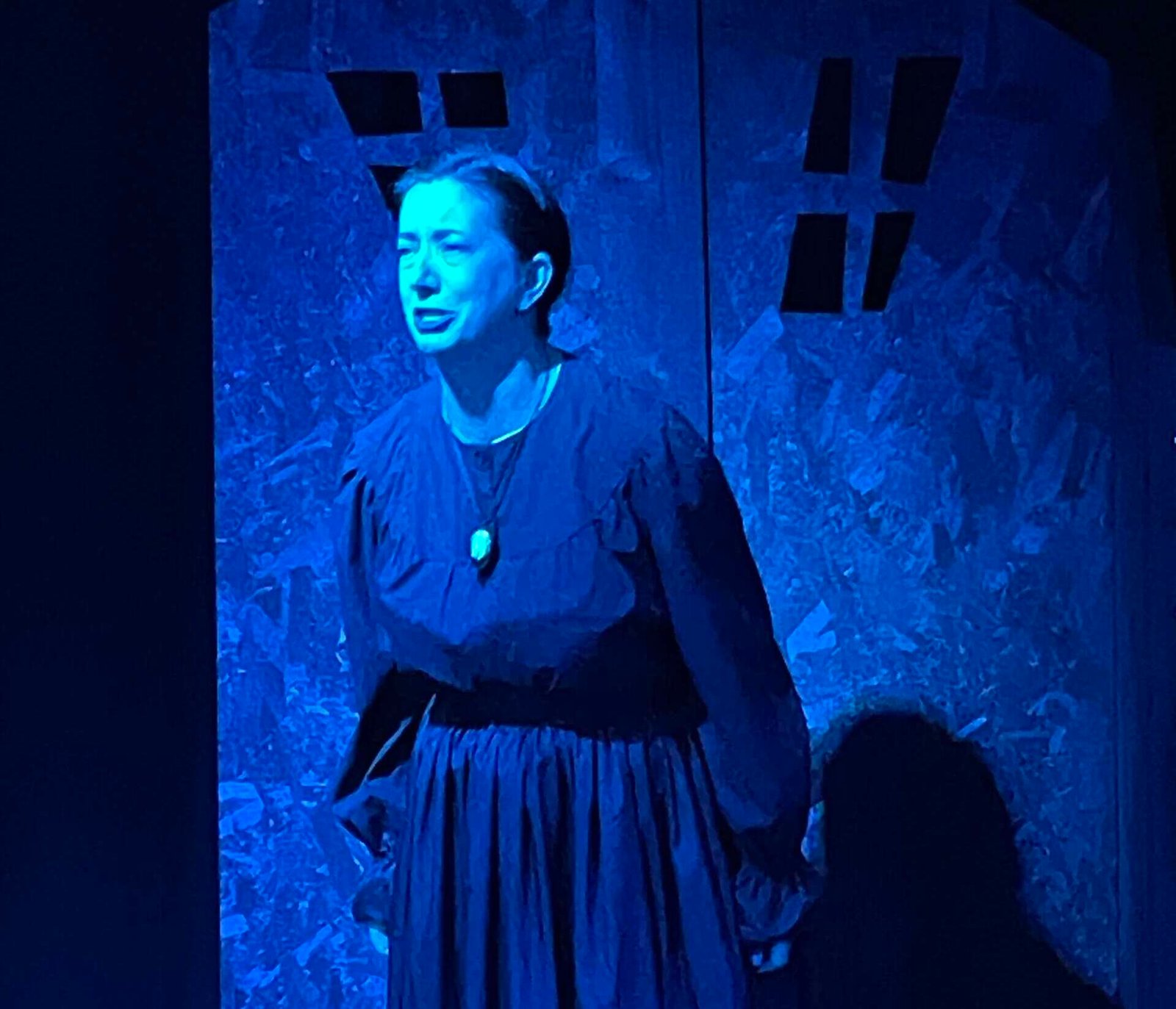
Jaccie Serbus in The Turn of the Screw. | Photo: Selena A. Naumoff
Two actors, many ghosts
Wilkes makes strong use of both performers. Serbus begins with an optimism that gives the production room to breathe. She is funny around the children, particularly when playing with the young boy, Miles, at the piano. That lightness makes the shift into dread extremely effective.
As the woman sees more of the ghosts and realizes no one else will acknowledge what she believes is happening, Serbus slowly lets desperation take over. Her performance becomes increasingly aching as the governess tries to convince those around her that the children are in danger.
York, meanwhile, plays nearly everyone else. She moves between the children, the older housekeeper, the narrator and both ghosts with impressive precision. Even without elaborate costume changes, York makes it clear who she is at any given moment through sharp vocal shifts and physicality.
The ghosts are especially distinct. One has a more flowing, seductive quality, accompanied by the recurring sound of dripping water. The other is rigid and stoic, often appearing on a slightly elevated platform that gives him an added sense of authority and menace.
One particularly effective moment comes when Serbus first sees the male ghost. York stands almost motionless before disappearing, only to reappear around a corner with a precisely timed scare. It is simple, and that is what makes it work.
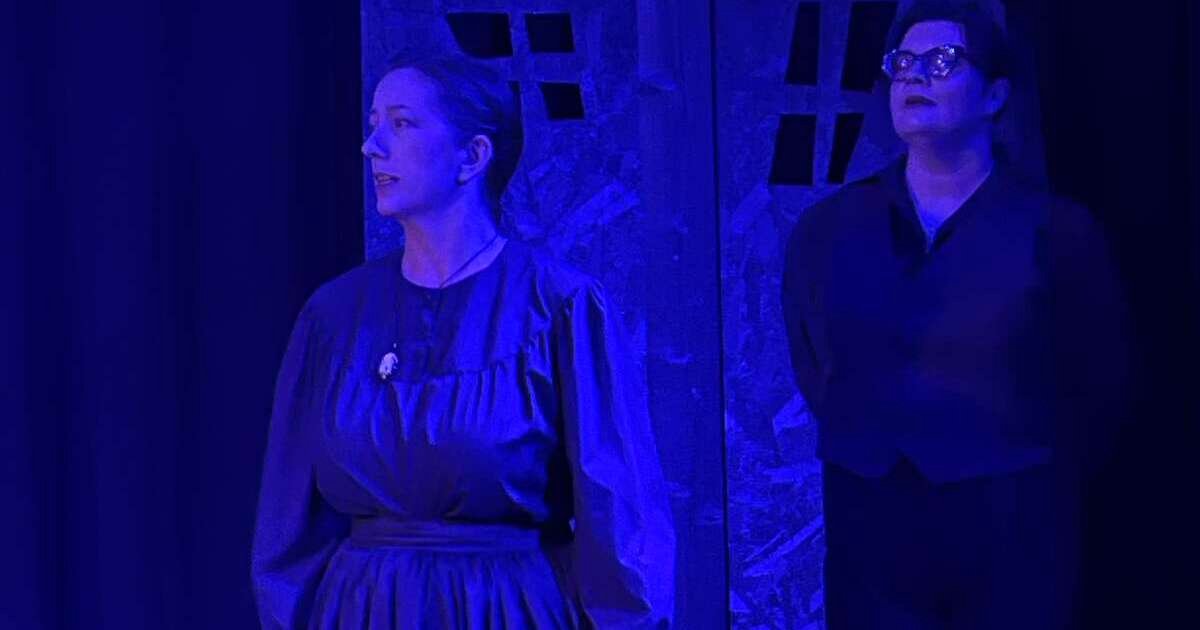
Jaccie Serbus and Staci York in The Turn of the Screw. | Photo: Selena A. Naumoff
Trusting the story
Char Worthey’s lighting and sound design repeatedly make those theatrical tools feel dangerous. Sudden blackouts cut off scenes at exactly the right moment. Repeated sounds become increasingly eerie. Flashes of light make an apparition feel more startling than any elaborate special effect could.
The more I think about this production, the less I want a more elaborate version of it.
A bigger set or more effects might look impressive, but they could also distract from what makes The Turn of the Screw work. At its core, this is someone telling a ghost story. Hatcher’s narration reinforces that feeling, and Wilkes understands how much power there is in leaving space for the audience’s imagination.
Sometimes all you need is a rapid turnaround, a corner, a sharp blackout and a well-timed sound cue to make the audience jump.
That goes back to Koop’s point: The mechanics of a scare can be simple. The artistry comes from knowing when and how to use them.
Wilkes and his two-person cast know exactly what they are doing, resulting in a remarkably effective ghost story that’s perfect for the Halloween season.

An award-winning Colorado arts and culture reporter originally from Mineola, Texas. Tresca is the chief theatre critic for OnStage Colorado and managing editor of OnScreen Colorado. He’s the editor of Bucket List Community News, a contributor to Denver Westword and Estes Valley Voice, a resident storyteller for the Bonfils-Stanton Foundation and the co-host of the OnStage Colorado Podcast.

Leave A Comment