
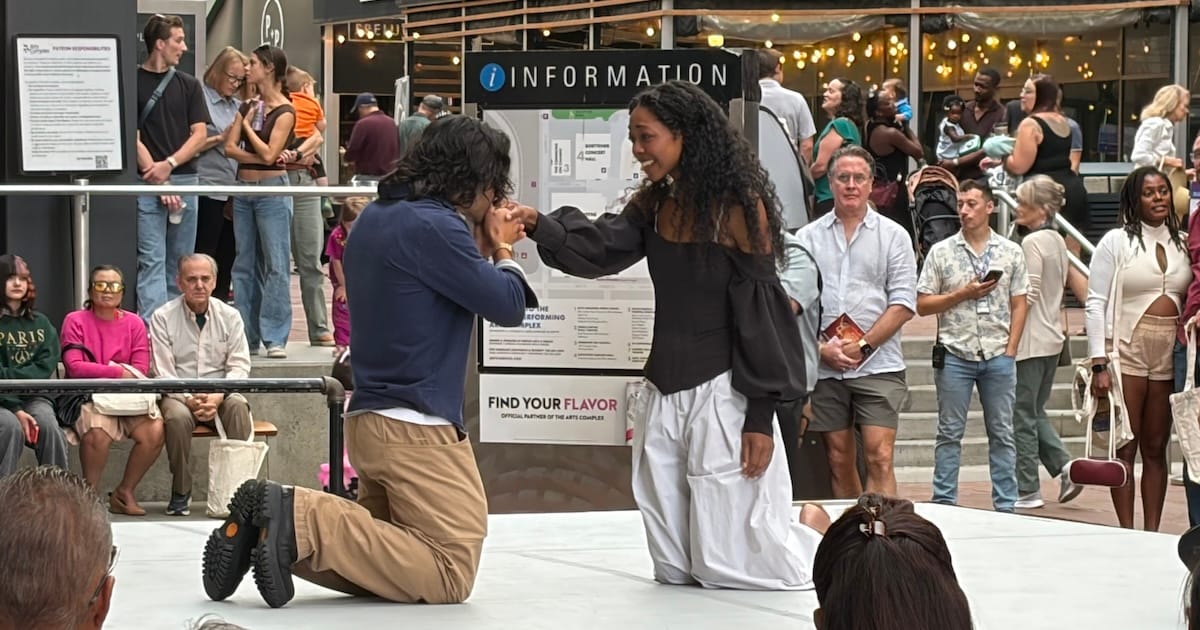
This month, Alex and Toni tackle the question everyone’s asking: what does AI mean for theatre? They dig into the Tilly Norwood “AI actress” controversy, SAG-AFTRA’s pushback, and where companies should (and shouldn’t) use AI tools in design, marketing, and criticism — plus a surprising listener story about ChatGPT quoting Toni’s own review back at her. Along the way: recent reviews of Misery, The Outsiders, Les Misérables, Gypsy, and Brindlewood; news on Boulder Ensemble Theatre Company’s sold-out streak and the Denver Center’s community open house; and an interview with Anne Penner and Brian Pertl on DU’s new Lamont School of Music and Theatre. Plus your Colorado Headliners for the weeks ahead.
Chapters
00:00 — Intro & Episode Preview
Alex and Toni introduce the September 2026 episode’s focus on AI and theatre, and preview the Lamont School of Music and Theatre interview with Anne Penner and Brian Pertl.
01:36 — What We’ve Seen Recently
Misery at the Arvada Center (Brian Mallgrave’s turntable house set); The Outsiders touring production at the Buell (strong rumble sequence, thin/derivative score); Les Misérables at Candlelight Dinner Playhouse in Johnstown (Casey Kearns’ large-scale set, 24-person ensemble); Gypsy from Performance Now at the Lakewood Cultural Center (sound issues, strong vaudeville numbers); and Brindlewood, a new folk musical from Third Side Theater Company at the People’s Building in Aurora (puppet design by Kelly Fox).
10:39 — OnScreen Colorado Update
Toni recaps growing film coverage on the sister site: Winter Park and Telluride festival guides, CU Boulder’s preparations for Sundance’s move to Boulder, a feature and review of the documentary mother: un/tethered, and upcoming pieces on Sundance’s local impact and potential federal film tax incentives.
12:33 — News: BETC’s Sold-Out Streak
Discussion of John Moore’s Denver Gazette story on Boulder Ensemble Theatre Company selling out The Witch and now The Weir before opening. Alex and Toni credit managing director Mark Ragan’s personal touch — handwritten-style emails, curtain speeches, greeting patrons — plus strong show selection and casting.
16:31 — Denver Center’s “First Act” Open House
Alex recaps the Sept. 12 open house at the Denver Center for the Performing Arts complex, including remarks from Denver’s mayor, performances previewing Destiny of Desire and The Tempest, and a peek at newly installed seating.
20:06 — Free Arts Days: DAM & the Friendship Powwow
Toni describes attending the Denver Art Museum’s SCFD Free Day and the 37th Annual Friendship Powwow, and previews her reporting on how SCFD’s free-admission program expands access to the arts.
22:58 — Main Topic: AI and Theatre — Tilly Norwood
The hosts introduce this month’s theme, noting they used Claude to draft an outline they then edited by hand. They open with the Tilly Norwood controversy — an AI-generated “actress” whose creator claimed talent-agency interest — and SAG-AFTRA’s pushback that AI is not an actor.
27:01 — Where to Draw the Line: AI Design Tools
A conversation about AI in marketing, poster art, and design — including community backlash on Colorado theatre Facebook groups toward AI-generated show art — versus longstanding non-AI design tools like Canva, and where the line between them really sits.
30:16 — Real-World AI Experiments in Theatre
Examples of AI already used in the field: a language model trained to co-write a script with a Prague theatre company, a 2021 Prague production scripted entirely by GPT-2, and an early GPT-3 writing experiment at a London theatre.
31:48 — Plays About AI
A rundown of stage works that engage AI and technology themes: Marjorie Prime (an AI hologram of a deceased spouse), coming to Curious Theatre in January; The Nether, on virtual reality and morality; and R.U.R., the 1920 play that coined the word “robot,” staged last fall by Springs Ensemble Theatre. Tangent on AI “grief chatbots” being researched at CU.
35:05 — AI and Journalism: Trust, Disclosure, and Gretchen’s Email
Research shows audiences trust AI-authored writing less once AI involvement is disclosed. Alex and Toni affirm all bylined OSC/OnScreen content is fully human-written, with AI used only for backend tasks like transcription and proofreading. They then read a listener email from Gretchen Roselli describing how a ChatGPT conversation — citing Toni’s Outsiders review — talked her out of buying $700 in tickets, only for her to later read the full review herself.
41:51 — Wrap-Up: Should OSC Have an AI Policy?
Closing thoughts on why audiences are less comfortable with AI in creative fields than in areas like medicine, and a plan for OSC to formalize a public-facing AI use policy.
42:04 — Interview: Anne Penner & Brian Pertl on the Lamont School of Music and Theatre Merger
Alex’s interview with Anne Penner (Chair, DU Department of Theatre) and Brian Pertl (Director, Lamont School of Music) about DU’s merger of its music and theatre departments into the new Lamont School of Music and Theatre — covering cross-disciplinary opportunities, embodied learning, entrepreneurship training, and why theatre and music programs feel comparatively insulated from AI disruption.
1:11:24 — Colorado Headliners
Upcoming shows previewed: Valarie: A Puppet Show (Blue Silk Productions); The Catastrophist (Theatre SilCo, Silverthorne); The Weir (BETC); The Tempest (Denver Center Theatre Company); Bad Theater Night (One Night Stand Theater); Borrowing Funny (Vintage Theatre); The Tin Woman (Windsor Community Playhouse); The Hatmaker’s Wife (Firehouse Theater); Drag Queen Magic (Local Theater Company); and Fools (Shark Box Theatre). Also previewed: upcoming reviews of Come From Away, Gypsy, Sweeney Todd, The Producers, The Catastrophist, Hold Onto Your Butts, No Contract, and Destiny of Desire, plus concert coverage of Role Model, Brandon Flowers, and Lily Allen.
1:21:54 — Outro
Alex and Toni close, pointing listeners to the weekly Theatre Blast newsletter and asking them to rate, review, and subscribe.
Transcript
Created by AI gremlins
Intro
Alex Miller (00:00): All right. Hello and welcome to the September 2026 episode of the OnStage Colorado Podcast. I’m Alex Miller.
Toni Tresca (00:07): And I’m Toni Tresca, and this month we’re going to take a look at AI — artificial intelligence — and theater. We’re going to talk about the pros, the cons, and the stuff we don’t even know is going on yet.
Alex Miller (00:22): Exactly. Everybody’s talking about AI — it’s going to end the world, it’s going to doom us, it’s going to be the greatest thing ever, we’re never going to have to work again, whatever. We’re going to figure it all out today. So we’ll dig in and talk about it from the perspective of performing arts, but theater specifically.
Toni Tresca (00:40): Yeah, absolutely. After our episode today, we promise to have solved AI and all of its various problems.
Alex Miller (00:46): Yeah, and then we’re going to tackle Gaza next week. We’ll figure that out.
Toni Tresca (00:50): Well, later in this episode we’re going to have an interview that Alex did with Anne Penner and Brian Pertl at the Lamont School of Music and Theatre at the University of Denver. What was that all about?
Alex Miller (01:03): Yeah. Anne, of course, is a well-known actor and theater educator from DU who’s been on the podcast before, and she’s chair of the Department of Theatre at DU. Brian is the newer faculty member there — he’s the director of what used to be the Lamont School of Music but is now morphing into the Lamont School of Music and Theatre. They’ve merged the departments, so I wanted to hear what that was all about. And bonus: they also talk about AI and the arts a bit in there too. So stick around for that.
Toni Tresca (01:31): I love when we have that kind of synergy. It’s all coming together, Alex.
Alex Miller (01:35): That’s right.
Toni Tresca (01:36): Also in this episode, we’re going to talk about some news happening around Colorado, dig into the Colorado Headliners — some upcoming shows we think are worth checking out. But first, let’s start with what we’ve seen recently.
What We’ve Seen Recently
Alex Miller (01:52): So I checked out Misery at the Arvada Center — really great show, with two pretty well-known parts now, especially after the film back in the eighties or nineties [Kathy Bates won an Oscar for the role], and of course it’s been done a number of times around Colorado. I really enjoyed it — I hadn’t actually seen the stage version before. Brian Mallgrave, as usual, knocked it out of the park with the scenic design. He built basically an entire house on stage on a turntable, so that was a pretty big technical challenge.
Toni Tresca (02:30): The theater company shared a video of that turntable spin on social media, so if anyone hasn’t seen the show but wants to see it for themselves, it’s incredible to behold.
Alex Miller (02:43): Yeah — if I wanted to be really nitpicky, I’d say they maybe fell in love a little too much with the house-moving part, which slowed things down in a few places. But really, it’s a great show with a really good set of performances. And then you and I were both at The Outsiders — you just posted your review of that. This was the touring Broadway production at the Buell Theater at the Denver Center — the Tony Award-winning musical. We were both kind of like — it was certainly entertaining, but the story itself was pretty thin. It seemed a little derivative, and the music wasn’t anything to write home about. Still, a fun show to watch, and of course, that incredible rumble scene.
Toni Tresca (03:25): Yeah, there are three minutes of the musical that are just absolutely spellbinding — when they’re in that rumble, fighting and beating the hell out of each other. It’s incredibly exciting to watch. But the rest of the musical — the other two hours and twenty-five minutes — is competent, and I’m not really interested in just seeing competency, particularly from the Tony winner for Best Musical. As you mentioned, the score was pretty bland and uninspired, the lyrics were incredibly derivative, and the characters were really flat, in my opinion. I wanted a little more, especially given the pedigree it comes with from New York. It must have been a weak season — looking back, the other nominees were Hell’s Kitchen, which we also saw in Denver recently and weren’t big fans of, and also—
Alex Miller (04:14): Mm-hmm.
Toni Tresca (04:14): —Water for Elephants, which in my opinion would have been my vote. I really love that musical.
Alex Miller (04:19): On the plus side, though, you really loved Candlelight’s production of Les Misérables up in Johnstown. That sounded like an absolute banger.
Toni Tresca (04:28): It really was. The company up there — it’s a dinner theater — really challenged itself both technically and artistically with this show, and I was impressed. I love this musical; it’s a big mega-musical that tells the story of Jean Valjean, and it gave Candlelight a chance to show what it can do at full scale. There’s a massive set designed by Casey Kearns, with large pieces rolling in — beds, tables, the ABC Café forms, and this massive barricade that comes in and out seamlessly. There’s an incredible moment with Javert at the top where he literally falls off the building. It’s really impressive in terms of scope and scale, and the performances and vocal direction live up to this larger-than-life musical that demands so much of the cast. It’s a 24-person ensemble with a massive live orchestra playing the score. If you’re anywhere around the Johnstown area, I highly recommend you do what the entirety of America seems to be doing right now and get yourself to Les Mis.
Alex Miller (05:41): We’ve talked a lot about how Candlelight really caters to — they stick to fairly safe properties for their audience up there. But now that they’ve established such a strong reputation, I wonder if we’ll start to see them challenge themselves with things that are maybe a little less mainstream. What do you think?
Toni Tresca (06:00): I really do wonder. It’s difficult for them to do more traditional stage plays because Candlelight is such a big playing space — you have to have those tables set up, which naturally spreads folks out. So much of what makes modern plays with smaller casts work is the intimacy of the experience, which they really can’t do on that stage. But I don’t think that means they can’t take risks in terms of the musical selections they’re doing. We saw glimmers of that in previous seasons with Bright Star, for instance—
Alex Miller (06:36): Mm-hmm.
Toni Tresca (06:36): —a more contemporary musical that also had a lot of technical challenges. But yeah, Candlelight really impressed me with this dazzling production up north. It’s a really special show to me — I’ve loved this musical since I saw the film in 2012, which I now think is kind of mid, but it got me into the world and the music of it. So I was really pleasantly surprised with this production in Johnstown.
Alex Miller (07:11): You also got out to see Gypsy from Performance Now at the Lakewood Cultural Center. How was that?
Toni Tresca (07:18): It was a pretty good production. I’d say the Lakewood Cultural Center is falling into a bit of a tricky pattern right now with its sound design — the last few shows I’ve been to have sounded pretty tinny, and opening night with Gypsy was particularly bad. Many passages were really hard to make out, which was frustrating, because it was clear the performers were doing good work — I just had the darndest time hearing and understanding them. I’d hope to see that smooth out as the run continues. I’ve got some more complicated thoughts on it overall — I think it really excels in the vaudevillian sections of the show, while some of the book scenes in between aren’t quite as strong. But if you like this musical, it’s a well-sung version of Gypsy currently up in Lakewood.
Alex Miller (08:13): And then Brindlewood — this is an interesting show you wrote about. Tell us about it.
Toni Tresca (08:19): This is a new, original folk musical from up-and-coming troupe Third Side Theater Company, produced at the People’s Building in Aurora. I’d call it a kids’ musical in terms of subject matter — it runs one hour with no intermission. It’s about a young girl who wanders into an ancient forest and encounters a series of temptations from magical creatures — from a willow tree to various animal creatures — who all offer her something, but it comes with a price. It’s a morality play about what you’re willing to trade, and what you’re willing to give up to get what you want. I thought it was incredibly inspiring and visually inventive in so many ways. They have gorgeous puppet design, created by Kelly Fox specifically for this production — there’s a willow tree puppet the actor wears, maneuvering the hands and branches, that hangs over them; it’s this massive thing. There are also smaller handheld puppets for the badger and fox that the actors maneuver, and crow puppets held overhead with wings that flap meticulously. It creates a really whimsical, joyful experience that embraces the theatricality of the medium in exciting ways, and it’s got a pretty infectious score. As I note in the review, there are a couple of areas for refinement in the book — the entrance to Brindlewood, for instance, could be a bit clearer, along with some of the relationships throughout. But for a world premiere like this, with no developmental workshops beforehand, it’s an impressive debut.
Alex Miller (10:08): That one’s closing on the 13th, so it’ll probably be over by the time you hear this.
Toni Tresca (10:14): Indeed.
Alex Miller (10:14): But look for that and other reviews on the site, including Garth’s review of Curious Theatre’s production of Topdog/Underdog, which he really liked. We’ve also got a few concert reviews from Maddie — Jack Johnson at Red Rocks, Gregory Alan Isakov, and more to come. So what about over on OnScreen Colorado, our new film site?
OnScreen Colorado Update
Toni Tresca (10:39): If you’re a regular reader of the newsletter, you might have noticed we’ve been working more film stories into our coverage and sending those out in the weekly blast. That’s because we’ve been building out OnScreen Colorado, the sister site to OnStage Colorado dedicated to covering the state’s film scene. We’ve got guides to the Winter Park Film Festival and Telluride, a story I did on developments at CU’s campus to get it ready for the Sundance Film Festival, and a feature on the making of mother: un/tethered — a new documentary from Hold Tight — along with a review, where I wrote about how I thought it was an incredible, magnificent distillation of motherhood and the environment. We’re going to be doing a lot more coverage like that in the coming months — more festival guides on the way, a piece I’m working on digging into what Sundance’s move means for the local community, an interview with the state’s film commissioner to get a sense of what’s happening at the state level, and a look at how the federal tax incentives the federal government has been teasing — which they’re floating passing later this month — could actually impact Colorado’s film scene. We’ve got a lot of exciting stuff coming. If you’re even tangentially interested in the film world and the developing scene in Colorado, head over to OnScreen Colorado. And if you’re a filmmaker in the scene, or you’ve got a tip on something happening, please reach out — I’d love to hear from you and chat as we roll out the site.
News: BETC’s Sold-Out Streak
Alex Miller (12:33): Let’s switch over to the news. What have we got?
Toni Tresca (12:40): Did you get a chance to read John Moore’s story in the Denver Gazette about Boulder Ensemble Theatre Company and how its upcoming production of The Weir—
Alex Miller (12:50): I did. It’s very interesting. I’m pretty familiar with the whole story of what BETC’s been up to — I think it’s a combination of things. Under Mark Ragan, it’s really good management. Mark has a lot of money, which John spells out pretty clearly — anybody who listens to CPR will hear BETC ads nonstop, it seems, anytime you turn it on. And they’re doing really interesting work. But even with all that, it’s still almost unprecedented — this many sellouts.
Toni Tresca (13:29): John wrote the article on September 10th, and he wrote it because the company had sold out its previous production of The Witch in Denver and Boulder over the summer, and it’s about to sell out its current production, The Weir. It’s already fully sold out in Denver, and there were only a few tickets left in Boulder as of when the article published — nine days before opening — and they’re adding more performances to accommodate demand. John’s breakdown of why BETC has been so successful was pretty interesting too. He dug into the personal touch Mark Ragan brings to a lot of the marketing — he sends personal emails that read like he’s writing directly to you, and he gives these curtain speeches before pretty much every single show that some might call long, but they’re gregarious, informative, and funny.
Alex Miller (14:23): Mm.
Toni Tresca (14:24): They keep the room small so it can be intimate, and he greets you on the way in and out. John really argues that you need to find your own Ragan to be successful — somebody who can bring the money, yes, but also help shepherd the experience and really commit to it fully. I’d add that BETC is also just objectively picking interesting shows and then casting the hell out of them.
Alex Miller (14:55): Yeah. He talked about how Mark greets everybody on the way in and out — he’s just everywhere, seems to be at every show. The money helps, but it’s that personal attention from leadership that matters, not just for theater or for BETC, but for any company — you’re usually going to do better with that kind of commitment from leadership. Not everybody’s going to have those resources, but there are certainly things that are cheap or free, like writing an email newsletter and not worrying about formatting it — just, here’s the words, short and sweet.
Toni Tresca (15:41): Yeah, I’ve gotten fooled a couple of times where I’m like, ‘I’ve got a message from Mark — I need to look at this and get back to him in a timely manner.’ No, it’s just a ticketing email.
Alex Miller (15:58): So — did you get your tickets to The Weir?
Toni Tresca (16:02): Yes, I did. I’m going the second Saturday of its run in Denver.
Alex Miller (16:09): Yep.
Toni Tresca (16:09): I’ve got tickets already, thank God — if I’d waited, I definitely wouldn’t have.
Alex Miller (16:12): Yeah, I’ve got mine.
Denver Center’s “First Act” Open House
Alex Miller (16:12): Moving on to the news — I went to the Denver Center for the Performing Arts complex on Saturday, September 12th, the day we’re recording this. It was interesting because it was Saturday morning — you’d think, who wants to go to that? But I was up early anyway, and it was packed. It hadn’t been planned for months or anything; it was kind of an impromptu open house. Opera Colorado had a table out there, it was a beautiful day, so there was activity happening outside and in the atrium — the ballet, the opera, the Denver Center Theatre Company all did little performances. The Colorado Symphony had a brass quintet playing some music. Mayor Mike Johnston was there and had some genuinely good things to say about the arts and how important they are to Denver, so here’s a short clip of that.
[Clip: Mayor Mike Johnston]
Alex Miller: And then, like I said, they had a couple of clips from upcoming shows at the Denver Center Theatre Company, including Destiny of Desire and The Tempest — I’ll share a bit of that audio too, just to give you a taste.
[Clips: Destiny of Desire / The Tempest]
Toni Tresca (18:39): It’s not like I wasn’t already going to Destiny of Desire and The Tempest, but this definitely piqued my interest — I’m curious to see more, particularly Destiny of Desire. There’s so much singing in it.
Alex Miller (18:51): Yeah, my gosh — I’m not sure who the actress was, but she had a beautiful voice, both of them did. It was a cool event, and I’m glad they did it. There were a ton of people there, a lot of folks just walking by going, ‘Hey, what’s going on?’ and wandering in. All the facilities were open — you could wander into any of the venues. I actually wandered into the Kilstrom — nothing going on in there except they were working on the set for The Tempest. I know that’s going to be a great set, because The Tempest always lends itself to something interesting, and the Kilstrom is a great space to build in. I ended up talking to an usher in there who’d been in the Coast Guard in New York City — that was fun. It was a lot of fun overall; I hope they keep doing it.
Free Arts Days: The DAM and the Friendship Powwow
Toni Tresca (19:39): That does sound like a cool way to bring the community into the arts complex and give them a sense of what’s coming. I saw the Denver Center is also doing giveaways and chances to buy season tickets there.
Alex Miller (19:53): Mm-hmm.
Toni Tresca (19:54): It’s obviously a big marketing push for them, but they’ve got a cool complex and cool shows happening there, so why shouldn’t they?
Alex Miller (20:04): Absolutely.
Toni Tresca (20:06): Speaking of free arts, I also went out today, September 12th, to a free art experience — the Denver Art Museum downtown for their Free Day, plus the 37th Annual Friendship Powwow taking place on campus. It was quite an experience to see so many people taking over all three buildings of the DAM — sprawled across the main building’s multiple floors, bustling with people exploring the installations, with the powwow happening in the background. It’s been happening on that campus for many years, welcoming folks in and creating this communal vibe — you can always hear it in the distance. It was a really invigorating experience, and I was there because I’m reporting on the impact of the SCFD Free Days. They’re really well attended — there are hundreds of them every year across tons of different arts organizations, not just the Denver Art Museum, but the zoo, other museums around the metro area, the botanical gardens. Millions of people go to these free days every year — I’m still waiting on final numbers from SCFD, expecting those next week — but it’s a really profound thing our city does, offering these free days and inviting people onto these campuses. That’s not something that happens in every community, in my experience.
Alex Miller (21:45): That’s great. Anybody in the arts will tell you: you’ve got to get people in the door, and one way to do that is to give them something free to try, get a taste of it.
Toni Tresca (21:56): I talked to a young family today and asked them point-blank: would you have been able to afford this experience without the free day? They said no — they really couldn’t have, for their family of five. They said they’d never been there before, and it’s a pretty big financial risk when you’re not sure you or your kids will even enjoy it. By making it free, you open up access for that family.
Alex Miller (22:24): Yeah, and there’s taxpayer money going into these places, so it makes a lot of sense.
Toni Tresca (22:28): Mm-hmm.
Alex Miller (22:29): By the way, did you know SCFD has a mascot? I saw him at the Denver Center.
Toni Tresca (22:35): The bear — yeah, I know what you’re talking about, though I didn’t see him at the art museum.
Alex Miller (22:40): He had this cape on and was having a lot of fun with the crowd. I thought, wow, that’s cool, they have their own mascot.
Toni Tresca (22:45): What’s the mascot’s name? I’m not sure I’ve ever asked — no name tag on it, I take it?
Alex Miller (22:47): I don’t know. Maybe ‘Artie’ would be a good name. I don’t know.
Toni Tresca (22:53): There you go — that’s a good idea.
Alex Miller (22:57): All right.
Main Topic: AI and Theatre
Toni Tresca (22:58): Now let’s turn to our main topic this month: artificial intelligence and theater. Full disclosure — in the spirit of the topic, we experimented with a little AI ourselves and asked Claude to work up an outline. From there we used our human brains to edit it — wrote out the talking points, added some stuff, cut some stuff. I think that’s a pretty okay use of AI. It worked more or less well; we still had to move some things around and refine it, but it was a decent outline to build from.
Alex Miller (23:36): Absolutely. That’s the question of our time — how much of it do you use? It’s not always clear. One of the things it came up with was the Tilly Norwood story: last September, actor-entrepreneur Eline Van der Velden unveiled an AI-generated ‘actress’ named Tilly Norwood and said talent agents were interested in signing her. SAG-AFTRA — the Screen Actors Guild — complained, saying AI-generated actors are not actors, which I’d agree with. It’s a computer program trained on, and drawing from, the professional experience and work of real performers without permission or pay. Anything like that is going to have people saying, ‘what the heck?’
Toni Tresca (24:25): And now we’re seeing AI get an official role — she’s actually being cast — and I imagine we’ll see more of this. We’ve already seen versions of AI-generated performances in other mediums — Disney, within its Star Wars films, has used technology to recreate, using AI, performances of actors who had passed away.
Alex Miller (24:53): Yeah.
Toni Tresca (24:53): So that’s already been happening as this technology advances. The unions felt a need to speak out against it — SAG-AFTRA represents a number of actors here in town too — and it’s pretty interesting that the union has officially declared, especially in its most recent disputes, that AI is not an actor and not eligible for credit. And if studios use AI, they still have to compensate the union as if they were using humans. So there’s no actual—
Alex Miller (25:29): Mm.
Toni Tresca (25:30): —economic benefit to using it that way.
Alex Miller (25:33): It’ll be really interesting to see how this plays out. I think audiences will help decide what we’ll tolerate and what we’ll reject — they’ll vote with their ticket-buying power.
Toni Tresca (25:50): I think we’re seeing audiences really not accept AI as a replacement. There have been consumer studies finding people are far more accepting of AI for things like visual effects and dialogue translation, but they’re really not okay with it moving into the creative aspects of things — they don’t want it acting, they don’t want it writing, they don’t want it designing the scenic elements you’re going to see on stage. So for theaters, that raises a pretty natural question: where do you draw the line, when all these studies tell you audiences don’t want AI replacing human creativity?
Where to Draw the Line: AI Design Tools
Alex Miller (26:39): Right — maybe you’re writing a press release for your play, or marketing copy, set design renderings, dramaturgy notes, a ‘synthetic understudy.’ That’s something Claude brought up — I’m not even sure what that is. I hadn’t heard that term before.
Toni Tresca (27:01): Yeah, that one threw me too.
Alex Miller (27:05): Go ahead.
Toni Tresca (27:08): I’ve seen people on the Colorado Theatre Facebook group talking about — and calling out theater companies specifically — for using AI in poster design as a replacement for show art. They’re saying, hire a human designer to do that work — it’s within the arts community, so why not have an artist do it?
Alex Miller (27:36): The counter is that a theater company might not have that in their budget, and they wouldn’t have hired a designer either way because they can’t afford it, or think they can’t. Though I’d suggest they should probably ask what it actually costs first. But that leaves them with a choice: do it themselves and maybe it doesn’t look great, or use the tool, which can sometimes look too good, or too AI-ish — and people have developed ‘slop detectors’ pretty quickly in this era. But I also think about tools like Canva, which I’ve used for years, which predates AI, and which has helped non-designers create decent graphics on the fly. Why is that okay — or is it? Where do you draw the line, now that Canva is adding AI to its own tool, which it is?
Toni Tresca (28:26): It is, yeah.
Alex Miller (28:28): I don’t know.
Toni Tresca (28:31): That’s a really good question. I remember when I was first getting into theater marketing, running my group in San Antonio — we’d make stuff on Canva and got called out for ‘lazy Canva art’ even back then. So I think this kind of gatekeeping in the artistic space has always been there. Some people would argue Canva usage isn’t okay either, because it’s pulling from other artists’ templates and work — it was doing a version of the generative-AI thing before this moment, in a way that predicted it. I don’t know — it’s definitely a live question. As for where I’d personally draw the line, I do think Canva is better than just typing a prompt into an AI to generate an image, because at least you have to move the elements around and build it yourself. But yeah, it’s a live question for sure.
Real-World AI Experiments in Theatre
Alex Miller (29:32): I use AI for a number of things — I use it to help format the transcripts and chapter summary for this podcast, because that would take me hours to do myself. I usually put a disclaimer saying this used AI and might have some names wrong. But it keeps getting better, and things like that are genuinely helpful.
Toni Tresca (30:01): That part of AI has definitely been a godsend in our line of work — the transcription feature, where it automatically generates text from a meeting. I use that every single day.
Alex Miller (30:16): Yes. And also just running a story through a tool to proofread it — AI will catch things that, say, Microsoft Word won’t. It’s just better at proofreading. Especially if you don’t have an actual editor looking at your stuff, which I don’t always have, it’s good to have another set of eyes, even AI eyes. Speaking of AI, Claude came up with some examples of AI actually being used in theater. A couple of them are from Prague, interestingly — the THEaiTRE project at the Prague Academy of Performing Arts trained a language model on existing plays and had it co-write a script. Švanda Theatre in Prague staged something called When a Robot Writes a Play, written entirely by GPT-2 — this goes back to 2021, which is ancient history in AI terms. And there’s an example from the Young Vic in London, where the artistic director at the time, Kwame Kwei-Armah, had GPT-3 write an essay and called it inspiring enough to explore further.
Plays About AI
Alex Miller (31:48): Marjorie Prime, by Jordan Harrison, which Curious is doing in January, is about a dementia patient’s family creating an AI hologram of her late husband — which is wild to think about.
Toni Tresca (31:48): Definitely. Just a couple of years ago that kind of idea felt confined exclusively to Black Mirror episodes, and now it seems more and more like it’s just a matter of time before that kind of technology gets rolled out widely.
Alex Miller (32:10): If you’ve got enough video of a loved one who’s passed, you could create some kind of AI version of them — which could be super creepy, but some people might like that. AI ghosts — that’s a thing coming our way.
Toni Tresca (32:23): I was just reading a story about professors at CU training AI to help people grieve — literal AI grief chatbots, where you upload information about a person and then talk to a version of your dead relative as part of the grieving process. To me, that sounds terrible — I don’t know if I’d ever want to type into a computer and get responses back from a simulation of a dead family member. But apparently the researchers said people got over their hesitation quickly, and it was a powerful coping tool for a lot of people in the study. Maybe this view will look pretty antiquated in fifty years.
Alex Miller (33:15): I was thinking about the Superman films — Kal-El has this AI, I’m assuming it’s some kind of rendering, of his long-dead father who’s there to give him advice and answer questions. I could see that being appealing to people — like, my father always seemed to know everything, and if he’d recorded a couple hours of his thoughts on things, you could access that as a chat after he’s gone. Some people might find that really appealing. You could see it being used on stage, in theater, in movies — the possibilities are endless.
Toni Tresca (33:56): A couple other plays that incorporate AI: The Nether, by Jennifer Haley, which dives into virtual reality and morality. And R.U.R. — the 1920 play that literally coined the word ‘robot’ — which was staged at Springs Ensemble Theatre Company last fall and centers on robots gaining consciousness and revolting.
Alex Miller (34:22): Nothing seems more prescient than the Terminator films, when you think about all this talk of AI ending the world. We don’t have killer robots exactly, but we do have things like tanks and drones that can go into the field — those are getting scarily close to being almost sentient decision-makers. I imagine we’ll see a lot of film, and maybe theater, built around that weird interface between what’s artificial and what’s human — it’s getting really blurred.
AI and Journalism: Trust, Disclosure, and Gretchen’s Email
Toni Tresca (35:05): We’re writers, and generative AI is getting increasingly able to produce writing that’s being distributed publicly. I wanted to talk a bit about AI and journalism and criticism, since that’s in our wheelhouse.
Alex Miller (35:27): Absolutely. Research on AI-generated news writing shows audiences often see that kind of writing as technically competent, but trust it less once they know AI was involved. There’s a whole question of how much you disclose. I think there’s a little bit of — I don’t know if ‘shame’ is the right word, but maybe a bit of embarrassment about using the tool. It’s maybe like when accountants first started using Excel instead of an abacus or a calculator — I don’t know if that’s really apples to apples, but there is that trust gap that can appear. And then there are the decisions we talked about earlier — maybe I’ll use it to turn a press release into a news story that runs on the site without a byline, or as a staff report, which I do at times. Versus, say, me using AI to write a theater review, which I would never do.
Toni Tresca (36:30): Yeah.
Alex Miller (36:31): You could imagine dictating a bunch of notes about what you thought of a play and having AI write it up — you could probably get it to do that. I find that way over the line, because it’s dishonest — that’s not what people are expecting. They’re expecting a real human response to people performing live on stage. But you can see how it could get there if people aren’t careful.
Toni Tresca (36:57): Absolutely. Just to say very firmly for the record: here at OnStage Colorado and OnScreen Colorado, all of our stories and reviews that carry a byline are entirely human-written throughout the whole process. You’ve mentioned using it on the back end afterward to check grammar, but it’s not involved at all in the actual writing.
Alex Miller (37:25): No, no.
Toni Tresca (37:28): We had—
Alex Miller (37:28): So we had an interesting—
Toni Tresca (37:31): —we got an email while we were putting together this episode about AI and theater. It’s from a listener named Gretchen, and it reminded me that whether or not we use AI in our own work, AI is using our writing in its work.
Alex Miller (37:52): Yeah.
Toni Tresca (37:52): Gretchen wrote in to say she was considering going to see The Outsiders, and had started a chat with an AI about whether she should risk going to the musical. She shared the conversation with us. She’d asked ChatGPT whether The Outsiders was any good; it asked if she wanted to see what Denver audiences were saying specifically. Gretchen said she’d never check reviews from Denver audiences, but that she trusts OnStage Colorado and John Moore. ChatGPT responded that was a fair correction — that Denver audience enthusiasm can run a little over the top — and then pulled up my review of The Outsiders to tell her she probably wouldn’t like the musical and it might not be worth seeing. It quoted my review — that although it had ‘bruising momentum,’ the music kept the emotion ‘at arm’s length’ — which was pretty surprising to see my own words regurgitated back through an AI.
Alex Miller (39:00): Yeah.
Toni Tresca (39:03): Even though I’m not using AI in my writing, it’s clearly scraped our website and pulled those words into its model. So my words are now in this AI thing.
Alex Miller (39:11): Mm-hmm.
Alex Miller (39:20): It’s also interesting — we’ve never used star ratings, because we don’t think you can distill a show down to one star or three stars or whatever. But here’s ChatGPT basically doing that for Gretchen anyway, just telling her, ‘you don’t want to see this’ — which is definitely not our intention. We want people to read through the whole review. So there you have it.
Toni Tresca (39:46): Absolutely. But it does show that the act of reviewing is still essential in this AI age, because where else would the AI get that information if we’re not actually on the ground doing the reporting? Still, it’s wild to think that AI’s interpretation of my review is what dissuaded Gretchen from spending the roughly $700 to see The Outsiders — not because she read my review, but because she read what the AI said about my review. She did clarify that she went back afterward and read the actual review, and thought it was thorough and well done. But I imagine not everybody’s going to go back to the source like that.
Alex Miller (40:31): I don’t like that — we want people on the site actually reading our reviews.
Toni Tresca (40:35): Yes.
Alex Miller (40:36): We don’t want them to just get a little AI summary instead. But there’s nothing we can really do about that — it’s just the way it is.
Toni Tresca (40:42): As we wrap up — studies show people are far less enthusiastic about AI in creative spheres like the arts compared to fields like medicine or real estate, where there isn’t as much of a trade-off, beyond the obvious environmental costs of AI, which I don’t want to minimize. But there’s something about creative work specifically that makes people want a human being behind it. So for companies considering this, my general guideline would be: tell your designers not to use AI anywhere in the process. If you’re putting something human-made on stage, you want it to be all human-made.
Alex Miller (41:29): Yeah. It makes me think pretty much every news outlet probably needs something on its About page about how it uses AI, with guidelines in place. That’s something I haven’t gotten to yet, but I’m definitely going to put one together — it’s the world we live in, and people want to know.
Toni Tresca (41:51): Absolutely. Moving on, as promised, we now have Alex’s interview with Brian and Anne from the newly minted Lamont School of Music and Theatre at DU.
Interview: Anne Penner & Brian Pertl on the Lamont School of Music and Theatre Merger
Alex Miller (42:04): All right, we’re here with folks from the new Lamont School of Music and Theatre — Brian Pertl, who is… I’m sorry, I should have asked you before we started. What’s your title there?
Brian Pertl (42:15): The director of the Lamont School of Music.
Alex Miller (42:21): Okay.
Brian Pertl (42:21): Yeah.
Alex Miller (42:23): All right — we’re here with Brian Pertl, director of the Lamont School of Music and Theatre, along with Anne Penner, chair of the Department of Theatre at the University of Denver. There’s some big news these days, with a merger of sorts over at Lamont. Thanks for joining us on the OnStage Colorado podcast.
Anne Penner (42:43): Thank you, Alex. Happy to be here.
Brian Pertl (42:46): Great to be here.
Alex Miller (42:47): Recently it was announced that DU’s Lamont School of Music is becoming the Lamont School of Music and Theatre. The music department at Lamont has been sort of the big star, and theater has been a separate department — now they’re merging. Brian, can you explain how this merger came about, and what the thinking was behind it?
Brian Pertl (43:19): Sure — we’re very excited about it, I’ll start there. The Lamont School of Music is entering its 102nd year of existence this year, so what a cool way to celebrate that milestone than to actually dream big and expand how we think about the performing arts. Part of this happened because — without getting into all the gory details — the University of Denver has spent this past year trying to figure out ways to cut budgets and be more efficient, and a lot of that involved merging different majors and departments into one another. Nothing was actually lost from what we offer at the university, but the structures of how those came together definitely changed and merged. It was a year of excitement, though not always in the best ways — it was a little anxious. But one of those mergers was between theater and music, and I can’t tell you how excited I am about it. I’ve been in music-school leadership for almost 20 years, and I’ve always believed that putting music in a box alone isn’t the way forward — that’s not where the exciting things are happening in the performing arts. It’s really between disciplines, in the cross-disciplinary space, treating the performing arts as a bigger, more vibrant, interconnected community — that’s how we should be training performing artists going forward. A year ago, I don’t think either Anne or I expected this would happen. But sitting here now, I couldn’t be more excited about what the future holds.
Alex Miller (45:49): From your point of view — music and theater obviously go well together, but a lot of universities keep them separate. What opportunities do you see from the theater side? Are we going to see more musicals coming out of the department?
Anne Penner (46:02): That’s the go-to, right — musical theater. We’re likely to do more musicals, but there are lots of other ways to integrate, which I’ll get to. Academia talks the talk of integrating disciplines, but it’s really easy for departments and programs to just keep doing their own things separately. We’re in the middle of merging — if we spoke again next summer, we’d have a lot more substantive answers about what the merger actually looks like. But what I do know is it’s already amplifying the presence of both music and theater on campus. There are high school students coming to a university having already done a lot of music and a lot of theater, eager to do both — whether they double-major, major in one, or major in business and do a lot of both as electives. This merger is going to make it easier for those students to access both curriculums. Sorry, I got excited and didn’t quite answer your question — ask me again?
Alex Miller (47:12): No, I think you touched on it — I was just asking what kind of opportunities you see this presenting, now that you’re in the same lane instead of two separate ones.
Anne Penner (47:24): Interdisciplinarity is hard to do, and we’re just beginning. It takes a ton of conversations — Brian and I meeting, me going to my theater colleagues, going to my first Lamont faculty and staff meeting. I’ve got maybe 15 potential coffee dates lined up to talk with people about things like the Alexander Technique, which they teach at Lamont and which is great for actors — I want to bring that instructor into our department. There are also Grammy-winning musicians saying, ‘hey, we can compose for your shows’ — collaborations that go beyond musical theater, where we get live original music for our plays, or other ways music and spoken voice can be integrated. There’s a professor who teaches Baroque music, and there’s actual overlap between Baroque music and teaching Shakespeare — I don’t want to get too nerdy about it. We had our theater meet-and-greet, and music students showed up. So even though we haven’t answered all the questions yet, theater and music students are already more curious about each other’s world. We want music students taking acting classes. We want to increase the presence of embodied teaching and learning on campus, and that starts with music and theater. And the final thing I’ll say is that both music and theater teach dozens of transferable skills — stage presence, public speaking, breathing, rhythm — things that help in the business world or in other, less ‘arty’ fields.
Alex Miller (49:20): Brian, from your perspective — a music student learning what it’s like to work within an orchestra or chamber ensemble now has some new opportunities to get involved in creating original music for a play, that kind of thing. Is that something you’ve thought about?
Brian Pertl (49:40): For sure — it’s something I’ve thought about my whole life, and I’ve been personally involved in those interconnected worlds. I’m a trained musician, a trombonist, an ethnomusicologist. But when I had children, one of my sons became a professional dancer, and all of a sudden he was knee-deep in the embodied world of occupying the stage through embodied practice. I was intrigued by the differences in how we train different kinds of artists. In music, I spent five hours a day in a little phone-booth practice room working on scales — but also locking in potential bad habits. My son, working toward being a professional dancer, never practiced his art without an expert there, witnessing, correcting, making things better — it was always a communal atmosphere of practice. So when I came back to lead music schools, I always felt like — we’re musicians, especially instrumentalists. Singers know they’ll be doing opera or musical theater, so they think about acting; every program has some form of acting training for singers. But cellists, trombonists — we hide behind our instruments. It’s like, people are just here to listen to us, we’ll play, then get up, bow, and quickly leave the stage. We’re totally underestimating our power as embodied beings, and how we can occupy space and collaborate through embodiment and practice. So it’s not just that musicians will have more opportunities to play — in the pit, or in incidental music for theater productions — but how can we become more theatrical musicians? And how can we co-create and collaborate with our theater colleagues to create new worlds of practice, spoken word, and sound together, in ways that maybe aren’t really happening anywhere else.
Anne Penner (52:15): Yeah, mm-hmm.
Alex Miller (52:34): Which is cool — I get really excited about this, and I think everything Anne said is spot-on. I think there’s suddenly going to be this raised awareness for the amazing theater happening at Lamont and DU that maybe people didn’t even know was going on. I’ve been talking to some folks — Lamont has a society of super-fans called the Lamont Society.
Anne Penner (54:28): Mm-hmm.
Brian Pertl (54:28): They call themselves the ‘Lamont Groupies.’
Anne Penner (54:32): Ha—
Brian Pertl (54:33): And those Lamont groupies are very, very music-focused — I don’t think most of the ones I’ve talked to have even been to a theatrical production. They’re so excited, like, ‘my gosh, now that’s part of Lamont, we want to support them.’ Anne’s going to come to the first Lamont Society meeting. I think this is going to be an opportunity to raise awareness, not just across campus but across the Denver community — to say, amazing things are happening in this building, you’re all welcome here, and we want you to come enjoy these amazing spaces and the art our students are creating.
Alex Miller (55:25): Mm-hmm. Kind of off-topic, but I was thinking about a musician who’s used to performing on stage and now, all of a sudden, they’re in the pit. What’s that difference like for a musician, having to go through a rehearsal process with actors and everything? It’s a really different world for them to learn.
Brian Pertl (55:52): It’s a very specific kind of work, and pit musicians love it. I’ve trained a number of pit musicians — one just finished a run of Les Mis, and every couple of months on her Facebook it’d be, ‘I just hit my thousandth show,’ ‘I just hit my 2,000th show.’
Alex Miller (56:22): Wow.
Brian Pertl (56:23): You think, my gosh, they’re playing the same book 2,000 times, and she was just as excited about the last one as the first. What excites me is that in every music school there’s a subgroup of musicians for whom that’s exactly what they want to do with their life. If we can give them more opportunities while they’re at Lamont to hone those skills and become first-rate pit musicians, that would be sensational.
Anne Penner (57:00): One more positive of the merger — there are potential degrees or concentrations that neither of our departments has on its own. I don’t want to speak for music, but something like arts administration, which could also pull in the School of Art and Art History or the film program, or entrepreneurship. Our small but mighty theater program has a lot of students who self-produce and found their own theater companies successfully — Alex, you’ve seen a lot of their work.
Alex Miller (57:36): Yeah.
Anne Penner (57:37): So this idea of learning how to self-produce — say I’m a clarinetist, a trumpet player, a pianist, and I want to put on a show at Dazzle or somewhere else in Denver: how do I set up lights, get a stage, hire a stage manager? Theater training can help with that. We also have really strong tech-production resources and curriculum, and that’s something we’ll likely do more of with music students — that can be a very lucrative, or at least successful, career path for artists, not just actors.
Brian Pertl (58:16): Yeah. I’m actually pretty new to DU too — this is my first year, and it’s been a very exciting one. One of my passions, as Anne so beautifully put it, is figuring out how to empower students to recognize their own power and possibility, to dream big, step outside their comfort zones, and start putting their work into the world as students, instead of waiting until after they graduate. About 15 years ago I created an entrepreneurship class for musicians called ‘The Entrepreneurial Musician,’ but it turned out half the people in it were artists and theater makers. So I’m going to rename it ‘The Entrepreneurial Artist,’ so people don’t think, ‘I’m not a musician, so this isn’t for me.’ It’s really for anyone who wants to start their own organization, create their own studio, be a freelance artist whose product is themselves — the business of you. I think the cross-pollination that’s going to happen between the students is going to be really remarkable. And I also want to say — one of the reasons I’m excited about this is that Anne and her theater colleagues are just some of the coolest people on campus, and now we get to work with them all the time.
Alex Miller (1:00:05): Theater people are cool, I must say.
Anne Penner (1:00:07): Thank you, Brian — I feel the same way. Can I say one more thing?
Alex Miller (1:00:14): Yeah, absolutely.
Anne Penner (1:00:15): You can keep this or cut it, but — at the risk of repeating myself, Alex — I think embodied teaching and learning is underpracticed on college campuses. I’m teaching a first-year seminar — we call them FSEMs — with no theater majors in it. Yesterday was our first class, and we played three different games. I explained why: obviously to get more comfortable, relax, bond with each other, and sometimes to teach information or terminology — but also because movement actually gives your brain information. We’re used to thinking about how what we think inside affects how we move, but movement itself actually impacts and increases cognition and imagination. I wanted to put that out there — it’s another thing I think music and theater together are going to have real success with on campus.
Alex Miller (1:01:24): That’s so true. From the theater side — when you’re talking to students now, compared to a decade ago — are you hearing different things? Are they talking about AI, about how they’re going to make it in this field?
Anne Penner (1:01:30): You mean in the arts in general?
Alex Miller (1:01:38): Yeah — theater specifically, but in general too.
Anne Penner (1:01:44): I don’t know if I’m going to have a great answer to that one — sorry, Alex, I had notes prepared for a different version of this question.
Alex Miller (1:06:03): That’s okay — do you want me to ask a different question?
Anne Penner (1:06:06): No, let me quickly answer the AI question. Thankfully, theater — at least in my experience, as an academic department — isn’t struggling with AI as much as some other programs are, because so much of the teaching and learning is practice-based. It’s the student, their body, their brain, showing up in the room — hanging lights, focusing lights, acting, memorizing text — none of that has anything to do with AI, thankfully. I often say theater, and maybe music too, are the ‘anti-AI majors.’ I don’t know yet if central administration loves hearing that. I’d add a related thought: the world is dominated by data and metrics, and even in academia, even at DU, decisions get made via data. That’s important up to a point, but I worry the more qualitative experiences — the ones that don’t get captured cleanly in numbers — get lost. That’s part of why it’s easy to cut arts education: ‘we need smaller classes, we can’t have fifty or sixty people in an acting or music class.’ Sorry, I’ve lost my train of thought a bit, Alex — I care deeply about this, so I’ll just leave it there.
Alex Miller (1:07:57): No, that’s totally fine — I know you’ve got a cold, so you might be a little foggy.
Brian Pertl (1:07:55): Yeah.
Alex Miller (1:08:02): It is interesting to think about — if you’re talking about playwriting or music composition, there’s an AI threat, or opportunity, I guess. But when you’re talking about people on stage holding an instrument or acting in a scene, you can’t fake that. That’s a beautiful part of what performing arts is all about, in this world of slop.
Brian Pertl (1:08:26): I had a conversation with a group of students about AI, and how they felt about it as musicians. It was interesting — they were actually pretty optimistic, because almost all of them said they were either taking a break from social media, or planning to, and starting to feel this very visceral technological overwhelm. They felt AI would be just one more thing driving people to desperately want to be in a room with a live musician, feeling art made by a human. They thought AI could actually be a driver of more live music and live performance, just because of its non-human nature.
Alex Miller (1:09:40): People are going to be looking for those experiences even more, I think — the same way people are trying to put their phones down, maybe not going back to rotary phones, but wanting a flip phone, or I’ve heard old iPods are coming back into vogue. Anyway — Brian and Anne, it’s so great to catch up with you. Exciting times for the Newman Center and the Lamont School of Music and Theatre. Anne, I have to put you on the spot real quick — when are we going to see you on stage again? Anything coming up?
Anne Penner (1:10:18): You’ll see me on stage Sunday, September 20th, with Stories on Stage — that’s at Su Teatro, Sunday the 20th at 2 p.m.
Alex Miller (1:10:26): Okay.
Anne Penner (1:10:26): Such a fun program — I always love these stories, and this is one of my top three. It’s beautiful, about a dog named Cerberus. And then I’m doing a two-weekend run with BETC — Boulder Ensemble Theatre Company — of The Sound Inside by Adam Rapp, a play Curious Theatre did, I believe, in 2021. It’s just two actors — me and my former student, Nate Cushing — playing a professor and her freshman student.
Alex Miller (1:11:06): All right, great — looking forward to both of those. Brian, Anne, thanks so much for taking the time, and best of luck with the big merger and all the opportunities ahead.
Anne Penner (1:11:20): Thank you, Alex.
Brian Pertl (1:11:21): Thank you, Alex.
Colorado Headliners
Toni Tresca (1:11:24): That was a nice conversation, and nice to hear their thoughts on AI — our main topic.
Alex Miller (1:11:30): Absolutely, definitely worth checking out. We didn’t even know we’d be doing this AI episode when we recorded that, so it worked out well. Now let’s jump into our Colorado Headliners — shows coming up in the next week or three that caught our eye. My first one is Valarie: A Puppet Show from Blue Silk Productions, a short run at the Denver Center Studio Loft, September 25th through 27th. It sounds really interesting — a collective of multidisciplinary artists blending handcrafted puppetry with projections, sound, and movement in a new work about a woman pulled into an uncanny wilderness while searching for her missing dog. It was developed during a residency as part of the Denver Center for the Performing Arts’ Arts Complex Creates: New Works Incubator. Sounds like a really interesting piece to check out.
Toni Tresca (1:12:28): I’m interviewing the creators in their studio space next week — looking forward to talking with them about their process and approach to puppetry. Katie is a prominent voice among the artists behind this — folks might know her from the puppet slam that happens regularly at the Denver Fringe Festival, but she does a lot of other work too, including this project.
Alex Miller (1:12:54): Where can people find that story?
Toni Tresca (1:12:57): That’ll be on Denver Westword.
Alex Miller (1:13:01): Awesome.
Toni Tresca (1:13:03): My first headliner is a world premiere called Borrowing Funny, set in the 1990s, where a national comic headliner is confronted mid-show by a hometown comedian for stealing one of her jokes. That leads to a head-to-head comedy competition that ushers in a new era of modern stand-up. It’s written by local playwright Matt Wexler, a CU Boulder grad who went on to study comedy in Chicago at Second City. It’s the follow-up to Matt’s first play, Reptile Logic, also produced at Vintage Theatre.
Alex Miller (1:13:45): My next headliner is up in Silverthorne at Theatre SilCo: The Catastrophist, a Lauren Gunderson play running September 15th through 27th. It’s about time we got a play about a virologist — this one’s based on the true story of Nathan Wolfe, a scientist working to understand how viruses shape the world. It goes through his groundbreaking work, his relationships, and the questions that drive him to explore life’s most uncertain frontiers. That’s up in Silverthorne, right around peak leaf season, so you can do some leaf-peeping in the mountains and catch some great theater too.
Toni Tresca (1:14:24): My next headliner is from Windsor Community Playhouse: The Tin Woman, centering on Joy, who receives a heart transplant that saves her life but leaves her emotionally conflicted. Instead of embracing her new lease on life, she spirals into doubt, questioning whether she truly deserves this second chance. At a friend’s urging, she decides to track down the family of the young man whose heart now beats inside her.
Alex Miller (1:14:57): Heavy.
Toni Tresca (1:14:59): Yeah, it does sound a bit intense.
Alex Miller (1:15:02): My next headliner is one we’ve already talked about: The Weir at Boulder Ensemble Theatre Company. As we noted, if you want tickets, jump on it soon — you might only be able to catch it once it opens in Boulder, since it seems to be selling out left and right. It’s almost a ghost story: a woman arrives at a remote country pub in Ireland and is entertained by the local bachelors who drink there, as the men compete to impress her with ghostly tales — until she reveals a startling story of her own. I’m really looking forward to this one, assuming I don’t have to pay a thousand dollars online for a ticket.
Toni Tresca (1:15:41): It’s funny to think of a black market forming for BETC shows, where people buy up all the tickets and resell them — please don’t do this, anyone listening, it’s a bad idea and we’ll all judge you. But it made me think of what happened recently with Oasis and IMAX screenings.
Alex Miller (1:15:50): Yeah, that’s right.
Toni Tresca (1:16:02): I’ve got another supernaturally spooky headliner: The Hatmaker’s Wife, making its Colorado premiere at Firehouse Theater in Denver. It centers on a young woman who moves in with her boyfriend, expecting domestic bliss, but instead has trouble settling in — her new home seems to be talking to her. Specifically, the walls talk, and they reveal a magical tale of an old hatmaker and his long-suffering wife, who runs away with his favorite hat. Inspired by Yiddish folklore, it’s a whimsical story about how we treat the people we love.
Alex Miller (1:16:43): My next one is the big one: The Tempest at Denver Center Theatre Company, running October 2nd through November 1st. This is Shakespeare’s last play, and as is often done these days, the role of Prospero is being played by a female actor as Prospera. It’s also interesting because the Colorado Shakespeare Festival did this same play in its 2025 season, which is still fresh in memory — so we’ll get to compare the two big Shakespeare players in Colorado and how they each approached this play, which is my favorite of Shakespeare’s.
Toni Tresca (1:17:22): It’ll give audiences a really interesting chance to compare and contrast. It looks like the visions are fairly similar too — leaning toward a more naturalistic, worldly style rather than high fantasy, with some anachronistic touches in the costume design. I’m looking forward to it. Like you said, I’m on record as a huge fan of Kevin Rich’s 2025 version of The Tempest at the Colorado Shakespeare Festival, so I’m curious what DCPA has cooking. My next pick is a world premiere from Local Theater Company, playing in both Boulder and Denver: Drag Queen Magic, a comedy blending farce, buddy-comedy dynamics, and the Groundhog Day plot device. It’s written by playwright Ian August, who workshopped it with Local Theater Company at eTown Hall last fall, and now Local is mounting the world premiere.
Alex Miller (1:18:37): That sounds great — isn’t our friend Steven DeBerg in that too?
Toni Tresca (1:18:42): Yeah, I believe he’s playing the titular role — the drag queen at the center of all this magic.
Alex Miller (1:18:50): All right, my last headliner is Bad Theater Night from One Night Stand Theater, at Vintage Theatre on October 4th. I thought this sounded fantastic — everybody’s experienced some bad theater in their day, and this is a night of deliberately bad theater from a handful of different playwrights, staged as readings. I’ll be talking with the artistic director, Jim, along with one or two of the playwrights, for a preview coming up soon. Looking forward to hearing what they consider bad theater.
Toni Tresca (1:19:25): I guess if any of the plays suck, it’s built into the title — you’re shielded by it.
Alex Miller (1:19:31): No, no — it’s got to be good bad theater.
Toni Tresca (1:19:36): My final pick is a classic Neil Simon comedy, Fools, done by Shark Box Theatre at StageDoor Theatre in Conifer in October. This fast-paced comedy follows an idealistic schoolteacher trying to educate his pupil and break a curse that’s left everyone in this tiny town foolish — they’re all dumb, and he’s trying to help them break that ‘dumb disease.’
Alex Miller (1:20:01): Ha ha.
Outro
Alex Miller (1:20:10): Also, upcoming reviews on the site for shows we’ll be attending include Come From Away at the Colorado Springs Fine Arts Center — a very timely tale of Canadian-American relations, given that Canadian relations aren’t at their best right now. We mentioned Gypsy at Performance Now — that review’s coming soon. Sweeney Todd, also in the Springs, from Theatreworks. The Producers at Vintage — and I don’t know if we’ll get to it, but Jesters Dinner Theater is also doing The Producers, if you’re in that area. We mentioned The Catastrophist. Hold on to Your Butts at the Garner Galleria — I’ll be at this one, a spoof on the Jurassic Park movies that I’m looking forward to. No Contract from Motus Theater, which I think you’ll be at, Toni, as well as Destiny of Desire at DCPA Theatre Company. And lots more concerts — Maddie’s going to be out at Role Model, a band I’d never heard of, Brandon Flowers — the lead vocalist of The Killers, an amazing singer — Lily Allen, and more. Definitely check out the music coverage we’ve got coming on the site.
Toni Tresca (1:21:10): The fall is really overloaded with stuff.
Alex Miller (1:21:15): It really is.
Toni Tresca (1:21:16): The entire OnStage Colorado review team is doing its absolute darndest to cover as much as humanly possible this month. And all you arts organizations are making that pretty hard with how much you’re producing — not that I’m complaining.
Alex Miller (1:21:30): Keep it up.
Toni Tresca (1:21:32): Keep that up. All right, well, that’s all for this episode. If you want to stay up to date on what’s going on in theaters across the state, subscribe to the OnStage Colorado Weekly Blast newsletter, which comes out every Thursday, and be sure to rate, review, and subscribe to this podcast so you never miss an episode.
Alex Miller (1:21:54): And if you’ve got a couple bucks to throw in our tip jar, you can find the support link on the site as well — we appreciate anything you can do. As always, thanks so much for listening. I’m Alex Miller.
Toni Tresca (1:22:06): And I’m Toni Tresca, and we’ll see you at the show.
A Note on Corrections
- Eline Van der Velden (creator of AI actress Tilly Norwood) — transcript audio sounded like “Aline”
- Mayor Mike Johnston — transcript audio sounded like “Johnson”
- Mark Ragan and BETC (Boulder Ensemble Theatre Company) — transcript audio repeatedly rendered these as “Mark Reagan” and “Betsy”
- The Tin Woman — transcript audio sounded like “The Ten Woman”
- Valarie: A Puppet Show, Blue Silk Productions — transcript audio sounded like “Valerie” and “Blue Silk Silk Productions”
- Theatre SilCo and Motus Theater — transcript audio sounded like “Theater Silco” and “Modus Theater”
- Playwright credits (Jordan Harrison for Marjorie Prime; Jennifer Haley for The Nether; Karel Čapek, 1920, for R.U.R.) and the specific AI-in-theatre examples (THEaiTRE project, Švanda Theatre, Young Vic/Kwame Kwei-Armah) were confirmed from the episode outline; they weren’t spoken in full on air.
- Left as-heard, unconfirmed: the actor names in the Misery discussion (01:52) and the venue name Alex mentions wandering into near the Kilstrom (18:51) — these were unclear in the source audio and don’t appear in the script.




News about live shows in Colorado, press releases 'n' such

Leave A Comment