
Alex Miller and Toni Tresca look back on the 49th Denver Film Festival, from a Kilimanjaro climb and a rodeo documentary to a Netflix Oscar push that left one of them cold.
The day after the festival closed, OnStage Colorado publisher Alex Miller and OnScreen Colorado managing editor Toni Tresca sit down to compare notes. They talk favorites and duds, parking and tents at the Sie FilmCenter, which Denver venues are worth seeing a movie in, and what’s next for OnScreen Colorado’s coverage of film in the state.
Chapters
00:00 A coming-out party for OnScreen Colorado
Alex and Toni set the scene: a smoothly run festival, nearly 130 films, and the first big festival for the new OnScreen Colorado site.
02:50 Festival logistics and parking
Alex recalls his days on the Breckenridge Film Festival board and the trek from Highlands Ranch. Toni explains how a crowded Sie FilmCenter lot cost her a screening.
05:00 Documentary favorites: The Ascent and Cheyenne
Toni’s tie for best documentary: a double amputee climbing Kilimanjaro, and the first women’s bronc riding championship at Cheyenne Frontier Days.
08:36 The best feature: Club Kid
Toni raves about Jordan Firstman’s directorial debut, a funny and moving story of an aging club promoter who discovers he has a child.
09:31 Alex’s picks and his least favorite
Alex praises the Carl Sagan documentary, I Play Rocky and Growth of the Soil. He is let down by Brad Bird’s Ray Gun and finds Bedford Park too bleak.
13:37 Colorado films and one big snooze
Toni explains why Colorado productions were the festival’s strength for her, and why Netflix’s La Bola Negra was the exception.
14:46 The Behemoth panel and the Pedro Pascal effect
Alex reports from the post-screening panel with the sound designer. Both critics find the film lightweight for Tony Gilroy but agree that Pascal is likable.
16:33 Parties, panels and extra coverage
Neither critic is a party person. They point to interviews and features on OnScreen Colorado, including Jeremy Swift and the filmmakers behind Welcome to the Fishbowl.
18:49 The venues: Where to see a film
The Sie FilmCenter, Ellie Caulkins Opera House and the IMAX screen at the Museum of Nature & Science get good marks. Toni weighs the tents outside the Sie and the best and worst seats at the Holiday Theatre.
22:22 The curtain-speech pet peeve
Alex and Toni agree: if you have something to add, great. If you’re reading the program aloud, cut to the film.
23:42 What’s next at OnScreen Colorado
Festival award winners, festival guides, a Globeville-shot horror film and a documentary about the First Amendment are all on the way.
Transcript
Recorded Monday, Nov. 2, 2026 — Alex Miller and Toni Tresca
Alex: Hey, welcome to the OnStage Colorado podcast. I’m Alex Miller, and I’m here with a special edition. I’ve been thinking about whether we should change this to the OnColorado podcast, but for now we’ll keep it OnStage, since that’s still what it’s called. Today we’re looking at the Denver Film Festival with Toni Tresca. Hey, Toni.
Toni: Hey, Alex, it’s great to be talking with you about film. We’re recording this episode on Monday, Nov. 2, the day after the conclusion of the two-week festivities of the 49th Denver Film Festival.
Alex: Yeah, it was great. I thought it was a great festival. It had so many films, and I’d have to say it was really well run. I didn’t see any hitches anywhere. It’s a huge effort, I know, and you can tell they’ve been at it for 50 years. That’s how smooth it went.
Toni: Absolutely. It’s almost 130 films for folks to check out across four different venues in Denver, with tons of people seeing a bunch of great films. We’re here to dig into it all. Let’s start really big picture — and that pun is very much intended. Alex, how many films did you see at the festival this year?
Alex: You just asked me a question I don’t know the answer to. Six or eight, something like that. The days are almost blending into each other, since we were both hitting a lot of film, but it was a lot of fun. The backdrop to this is that we launched our OnScreen Colorado website earlier this year, and this was really our coming-out party for festival coverage.
Toni: Absolutely. Last year over on OnStage Colorado, you and I soft-launched our film coverage with the 48th Denver Film Festival, reviewing a bunch of different things and testing the waters to see if there was interest in the community in reading more about film. We saw some positive signs. Then this year, as you just said, we officially launched OnScreen Colorado, and we covered this festival in a really big way.
You and I were on two very separate tracks, seeing very different films. I ended up catching 10 films at the festival and reviewing all 10 of them. You can read my reviews on OnScreen Colorado, as well as all of Alex’s reviews. Before we get into the specifics, have you ever hit the Denver Film Festival, or really any Colorado film festival, this hard before?
Alex: It’s been a while. In the ’90s I was on the board of directors of the Breckenridge Film Festival, so I definitely hit it pretty hard then. I was volunteering and helping out as well. And I gotta tell you, since I live in Highlands Ranch, it’s a pain in the ass to get to the Sie FilmCenter. I really appreciated that they had a lounge where you could spend some time between screenings. If you’re from out of town, or out of the main part of Denver, there’s a bit of a hassle factor. But at least the parking at the Sie is free, and generally I didn’t have any trouble parking.
Toni: I had a little trouble finding parking at peak times at the Sie. For instance, I was trying to catch a screening on Saturday afternoon after coming over from the Holiday Theatre, and around noon it was a beast to find parking. There was also a farmers market across the street that day, and people from that had spilled over into the adjacent street parking. The garage was full and street parking was full, so I ended up missing the screening of The Ascent I was supposed to attend that afternoon. Luckily, I was able to reschedule for the following day. They have multiple screenings of most of the films.
But it definitely seemed that at peak times they didn’t have a backup plan for the overflow. The Sie backs up to a residential neighborhood, so there aren’t a ton of options if it fills up.
Alex: It’s tricky. What about you? Had you ever covered this many films at a festival before?
Toni: You know what’s funny? I was looking back at the past two years I went to the Denver Film Festival, and I saw exactly this many films in 2024 and 2025. Ten seems to be my magic number for what I can handle in a festival environment.
Alex: All right. Let’s talk about some hits and misses. What was your favorite documentary, and your favorite non-documentary film?
Toni: On the documentary side, I have a tie between two sports documentaries. One was The Ascent, which follows Colorado climber Mandy Horvath, who has no legs, on her journey climbing Mount Kilimanjaro. That journey is intercut with a true-crime-style narrative centered on the 2014 events of how Mandy lost her legs. She was found on a train track after a train had run over her legs.
Alex: Oh my gosh.
Toni: She was drugged — she doesn’t have the details of what happened, but she believes she was drugged. So you’re trying to figure out what happened to her and how she moves forward, along with witnessing this journey up the mountain. It’s as breathtaking as it sounds. You may have seen climbing documentaries, but you have absolutely never seen anything quite like this.
Alex: Wow. What was the other one?
Toni: The other was a late addition to my schedule. It’s a film called Cheyenne. I added it because someone else at the festival, who had seen an earlier screening, told me, “You must see Cheyenne.” It’s about Cheyenne Frontier Days and the first women’s bronc riding competition there, in 2022. Back in the early 1900s a female bronc rider died at the event, and since then women’s bronc riding — that’s wild horses — has been outlawed at most rodeos. The documentary follows the Americans competing in the first world championship at Cheyenne Frontier Days in Wyoming, which is known as the “Daddy of ’Em All” rodeo.
It’s a harrowing documentary. In the same way The Ascent is a hard watch every time Mandy climbs, every time these women get on the horses it’s life or death in a very literal way. The horses are wild, and if you make one wrong move and fall off, there’s a very good chance they’ll stomp on you and break your ribs or much worse. You feel every second of that eight-second ride. They just have to stay on for eight seconds, but it can feel like an eternity while they’re holding on for dear life.
Alex: I saw that one listed and thought, eh. I’m glad you got to see it. I should have been more open to it, but rodeos are pretty low on my list of things I’m interested in.
Toni: What I really liked is that the documentary asks real questions. Although it follows these women competing in the sport for the first time, it also asks whether anybody should be doing this when it’s so dangerous. The fact that it lets you draw your own conclusions without minimizing the experience these women are going through really adds to its character.
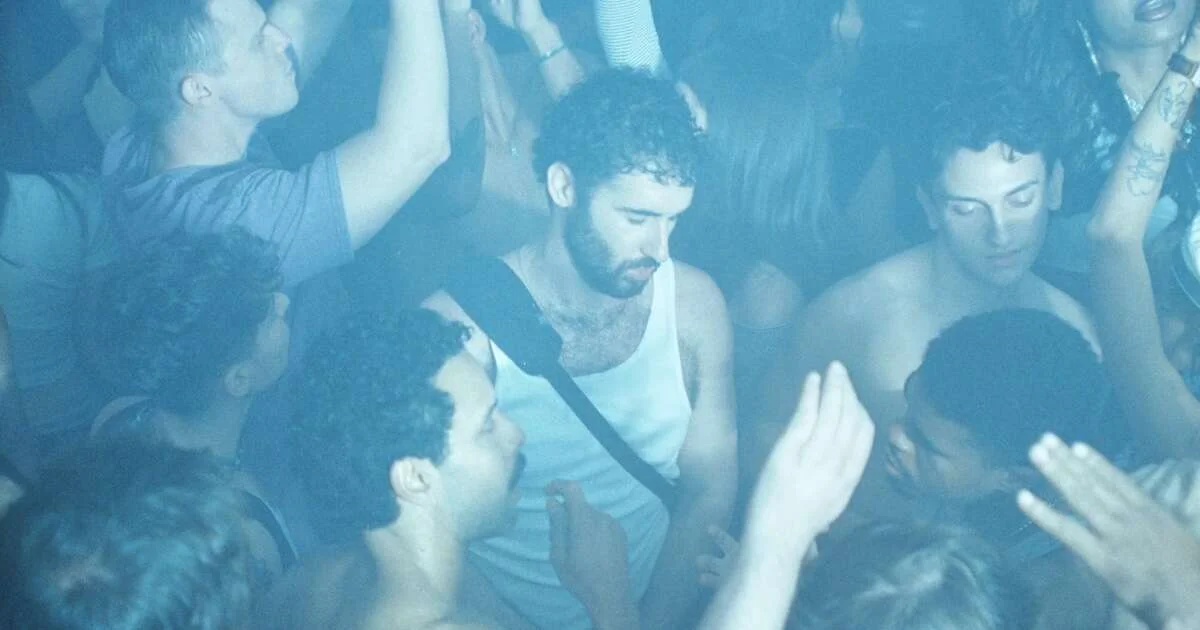
On the feature side, I saw a really fantastic narrative film called Club Kid over at the Holiday Theatre. It made me laugh, and I cried multiple times. It’s the directorial debut of actor and writer Jordan Firstman, and it centers on an aging club promoter who finds out he has a kid. He’s suddenly forced to grow up in profound ways, and the tension of the film is that despite this growth, he can’t outrun the decisions he’s made in his past, often in upsetting ways. That leads to great dramatic tension. The performances are excellent, it’s beautifully acted and incredibly well shot, often in intimate close-ups that force you to be inside the moment and inside these characters’ heads.
Alex: I figured that would be your pick from reading your reviews. I read it and thought, I definitely want to see this film when it comes out. On the doc side, I really enjoyed the Carl Sagan documentary, We Are All Made of Star Stuff.
Toni: I figured you were going to say this one after your review. That was a banger review from you.
Alex: It wasn’t breaking new ground as far as documentaries go, but it’s a great story about a single person who really made a difference in spreading knowledge. If you’re my age, Carl Sagan was everywhere in 1980, long before the internet, of course. He was on The Tonight Show. If you were a journalist with a question about astronomy, you tried to get Carl Sagan. And of course he did Cosmos, which was the biggest thing PBS had ever done, explaining a lot of those concepts and inspiring a lot of people. I took four semesters of astronomy in college, partly inspired by all that.
There’s also some human drama. He left his wife for Ann Druyan, who he worked with and wrote novels with. She sat for a lot of the interviews, and one of the funniest moments was her talking about how high they would get smoking Thai stick while they were making Cosmos. She said, “Yeah, it really helped us out somehow.” That was a lot of fun. I also saw it on the big IMAX screen at the Denver Museum of Nature & Science, which was cool because they did a lot of great graphics to illustrate the astronomical stuff.
The two other non-documentary films that really stood out were Growth of the Soil and I Play Rocky, which is surprising because I’m a huge Brad Bird fan. The Incredibles is probably my favorite film of all time. His new film, Ray Gun, screened at the festival, and it was good, but it was not Incredibles-level Brad Bird.
Toni: From reading your review, I felt you really grappling with it. You were like, this is an OK film, but it struggles because it didn’t live up to what you wanted from this filmmaker.
Alex: I’d say so. It didn’t have that extra element. It was derivative — that’s such a negative word — but it was derived from Raymond Chandler books and Humphrey Bogart movies. It’s set in a futuristic world, like Futurama meets The Lady in the Lake or something. It was still a lot of fun to watch.
I also really loved the opening film, I Play Rocky, which is all about Sylvester Stallone. The actor who plays him was unbelievable, portraying Stallone’s voice and mannerisms and even how he looked. It’s a really inspiring film. You could say it was a little hokey, a little cheesy, but I really enjoyed it, and I thought they did a really nice job with it.
The other one was Growth of the Soil, a Norwegian film that couldn’t be more different. I went from that to Ray Gun, and it was like whiplash. Growth of the Soil is about people scratching out an existence from the soil in Norway around 1900. It’s a really gritty family drama, really intriguing to watch and so different from the life we have now. Those are just a couple. Lots of great films at the festival this year for sure.
My least favorite was Bedford Park, a Korean American film that just didn’t click for me. It was really depressing. I can enjoy a film with somber topics, but this one had hardly any relief and didn’t really go anywhere for me. Otherwise, most of what I saw was really enjoyable.
Toni: On the whole, I had a largely positive experience with most of the films I encountered. I saw a lot of Colorado films this year, which was definitely new for me. In the previous couple of years I attended, I had Oscar buzz on the brain — anything that might get an Academy Award nomination, that’s what I wanted to see. This year I saw a lot more Colorado work, which I really enjoyed, and on the whole I thought it was very strong. Both of the documentaries I mentioned have Colorado connections.
The one film I really didn’t like — the only real negative — was La Bola Negra. It’s a Spanish film, Netflix’s big Oscar push, and I found it a total snooze fest. It runs two hours and 40 minutes, and you get the point after the first 60 minutes. It has three timelines cut together, but none of them are interesting. It’s this gay epic where nothing happens — very ambitious but emotionally inert. I found it an incredibly frustrating watch.
Alex: I remember reading your review and thinking, ooh, boy, I’m not sure about that one. It was a lot of fun to get out to some of the other events. I went to one of the post-screening panels after Behemoth, the Pedro Pascal film about a sort of sexy cellist. They had the sound designer there, which was really interesting because it’s a very sound-heavy film. It shows all this orchestra action and people recording film and TV scores, and the score of the film they’re working on bleeds over into the action of Pedro Pascal’s other story, where he’s running around doing this and that. It was really clever. Otherwise, not the greatest film. It was fun to watch, but pretty lightweight for Tony Gilroy.
Toni: You’re not the only one who thinks that. I talked to a couple of different people who had seen Behemoth, and opinion seems very mixed. A couple of people were mixed-positive, but a lot more were mixed-negative, like you. They like Pedro, though. That seems to be the universal consensus.
Alex: I feel like he’s so likable. He reminds me of — who was I thinking of? Brad Pitt. He’s taken that slot where Brad Pitt is just this likable guy who can kind of do anything and is so much fun to watch. But I don’t think this will be in his top five films.
Toni: Fair enough. As you just alluded to, the film fest is obviously more than screenings. You mentioned you attended a panel. They also have parties. Did you go to any other panels or parties during the event? I didn’t.
Alex: I didn’t. I honestly don’t care about going to parties, especially at 9 p.m., because I don’t want to stay out that late, or drink or eat. I’m not in that community. I’d probably just be bored, standing in the corner feeling lonely.
Toni: That’s more or less the same for me. I also wanted to get home and get started on my reviews in most cases, because I had more films to watch the next day.
Alex: But we did do some other coverage. I had a chat with one of the directors of the shorts, Kaylee Morgan Smith, who has a real Colorado connection as a co-founder of SeriesFest. Her short film, General Admission, is actually clipped out of a series pilot she’s working on and hoping gets picked up, which was fun. It’s fun to talk to somebody about the process of making a short film.
I also got to talk with Jeremy Swift, whom many people know as Higgins from Ted Lasso. He starred in Cheryl Glubach’s film Welcome to the Fishbowl, which was filmed entirely in Colorado. We talked to Cheryl and Jeremy about that whole experience, and that’s on the OnScreen website too, which was a lot of fun.
Toni: We also have features about a couple of other documentaries, including Watch Them Rise. Maddie Browning was able to speak with the filmmakers about that. I also chatted with the folks behind The River, Good Help and Art Not as Usual. All of those features are on OnScreen Colorado.
Moving on quickly to the venues. There were four for screenings this year: the Sie FilmCenter, MCA Denver at the Holiday Theatre, the Ellie Caulkins Opera House and the Sturm Infinity Theatre at the Denver Museum of Nature & Science. Which of these venues did you attend, and what did you think of them?
Alex: None of my films were at the Holiday Theatre, but I was at the other three venues. The Sie has all-new seats and, I think, new screens and all kinds of new this, that and the other. It’s a wonderful facility, a great place to see a film. The Ellie Caulkins Opera House is pretty darn good too. They do a great job, and they’re able to put up an enormous screen. It’s a beautiful facility, and the sound is good. And of course the IMAX screen at the Museum of Nature & Science is enormous as well. It’s a great place to see bigger films like Ray Gun. It was really cool to see it there.
Toni: I bet. I saw Knives Out there last year, the third Knives Out film, and you feel totally immersed when you have a screen that big.
Alex: I will say about that particular screen, though: if you get there late and you’re way off to the side or too close, it’s tough. You really want to be closer to the center if at all possible, because the screen towers above you, and you’re craning your neck if you’re too close.
Toni: Yep. This year I saw films at the Sie and the Holiday Theatre. As I mentioned, at peak times the Sie definitely seemed a bit pushed to capacity. The Bus Rapid Transit project in that area is complete, but on Saturday afternoon I found it really hard to find parking. I also heard from other attendees a lot of big feelings about the decision to make people wait in line in tents outside the theatre before filing in. Some people I spoke with were definitely frustrated, but I personally didn’t mind it. I thought it created a communal, intimate vibe where you have to talk to the people you’re going to the next screening with, and I quite enjoyed that. But I heard a lot of complaints. A couple of my friends were like, “Can you believe they’re making us wait in tents outside?” And I was like, “Well, I don’t know. Come on, man, it’s not that bad.”
Alex: That’s really funny. I never did that. At one point I was there with Andy and we were like, “What are those people doing in the tents?” I don’t know. I just walked in. Maybe I cut the line. I never had any tent-waiting opportunities.
Toni: Fair enough. And over at the Holiday Theatre, I really want to love this historic space, but as a movie theatre this venue is a mixed bag, depending on where you’re seated. When I saw La Bola Negra, I was closer to the back of the theatre, and because the screen is comparatively small, I was looking at a very small picture. There was a rather tall man in front of me, so I had to sit all the way up straight, and I could still only see the subtitles if I was straining. In contrast, when I saw Club Kid, I sat in the very front row and found it an incredible experience. With a small screen that close, you feel really intimate, and it works really well. But gosh, if you have a bad seat in that theatre, it’s going to be really hard.
Alex: I’ve never been in that theatre, so I don’t know.
Toni: Anything else you want to share about your experience at the festival?
Alex: Like I said, it was really well run. When that many people funnel into the same place, you’re always going to bang into traffic issues and parking and this, that and the other thing, but overall I thought they did a great job. My only complaint is curtain speeches. You and I both have a pet peeve about before-screening speeches. If there’s something to say, fine. Make it brief. But a couple of them just had a volunteer reading a description of the film from the program. You’re not adding anything. You’re not giving me any reason to listen to you other than cutting to the film. Minor quibble. None of them were too long.
Toni: I have a soft spot for the introductions by Keith Garcia, who is on staff at the Sie FilmCenter. His descriptions of films add a lot of flavor and character, and you feel like you learn something. His introduction of Club Kid I found really illuminating. How he framed the film and where it fit in Firstman’s career was really helpful context. But I was also present for those volunteer ones that amounted to, “And this is what is going to happen in the film you are about to see that you all already bought tickets for.”
Alex: Exactly. It’s great if you’ve got something to add, but if not, I’d say just cut to the chase.
Toni: Totally. Over at OnScreen Colorado, just because the Denver Film Festival has ended does not mean our coverage is going away. We’ll have the winners of the Best Feature Film, Documentary and True Grit awards — the best Colorado production from the festival — as soon as they’re announced, as well as more feature stories, reviews and guides to what’s going on around Colorado’s film world. And if you haven’t already, please make sure you’re subscribed to The Reel, our newsletter for film and TV that goes out every Tuesday or so and lets you know what we’ve been up to.
Alex: Please do check out our site. If you’re into film, it’s all there. We’re going to be creating a lot of guides, so if you want to go to festivals, you can peruse all of the ones in the state. Did you know there’s a festival dedicated to environmental films coming up in Golden? This state is just rife with film festivals, so there’s something for everyone out there.
Toni: Literally today, Nov. 2, as we’re recording this, I’m going to have a guide to the DocWest Film Festival, which is happening at the Sie in a few weeks. We’ll have constant guides to everything. Later this week I’m going to see a local Colorado horror film called Uk, filmed entirely in Globeville in Denver. I’m really excited to see that. There’s tons of cool stuff like that over at OnScreen.
Alex: I’m also really interested to see your story about The First, a new film from Colorado’s own Brian Malone, which also features well-known Colorado figure Bazi Kanani and Tom Costello of NBC News talking about the First Amendment. It’s a documentary all about the origins of the First Amendment, and an important film for people to see and learn from if you don’t know, because a lot of people don’t.
Toni: Absolutely. I’ll say it: even as a journalist who relies on the First Amendment, I didn’t know nearly as much about it as I probably should. The film really illuminates how much of the First Amendment was only gained by fighting for it through court cases and active litigation, and by journalists standing up and demanding that the free speech enshrined in the Constitution be actively enforced. Great film, great documentary.
Alex: Yep. All right, we’ll be back in a few weeks with our regular monthly OnStage Colorado podcast to talk mostly about theatre. Thanks so much for listening, and we’ll see you at the show.
Toni: Absolutely. See ya there.




News about live shows in Colorado, press releases 'n' such

Leave A Comment