
From Sweeney Todd to the Haunted Junkyard, plus an interview with the creators of ‘FDR’s Very Happy Hour.’
It’s spooky season, and this month’s OnStage Colorado Podcast goes beyond the theatre. Hosts Alex Miller and Toni Tresca catch up on what they’ve seen lately, from Feeding Beatrice at the Aurora Fox to Barefoot in the Park at the Arvada Center. Then they round up the state’s haunted theatrical offerings, from four ways to see Sweeney Todd to a pair of Addams Family musicals and Wonderbound’s The Witching Hour.
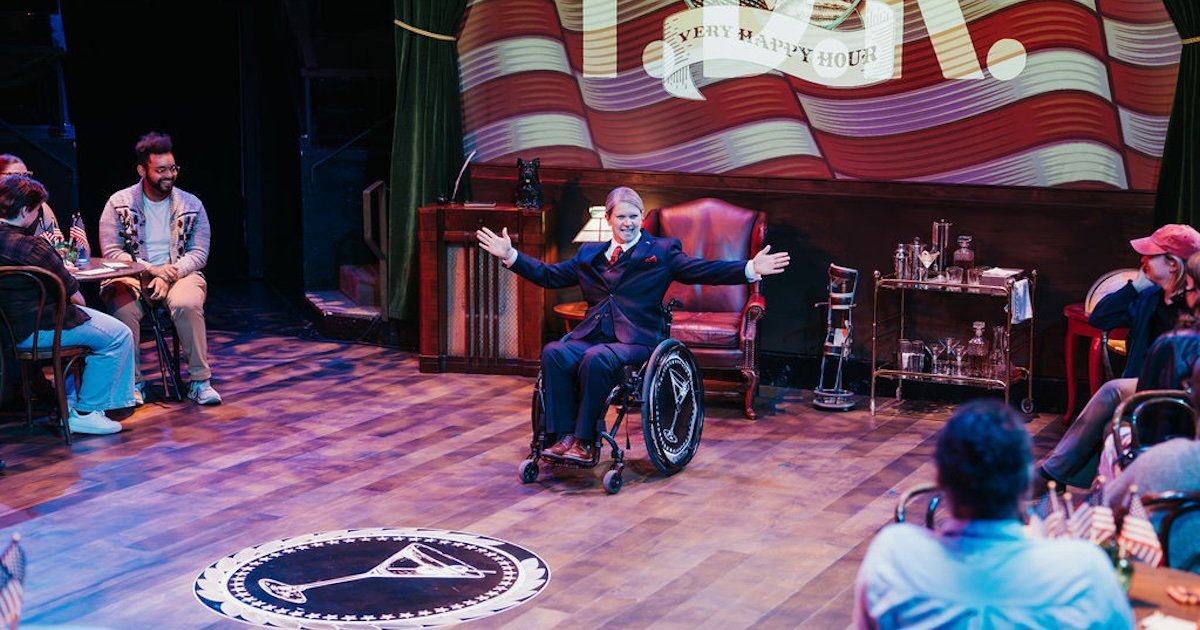
Danielle Riha, marketing coordinator for the RiNo Arts District and an immersive and haunted house expert, joins the show. She explains how to pick a haunt, what makes a great scare actor and where she’d send you, from Terror in the Corn to the Haunted Junkyard. Alex also talks with Regan Linton and Graham Smith about FDR’s Very Happy Hour, the show Linton wrote and stars in, which makes its Denver premiere at the Denver Center this month.
Chapters
- 00:00 — Welcome and what’s ahead. Alex and Toni preview the episode.
- 00:33 — Teasing FDR’s Very Happy Hour. Alex previews his conversation with Linton and Smith.
- 02:08 — What we’ve seen lately. Alex covers Feeding Beatrice and The Weir. Toni covers Barefoot in the Park, Title of Show, The Turn of the Screw, The Pumpkin Kid and Drag Queen Magic. They also flag new reviews of The Hatmaker’s Wife, The Catastrophist and Sara Bareilles at Bellco.
- 12:41 — OnScreen Colorado update. Toni covers festival coverage, including the Women’s Film Festival, the Telluride Horror Show and the Denver Film Festival.
- 14:15 — News and notes. Alex’s conversation with the editor of DC Theater Arts, Phamaly Theatre’s Tiny Beautiful Things and the Sip pop-up from Culture House Immersive and the Catamounts in Westminster.
- 20:45 — Spooky season Colorado Headliners. The hosts run through haunted shows statewide, including Sweeney Todd, Misery, The Vampire of Lafayette, Rocky Horror, Dracula, Nevermore and Stranger Sings!
- 34:21 — Haunted houses with Danielle Riha. She covers picking a haunt, scare-acting technique and full-contact haunts. She also covers industry trade shows and her top picks: Terror in the Corn, Frightmare Compound and the Haunted Junkyard.
- 1:06:20 — Interview: Regan Linton and Graham Smith. They discuss the show’s research, FDR’s disability, the mix of scripted and interactive scenes and the national tour. Plus FDR’s signature cocktail.
- 1:30:26 — Coming up on the site. Upcoming reviews and concert coverage, and a reminder to subscribe to the Weekly Blast.
Transcript
Created by AI; errors may haunt us!
Jump to a section
Welcome (00:00)
Alex: Hello and welcome to the October 2026 episode of the OnStage Colorado Podcast. I’m Alex Miller.
Toni: And I’m Toni Tresca, and this month we’re diving into spooky season. And we’re not just talking theatre this time around.
Alex: No, we’re going to be talking haunted houses as well as haunted theatre. We’ll have a special guest to help us out, Danielle Riha, who will join us in a little bit to talk about haunted houses and scare acting, which she’s been doing for a while. So stay tuned for that.
Toni: We’ll also have a conversation that you did, Alex, with Regan Linton, whose new show, FDR’s Very Happy Hour, which she wrote and stars in, is about to make its Denver premiere at the Denver Center. You met with her and the show’s director, Graham Smith. Tease that conversation for us, Alex.
Alex: This is a really cool show. FDR apparently had a penchant for having a happy hour and mixing up cocktails in the White House, and she riffs off of that and plays FDR. FDR was famously in a wheelchair, although he hid it. Regan is also a wheeler, but very much not hiding it, so there’s some of that disability theme in there. But really it’s a show about one of our most popular presidents and what he was like, with a fun spin to it.
Toni: It sounds like it should be a really cool show. It had its world premiere at Actors Theatre of Louisville last October, so now it’s coming over to Colorado. I’ve been hearing Regan talk about this show for years, so I’m excited to see it in action here in Colorado finally.
Alex: She gets into it, but it’ll be in the studio loft above the Ellie Caulkins Opera House, which is a really flexible space. They’ve turned it into, I think, tables, and they’re actually going to be serving drinks and stuff. So that’s the vibe.
Toni: Sounds like a great conversation, so be sure to stick around for that. We’re also going to dig into a special spooky season edition of our Colorado Headliners, in which we attempt to round up all of the haunted theatrical offerings happening around the state. But first, let’s turn to what we’ve seen lately on stage. Let’s start with you, Alex. What have you seen?
What we’ve seen lately (02:08)
Alex: A couple of spooky ones. Feeding Beatrice is at the Aurora Fox, directed by friend of the pod Betty Hart. It’s about a young Black couple who move into a fixer-upper in a pretty much all-white neighborhood, and they start being haunted immediately by a white teenage ghost from the 1950s who has an insatiable appetite for milk and raspberry jam. It’s kind of a weird story. It’s funny in places. And it has two of my favorite actors, Kristina Fountaine and Jysten Atom. It was really nice to see the two of them on stage together as the couple.
I saw it on preview night, and I think this is a show where they were just getting started, gelling their relationship. I imagine by now they’re really starting to dig into what this couple is to each other, because they have a pretty complex relationship that ends in an even more complex fashion. So that one was fun.
The other one is The Weir, which we’ve talked about before. This is BETC’s show, which is completely sold out, pretty much for its whole run. Irish ghost stories are the theme there, and it’s a pretty cool play that you reviewed. You can see both of those reviews on the site.
Toni: I think the only tickets that are available, as of when we were recording this, are for the added dates at the Dairy Arts Center in Boulder.
Alex: Right.
Toni: It’s definitely a bit of a head-scratcher, and I used my review to think through the play and what it was trying to do.
Alex: Definitely not your traditional plot-driven show. It’s more like a slice of life, I guess.
Toni: Whereas I think last season their The Thin Place, which is also a ghost story, was a lot more traditional, even down to having jump scares included in the show. This is a lot more cerebral in terms of what it’s trying to achieve.
Alex: So what did you get out to?
Toni: I got out to quite a few things. I went to the Arvada Center to check out Barefoot in the Park, a Neil Simon play that they’re doing in their black box theatre. And good lord, Alex, I didn’t realize six flights of stairs was that challenging. It follows a newlywed couple who live on the fifth floor. Six, though, with the initial stoop on the way in, as Simon makes a point to tell you over and over again.
It starts with the couple in honeymoon bliss. Then rather quickly you see that this is a play about how these two opposites are going to live together. Just when it seems like things won’t work out, they find a way to come back together. It’s very traditional in terms of its values, but I think Kate Gleason’s brisk direction really makes it worth seeing. She keeps it moving. It’s got really strong actors. The two leads, Katie Medved and Cam Davis, are excellent. They really sparkle opposite each other, and they have to play a whole range of emotions, because you have to see them fall in love, fall out of love and come back together in about an hour and 45 minutes with an intermission. It’s really a tour de force for those two actors, with some fun supporting performances from folks like Garreth Saxe, who is always great to see. Here he’s playing an eccentric European. And Cindy Lodio Hill as the mother makes a hilarious supporting turn.
Alex: It’s a classic for sure. And then Title of Show, another one you just reviewed, sounded pretty interesting.
Toni: Absolutely. This is an intimate show being done at Vintage Theatre, out on their cabaret stage in the lobby. Folks have probably passed it on their way to see a Vintage show. They’re making use of this space for Monday, Tuesday and Wednesday night performances with this show about the making of a musical. You watch four friends go through the motions, in a highly meta-theatrical way, of how this musical went from idea to something that made it to Broadway. The direction by Nick Martinez is really fun. They’ve got a live piano player, and the four-person cast has really strong singing voices. I think that makes it easy to recommend, particularly on a weekday when there aren’t a ton of theatrical offerings. It’s a smart programming choice. It seems to be speaking to the theatre crowd, those industry folks who are in shows on the weekend and want to see something during the week.
Alex: Love to see all those stages being used. Keep the place busy.
Toni: And keeping it busy in a smart way, because I don’t think Vintage has the capacity to do a cabaret show at the same time as a show on one of the two main stages. It would get noisy quickly, particularly with the live piano player. So I think it’s smart to program on those dark days when you just have rehearsals in there, if anything.
Alex: Yep. A couple of other spooky shows. The Turn of the Screw from Elemental Theater. You were pretty impressed by this one.
Toni: I was very pleasantly surprised. Elemental Theater is a new company born from the ashes of Wheat Ridge Theater. They kicked off last year, and their shows have been a little rough, in my opinion. But I think they play it smart here. James Wilkins is the director, and they keep it simple. They get a lot out of a well-placed loud noise and a quick blackout or flash of light. It’s a ghost story done with two actors who I think are both really capable. There’s solid accent work in here. It’s about 80 minutes, so you’re in and out. It doesn’t overstay its welcome. And I’ll admit I jumped quite a few times, so I knew it was pretty effective.
Alex: Cool. And then we had a family-friendly show. We don’t get to a lot of those, but you saw The Pumpkin Kid.
Toni: I thought I’d check this one out since it’s an original-ish musical. I say original-ish only because it’s not making its premiere now. It’s been around a couple of years. It ran last year and is now returning, this time at the Historic Elitch Theatre. It’s a 38-minute musical about a little girl whose pumpkin-carving abilities bring joy to the town. It’s an intentionally light musical, pun very much intended, meant to spread joy. If the audience’s reactions were any indicator, it was very effective. There was a really awesome moment during the wedding day song when a little girl wearing a pumpkin dress stood up and began dancing along with the actors. I thought, this is just pure, uninhibited joy in the theatre. It wasn’t distracting. Everybody around her was laughing, and it showed how into it the kids were getting.
Alex: That’s great. And then Drag Queen Magic at Local Theater Company in Boulder. You just posted that review today, Tuesday, as we speak.
Toni: Yeah, this is Ian August’s new time-loop comedy. It’s essentially Groundhog Day with two drag performers and a woman named Nancy. It’s being done first at the Dairy Arts Center in Boulder, before going to the Maisel Arts Center and then around the country, because it’s part of the National New Play Network’s rolling world premiere.
While it’s very funny, packed with jokes, I thought the human relationships at the center, the ones it so clearly wants us to root for, don’t quite come together. There are moments built into the script, particularly in the last couple of scenes, where they’re trying to establish an emotional payoff, but it doesn’t quite land. So while I was laughing the whole time, I think the show, as it continues its developmental process, could refine those relationships and go a little deeper. Right now it’s very much living in the land of farce, so when it introduces more serious elements, they feel a little out of place and unearned.
Alex: All right. Also new or newish on the site: The Hatmaker’s Wife at Firehouse Theater in Denver, reviewed by Maddie Browning. Kim Nicoletti checked out The Catastrophist up at Theatre Silka, which is notable for the return to the stage of Josh Blanchard, who has been involved with the theatre for many years but has moved on to other things. He’s a great actor, and it’s good to see him out there. Also, Judith was at Funky Little Theatre’s production of Driving Miss Daisy and thought they did a good job with that. And a little bit of music: Sara Bareilles, well known in theatre circles as well as musical circles, was at Bellco, and Maddie got out to see that and said it sounded like a great show.
Toni: Sara Bareilles certainly can sing. She’s also the mind behind Waitress, the musical, I believe.
Alex: Yeah, absolutely.
OnScreen Colorado update (12:41)
Toni: Before we get into the news, a quick update from OnScreen Colorado, the sister site of OnStage Colorado. We’ve got a ton of coverage coming out. We’ve been keeping our eye on all the festivals. We’ve had guides come out for the Women’s Film Festival and the Telluride Horror Show, and we’ve broken down the Denver Film Festival. I was at a Denver film panel over the weekend, hosted by Cinema Toast House, a new group that’s been doing really cool film events. We got that coverage up on the site. If you want help planning for the Denver Film Festival, the schedule just dropped, and we’ve got a really cool interactive guide up on the site. We’ve got tons of coverage coming over the next month. We’re going to be reviewing films, we’ve got more guides, and I’ll be interviewing Colorado filmmakers who are participating in the Denver Film Festival. So no shortage of activity on screen, and on stage it’s not slowing down either.
Alex: No, it is busy, busy, busy. I’m really excited about everything you’ve been doing on OnScreen Colorado. I think the Denver Film Festival is going to be sort of our big coming-out party, because we’ll be doing a lot of reviews of the new movies there. We’re going to be super busy doing that toward the end of the month.
News (14:15)
Toni: Moving on to the news, I wanted to highlight the conversation you had with the editor of DC Theater Arts, in a special episode of the podcast that released on Sept. 25. In addition to being a great explainer of all the drama around Donald Trump and his ongoing battle with the Kennedy Center, I thought it was very educational about the rest of the city’s theatre scene. I honestly had no idea there were over 80 professional theatres in the area. It really puts into perspective that our theatre scene in Denver, though it’s big and growing, isn’t quite that big.
Alex: No, nowhere near it. It’s a huge metro area, and of course it’s D.C., Maryland and Virginia. It was a lot of fun to have our friend Nicole Hertvik from DC Theater Arts, a very similar site to OnStage Colorado and someone we’ve been in touch with over the years. If you haven’t had a chance, check that out for an inside take on that whole Kennedy Center shit show, as I called it.
Also on our site, you caught up with the team of Phamaly Theatre’s production of Tiny Beautiful Things, a really familiar title, but they’re approaching it in a very different way. What did you learn about this production?
Toni: This production is usually done with one person playing Sugar, the advice columnist, and three people playing the letter writers who write in to her about various topics. That presented a problem for Phamaly, which is an ensemble theatre of sorts. There are lots of actors who, if they’re not acting in a production at Phamaly, are likely not acting anywhere else around town. So a four-person show was not conducive to what they do. Phamaly decided: why not blow the project up? Let’s expand it. Let’s cast different disabled actors as all of the letter writers, film them, and do the show with 125 disabled actors appearing on video alongside one live performer. It’s being done at the People’s Building in Aurora.
Alex: That’s amazing. Such an interesting approach.
Toni: I found it a fascinating way to take what could be a big problem. This is a small show by nature, meant to be done a certain way, and they found this really creative solution to bring in a whole bunch of people. This is now the biggest show Phamaly has ever done in terms of the number of disabled actors involved, and it makes this the biggest season in terms of people Phamaly has ever been able to produce. It’s a cool achievement, and I know Maddie, our correspondent, will be getting out to the People’s Building to review it for us.
Alex: All right. What else have you got?
Toni: I also wanted to touch on what Culture House Immersive and the Catamounts are doing in a shopping mall in Westminster with their developmental run of Sip. I’m working on a feature story about this that will be up on OnStage Colorado soon. It’s a really cool collaboration at the Orchard Mall in Westminster, in an abandoned building. The conceit of the show is a traveling Sip Society that pops up in random, unoccupied places, using nothing but suitcases to bring the space to life. It’s part of Culture House Immersive’s incubator program. They’re developing six original shows in different marketplaces around the country, and this is the first.
It’s being done by a really cool team involving Michael Terra Garver, who has worked in a lot of corporate settings. She helped on a Star Wars project for Disney, so she definitely has a more commercial mindset. And Charlie Miller, formerly of Off Center. The project was designed explicitly as a response to the high-profile immersive closures in Denver, such as Off Center and Dirt. This production is trying to create a sustainable touring model that, in theory, could be produced in any location. If a regional theatre wants to do this in their black box or lobby, they could. You want to do it at a brewery, you could. In a school, you can. In an abandoned shopping mall, it can be done there. It’s very flexible in nature, and I think it’s a creative, interesting response to a lot of immersive failures in the city over the years. There have been a lot of closures, a lot of projects that didn’t work. So it’s fascinating to hear the team talk about this project as a blend of the creative and the commercial, intentionally from the ground up.
Alex: That’s great. It’s always good to see people being resourceful. If something doesn’t work, try it a different way.
Toni: Absolutely. I was just talking to Lonnie Hanzon, a longtime immersive artist, and he says, “We’re entering a new stage in immersive, so we have to shed a lot of what wasn’t working, take the best of it and adapt for the future.” I think that’s what we’re seeing here with Culture House Immersive and this unique partnership with the Catamounts. I was there Friday night. It’s an interesting process, a developmental run. I saw it Friday, they had a rehearsal Saturday to change things, and the show they were doing the following Sunday was going to be different from what I saw. So it’s actively a work in progress, in a way that’s probably unfamiliar to a lot of Colorado audiences. There aren’t a lot of shows that operate like that.
Spooky season Colorado Headliners (20:45)
Toni: Okay, now on to our main topic, spooky season. We’re going to start by talking about all of the theatrical offerings happening around the state. Think of this as the spooky season edition of our Colorado Headliners.
Alex: We looked around the state and put together this list of all those spooky shows on stage. Kicking off, as we’ve mentioned a couple of times, is the prevalence of Sweeney Todd productions in Colorado this season. If you want to see Sondheim’s Sweeney Todd: The Demon Barber of Fleet Street, you would have just been able to see it at Theatreworks in Colorado Springs, which just closed. There’s a melodrama version in Cripple Creek, Sweeney! Demon Barber of Cripple Creek, at the Butte Theater, running through Nov. 1. Platte Valley Theatre Arts in Brighton is doing a production Oct. 9-18. And the CU Boulder Musical Theatre Program is doing a short run Oct. 23-25. What do you think accounts for all these Sweeneys?
Toni: It’s Halloween, it’s bloody. I think Sondheim is always popular in the theatre community. And I think there’s something about this story, about someone wronged by the justice system, in the lower class, taking those in power to task. I think that message resonates in our society right now. That’s my hot take on Sweeney.
Alex: Okay. Over at the Arvada Center, you can still catch Misery, running through Oct. 11. Always a creepy one. We mentioned The Weir. Not a lot of tickets left, but if you can get into it, it’s worth it. And The Hatmaker’s Wife, which we mentioned, is at Firehouse Theater in Denver. Then there’s SAW The Musical: The Unauthorized Parody of Saw, running through Oct. 11 at the Bug Theatre in Denver. Do you know who’s doing this one, Toni?
Toni: This is the touring production, based on the Off-Broadway cast version of the show. I saw it when it was at the Dairy. I think this production is atrocious. It’s one of the most unfunny, on-the-nose, obviously pandering pieces of theatre I’ve seen. But it is certainly here, and it does fit spooky season, so in an effort to be comprehensive, here it is on the list.
Alex: Okay. And we mentioned The Turn of the Screw at the Three Leaches Theatre in Lakewood, through Oct. 11, and Feeding Beatrice all the way through Nov. 1 at the Aurora Fox. Our friends at Buntport Theater are doing something called The Vampire of Lafayette, running through Oct. 25 in Denver. I’m going to be out there on Monday, so I’ll have a review of that. I don’t know anything about it other than it’s about Lafayette, Colorado, and a vampire they believe is in the area. So Buntport is having fun with that.
Toni: That’s right. All I’ll say is that Sonic and slushies are also involved in some way.
Alex: Okay, say no more. What’s this Spookadelia thing you had on this list?
Toni: If you like immersive art installations, Spectra Art Space in Denver, on South Broadway, is doing its eighth annual Spookadelia, in which it transforms its gallery spaces into a theatrical event with actors and new installations. They also have new mini games in there. If you haven’t been to Spectra Art Space, they’re doing interesting work. They constantly mix up the galleries, and this Spookadelia installation is the centerpiece they’ve become known for.
Alex: That sounds really cool. No, I haven’t been to Spectra Art Space. Moving through our list, we just talked about The Pumpkin Kid. Coming up in the Springs at Pikes Peak State College, they’re doing something called Arnie’s Scary Mix, Oct. 15-26. It’s a little playfest with short horror and comedy shows, asking the question: What if Mothman got a makeover? What if Frankenstein’s monsters wrote bad two-sentence horror stories? What if a demon ran their own sitcom? Et cetera. Then we have two Addams Family musicals coming up. What are these?
Toni: Two different productions of the musical in different parts of Colorado. Thingamajig Theatre Company in Pagosa Springs is doing it Oct. 18-Nov. 1. And in Fort Collins at the Lyric Theater, it’s Oct. 22-24. It’s not quite as popular as Sweeney Todd, but it’s clear people like the Addams Family.
Alex: Love the Addams Family. It was born out of a comic strip in The New Yorker many years ago. The cartoonist was named Charles Addams. He started doing these, and then it was turned into a TV show and all that. I used to watch that when I was a kid, those black-and-white things. Of course it wouldn’t be Halloween or spooky season without some Rocky Horror Picture Show. Colorado’s Elusive Ingredient is doing one of these, which is a shadowcast. I always forget that word. Oct. 17, 24 and 25 at the Sie FilmCenter, the PACE Center and the Boulder Theater, so it’s moving around. I’m sure that’s not the only Rocky Horror. There must be others out there, but that’s the one I’ve got here.
Toni: Just wait a little further down on the list.
Alex: Okay. Little Shop of Horrors, which I mentioned earlier, I’m going to check out. That’s in Lafayette at the Arts Hub, Oct. 9-25. And Dracula: A Comedy of Terrors, which had a big run at the Garner Galleria last year and cleaned up with some Henry Awards, will be at Center Stage Theatre in Evergreen, Oct. 9-25. That’s a really fun one if you get out there. More silly than scary.
Toni: That’s a great way to put it. It’s definitely sexy Dracula rather than scary.
Alex: Yes. What’s next on our list?
Toni: Over at the Molly Brown House Museum in Denver, they’re doing Victorian Horrors, in which local actors perform macabre literary tales by long-dead authors throughout the Victorian mansion. They’ve got a couple of different performances, Oct. 15 through the 24th.
Alex: And as they often do, Wonderbound will kick off their season with something on the spooky side. This one is called The Witching Hour, Oct. 15-25. It’s contemporary dance, created with the Clay Rose Band. We’ve seen these partnerships before, and they’re always pretty great.
Toni: At the very least, you know the music is going to be well performed, because it’s a live band. And Wonderbound often excels when they’re in darker terrain. Garrett Ammon has a bit of a dark quality in his work, at the very least. So I think The Witching Hour, which follows a place where souls are trapped in limbo and shadows claw at the psyche as characters struggle to cross the threshold into tomorrow, sounds like a perfect show for him.
Alex: And that’s another one that sells out like crazy. You’d be lucky to find tickets at this point, but worth a try. This next one is kind of an outlier: Morwood Manor, Oct. 15-18 at Merritt Wellness. It’s a yoga and wellness studio that’s got this immersive thriller going on from a Denver ensemble. What do you know about this one?
Toni: It’s very loosely inspired by Shirley Jackson’s We Have Always Lived in the Castle, and it’s created by two clown performers. So it’ll be more on the comedic side of immersive. They describe it as being as interactive as you want it to be. The setting is that you’re sitting at a table with this family who’s having a fight, and the family knows you. You can choose to engage as much or as little as you want as the events unfold.
Alex: Okay. Moving back to the Bug Theatre in Denver: A Hollywood Horror Story, Oct. 23 and 24. It’s based on Vampira, who was a horror host on TV before Elvira. It’s a solo performance about that person, structured as an episode of the show.
Toni: Indeed. Over at the Clocktower Cabaret, they’re doing their 20th annual BOO-lesque, a seasonal burlesque and variety show. I’ve not seen it, but 20 years is a long time to be doing a show. Quite an anniversary.
Alex: Burlesque and spooky Halloween stuff seem to go hand in hand. Over at the People’s Building in Aurora, Oct. 23-31, there’s something called Dancing in the Dark: House of Omens, another immersive theatrical experience, by Life/Art Dance. It explores the birth of autumn rituals: why black cats have a bad reputation, how a hollow turnip guided a man named Jack into eternity, and more. I hadn’t heard about the turnip. Although some people are horrified by turnips in general.
Toni: Indeed. Here’s another one of those Rocky Horrors. This is not the shadowcast version, so I separated it into its own entry. It’s being done at the Longmont Performing Arts Center by the Longmont Theatre Company, and this is the musical version that Richard O’Brien wrote before it was adapted into the film.
Alex: It’s legit. That’s a good show if you like Rocky Horror.
Toni: It’s a raucous good time.
Alex: Spooky Cabaret. The aerial performers get in on the act on Oct. 24 at Frequent Flyers Aerial Dance Studio in Boulder. As you’d imagine, it’s aerialists performing a lineup of eerie acts high above the floor, with vampires, ghosts, murderers, barbers. You get the picture.
Toni: If you want more poetry than a stage production, at the Masonic Temple Events Center in Fort Collins they’re doing Nevermore: An Evening of Edgar Allan Poe, Oct. 24-30, in which they’ll stage five Poe tales in one unbroken evening of gothic horror. I know for sure “The Tell-Tale Heart” and “The Raven,” and “The Cask of Amontillado,” as well as two others.
Alex: Hopefully “The Fall of the House of Usher.” I think that’s the scariest one. But “The Tell-Tale Heart” is good. Ghost of Union Station is Oct. 24, with other dates in late November. This listing is all over the place: The Three Leaches Theatre in Lakewood, Vintage Theatre in Aurora, Tattered Cover Colfax in Denver and The Trident in Boulder. It’s a series of staged readings following distracted security guard Leo Perino as he escorts troubled homemaker Rose Lipstein into the Denver landmark’s basement while her violently jealous husband waits upstairs. That’s pretty interesting.
Toni: And at the end of the month we have two productions starting on Oct. 31, Halloween itself, and running through November. First is Dracula at the Lincoln Center in Fort Collins by OpenStage Theatre & Company, running Oct. 31-Nov. 28. If you’re sick of vampires being a laughingstock at other theatre companies across the state, well, this production, by Steven Dietz, adapts Bram Stoker’s novel and really emphasizes gothic suspense and more traditional supernatural terror. So this would be the Dracula to check out. And over in Aurora, on the complete opposite side, back in the land of silly, they’re doing Stranger Sings! The Parody Musical at the Storyteller Theater, Oct. 31-Nov. 14. It’s being mounted by Shifted Lens Theatre Company and brings Hawkins, Indiana, to Aurora, Colorado, in a musical parody of Stranger Things.
Alex: Well, it’s about time we had a Stranger Things parody, I say.
Toni: Absolutely. I think it’s cool that the Storyteller Theater and Shifted Lens are taking a chance on a pop-culture, fun, dumb musical, appealing to the audience here. Although we’ll see. They may have missed the Stranger Things mark. That last season was not great.
Alex: I actually liked the last season just fine. The last episode, I didn’t think it was ever going to end. But now we’re going to switch gears.
Haunted houses with Danielle Riha (34:21)
Alex: Now it’s spooky season part two, where we talk about haunted houses, and we brought a ringer. We have Danielle Riha, who is the marketing coordinator for the RiNo Arts District by day and an immersive and haunted house expert by night. She’s also an occasional contributor to OnStage Colorado and a scare actor in her own right. She’s a marketing volunteer for Immersive Denver, and she also worked for about a decade at Nightmare on Edgewood, a big haunted house in Indiana, as a scare actor and in marketing. You’ve been in this world for a while. Thanks for being on the podcast.
Danielle: For sure, thanks so much. I’m glad to be here. As I tell people, haunted houses are my entire personality. I could go for hours, so I always love the chance to get on a platform and go for a really long time on haunted houses.
Alex: People familiar with OnStage Colorado will also recognize Danielle’s byline. She’s done some coverage of shows for us as well. This is a world where some people are super into it and some people don’t know anything about it. I haven’t been to a haunted house in probably 20 years, so I don’t know anything about it. To kick things off: somebody says, “I want to be scared.” What do you tell them before recommending anything? I’m assuming there are varying degrees of how scary these places are.
Danielle: There’s absolutely a spectrum, and it follows a standard bell curve. There are some anomalies on both ends, offering something extra unique in a certain way or format. But the majority fall into that top part of the bell curve, where you’re paying about $40 a ticket and going through about three attractions as part of that ticket. They might be indoors or outdoors, and depending on the theme or location of that particular haunt, some might be more gory or more interactive. But generally they’re all very similar. I can also point out what makes different ones unique in different ways.
Alex: What’s a gore-heavy haunt versus one that leans on atmosphere, dark-ride gags and illusions? What does gory look like in a live environment like that?
Danielle: The best way to start is probably with what’s not gore. When I talk to people about haunted houses, they’re either all for it or really hesitant. If it’s not their thing and they’re not even curious, I say that’s fine. Halloween can be celebrated in a lot of different ways. You don’t have to go to a haunted house. But if you’re curious and want to get your toes wet, maybe you’ve got some little ones who are getting old enough to be curious, or maybe Grandma wants to come too, I always point people to Reinke Brothers. Some people say “Rinky,” some people say “Rhinkey.” I’m not sure of the proper pronunciation. It’s the costume shop down in Littleton, open 24/7 as a costume shop, and the other half of the building is a haunted house. It has that dark-ride vibe. I describe it as more of a funhouse than a haunted house.
I’ll add a caveat: I took a friend of mine, my age, through there, and she still to this day is mad at me, because I told her, “I think this one’s a little more your speed.” You won’t find gore. It’s more tricks of the eye, a lot of blacklight-responsive stuff. They do have animatronic props, but I think everything inside Reinke’s is handmade by the Reinke brothers themselves. That’s what’s so cool about going there. You won’t see anything in there that you’ll see anywhere else, because they’ve made it all themselves. I don’t think they have a huge crew running it, so a small group of people work multiple spots through the haunted house. You might see the same guy jump out at you a couple of different times. But he’ll be dressed like a cyclist, and maybe he’s got a bruise on his forehead or something. So it’s not gory or super scary. It’s almost comical, funhouse scares.
The other thing that’s cool about Reinke’s is that they have standing non-scary hours. A lot of haunted houses will do a kids’ day where they turn the lights on and you can come through with the kids, with no jump scares, just a chance to see things. But at Reinke’s, every day they’re open, there are a few hours when you can come for non-scary walkthroughs, which I think is really cool.
Alex: What’s the point of going through a haunted house in a non-scary way? Just to see how it’s done?
Danielle: Yes. Some people get so scared they just run through and don’t take the time to look around. It’s not just about the scary person jumping out at you. There’s a lot of time and effort that goes into the build, the environment. If you take away the scary parts and walk through with the lights on, you can admire more of the artistry, if you will.
Alex: Any tips on timing? I’m assuming that if you go earlier in October it’s a lot less crowded, and it gets busier closer to Halloween. Probably weeknights versus weekends, things like that.
Danielle: The earlier in the season, the better in terms of lines. Go early in the season, and go early in the evening. Even later in the season, showing up right when they open the doors gets you a much shorter line than coming two hours after they’ve opened and a bunch of people have shown up. Closer to Halloween, a lot of haunted houses are open on weeknights, Sundays and throughout the week, and those are good nights for shorter lines. Some places do dynamic pricing and some do flat rates, but if they do dynamic, tickets will also be cheaper on one of those weeknights. The trade-off is that sometimes you get the B team if you go on an off night. There might be more dead rooms, because they can’t get as many people to work on a Sunday or Wednesday night as they can on Fridays and Saturdays. So you might experience some dead rooms or some more inexperienced actors on those off nights. It’s definitely a trade-off.
Alex: That’s a great segue to what I wanted to ask next, which is about scare actors. We’re very used to talking about people on more traditional stages at OnStage Colorado, but scare acting is still very much acting. You’re in costume, you’re playing a part, but you’re more impromptu. You’ve got set things you’re going to do, but you also don’t know how those people in the audience are going to react. What does it take to become an actor in that world?
Danielle: Just like going to haunted houses, acting in a haunted house is not for everyone. The biggest thing is that it’s really exhausting. It depends on the type of haunted house. You mentioned Nightmare on Edgewood, where I was in Indiana. That was a full-contact haunted house. We were touching, holding back our customers, maybe holding them down on a bed or separating them from their group, or physically trying to prevent them from moving through the room. It’s very physical, and essentially you’re putting on a 60-second show all night long.
What makes a good scare actor? I’ll share my approach. I tried to get three scares out of every group. The first one is the jump scare, when you make yourself known. You jump out from whatever you’re hiding behind and get everyone in the group to jump. The second is what I call the creepy scare. Maybe you target someone in the group, or say something instead of screaming. You get close and get a little quiet with it. Do something to catch them off guard. By the time you get through the second scare, it’s about time to move them out of the room so you can reset for the next group. And I always made sure to try to get a jump scare on the caboose, the person at the back of the group.
Typically people think the first spot is the scariest, but I actually think the back spot in a group is the scariest. You’re an easy target for the scare actors as the group is moving away. You’re just there in the back, very exposed. A bad scare actor will just go back and reset, but a good scare actor will linger a little, wait for that person in the back to look and check, and when they turn back around and move on, then you go get them.
Alex: Can you dive a little more into what full contact means, and how prepared people are, how aware they are that they’re going to be in that environment when they go to a place like that?
Danielle: I’d love for someone to correct me if I’m wrong, but I don’t believe we have full-contact scares here in Colorado. I haven’t found one yet, in terms of a main commercial haunted house. There’s some stuff on the fringe we call extreme immersive haunts, but those are application-based, usually a several-hundred-dollar ticket, possibly an experience for an audience of one or a very small group. Those will be physical and interactive, and we do have some of those here. But in terms of a more traditional haunted house, I don’t think we have any in the Denver metro area where they will touch you.
At Nightmare on Edgewood, there was a lot of touching hair, grabbing shoulders. If you’re working a position down by people’s feet, you can grab ankles as they walk by, not making them fall, obviously, but just a little grab that they didn’t expect. And it would go up from there. Different actors would have different levels of permission. They might pick somebody up in the group and lay them down. At Nightmare on Edgewood we had a barn attraction, and they would lay someone down in a pumpkin room, acting like they were going to turn you into a jack-o’-lantern, just like all the jack-o’-lanterns around the room. They’d have a fake weapon and you’d be laid out on this bench. It’s fun because all your people in the group are standing around the table pointing and laughing while you’re lying there waiting to see what’s going to happen. They might hold a weapon to your neck, or pull back and act like they’re going to hit you and hit right next to you instead. That sort of thing. Breaking the fourth wall.
Alex: Wow. What’s the likelihood that someone might react and injure one of the scare actors, purposefully or accidentally? Does that happen?
Danielle: It does happen. It never happened to me. I did see some castmates walk out with bloody noses and things like that. But I always say it’s the ultimate badge of honor for scare actors, because it means the guest has bought into this world that we’re working so hard to create. They’ve fully bought in, to the point where they’re actually scared for their lives. For some people it’s not so much that they’ve bought in as a knee-jerk reaction. Either way, it does happen. The way I always mitigated it was, if I’m jumping, I always jump like this, with my hands in front of my face, so that if somebody has some kind of unexpected reaction, I’ve got a decent chance of blocking my face from getting hit.
Alex: The pre-block. Different things scare different people. The last time, when I lived in L.A., we went to one of these, and the thing that scared me the most was a hallway that got progressively smaller until we had to get down on our hands and knees and crawl through an opening. If you’re kind of claustrophobic, that freaked me out. But about the Reinke brothers and how everything they do, they create themselves: is there a clearinghouse or a place where you can buy all kinds of stuff to create a haunted house?
Danielle: Yes, there’s a big industry trade show every year, usually around March. It’s been in St. Louis for as long as I can remember. The shorthand name is Transworld, which is kind of an unfortunately named conference. Nobody knows why it’s called Transworld. It doesn’t sound like a Halloween conference, but the Halloween industry trade show happens in St. Louis, and you’ve got all the major prop makers, including one right here in Colorado called Distortions, up in Greeley. They also put on Monster Days, I think it’s called, a festival up there in Greeley that Distortions helps put on. They manufacture some really impressive animatronics that are standard in the industry. But you’ve also got costume makers and makeup artists. It’s everything you could ever need to put in your haunted house, all the way down to your snack shop signs and things like that.
We also get a lot of home haunts, which we actually have a lot of right here in the Denver metro area. Most major cities might have one or two, that house known for having 15 giant skeletons in their yard or whatever. We probably have six or eight really well-established home haunts in the Denver metro area. That’s always a fun one to check out. If you’re not interested in going into a typical haunted house, or you’ve got little ones who are getting curious but aren’t ready for the full thing, you can test the waters by taking them to these home haunts. They’ll do a small build-out in their garage or backyard, a little walkthrough, without the full ticket price. Those are usually free. They’re for the kids in the neighborhood, and a good chance to see how much you can take.
Alex: I’m guessing that at this big trade show every year there’s a new whiz-bang thing, and the technology probably changes every year. Maybe AI is starting to creep in. What are some of the more interesting things you’ve seen tech-wise in the last few years?
Danielle: I didn’t go this year, because Nightmare on Edgewood closed permanently at the end of the 2025 season. This is the first year in a decade that I haven’t been working at a haunted house. But I remember one of the coolest things I saw, a few years before AI. It was a little demo, like a little ride. I sat down in a chair that was like a wheelchair and put a VR headset on, and you’re wheeled through a hallway, and nurses come up and get right in your face, inspecting you or whatever. At one point in the video, they tip the person in the wheelchair back, and the device I was sitting in actually flipped back when that happened. I never saw that coming, and it was a really fun experience.
Similarly, several years ago we actually bought a 4D ride and took it to Nightmare on Edgewood. You get into a trailer and put on these headsets, and the room goes dark. There was an orb that sat in the middle of the four chairs, and it was detecting fears, is how it was set up. It would say, “The oracle has detected a fear,” and you’d get a little preview, maybe a snake’s eye. Then the orb goes black, the whole room is pitch dark, and you’ve got this 4D audio where it sounds like somebody’s walking around the room. They also had little pneumatics down by my feet, so at a certain point it would feel like snakes were slithering around your ankles. They had scents built in too. One was like a spooky barnyard animal, and it started to smell like a barnyard inside the trailer. And there was a thing in the back of the chair: a guy in the room cocks a gun, and then something comes out of the back of the chair, so it feels like a gun is being held to your back.
Alex: All kinds of ways to scare people with sights, sounds, smells and touch.
Danielle: Yeah.
Alex: Let’s talk about some of the places, mostly in the Denver metro area, that you might recommend. Frightmare Compound has been around for more than 40 years. At a place like that, how do you keep it fresh, especially for return visitors? And there’s The Ritual, the Haunted Field of Screams. What are some you’d highlight?
Danielle: I have three regular haunts I always recommend when I have this conversation with people. The first one I always start with is Terror in the Corn at Anderson Farms, up in Erie. It always comes with the label “worth the drive.” You can make a whole day of it. They have the haunted corn maze, which is actually not a maze, just a haunted cornfield that you walk through, at night. During the day they’ve got rides to the pumpkin patch, a non-haunted actual corn maze and all kinds of vendors for food and things like that. A lot of kid-friendly activities, everything you’d think of at a typical daytime fall festival, all included with your ticket if you’re going to the haunted cornfield that night.
At face value, most haunted houses in the city are right around $40. This one in Erie is going to set you closer to $50, but you can literally make a whole day out of it. And even if you don’t, and the daytime stuff isn’t interesting, this experience is worth the $50 ticket because of the level of production and quality. Hands down, it’s the best-quality production haunted house we have access to in the Denver metro area. When I walk through, I go slow. I’m not running through like most kids do. It takes me about 45 minutes to get through the whole experience. So you get the value for the money you pay, and then the level of production.
I’m thinking of one scene in particular from when I went through last year. You’re walking through the corn, and there might be some stuff in the corn, but then it opens up and there’s a whole little village built out, like an Old West town. All of a sudden you’re walking through the saloon and the post office. The one scene I remember was the brothel, two stories, and up on the second story there was a balcony with a madame walking back and forth. She was mic’d and calling down to us, and she called one of us out by our attire. So it was really interactive in that way. They also train their actors really well. In that same scene, I’m walking in and looking up and to my right, watching this woman and this crazy facade that’s been built out, and then the jump scare comes from the lower left. While I’m completely engrossed in what’s going on over here, somebody jumps out at me from the other side. That happened to me throughout the experience. I’m looking for the scares. I’m in the industry. I know what I’m looking for, and I was so engrossed in what they’d designed for me to be engrossed by that the jump scare got me because I wasn’t looking for it.
They go all the way down to the minute you step in line at Terror in the Corn, and the world-building begins. All the staff working the queue lines are in costume. They have a stage built into their queuing area, so occasionally actors will come out, music and lights will come on, and they’ll do a little bit and give you some instructions that you’ll actually call back on later when you’re walking through the haunted experience. So from the production to the quality of the acting to the world-building, it’s a five-star experience. Don’t let the ticket price or the drive scare you. I cannot recommend it enough.
Alex: That’s one. What’s your second recommendation?
Danielle: If I can’t get you to drive up to Erie, then by far the next best option is Frightmare Compound in Westminster. You mentioned they’ve been around forever. I think other haunted houses in the area actually got their start working at Frightmare, so it’s like a proving ground for little haunters to be inspired to go off and create their own experience.
The other thing I really like about Frightmare, and this is probably not as obvious to the general haunted house consumer, but as somebody who’s been in the industry for a long time: haunted houses exist for two reasons. One is to make money, and the other is for the art and the love of the scare. Frightmare Compound is all about the latter. You can tell they’re doing it for the artistry, the craft of it. It’s a family affair, from the way you’re treated by the staff to the type of experience they’ve created. It feels good, and you feel like you’re supporting a small local business and you’re happy to do that.
They’re also always changing things. Every time I go back, they’ve got a new scene. They have some really cool scenes you won’t see anywhere else, like actual airplanes crashed into the dirt. They’ve built out a really cool cave walk-through. They’re starting to build a trailer park, hillbilly backwoods kind of vibe. And you always end by going into the big barn, which is the iconic piece of their set, and you get to go up in it, up the rickety old stairs, through the narrow hallways. It’s a really high-quality experience, and always something new there as well.
Alex: Terror in the Corn in Erie and Frightmare Compound in Westminster. What’s your third top pick?
Danielle: This is my hidden gem, and I’ve been telling people I’m tempted to gatekeep because I don’t want it to change, but I also want them to keep happening, so I want people to know about it and go. It’s not for everyone, but it’s the Haunted Junkyard in Commerce City, and it’s in an actual functioning junkyard. They tell you not to run because you might scrape your knee open. They tell you not to lean on anything because you’ll probably get grease on it. The only lighting in the place is the pole lights that operate as part of the junkyard. There’s very little theatrical costuming and makeup. What it really reminds me of is the haunted houses I went to growing up in the middle of nowhere, Indiana, at the conservation club. It feels refreshingly old school. They’re not going to the conference in St. Louis and spending thousands of dollars on costumes and makeup and props. They’re just getting some good old boys who are big and hulking and want to scare people, putting them in a mechanic’s jumpsuit like a Michael Myers or a Jason, and giving them a machete.
The other thing that’s really unique: they don’t have a website or a social media presence. You have to call and make a reservation. They do take walk-ups, but I’d suggest making a reservation. Last year I went on the second-to-last Saturday of October. My reservation was at 8:10 and I walked right in. In the industry we call that weekend Hell Week, because it’s the weekend that everybody goes to haunted houses, since on Halloween weekend people are going to house parties. So the lines are crazy long the second-to-last Saturday. The fact that I had no wait, when you’re looking at a one-to-two-hour minimum anywhere you go, was really impressive.
I actually called today to make my reservation for this year and spoke to Gene, the owner, who you’ll speak to as well if you call the junkyard. I asked him some questions. They start out by scheduling people only every 20 minutes. They expect it to take 20 minutes for you to get through the junkyard. If it starts to get busy and there’s more demand, he’ll circle back, he said, and start scheduling groups every 10 minutes after that, so at that point you’re halfway through the experience. His goal is for you to never see another group while you’re inside, which is huge. You can have all the fancy props and animatronics and costumes and makeup in the world, but if your groups are running into each other inside the haunted house, none of that matters, because it takes away from the experience. It ruins the actor’s ability to scare you, and it takes you out of it when you have some high schoolers giggling up behind you the whole time.
I love the Haunted Junkyard. It’s not for everyone, but if you’re interested in an old-school haunted house experience, or you just don’t want to mess with the wait, that would be my recommendation.
Alex: Excellent. That sounds great. You created an amazing list of all these haunted houses in Colorado, or at least in the Denver area and beyond, so I’ll post a link to that in the show notes. Danielle Riha, thanks so much for taking the time to talk to us about scare acting and haunted houses and getting us ready for that aspect of spooky season. I really appreciate it.
Danielle: Happy to be here. You can find me online and hit me up if you want personalized recommendations or want to know why certain ones did or did not make my list. I’m happy to chat offline with anyone about haunted houses.
Alex: Awesome. Thanks again, Danielle.
Danielle: Thank you.
Interview: Regan Linton and Graham Smith (1:06:20)
Toni: Moving on, as promised, we have Alex’s interview with Regan Linton and Graham Smith to talk about FDR’s Very Happy Hour.
Alex: We’re here with Regan Linton and Graham Smith, who are doing FDR’s Very Happy Hour. This is a show that Regan wrote and is starring in, and Graham is the director. Thanks so much for being on the OnStage Colorado Podcast, both of you.
Graham: A pleasure.
Regan: Thanks for having us.
Alex: FDR is a lot of people’s favorite president, so I have to ask, starting right off, Regan: where did the idea for this come from? I love the idea of the daily cocktail hour, which apparently is something FDR did. He had drinks every day with the White House staff, or who?
Regan: That’s one of the things we found when we started researching FDR, and it seemed to fit really well with our concept of the show. He used to host what he called the children’s hour, which is essentially a cocktail hour where, whoever was at the White House meeting with him or visiting, he would stop all business and say, “All right, it’s time for me to make drinks and for us to hang out and connect as humans.” That was really in line with where Graham and I were when we met about 10 years ago and started chatting about a show that would bring people together and help us connect outside of political persuasions, outside of identities that could be siloing. We also wanted to elevate and amplify disability representation that sometimes doesn’t exist in theatre as much as we’d like, and to amplify historical figures with disabilities.
Alex: You and FDR have something in common: you’re both wheelers. How much does that, the disability part of it, inform the script?
Regan: A lot. Sorry, go ahead, Graham.
Graham: I was going to say, part of our thesis has been that FDR’s strength as a leader is in many ways informed by his experience using a wheelchair and a different perspective on the world. But Regan, please go ahead.
Regan: You’re absolutely right. When we started talking about historical figures I could play, obviously I’m a multifaceted human, and so is FDR, but this connective tissue of being a wheelchair user, and adjusting to a life circumstance that shifted how you ambulate through the world, but also how you perceive the world, how you interact with it and how you’re perceived by it, is something I share with FDR. He was paralyzed from polio. I was paralyzed from a spinal cord injury in a car accident. But many of our experiences have been similar. That was an initial point. Also, most of the people who have historically played FDR in theatre, the connection comes through shared sex or gender. We said, why does it have to be that? My social experience is probably a lot closer to FDR’s, being a wheeler and understanding what it was to live in the world with a disability, than some non-disabled men’s. Their experience might not be as close to his in that regard.
Graham: I remember one of the things that excited us, Regan, that we talked about a lot, was that FDR is a complicated person who lived with a disability. He’s not necessarily a one-note hero in the way we might think about that today. There’s a lot to dig into in terms of his relationship with the disability and why he kept it a secret for so long.
Alex: Do you dig into that in the script? I guess he probably felt it would impact how he was perceived in his power. Was that what it had to do with, mostly?
Regan: It was very complicated. We live in a very identity-conscious world now, partly because we have so many screens and modes of capturing images that didn’t exist in FDR’s day. FDR also lived at a transitional, pivotal moment for disability representation. Post-FDR and post-World War II, you had a lot more veterans coming back with disabilities who were surviving because of the advent of penicillin, and that started to impact a lot of social changes that didn’t exist for him. So there was the perception of disability for him, and then how that perception translated, frankly, to electability. We still see that nowadays in how politicians running for office frame themselves, or frame what could be considered a deficit that others of us may see as a strength, in terms of putting themselves forth to an American public that may not have full understanding or awareness of the situation.
Alex: You mentioned being able to relate to him on the ability front. But as far as being a woman playing a man, and especially a man in a very paternalistic society at the time, how did you figure out how to portray that in the script and on stage?
Regan: Graham, do you want to share what somebody shared with you about the Roosevelt household that I think has always been striking?
Graham: Could you jog my memory?
Regan: Sorry, that was a very cryptic prompt. Graham had shared with me that one of the historians he’d spoken with said that in some sense the Roosevelt household was a very queer household. You had Eleanor, who was such a strong female presence and really impacted FDR. FDR and Eleanor were really close. Even with some of their marital and relationship complications, they remained very close partners, and FDR respected Eleanor a great deal. So some of those traditional paternalistic energies that would have been present in the 1930s and ’40s when FDR was in office were muted or shifted or modified because of who the Roosevelts were and his interaction with a lot of the other strong people in his life.
Alex: Maybe not as much of a mansplainer as his peers back then. Who knows?
Regan: I’m sure he still had his mansplaining, but yeah.
Graham: I also think part of what FDR was doing is not that dissimilar from what Regan needs to do as an actor. To act the role of a strong leader, you need to take on some of the characteristics that he understood his audience might want to see in him. There’s a moment in the show where we talk about FDR’s transatlantic dialect, which is a totally made-up dialect that no one actually ever spoke from anywhere. It’s a put-on way of giving yourself access to a different social circle and a different sense of status. So there’s a lot about what it takes to be, quote-unquote, presidential that’s really about creating a character that you call yourself.
Alex: That’s great. Are you emulating that made-up accent, Regan?
Regan: To some extent, yeah. I try not to force it to the point that everybody gets incredibly tired of listening to me. I remember watching Anna Deavere Smith talk about the work she does representing all sorts of different characters in her documentary shows. She said you pick one thing, and you lean into that one thing, and it transforms you into a different character. So the accent, the dialect, is one piece of FDR. But as Graham said, it was really interesting, as I started researching FDR, to see how much I had in common with him: things I feel I’ve embodied in my life or had to embody. Perseverance. The transitions we both went through physically and how that affects every part of your life. And how you still remain charismatic and a more universally attractive person, and how you use that, especially as a person with a disability, to move through the world and not stay in that alienated, marginalized space.
Alex: Can you tell me a little about the script itself? Does it have an arc? Is it all based on real life, or is there a lot of poetic license? What should we expect?
Graham: We did a lot of research, many years’ worth, both with books and by visiting his estate, which is now part of the national park system, up in Hyde Park, New York, where he has a museum and you can tour the house with a docent. And also down in Warm Springs, Georgia, where the Little White House is, and where the rehabilitation center he created almost 100 years ago still exists. Everything in the script comes from that research. I don’t think we’ve taken too much poetic license, except to put it in the first person, in the present tense, and have FDR speak to us. Would you say that’s true, Regan?
Regan: Absolutely. I actually think there’s very little poetic license. We tried to root everything in historical fact. The script is unique because we jump around between styles. There are sections that are very interactive with the audience, then FDR goes into a monologue, then it’s a trivia game, then there’s a special guest coming in. It’s fun to read the script, because there are a lot of sections where it says, “This moment depends on how the audience responds,” whereas other parts are 100 percent scripted. Some of the feedback we got, including last year in Louisville, was that people sometimes don’t have the right way to describe it, because it’s a different form of theatre that we don’t experience a lot. Usually you’re either in a fully immersive thing or a fully scripted, presentational thing, and we really exist between different worlds.
Alex: There are going to be drinks served during the production. Can you describe what that middle ground is going to look like for audience members?
Graham: Sure. Audience members are encouraged to drink cocktails or mocktails. We’ll have all of those available. Audience members who want a very interactive experience can choose seats close to the action, at café tables and cabaret tables right down next to FDR, and people who want a lighter interactive experience can sit in more traditional theatre seats. But we do ask audience members to introduce themselves to each other and share some basic facts about themselves. One of the driving impetuses behind the piece was that over the last 10 years, people are more and more anxious about their neighbors being hostile or different from them or not sharing their values. We wanted to help audiences recognize that that’s not the case, that when they engage with their neighbors in very light, consensual ways, by saying cheers and telling them your name, they might be surprised at how generous and compassionate and positive an experience connecting with people they don’t know in their communities might be.
I know a lot of people have their own anxiety around interactive shows, but almost every single person we’ve talked to who had that anxiety going in leaves the show with a list of book recommendations that somebody next to them gave them over the course of one of the activities, or a business card, because they want to stay in touch with that person. I think that’s marvelous. For me that’s been a big success for the show.
Regan: I’ll just add that we leaned into the happy hour because it’s a universal thing that looks different in different cultures, but it’s really a time for people to come together, unwind, let loose, share, maybe have a drink. We’ve had kids come to our show and really enjoy it. I love having younger people in the room, because they’ll immediately take a chance that the adults sometimes step into more slowly. So the happy hour framing is about the drinks, yes, but it’s really, like Graham said, more about the camaraderie and the community we’re trying to inspire in the room.
Alex: Since you’ve been workshopping this with some audiences, what have you been surprised or encouraged by from the audience?
Graham: There are a bunch of moments in the show where we ask the audience to share some vulnerable things. It’s up to every person how much they want to share and how they share it. They can share some of these things anonymously or speak to their neighbors about them. I found that the quality of conversations I was having with the other people in the audience got much more real than I imagined, in such a good way. I don’t know if it’s about happy hour or the kind of ramp we’ve created with the show, but the sense that an audience member can form a true community with other audience members in such a short amount of time has been a true inspiration. Regan, do you have any anecdotes from doing the show where you’ve had a really surprising experience with an audience?
Regan: It’s maybe more a hunch I had going in that I’ve since seen realized. I used to be on two feet, walking, and now I’m a wheelchair user. Through that transition I’ve noticed out in the world that my presence as a wheeler is sometimes nonthreatening to people, or it lowers their guard a little right off the bat, which allows for quicker, more vulnerable engagement. I’ll be on an elevator and people will ask me very personal questions. If I’m open to engaging, then you’re immediately connecting at a deeper level. That was one of the hunches we had that FDR also embodied, in his own application of his altered mobility in the world as a wheelchair user. I do sense that immediately the audience is a little more on board because somebody rolls on stage, and it automatically feels like, “You’re being vulnerable with us, so we’re willing to take that step and be vulnerable with you.” That’s a joy and a delight, and it’s why I think disability should be in theatre all the time. It just creates a different energy.
Alex: There’s that vulnerability, but some disabled people have told me that some people are wary of talking to people who are sharing a different life experience than theirs. Do you touch on that at all?
Regan: I think we literally touch on it, because from the very beginning you have FDR going up and engaging with people. Especially for the people nearby on the stage, those walls fall real fast. And I sense that out in the larger world we lower those walls when it feels like somebody’s willing to open up and be a little vulnerable and take a risk, and then you can mirror that. So we try to encourage that. We name things right off the bat. We name fear, and we also model it. I don’t want to give things away, but there’s some modeling that happens, in terms of saying, “We understand what you might be coming in with in terms of your guard, your shell, and we’re going to show you how we can start to chip away at it and open up and share with each other.”
Alex: I wanted to ask each of you if you have a favorite FDR line. My favorite is “I welcome their hatred,” and I wish a Democratic president would say that these days. Do you each have one that really sums up FDR?
Regan: I know it’s cliché, but I literally thought I would get it tattooed, and I haven’t done it yet, but I still might: “The only thing we have to fear is fear itself.” It’s a very powerful statement, and I come back to it over and over again, whether it’s me getting up in the morning and putting myself together and going out into the world, or a goal I have in my life and all those voices that start coming into your head: “No, you shouldn’t,” or “No, you can’t.” That line continues to resonate with me very deeply, both in the show and beyond.
Alex: It’s a good one.
Graham: He has so many quotes, and I’m sure there are books you can buy at FDR’s many historic sites that are just collections of wonderful quotations. Rather than a single quote, I feel it’s his demeanor, his ability to do those fireside chats. Regan really takes on that demeanor with such accuracy and generosity of spirit, being able to speak to people in plain words, in a very intimate way, to reassure them that the things they’re anxious about are less important than the things they hope for. That sense of both reassuring people and unifying people through common purposes is really what the show reveals, and it feels so different from this current moment we’re living in.
Alex: The title, FDR’s Very Happy Hour, suggests it might be kind of fun or comedic. How much of that is part of the show?
Graham: Most of the show is pretty fun, entertaining, comedic, joyful, silly and physically entertaining, too. There’s a lot about the physical life of the show that is really fun to experience. There are only a few moments, very important, pivotal moments, where we let go of that joy for a little while to deal with some more serious matters that need to be addressed. But for the most part it’s a pretty jolly evening.
Alex: And this is the kickoff of a national tour. Can you tell me a little about where we’re going next?
Regan: That’s coming together. We’re hoping to be bopping around the country, probably into ’27 and ’28. Hopefully a stint in the Northwest, then up to the East Coast, maybe some spots in the middle of the country. As a born-and-bred Denverite, I was excited to get the show here and get it up. Some of those additional locations are still coming together.
Alex: Wow. On the road. Sounds like fun.
Graham: A whistle-stop tour.
Alex: Yes. FDR’s Very Happy Hour runs Oct. 14-Nov. 1 in the studio loft at the Ellie Caulkins Opera House at the Denver Center. Thanks so much for coming on and telling us about this. I look forward to seeing it, and it sounds like a lot of fun.
Regan: Thank you so much, Alex. Cheers.
Alex: Cheers. I was going to ask also: did FDR have a signature cocktail? Was he making lime rickeys or martinis? Do we know?
Graham: It’s a martini.
Regan: A gin martini with an olive and a twist.
Alex: An olive and a twist, okay.
Graham: Which doesn’t sound tasty, but you should try it.
Wrap-up (1:30:26)
Toni: That was a fun and very informative interview. It’s cool to hear how they’re taking what FDR did in the White House, these social hours, these nonpolitical events, and using that as the basis for this theatrical experience.
Alex: It’s also always really gratifying to see something that’s been a passion project for a theatre artist, someone who’s been working on it for quite some time, finally on stage. It’s so exciting for Regan and the team. Also upcoming on the site, either coming up or already there: Tiny Beautiful Things by Phamaly Theatre, Goodnight Oscar at Miners Alley in Golden, The Tempest at the DCPA Theatre Company, Night Terrors by Searcher Collective in Pueblo, Little Shop of Horrors at the Arts Hub in Lafayette, The Vampire of Lafayette at Buntport in Denver, Always…Patsy Cline at Lone Tree Arts Center, Disney’s Beauty and the Beast at the DCPA. Are you going to that one, Toni?
Toni: That’s the plan. It’s the first big touring production of this in 25 years, so it’s a big deal. I’m curious to see how it looks and if this is perhaps a tryout for an upcoming Broadway production down the line. Who’s to say?
Alex: Interesting. And then Dr. Jekyll & Mr. Hyde, another spookyish show, at Vintage Theatre, to name a few on the theatre side. On the music side, Maddie Browning has been out hitting the shows. She’s getting out to a lot of concerts: Zolita, whom I’m not familiar with, Kacey Musgraves, whom I’ve heard of, MUNA, Macklemore and more. Thanks for getting out there to check out all that music, Maddie.
Toni: And like I mentioned earlier, over on OnScreen Colorado we have a ton of content, so if you haven’t already, bookmark OnScreen Colorado, because we’re going to have a ton of features you don’t want to miss. But for now, that’s all for this episode. If you want to stay up to date on what’s going on in theatres across the state, be sure you’re subscribed to the OnStage Colorado Weekly Blast, our newsletter that comes out every Thursday and has all of our reviews, our feature stories and a detailed calendar so you can plan the weekend ahead. And if you like the show, rate, review and subscribe to this podcast.
Alex: As always, thanks so much for listening. Enjoy spooky season. I’m Alex Miller.
Toni: And I’m Toni Tresca, and we’ll see you at the show.




News about live shows in Colorado, press releases 'n' such

Leave A Comment