
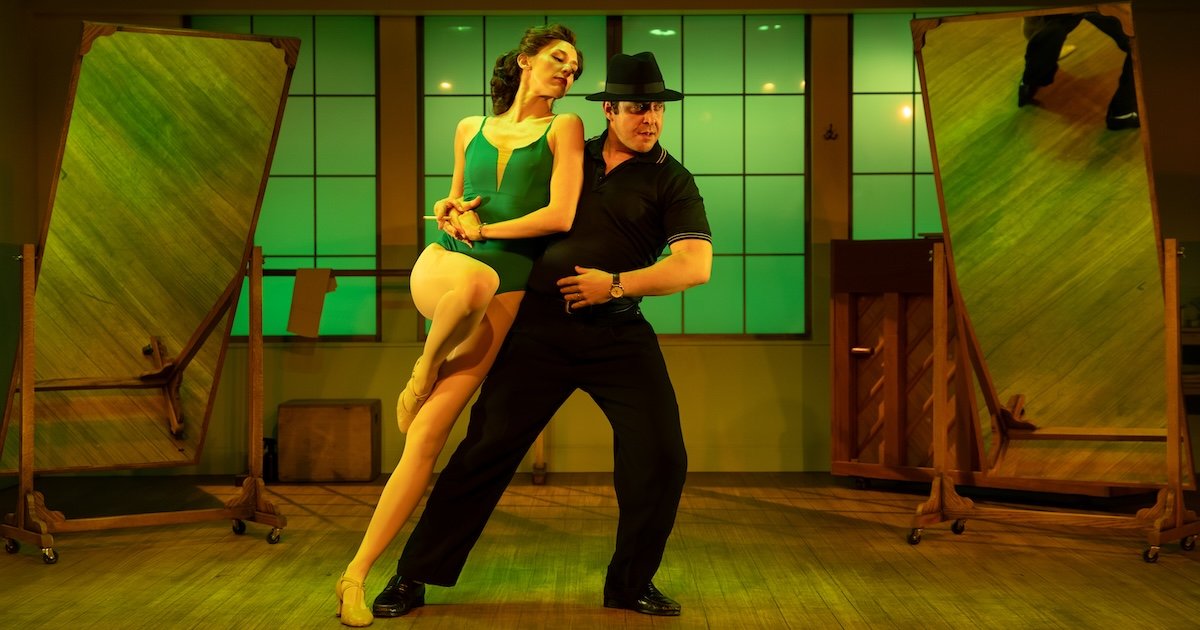
Impressive dancing is the highlight of a flimsy backstage look at the making of Singin’ in the Rain.
Early in What a Glorious Feeling!, Gene Kelly and Stanley Donen turn a rehearsal of “Moses” into a playful tap-dancing competition. Matthew Dailey as Kelly and David Otto as Donen trade increasingly elaborate steps, challenging each other to top the last combination as they work out one of the most memorable numbers from Singin’ in the Rain. It’s an exhilarating sequence that captures the creative spark behind the beloved movie musical.
Unfortunately, that energy rarely carries over into the rest of Jay Berkow’s imagined backstage drama about the making of the 1952 classic movie musical, Singin’ in the Rain, now playing at the Denver Center for the Performing Arts’ Garner Galleria Theatre. When the tapping stops, the production struggles to make the personal and professional tensions as engaging as the dancing.
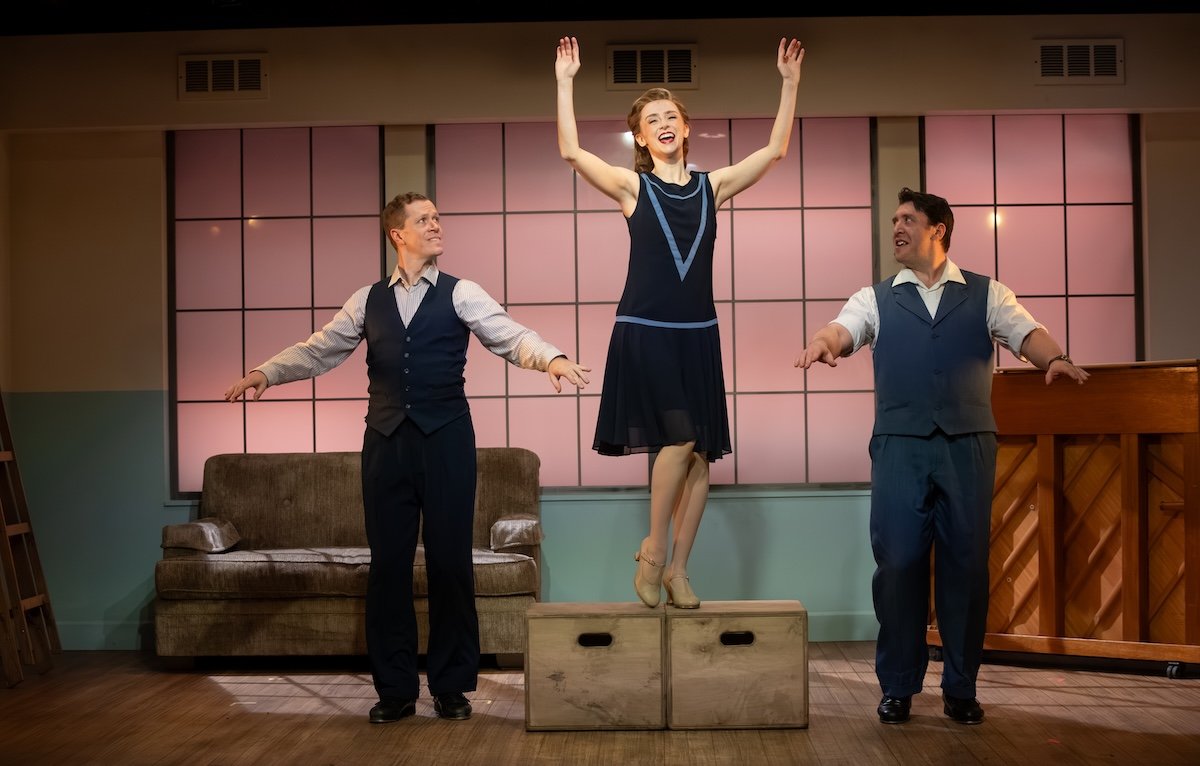
David Otto, Kayleigh Bernier and Matthew Dailey in What a Glorious Feeling! | Photo: McLeod9Creative
Set in 1951, Berkow’s play with music adds another meta layer to a film that is already about the behind-the-scenes drama of making a movie. The story centers on Kelly, his co-director Donen and Donen’s newly divorced ex-wife, Jeanne Coyne (Leiney Rigg), who remains Kelly’s trusted assistant and choreographer. Meanwhile, newcomer Debbie Reynolds (Kayleigh Bernier) has been cast in the film despite being unable to dance.
These relationships offer potentially rich dramatic territory, but Berkow rarely mines it for anything particularly interesting. Much of the tension hinges on whether Reynolds will learn to dance and whether the movie will succeed. Of course, we already know how both turn out. Bernier brings some welcome humor to Reynolds’ predicament, although her character remains largely in the background.

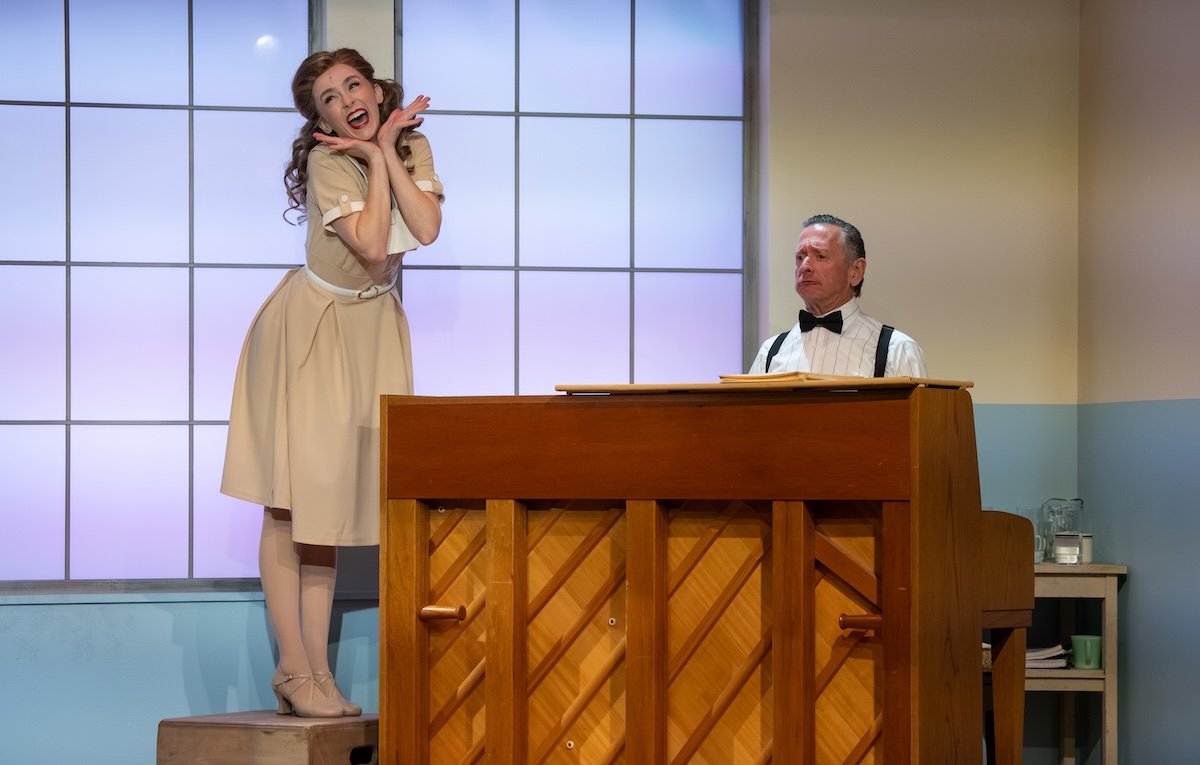
Kayleigh Bernier and David Nehls in |What a Glorious Feeling! | Photo: McLeod9Creative
The more personal conflicts are similarly underdeveloped. Coyne’s feelings for Kelly and her strained relationship with Donen become repetitive, one-note exchanges. Rigg is largely stuck playing a spurned woman obsessed with Kelly, although Otto finds some welcome nuance in Donen’s wounded pride and determination to work alongside his ex-wife.
Kelly receives an especially uncritical treatment. His complicated private life is only lightly alluded to, and the script seems more interested in reminding audiences of his brilliance than exploring what made him tick. These were complex people navigating difficult creative and personal relationships, but Berkow handles them with such kid gloves that the drama rarely develops much depth.
The tapping offers some relief
Fortunately, there’s plenty of fun whenever the actors start dancing. Dailey’s opening work on “Broadway Melody,” the familiar couch flip and other nods to the film’s signature choreography offer delightful Easter eggs for fans. Director Piper Lindsay Arpan and co-choreographer Dailey do a remarkable job recreating these moments while making them their own.
Dailey certainly has the right look and impressive footwork to play Kelly. Outside the musical numbers, however, his performance often feels like a stilted impersonation, missing the everyman swagger that made Kelly’s screen persona so irresistible. Some responsibility belongs to Berkow’s writing and Arpan’s direction, which give Dailey little room to develop a more distinctive interpretation beyond the familiar mannerisms.
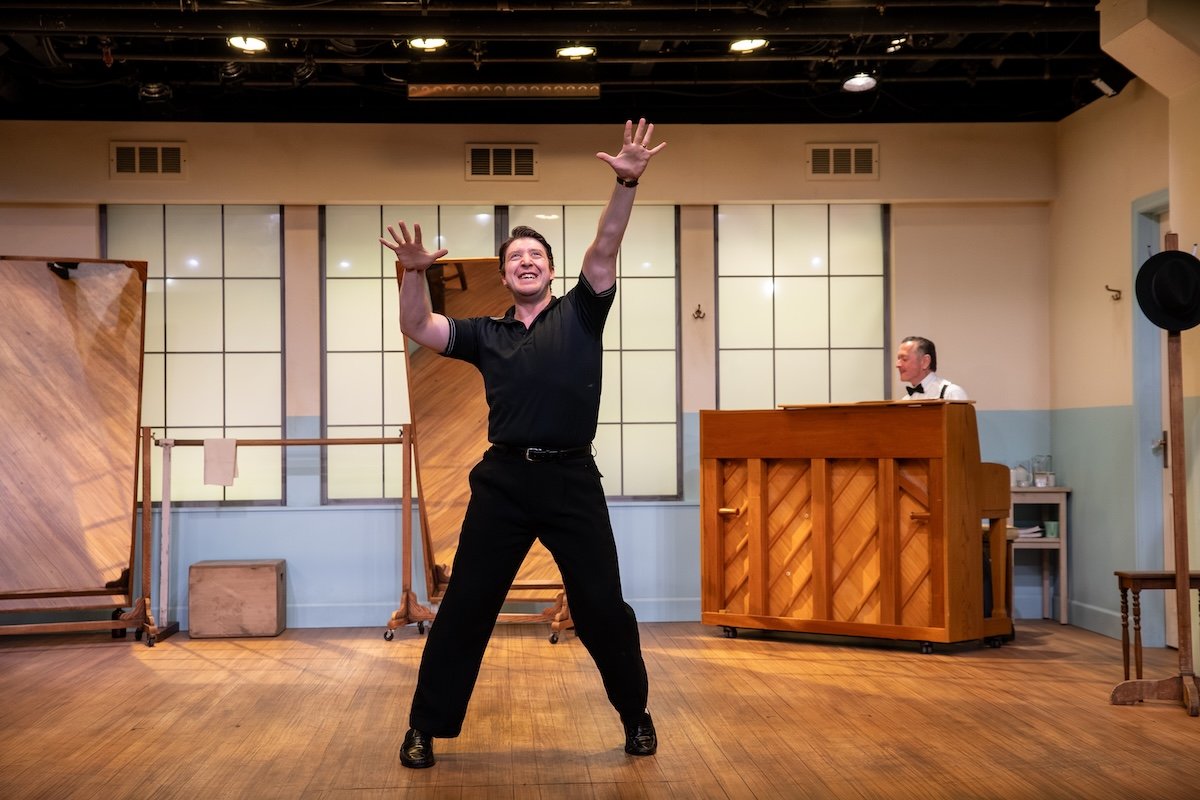
Matthew Dailey in What a Glorious Feeling! | Photo: McLeod9Creative
Lisa M. Orzolek’s rehearsal-room set, complete with piano, windows and full-length mirrors, serves the choreography well. Yet confining much of the action to this space makes the production feel surprisingly flat compared with the movie’s sweeping visual spectacle. Arpan struggles to find enough variation in the staging to sustain the lengthy stretches between numbers. The intermission (which it’s written without) further interrupts a story that could use tighter pacing.
Audiences seeking a nostalgic recreation of their favorite dance numbers will find plenty to enjoy; however, Berkow’s imagined backstage conflicts are too one-note and repetitive to sustain a compelling drama on their own. It’s less of “a glorious feeling” and more of “a middling monotony” with the occasional burst of titillating tap.

An award-winning Colorado arts and culture reporter originally from Mineola, Texas. Tresca is the chief theatre critic for OnStage Colorado and managing editor of OnScreen Colorado. He’s the editor of Bucket List Community News, a contributor to Denver Westword and Estes Valley Voice, a resident storyteller for the Bonfils-Stanton Foundation and the co-host of the OnStage Colorado Podcast.

Leave A Comment