
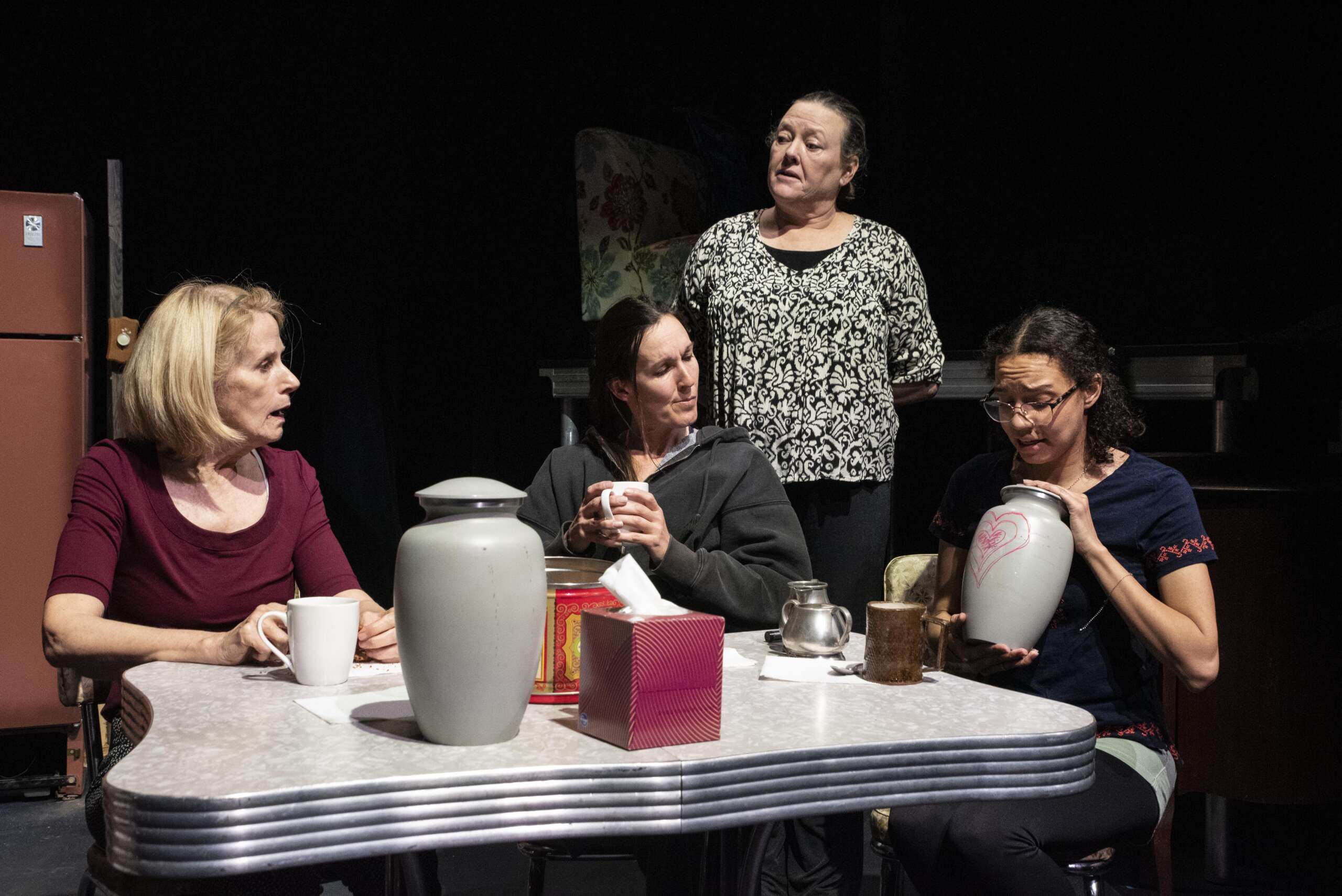
Dirtyfish Theater’s Daughtering is a poetic world premiere about mothers and daughters.
What does it mean to be a daughter? In Daughtering, Colorado playwright Nina Alice Millee reframes the question as an action.
To be a daughter is not a fixed state but an ongoing, shifting practice shaped by memory, obligation and the quiet, often fraught negotiations that define family life. That framing gives Dirtyfish Theater’s world premiere, directed by Nicolette Vajtay at the Dairy Arts Center, its intellectual backbone and emotional charge.
Set over three days in a memory-soaked family home, the play gathers three generations of women to mark the 10-year anniversary of two deaths in the family. The dead are not entirely at rest: their ashes sit in urns that seem to move of their own accord, unsettling the living and prompting a reckoning that is as spiritual as it is interpersonal.

What unfolds is a darkly funny and frequently stirring excavation of grief, inheritance and the habits that pass between mothers and daughters.
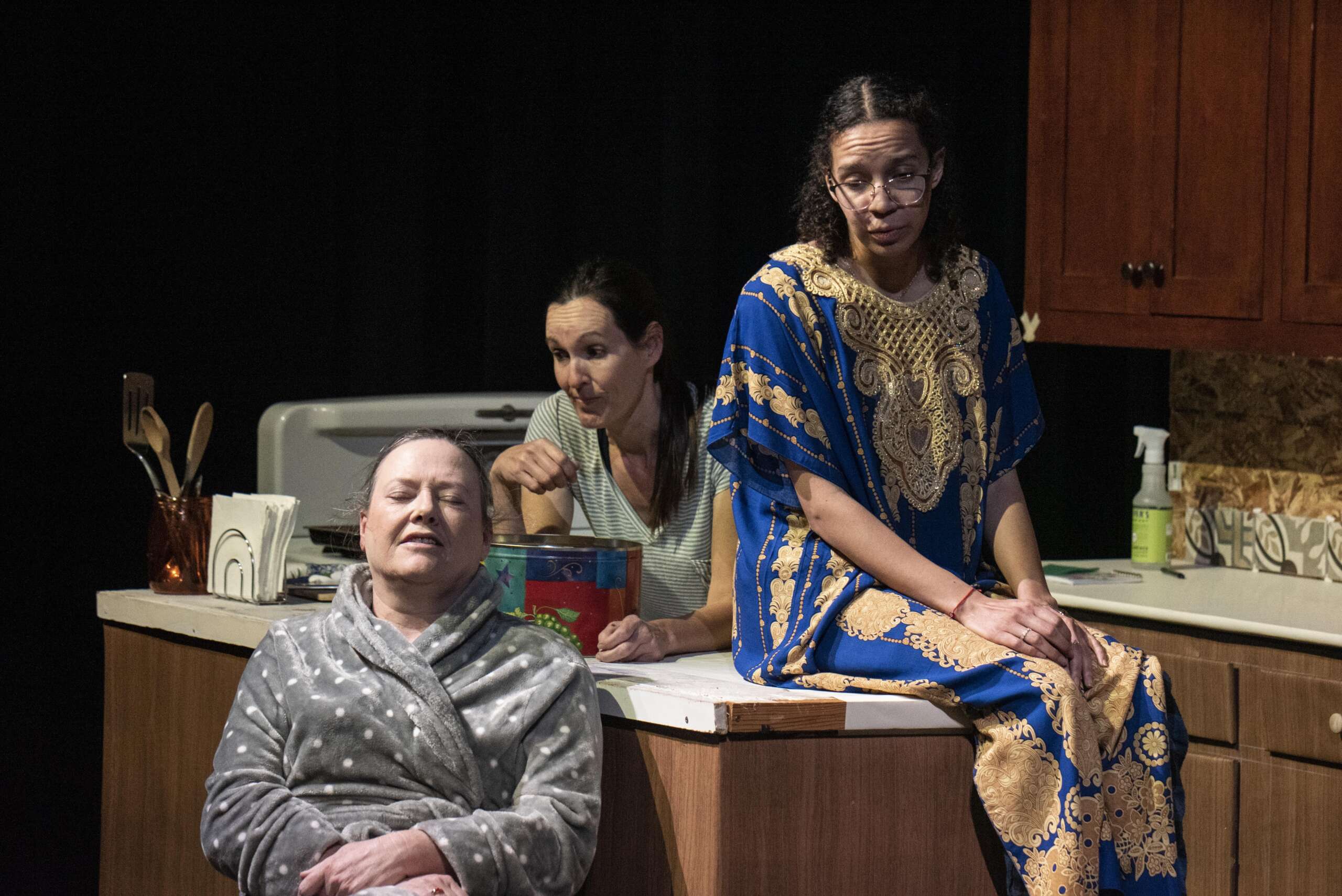
Meg Chamberlain as Lisa, Katherine Garner as Natalie and Jessica Czapla as Mare. Photo by Michael Ensminger
Fractured connections, vividly drawn
Miller begins the play with an evocative device: Olga sits alone in the house, writing a letter to her scattered family, explaining that something is wrong and that the dead’s ashes will not stay put. These ashes represent two central absences that shape the gathering: Olga’s husband, Richard, and her daughter Julie, who died within days of each other. Julie was Lisa’s sister and Mare’s mother, so each woman in the room is tethered to the loss differently: as a wife, mother, sister and daughter.
From there, the first act unfolds as a series of vignettes depicting their parallel, often disconnected attempts to coexist. The approach reflects the play’s thematic interest in missed connections, with characters sharing space but rarely emotionally aligned; however, it also makes the opening stretch feel diffuse. At just over an hour, the act takes its time establishing stakes, and it is not immediately clear where the piece is heading.
Nonetheless, the character work is consistently sharp, and Miller’s language is extremely poetic. Mary Campbell’s Olga, the family matriarch, balances biting humor and deep wells of sorrow. She is prickly, occasionally insensitive, and deeply rooted in old-world traditions, but Campbell reveals the vulnerability beneath that armor, especially in the quiet rituals, such as baking endless batches of cookies, that hint at years of solitude.
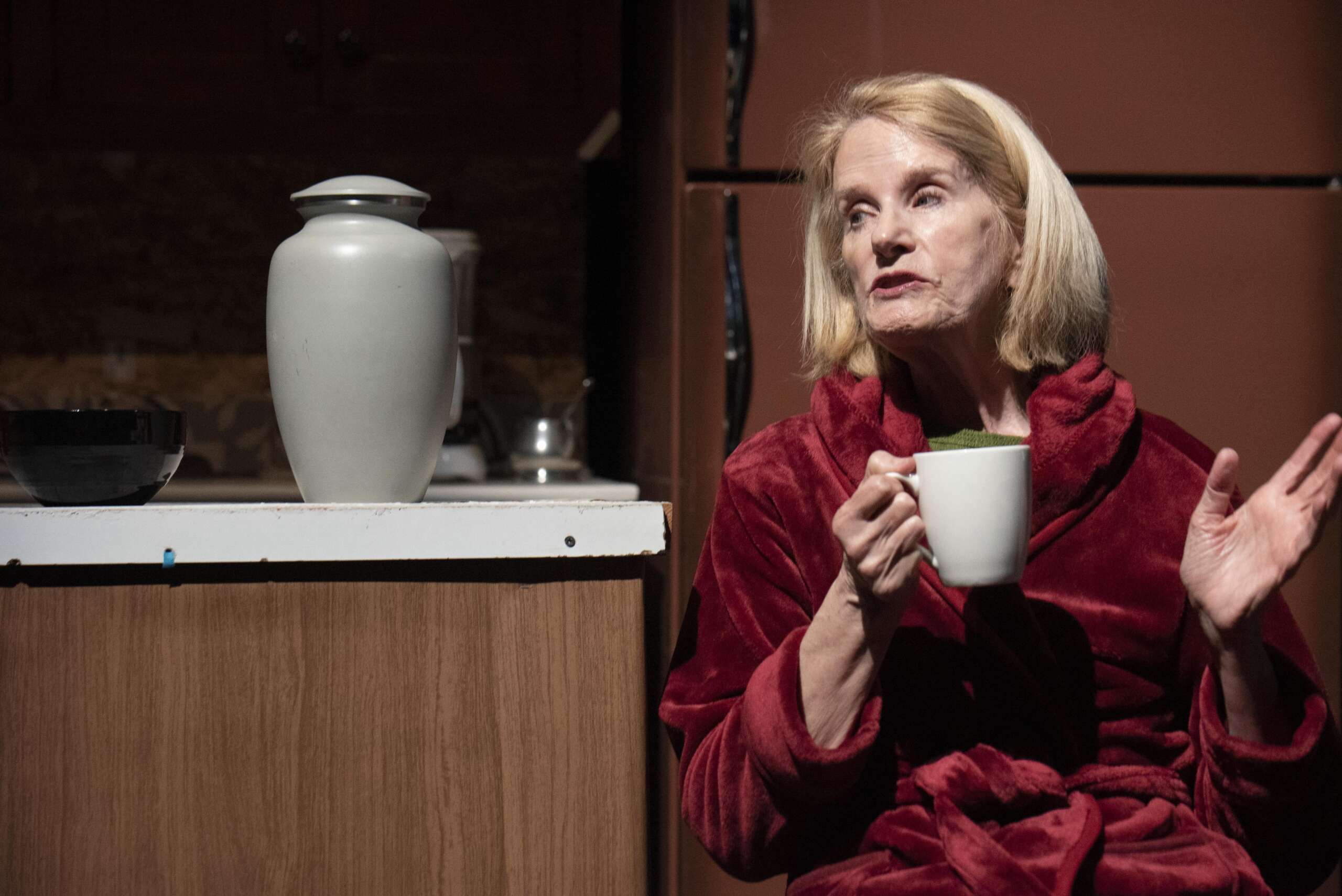
Mary Campbell as Olga. Photo by Michael Ensminger
Meg Chamberlain’s Lisa navigates the most complicated emotional terrain, caught between caring for her mother and reckoning with her own shortcomings as a parent. Chamberlain gives her a restless, searching quality, as if she’s constantly trying to rewrite a script she inherited.
Katherine Garner’s Natalie, a frazzled graduate student fueled by red wine, sugar cookies and anxiety, is instantly recognizable as she toggles between complete conviction and overwhelming doubt. Jessica Czapla’s Mare brings a quieter but essential tension, her curiosity about her Moroccan heritage bumping up against a family culture that prefers not to interrogate the past too closely.
A late Act I sequence, in which Lisa and Natalie perform yoga simultaneously in separate rooms, distills the play’s central idea with striking clarity. They move in tandem yet apart, connected by intention but divided in practice. The scene is visually and emotionally powerful, a quietly devastating metaphor for proximity without intimacy.
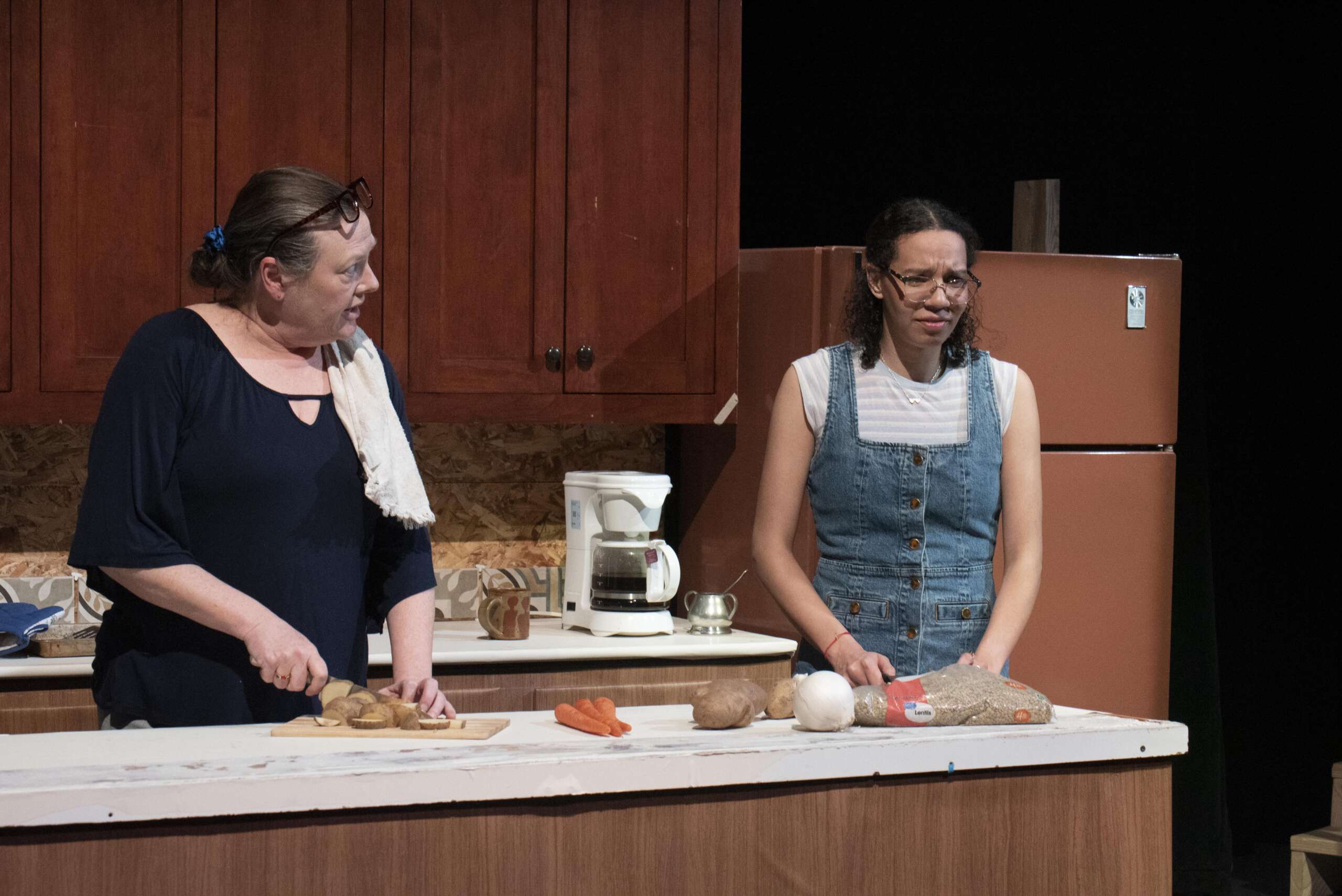
Meg Chamberlain as Lisa and Jessica Czapla as Mare. Photo by Michael Ensminger
When the dead won’t stay dead
Threaded through these domestic encounters is a current of magic realism that keeps the house from ever feeling stable. Rat traps snap loudly and unpredictably throughout the performance — sharp, jump-scare jolts that are both comic and unnerving — while the suggestion of an encroaching infestation turns the home into a space that is literally being overrun. The ashes themselves seem restless, shifting locations and resisting containment. Together, these elements externalize the family’s unresolved grief: what has been ignored refuses to stay buried.
Design elements, all handled by Glenn Webb, efficiently render the home as both a literal and emotional container. The multi-level set, which includes a kitchen, living room and elevated bedroom, helps to support the play’s layered storytelling, while sound and lighting changes subtly emphasize the supernatural presence.
The second act introduces a stronger sense of direction as Mare proposes a ceremony to release the unsettled ashes. What follows is the play’s most gripping stretch, culminating in a confrontation that finally forces long-suppressed tensions into the open.
Here, Miller’s writing tightens and deepens. The language remains lyrical, but the emotional stakes become more immediate, giving the actors room to push into sharper, more volatile territory. A climactic scene in Julie’s preserved bedroom is especially effective, layering grief, resentment and revelation into a dynamic and deeply felt exchange.
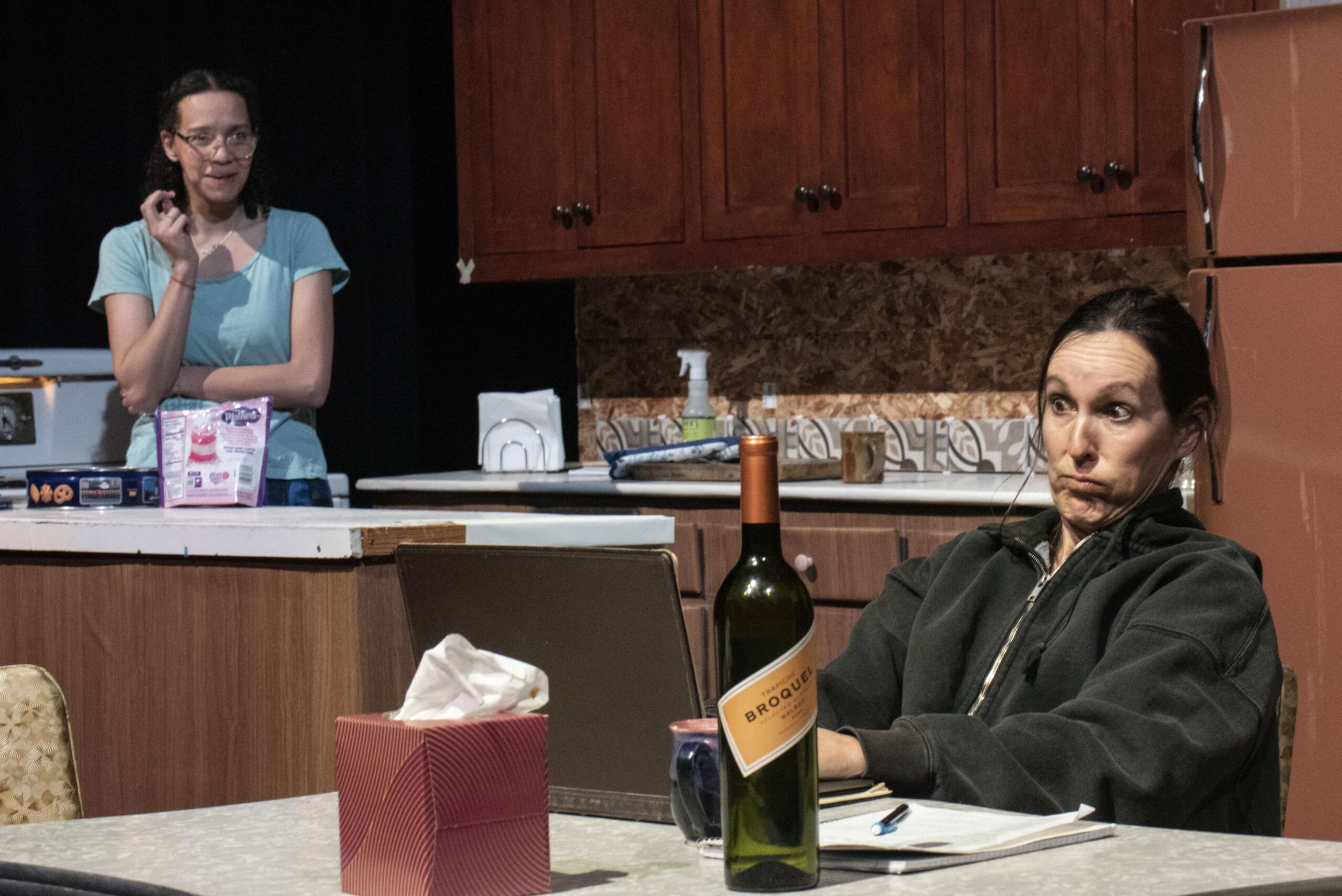
Jessica Czapla as Mare and Natalie as Katherine Garner. Photo by Michael Ensminger
At the same time, the play’s architecture doesn’t always support the weight of its ideas. The central conflict arrives relatively late, and while the climactic sequence hits hard, the addition of a subsequent scene feels underdeveloped in comparison, serving as a sort of epilogue that gestures toward resolution without fully achieving it. With a runtime of about two hours and fifteen minutes, some tightening, particularly in the beginning, would allow the play’s strongest ideas to emerge more clearly and quickly.
What ultimately lingers is Miller’s language, which is haunting and rich with metaphor. The play deals with the familiar territory of family and grief, but with a specificity that rings particularly true. At times, the script’s intellectualism and therapy-inflected dialogue risk creating distance, and its structural looseness can be frustrating; however, there is no denying the depth of its inquiry or the commitment of its performers, all of whom approach the material with impressive emotional openness.
Daughtering may be a bit bumpy in its premiere outing, but there is much here to admire. Miller has written something probing and alive, and Vajtay’s production meets it with performances that are fully invested in its emotional demands. With further refinement, it can even better deliver on its argument that being a daughter is a continuous, messy act. As it stands, Daughtering is a solid debut that’s perfect for audiences who appreciate dense, idea-rich new work.

An award-winning Colorado arts and culture reporter originally from Mineola, Texas. Tresca is the chief theatre critic for OnStage Colorado and managing editor of OnScreen Colorado. He’s the editor of Bucket List Community News, a contributor to Denver Westword and Estes Valley Voice, a resident storyteller for the Bonfils-Stanton Foundation and the co-host of the OnStage Colorado Podcast.

Leave A Comment