
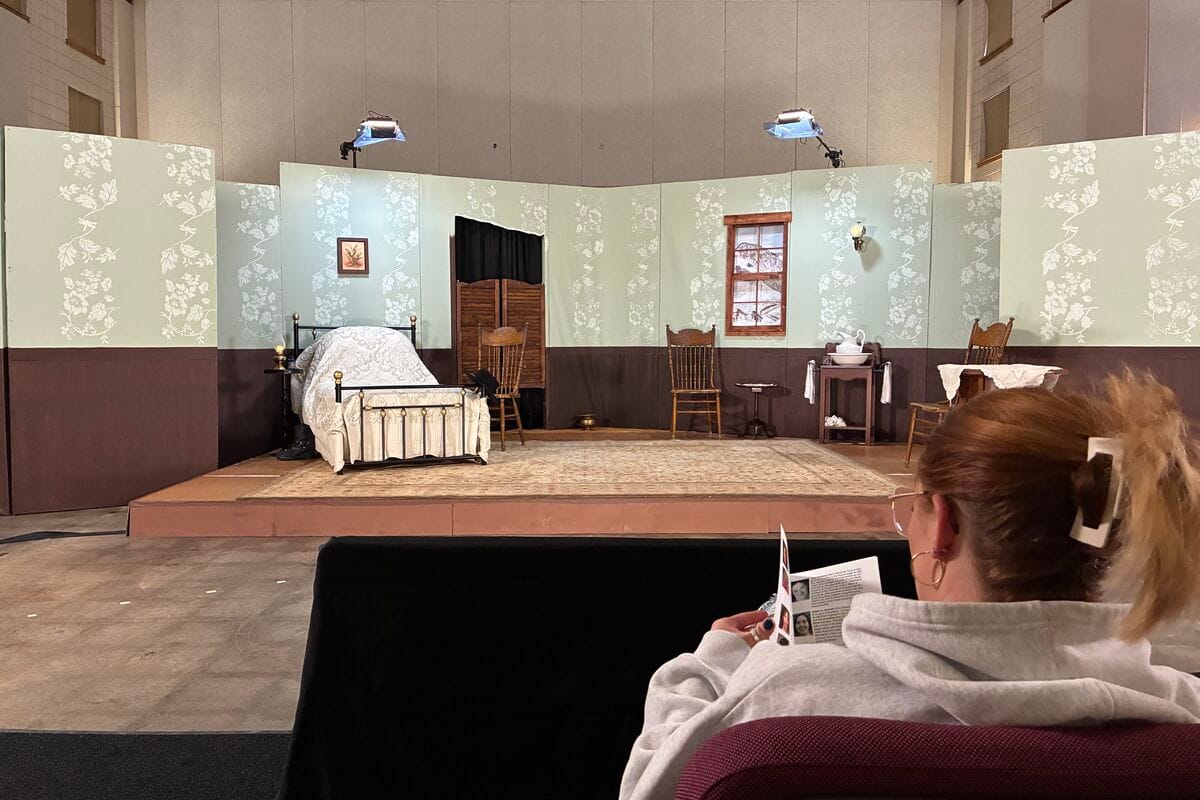
Atomic Theatre’s original musical struggles to dramatize the legendary gunslinger’s life.
John Henry “Doc” Holliday absolutely has a story worth telling. The dentist-turned-gambler-turned-gunfighter has occupied a strange and enduring place in the mythology of the American West for more than a century.
Popular culture has transformed him into everything from tragic antihero to unstoppable outlaw, often exaggerating both his body count and his legend. He is perhaps best known for his role in the Gunfight at the O.K. Corral in Tombstone, Arizona, alongside Wyatt Earp, but Colorado audiences may know him for another reason: Holliday died in what would later become Glenwood Springs after traveling west in hopes that the mountain air might ease his tuberculosis.
So when Atomic Theatre announced Defiance: Doc Holliday’s Last Stand, an original musical written and composed by Ken Crow and directed by Emily Liddy, the premise immediately sounded promising. Holliday’s life contains betrayal, violence, addiction, friendship, mythmaking and mortality — all rich material for musical drama.

A deathbed reflection framed around the ghosts of his past could have offered an intimate way into that mythology. Unfortunately, Defiance rarely finds a compelling dramatic angle on its subject.
Rather than dramatizing a pivotal chapter of Holliday’s life or interrogating the mythology surrounding him, the musical spends almost its entire 90-minute runtime with Holliday confined to a bed in Glenwood Springs while three women from different periods of his life argue over who understood him best. Ghosts of men he killed occasionally appear to confront him, though those encounters ultimately lead less toward reckoning than reaffirmation.
Again and again, the show circles back to the same conclusion: Doc Holliday may have been reckless, selfish and destructive, but he was also just too charismatic to condemn.
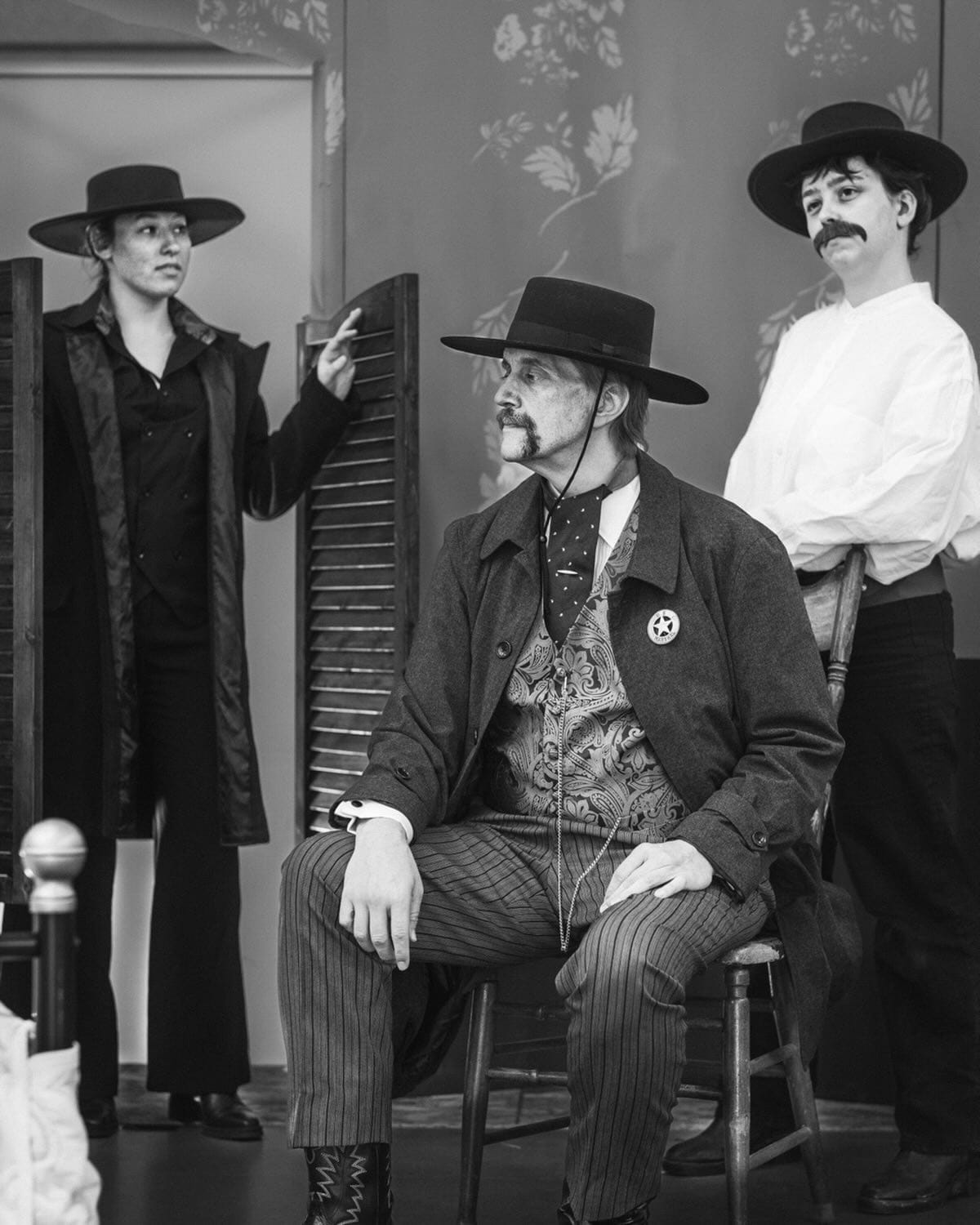
Julietta Rozin, Tobie Bonahoom and Rebecca Juranek in Defiance: Doc Holliday’s Last Stand. | Photo: Paul Adams
That reverence becomes the production’s central problem. Defiance holds Holliday in such high regard that it never seriously interrogates the man beneath the legend. The result is a musical with very little dramatic tension. Since the story begins with Holliday dying of tuberculosis in the 1880s, there is no uncertainty about the outcome, and the script struggles to create meaningful stakes beyond repeated declarations about his freedom-loving spirit.

An award-winning Colorado arts and culture reporter originally from Mineola, Texas. Tresca is the chief theatre critic for OnStage Colorado and managing editor of OnScreen Colorado. He’s the editor of Bucket List Community News, a contributor to Denver Westword and Estes Valley Voice, a resident storyteller for the Bonfils-Stanton Foundation and the co-host of the OnStage Colorado Podcast.

Leave A Comment