
Mixed-bill program pairs pure Balanchine with a muscular ‘Rite of Spring’ and a world premiere from Yoshihisa Arai.
If I could see a single George Balanchine ballet over and over it would be Concerto Barocco. One of Balanchine’s greatest masterpieces, it serves as the stunning centerpiece of Colorado Ballet’s current MasterWorks program, beautifully danced by the company’s proficient ensemble.
Balanchine choreographed Concerto Barocco initially as an exercise for his School of American Ballet students but premiered it as a finished work in 1941 on a Latin American tour of American Ballet Caravan. Ballet Caravan was founded by Balanchine and Lincoln Kirstein and then evolved into the New York City Ballet, which performed the work at that company’s first performance in 1948.
Since then, it has remained an integral part of City Ballet’s repertoire; it is danced by many other ballet companies as well, and for good reason. For anyone not familiar with Balanchine’s genius — even for Balanchine aficionados — Concerto Barocco is quintessential Balanchine. Pure of manner, it is the perfect response to its score, Bach’s Double Violin Concerto in D Minor. Balanchine considered himself a musician first and dancer second (like all students at Russia’s Imperial Ballet school, Balanchine was trained in music as well as dance) and had a profound sensitivity to music.
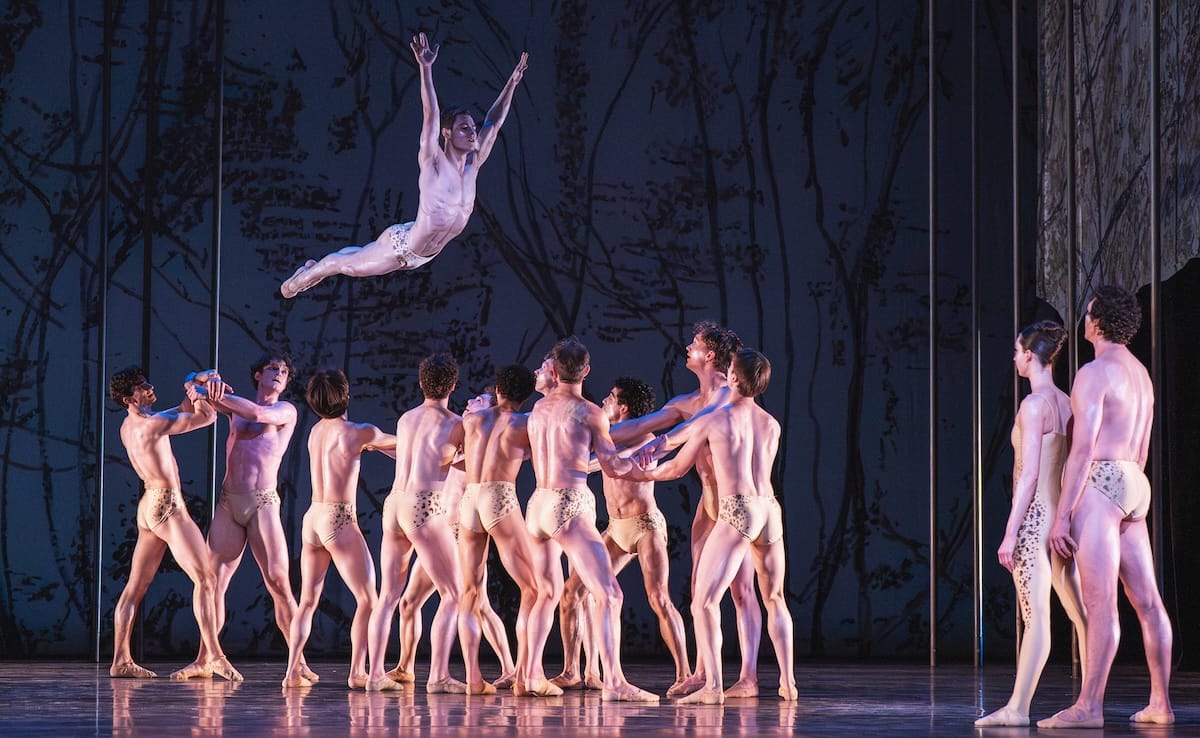
‘The Rite of Spring’ | Photo: Amanda Tipton Photography
‘See the music, hear the dance’
One of Balanchine’s most famous quotes about his neoclassical ballet style was that he wanted the audience to “see the music and hear the dance.” In Concerto Barocco he succeeds perfectly. The spare choreography, enhanced by the dancers’ simple white-skirted leotards, is pure and clear. We can see the details in the smallest movements — the tap of a pointe shoe on the floor, the extension of a hand or arm — as they naturally lead into a larger arabesque or jump, making each moment an expression of poetry in motion.

In their solo variations and ensemble sections, Colorado Ballet’s dancers meld into a seamless whole of intertwined bodies conveying the melodious flow of Bach’s magnificent score. Jessica Payne, Leah McFadden and Christophor Moulton easily manage the speed, precision and expansiveness of Balanchine’s inventive style. For its part, the corps handles Balanchine’s challenging rapid-fire changes of directions and complex interweaving patterns (known as Balanchine’s “daisy chains”) with ease and grace. Colorado Ballet does this magnificent work its due.
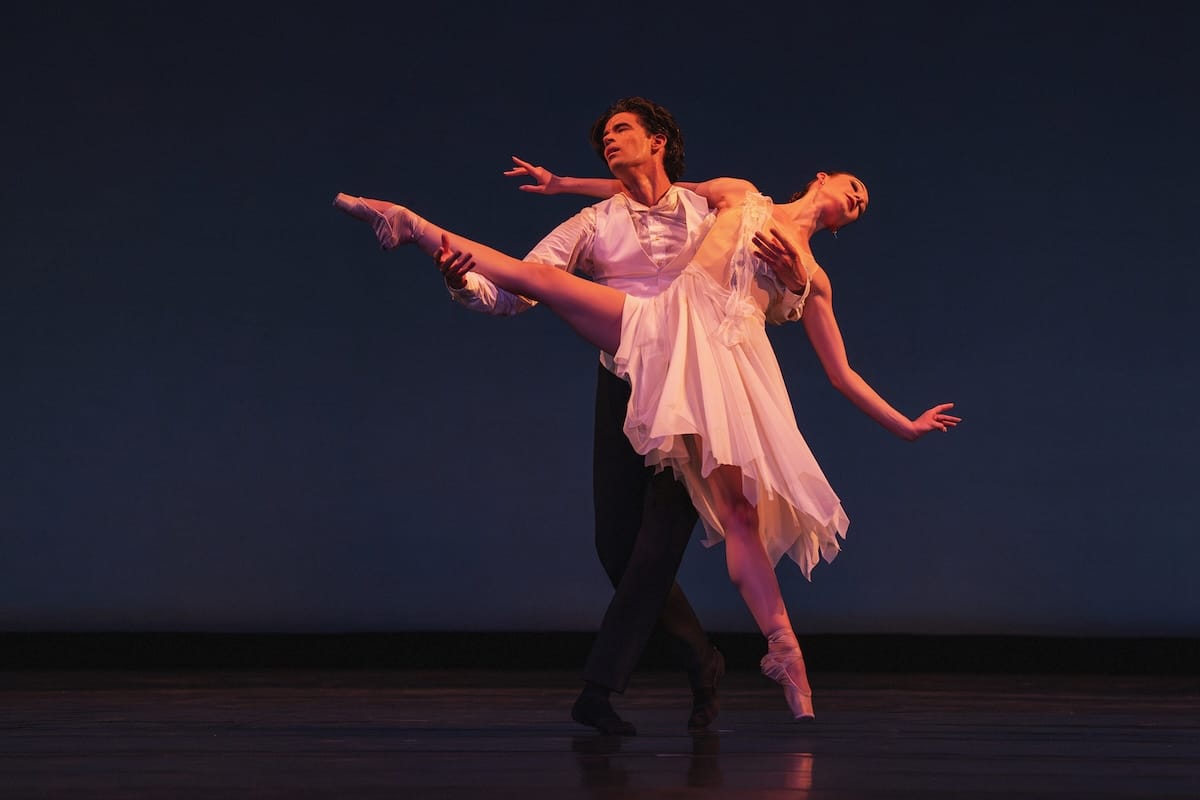
Ever Larson and Mario Labrador in ‘S Rachmaninoff’ by Yoshihisa Arai. | Photo: Amanda Tipton Photography
The Rite of Spring
The other standout on this mixed-bill program is The Rite of Spring, the most revised work in the entire ballet canon. Almost every 20th-century choreographer has created his or her own version since the original production, with choreography by Nijinsky and a pounding Stravinsky score, set off a riot at its Paris premiere in 1913.
Stravinsky had the idea of writing a ballet score for Diaghilev’s Ballets Russes that would be based on ancient pagan rituals in Russia. Nijinsky, the most famous dancer of his day, took the subject to heart, experimenting with styles and movements that were decidedly not classical ballet. The resulting collaboration was shocking to the audience, largely because of Stravinsky’s challenging music but also due to political tensions and anti-Russian sentiment in Paris at the time.
Today the Stravinsky score is considered so compelling that it is often performed by itself by symphony orchestras, and here Colorado Ballet’s terrific orchestra under Adam Flatt brings it to brilliant life. On the other hand, the original ballet is performed rarely, most notably by Russia’s Mariinsky Ballet and the Joffrey Ballet. Modern audiences know the ballet mostly from more contemporary versions like the one by Glen Tetley, created in 1974, that Colorado Ballet uses.
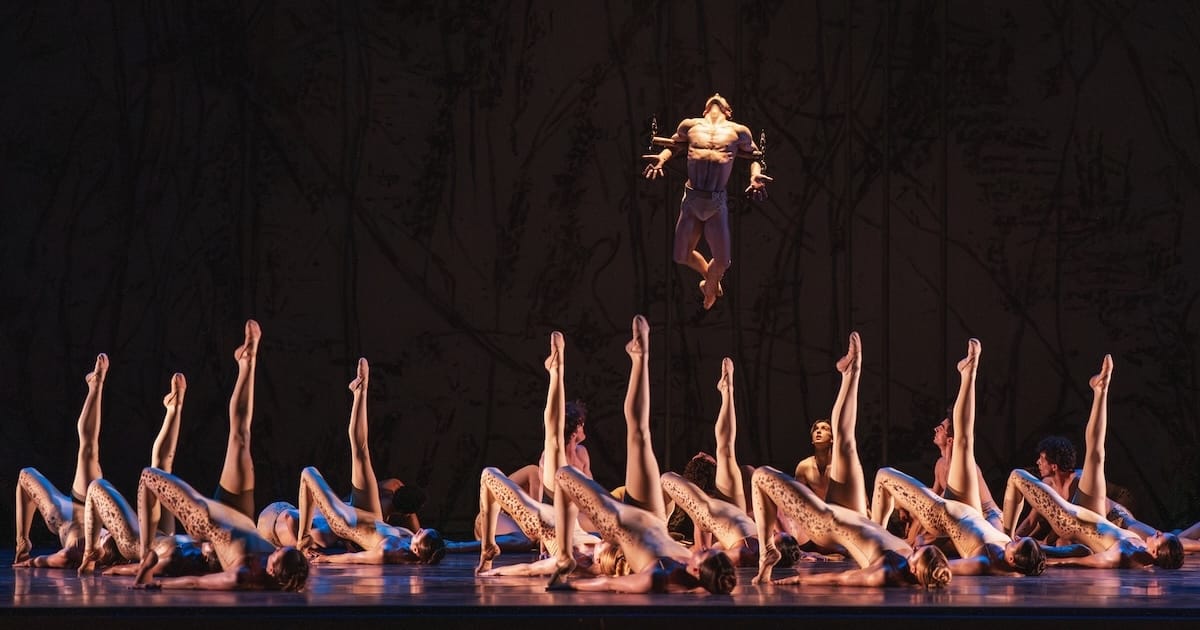
Last offered by Colorado Ballet about 10 years ago, Tetley’s Rite is one of the most wild and muscular, using a huge cast fleshed out with apprentices joining the regular company. The shimmering sets and costumes (skin-toned leotards that make the dancers look near nude) come from the Czech Republic’s National Theatre, with Colorado Ballet’s Resident Lighting Director Todd Elmer creating such dazzling lighting effects that we can see the smallest movements even in the enormous ensemble sections.
There is no actual storyline to the Rite; rather, there is a series of ritualistic dances ending with a human sacrifice to the beginning of spring. In the Nijinsky original the sacrifice was of a virgin maiden but Tetley, like some others, has made this character a male. To my mind both genders work equally well. On opening night here Jeremy Studinski was powerful as the sacrificial victim, with Ever Larson and Christophor Moulton adding great emotion as Earth Mother and Earth Father in a lovely pas de deux.
Tetley’s demanding choreography requires significant endurance on the part of the dancers, and Colorado Ballet’s troupe is easily up to the task. The dancers literally throw themselves into the wild steps, and by the end of the ballet they, and we, are near exhaustion but in a good way.
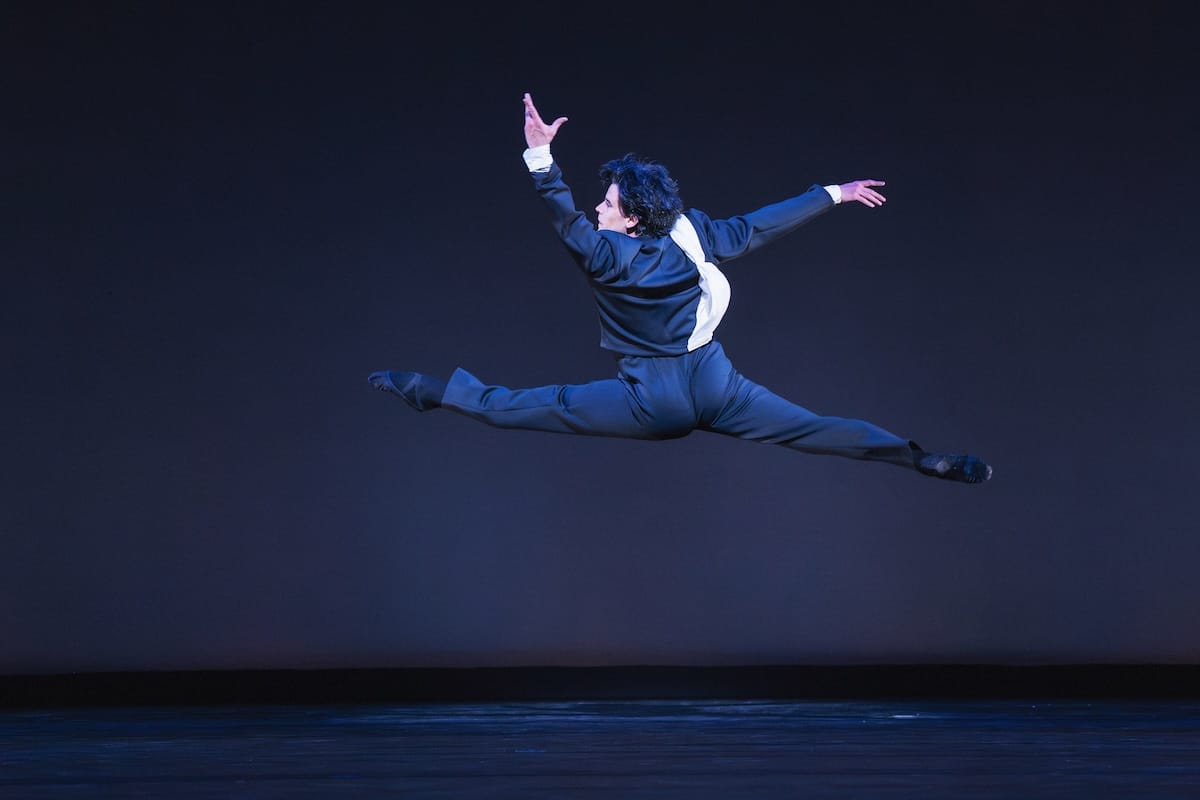
Mario Labrador in ‘S Rachmaninoff’ by Yoshihisa Arai. | Photo: Amanda Tipton Photography
A pas de trois to remember
Rounding out the program is the world premiere of S. Rachmaninoff by Yoshihisa Arai. Arai loosely based the work on Rachmaninoff’s artistic and personal struggles after the disastrous premiere of his First Symphony. But although there is an engaging opening sequence for six men and an exquisite pas de trois for one woman and two men, Arai can’t sustain the narrative. The steps for Rachmaninoff’s character, ably danced by Mario Labrador, hardly change at all, and he remains as distraught at the end as at the beginning.
The pas de trois, however, is worth remembering. Ever Larson, dancing with Mario Labrador and Liam Hogan, is breathtaking. Larson’s perfect technique, with arms and legs that seem to go on forever and endless extensions, makes her every second on stage seem like a study in the most extreme flexibility and elegance a human body can achieve. And then there is the score that Arai uses — Rachmaninoff’s transcendent Piano Concerto No. 2, sensitively played by guest solo pianist David Korevaar. If and when the dancing lags in S. Rachmaninoff, one can easily sit back and luxuriate in the glorious, transporting notes of this magnificent musical composition.

Alice Kaderlan is a long-time dance and theatre critic and general arts writer. She has written for newspapers and online news sites in Seattle, Washington D.C., Pittsburgh and other cities for more than 40 years. She has also appeared on various public radio stations including WAMU-FM in D.C. and KUOW in Seattle and covered arts for NPR. She currently lives and writes in Denver.

Leave A Comment