
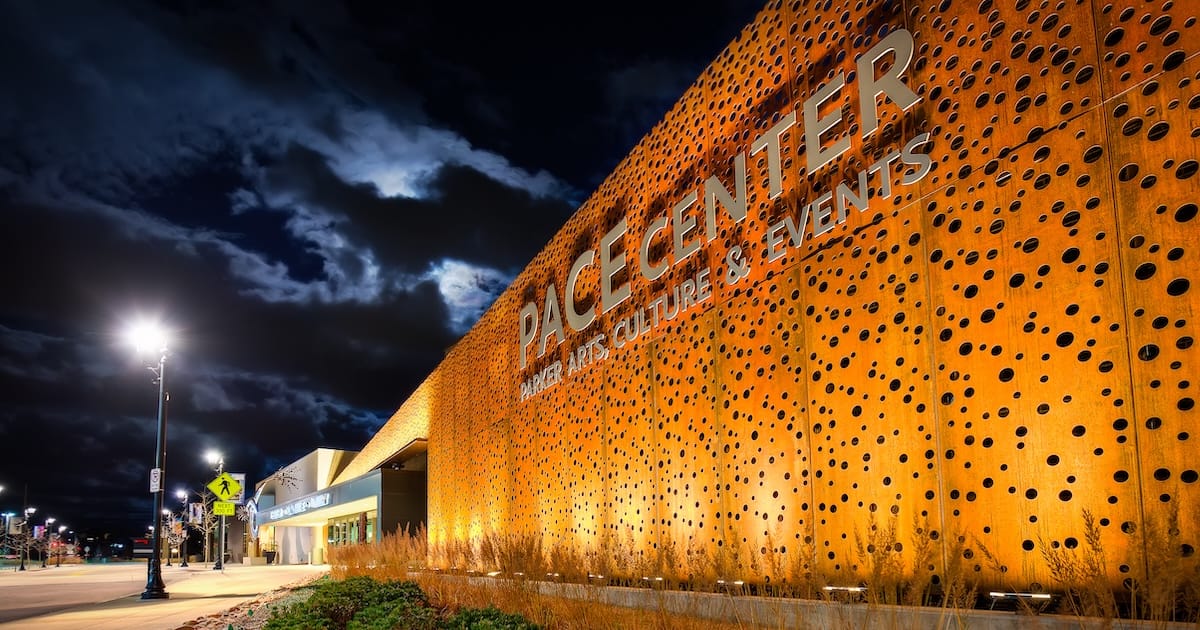
The town’s cultural director on a new strategic plan, the future of the PACE Center and why patrons probably won’t notice much changing — at first.
Earlier this year, the Town of Parker released its Cultural Strategic Plan 2026–2036, a 10-year roadmap developed with Keen Independent Research. The plan covers Parker Arts’ four venues — the 534-seat PACE Center, the 200-seat Schoolhouse, the Discovery Park amphitheater and Ruth Memorial Chapel — and lays out three big priorities: building financial sustainability, cultivating a creative community and turning downtown Parker into a thriving cultural destination.
I sat down with Cultural Director Carrie Glassburn to talk through the findings, including the report’s pointed critiques of Parker Arts’ musical-production model, its education programming and its reliance on sales tax revenue. The conversation has been edited for length and clarity.
What was your top-level takeaway? Anything surprising in there?
Carrie Glassburn: Not really. And while you might think, “Great, we spent money on a consultant and there’s nothing new” — I actually take that as a sign that we know our business, we know our patrons, we know the community, we know our partners. The biggest takeaway is that people really love what we do here and feel it’s special. It’s part of why they love living in or visiting Parker. And they want more of it.
The challenge is that as Parker builds out and our sales tax revenue plateaus — and we do rely on a subsidy from the town — there’s tension. If we’re going to do more and the community keeps growing, but the revenue plateaus, that’s where we’ve got to figure things out. We’re doing a great job. We just need to keep doing more of it. And we’ve realized we can’t do it alone.

One recommendation was to get more town departments involved. How do you see that working?
Carrie Glassburn: This is a 10-year plan, and we saw it happening in phases. Long term, if we want to be the kind of creative community where you walk downtown and there are galleries and gift shops and maker spaces, art on the streets, festivals going on — we’re not there yet. We’re great within our walls and at our community events, but it doesn’t feel like a creative community the way Salida might, or other creative districts in the state.
That’s not something my team can just go change. For artists, musicians and businesses to come here, we need affordable housing. We need affordable rents so people can open galleries or jewelry stores. We need better transportation so people can get here from other places. Those are bigger infrastructure things that go beyond Parker Arts. We’ll have to work with community development, economic development and developers to make that real. That’s 10 years down the road.
The study flagged the model you use for musicals — where the town picks a title and theatre companies bid to produce it. What was problematic about that, and do you agree?
Carrie Glassburn: It’s an interesting model. None of the cultural centers in Colorado are exactly the same. Arvada focuses on theatre. Lakewood’s different. We’re different sizes and do different things. The thing about us is that while musicals are important, they’re only one piece. On our stages alone we do musicals, jazz, comedy, national acts and dance. We also have camps, classes, rentals to HOAs, weddings, funerals, outreach into schools and senior centers, public art and multiple facilities.
This started 15-plus years ago. We don’t have producers, directors, choreographers and carpenters on staff, so we rely on outside partners. We chose not to have a single resident company — we wanted to spread opportunities out and give multiple groups a shot. It also meant they could focus on one production while we were already booking the next thing.
What our partners are telling us is that not knowing whether they’ll get the next show makes it hard to budget and plan. It’s a little clunky for them, and honestly for us too. We don’t know what the next iteration looks like yet, but we still want to give opportunities to multiple organizations — we have school matinees, big family musicals, and to your point, we haven’t done straight plays in a while. That might be a different organization where plays are their forte.
It might not even be about who we partner with. It might be how many we’re doing in a year, or when. One example: We always did a summer musical, which blocked out the whole summer. We found a lot of national acts only tour in summer — fairs and festivals — but we had to turn them away. So maybe we don’t do a summer musical. Maybe we move it to the holidays when people want holiday shows and have family in town. We’re going to test some things and see what sticks.
The report described PACE and the Schoolhouse as in need of updates, which surprised me — PACE feels almost brand new.
Carrie Glassburn: Our seats are 15 years old. We’re not at the point of replacing them yet, but in the next few years we’ll need to look at reupholstering or replacing. We get complaints about the Schoolhouse seats — they’re a little wobbly and people feel cramped. The Schoolhouse also doesn’t have the technology in there for much rigging because of the building’s structure.
We’re about to do a refresh of the PACE lobby because as our patrons age, they want more places to sit, and the seating we have is 15 years old with a lot of kids climbing on it. So it wasn’t so much about the theatre technology — we try to stay current on sound and lighting boards — it was more about patron comfort.
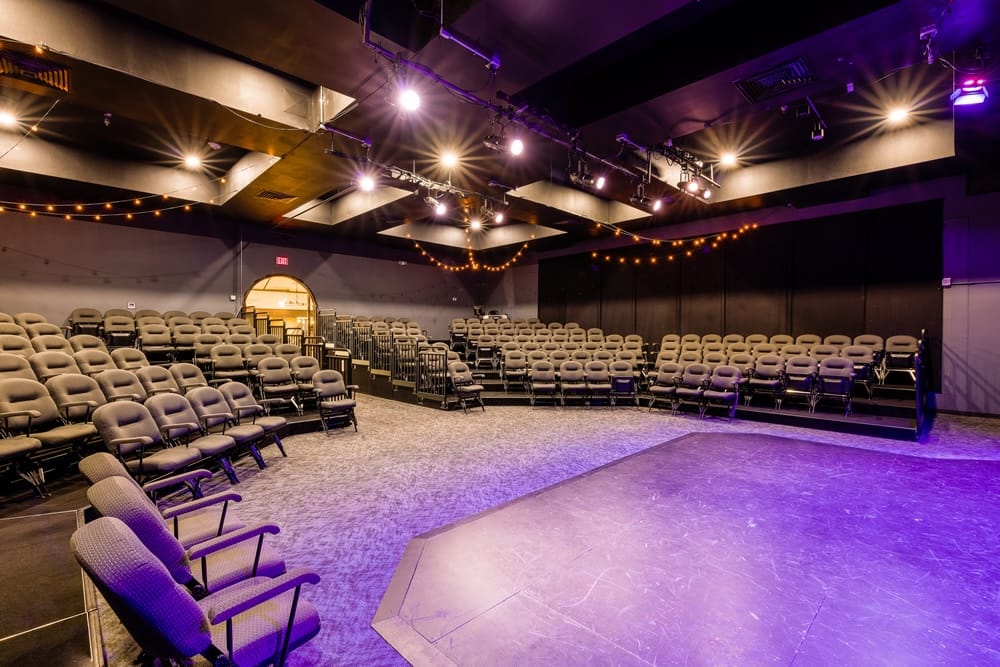
Parker’s Schoolhouse theatre | Photo: John Ott
Education programming was also called out as a weakness.
Carrie Glassburn: We weren’t surprised. Trends come and go in arts and culture just like in fitness. There’s a pottery show on TV and suddenly everyone wants to do pottery, then it’s acrylic pouring. We try to stay with the trends, but that means you’re putting on a lot of classes and seeing what sticks.
We don’t have to be the only ones doing things. There’s a retail shop here called Community Mud — a pottery studio. Instead of us trying to find the funds and space to build our own studio with kilns and clays and finishes, they’re already doing it really well. Let them be the place for pottery. We can focus on what we do well, like our dance and theatre programs. As we get more creative businesses here, we’ll send business their way so not everyone is looking at us to provide every class.
The cost of touring acts was noted as a threat. What’s the answer?
Carrie Glassburn: Our patrons love variety, and in marketing, you typically don’t want to be all things to all people because you end up not being good at anything. But contrary to that belief, we’ve succeeded in offering this variety of affordable, quality programming, and that’s what the community loves.
Costs are going up. Gas is more expensive, groups have to pay people and give raises. Our goal isn’t to stop booking acts — presenting, renting and producing are all important. We just have to be more strategic about how we piece them together. If acts tour in summer, let’s make room for them in summer instead of automatically saying no. May is a huge month for rentals — end-of-year school banquets, dance recitals — and rentals support our presented shows. So maybe we don’t book as many touring acts in May and let rentals take over. They all have a place. We just need them to work better together.
The report mentioned underutilized spaces. PACE seems pretty well booked, but I’m guessing the Schoolhouse sits empty quite a bit.
Carrie Glassburn: Right now a lot of classes are held at PACE, which means we can’t rent during that time. The class may or may not even go, and we’ve lost out on a rental. So we’re looking at the Schoolhouse — which literally is a school with classrooms — as the center for classes and camps. That’s where you’ll have kids in tutus running around and theatre camps. It frees up PACE for HOAs, financial seminars, conferences and full-facility rentals.
The Schoolhouse is such a great space — intimate, the right size for smaller groups, affordable for community groups that aren’t big enough to fill PACE. It’s about making better use of what we have.
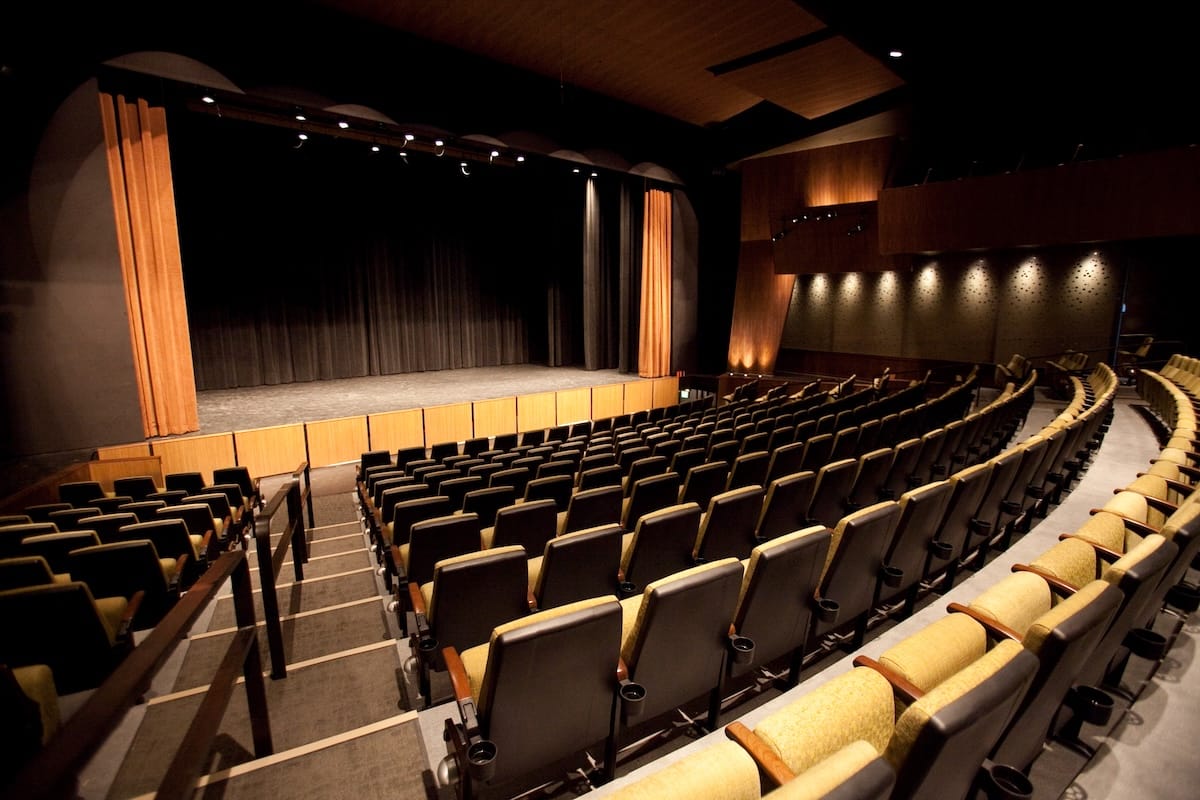
Inside the PACE Center | Photo: John Ott
Lone Tree is planning an amphitheater not far away. Threat or opportunity?
Carrie Glassburn: Two performing arts centers less than eight miles apart would normally be a big concern, but Lone Tree and PACE opened around the same time and we’re almost the same size. We’ve done a really good job of coexisting — we share part-time staff and volunteers, we share patrons. We have good relationships with their staff and make sure we’re not bringing the same acts.
Their amphitheater will probably be bigger than either of our theatres, which lets them book bigger acts. Parker’s Discovery Park is different. We host free community concerts with regional acts. We can fit 3,000 people, but that’s not the idea — it complements the splash park, so families bring kids and a picnic. We don’t sell concessions. Lone Tree will program larger ticketed concerts, which isn’t an area we play in. More is more. The more going on down here, the more people come, spend money at restaurants and shops. That’s good for the county.
What’s next?
Carrie Glassburn: The first phase of the plan is internal — we’re putting every division under a microscope, looking at finances, systems, technology, evaluating partnership models, testing things in different time slots. Patrons probably won’t see a visible difference at first, especially not “we’re no longer doing musicals” or “we’re not bringing big names.” Once we know we’re solid and viable for the long term, that’s when we start looking outward — at dance studios, artists, musicians and other venues like Tailgate, Wild Goose Saloon and Music on Main Street. How do we work together to create a stronger creative community? And eventually, things like a chalk festival, where partners and sponsors help us put it on rather than us funding it alone. That’s the longer-term piece.

Alex Miller is editor and publisher of OnStage Colorado. He has a long background in journalism, including stints as the top editor at the Vail Daily, Summit Daily News, Summit County Journal, Vail Trail and others. He’s also been an actor, director, playwright, artistic director and theatre board member and has been covering theatre in Colorado since 1995.

Leave A Comment