
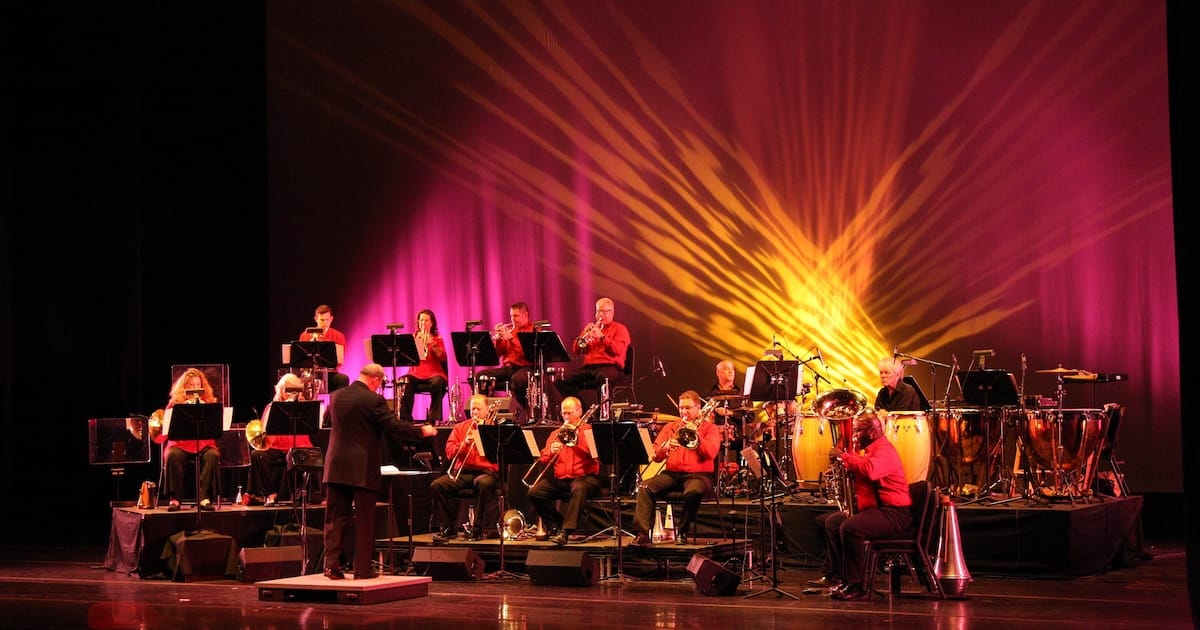
Executive Director Becky Wilkins on releasing two records at once, running the Rafael Méndez Brass Institute and why an all-brass ensemble is worth a listen.
Becky Wilkins found her way to Denver Brass in the most Colorado way possible: by organizing a ski trip. A French horn student at the University of Denver’s Lamont School of Music, surrounded by faculty who doubled as the ensemble’s core players, she impressed co-founder Kathy Brantigan enough to land an internship, then a full-time job. Fifteen years later, she runs the operation as executive director.
This month, the 14-member ensemble puts out not one but two albums: “Elevated Masterworks,” a collection of original commissions, and “If You Just Believe,” its first holiday record since 2012. The a free release concert will be folded into the Rafael Méndez Brass Institute, the week-long brass intensive Wilkins has directed since 2012. We caught up with her about the double release, the state of a life in music and what makes a room full of brass worth showing up for.
You’ve been with The Denver Brass since 2010 and executive director since 2015 — and you’re a horn player yourself. How did you get from Lamont to running one of the country’s premier brass ensembles?
I was a student at Lamont, and at the time most of the brass faculty were involved with the Denver Brass — Kathy Brantigan, our co-founder, was chair of the brass department, and so many of the players who are the heart and soul of the group were teaching there. I was fortunate to have all of them as mentors.
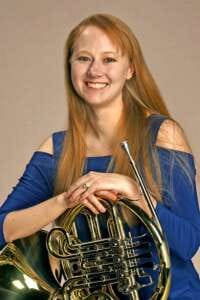
Becky Wilkins
It’s a funny story, actually. I organized a ski trip for the whole brass department — got all the logistics handled — and that put me on Kathy’s radar. She came up to me one day and asked if I’d be interested in interning with the Denver Brass. I said I’d love that, and I started an internship for credit, learning a little bit of everything with a focus on marketing. When I graduated, I got the call asking if I’d come on full-time. I said absolutely. It was just a wonderful opportunity that kind of appeared.
I play French horn — I studied with Susan McCullough, one of our original members, who just retired after 45 years with the group. I’m a little out of shape right now, balancing the Denver Brass with a 3-year-old at home, so I’ve shifted a bit from musician to mommy. But getting back into the routine is on the radar.
Denver Brass is releasing two albums at once — “Elevated Masterworks,” a collection of original commissions, and “If You Just Believe,” a holiday record. What does each represent, and why launch them together?
When we were planning this season, we realized we hadn’t done a major recording in some time. Our last one was recorded in February 2020 — and then the world shut down that March. We released it that October, but nobody was thinking about music that way, so it had a really silent entry into the world.
Meanwhile, the group is sounding better than ever, and we knew we had to capture where we are right now. So we decided to record the November concert and Christmas — people have been asking for a new holiday album for a long time, and our last one was in 2012.
“Elevated Masterworks” grew out of that November program, which we originally called “Legacy in Brass” — an introspective look back at 45 years of commissions. We’re unique in that everything has to be written for us because of our instrumentation; there’s no other group quite like us. We’ve got this remarkable body of original work, and we finally wanted to show it off. “If You Just Believe” is the holiday side, and it also let us finally record with two guest artists we’ve collaborated with for years but never captured on an album. It really came down to timing — we were overdue, the ensemble sounded fantastic and we needed to document this moment in our history.
The release party is folded into a free concert during the institute rather than a standalone event. What’s the thinking behind that?
Tying it to the institute hit two important angles of our mission at once — advancing brass repertoire and focusing on brass education and accessibility. We can have people come in for free, celebrate these original works and do it in an atmosphere full of students we’re helping train to be the next brass professionals, whether that’s in a group like ours or the Colorado Symphony. It felt like a great way to put real energy around the albums, especially after the last couple of releases didn’t have a lot of oomph around them.
Will there be a little Christmas in July, then?
A little — but not overly Christmassy. We’ll pull selections from both albums, plus a couple of pieces from a third album we recorded in May that won’t be released until early next year. So it’s a smattering of what’s coming.
You’ve directed the Rafael Méndez Brass Institute since 2012. For someone who’s never heard of it, what actually happens that week at DU — and how is it different from a summer music camp?
It’s an intensive, week-long brass seminar, and we co-host it with Summit Brass, who make up a good chunk of our faculty. We get students from across the nation and around the world.
Every morning there are career seminars: audition techniques for landing a chair with a major orchestra, career paths in military bands, how to build a robust freelance career, what it takes to become a tenured professor. We’re trying to give them the tools to be successful. Most participants are undergraduate performance majors, along with some very advanced high school seniors and a lot of people nearing the end of their undergrad who are shopping for master’s programs and meeting our faculty.
There are daily masterclasses, and everyone gets placed into chamber ensembles — many of them meeting for the very first time. They learn to work together and put on a recital at the end of the week, which is one of my favorite parts. Then there are free evening concerts to get everyone excited about everything brass music can be. It’s intensive, and it’s really inspiring.
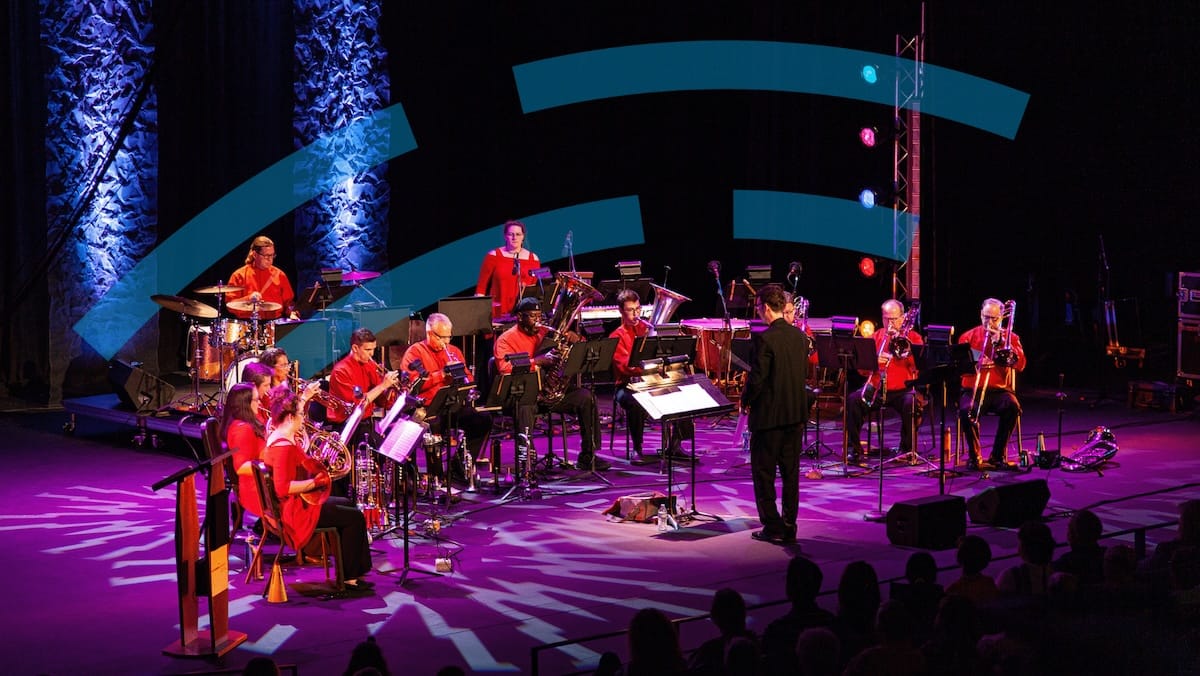
Denver Brass performing at the Arvada Center | Photo: Denver Brass
The institute puts real weight on career development and the music business. What do young brass players most need to hear right now?
The opportunities are out there, but it’s not the same world it was 30 or 50 years ago — the paths are different. If somebody has a goal and keeps at it, they can absolutely reach it. We’ve had past participants land in top military bands and pick up assistant professorships. There’s always turnover, so you have to be tenacious.
But the real meat of a performance career is being able to piece different things together. The most successful people I see do a little teaching here, freelance with an organization there — and that adds up to a really robust, diverse career. There are only so many first chairs in the country. You can keep taking those auditions, but you can still build a rich performance life doing a variety of things.
“Elevated Masterworks” leans into commissions. Why does commissioning new work matter for an ensemble like yours?
When the Denver Brass started in 1981, it was strictly classical. Within about a year they realized they couldn’t keep doing only that. Audiences want more than classical, so they diversified into jazz and other styles to reach a broader crowd. And honestly, it’s more exciting for the musicians. It gave them a challenge, something different from the day-to-day.
That’s where the original works come in. We don’t want to play someone else’s version of something over and over when we have people with creative minds who can write beautiful things for us. One of our composers put it perfectly the other day: it’s amazing writing for a group you play in, because you know everyone’s personalities and exactly how they play. If you need a technical, high piccolo part, you know David can play it, so you write it for him. If you need a soaring, mournful melody that pulls at the audience’s heartstrings, that has to be Joe on euphonium. The composers know our musicians intimately, and that makes the piece more intimate for the performer and the listener alike.
There’s a full week of free public concerts — Denver Brass, faculty recitals, the Summit Brass finale. For someone curious but brass-shy, where should they start?
The Denver Brass concert is a great place to start, because of the variety — a little jazz, a little classical, some more open, Copland-sounding things. Very palatable works.
If you’re worried about a big brass sound, the faculty recitals are lovely, too. They drift a little more toward traditional classical, and you get to hear each instrument performed by a virtuoso, with solos and small duets throughout. And if you’re not afraid of a big sound, the Summit Brass finale is not to be missed. Our artist faculty put on an incredible concert, and we always end by inviting all the participants up for a mass brass finale. That one is a big brass sound.
Fourteen musicians, more than 140 concerts a year, and you’re a nonprofit. What does it take to keep that sustainable, and what’s the hardest part people don’t see?
We have a really good team, a great board and dedicated fans who keep us afloat. The hardest thing we’re dealing with is managing accessible, affordable pricing against an economy that keeps driving up costs.
We pay all our musicians — we’re not a volunteer ensemble. These are careers, people’s livelihoods. So the balancing act is making sure our people earn a fair, livable wage while keeping ticket prices affordable, because we know a lot of people are struggling right now. Venue expenses, labor at venues, insurance — it’s all going up. When you buy a ticket, you might think it’s covering the show, but there’s so much behind it. Taking care of our people and our fans at the same time is the biggest balancing act, and probably the hardest part of the job.
Is drawing younger audiences a challenge, the way it is in theatre?
It is. Think about a 12- to 25-year-old — they’re maxed out with school, extracurriculars, homework, and if they’re music majors, all those practice hours on top of coursework. When they finally want to decompress, a concert isn’t always the obvious choice; it’s easy to just reach for a phone or stay home. So we’ve tried to help: a discounted youth ticket for ages 13 to 21 at $10, and free admission for children 12 and under. We want to ease the cost burden on families and get younger people in the door, because they become the backbone of the organization down the road — the future donors and lifelong fans.
For someone used to a full orchestra with strings, percussion and woodwinds, what is an all-brass ensemble like — what’s the appeal of that sound?
What’s nice is you get a consistent color of sound. In a symphony, the woodwinds and strings each bring their own distinct colors, and you do lose a bit of that going all-brass. But what makes the Denver Brass unique is that we take advantage of every brass instrument and accessory to change those timbres.
People are used to seeing a B-flat or C trumpet, but we use trumpets in G and little piccolo trumpets for different tone and color. We love playing with mutes and different styles — we even have a piece where the trumpets unscrew their valve caps a little and use them as a percussive element. We’re always finding creative ways to make different timbres, so we end up with a full symphony sound without being the size of a full symphony.

Alex Miller is editor and publisher of OnStage Colorado. He has a long background in journalism, including stints as the top editor at the Vail Daily, Summit Daily News, Summit County Journal, Vail Trail and others. He’s also been an actor, director, playwright, artistic director and theatre board member and has been covering theatre in Colorado since 1995.

Leave A Comment