
Shakespeare in the Wild’s Shannon Altner on free theatre, clown school and the appeal of outdoor shows.
Shakespeare in the Wild is heading into its fifth season of free outdoor Shakespeare at DeKoevend Park in Centennial, and this year the company is going full farce with The Comedy of Errors, running Aug. 14-30. Ahead of opening, OnStage Colorado caught up with Shannon Altner — associate artistic director and one of the group’s founding members — to talk about how the whole operation comes together, from fundraising to clown school.
It’s a pretty big effort to pull off for free. Where does the funding come from?
Shannon Altner
Through the years, Leigh Miller (founder and producing artistic director) has really worked on creating partnerships within the City of Centennial, and they’ve become a big sponsor — keeping it free for us and keeping it going year after year. We also have some business sponsors. But really, when people come and see the show and see what they’re getting at that free price tag, we ask for donations, and people are really giving at that point, too. Not only are we able to pay all of our artists a stipend from the start, but we split the donation pool evenly across the cast, so everyone gets a little bonus at the end depending on how donations go. So it’s grant money, it’s the City of Centennial and it’s the audience members themselves.
Tell me about DeKoevend Park itself. Is there an actual stage there, or any kind of backstage setup?
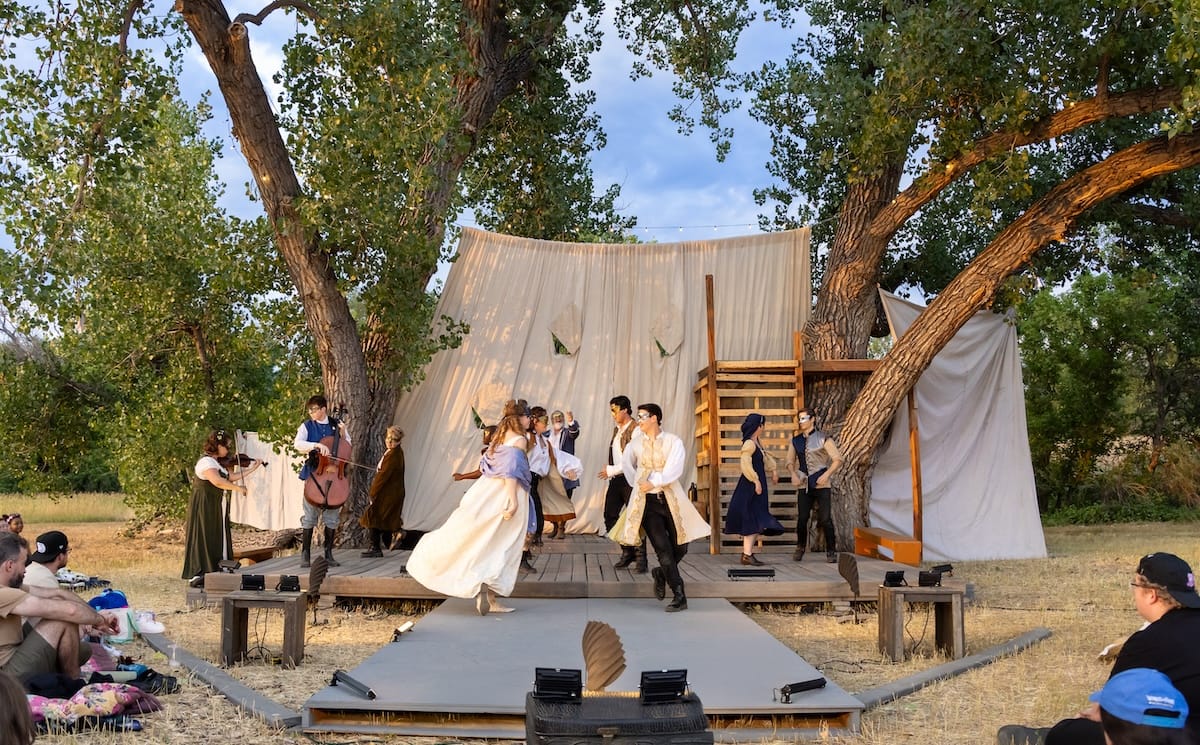
We’ve developed it over the years. It really started with Leigh running through that park every day — it’s the closest one to his house — and he kept looking at these two cottonwood trees in a field and thinking, we should do Shakespeare there sometime. So he made it happen. The first year, we hung a curtain between the two cottonwoods and built our own stage, and that’s the same stage we’ve used for the past five years. It deconstructs, we put it in storage, and every year we have a weekend where we rebuild it. Our tech team, which has really been Leigh, plus all the cast members, come out for at least one day, four hours, and we construct it ourselves.
Backstage was just a circle of chairs the first couple of years. The second year we finally got a porta potty, and now we have a trailer back there for changing areas, privacy and a little more capacity in case of rain. It’s really bare-bones, it’s about the cast and team showing up and making it happen. Last year, since we did Romeo and Juliet, we added a balcony to one of the cottonwoods, and we’re using that again this year along with a couple more scenic elements.
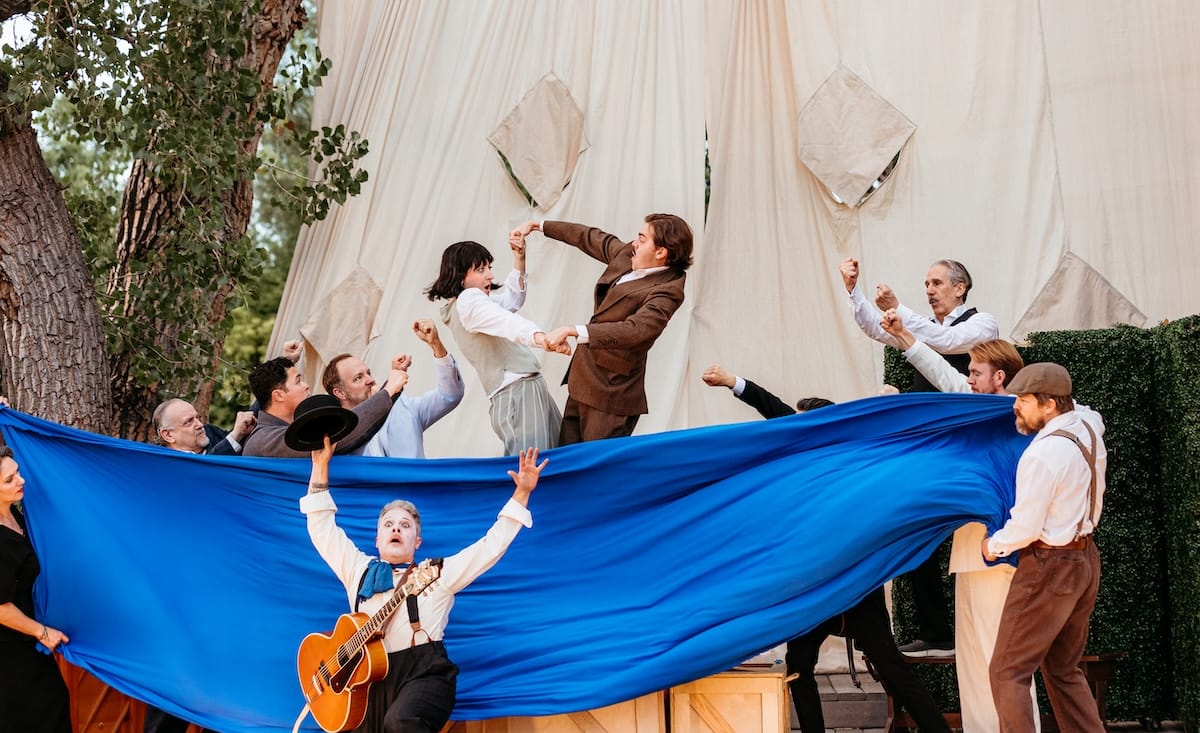
A scene from a previous production of ‘Twelfth Night’ from Shakespeare in the Wild. | Photo: Yellow Banana Photography
Why do you think Shakespeare works so well outdoors, in a park?
I think it works because the stories and the language lend themselves to simplicity. Shakespeare’s strength is how universal it is — as much as we can add bells and whistles, sitting outside in community and focusing on the language and the actors is enough. We proved that in our first year with A Midsummer Night’s Dream, when we basically all wore white T-shirts and had a couple of boxes standing in for trees. It was really powerful for folks, and that set the groundwork for us to maintain that simplicity. It’s also just timeless — think about how, over generations, this has been done outdoors, whether it’s traveling troupes or the Globe itself being open-air. It’s part of a tradition people naturally take to.
Since it’s free and outdoors, do you get people seeing their first Shakespeare there?
It’s a mix. One of the most impactful things is when someone comes up to you after the show. We introduce ourselves as Shakespeare in the Wild as a company, as actors, and then step into our characters to start the show — so right off the bat, we create a welcoming environment for people to come talk to us afterward.
People are generous not just with donations, but with their time, sticking around to give us feedback. Some of the most meaningful feedback is people saying, “I’ve never seen a Shakespeare performance before,” or kids saying, “I studied this in school and it was boring, but this wasn’t boring at all. I actually understood what was happening.” Shakespeare is meant to be seen and heard, not just read. It’s meant to be performed, so giving that for free, with equal access for everyone, is really important to us. It’s a wide age range and a wide demographic, and we’re just trying to grow that and increase access.
So it really is lawn chairs and picnics on the grass?
Yep. I tell people “you’re signing up for a show, but you’re signing up for a full experience.” You’re watching the sun set across a field. A deer might walk by; that’s happened before. An owl might swoop in. Bring your chairs, bring your picnic blankets, bring food and drink and friends and family, bring bug spray, and just in case, prepare for rain, too — you never know. We’ve had people sit out in the rain for a full hour in their rain jackets, waiting for the show, and just being amazed they got to hang out with us while they waited. Come prepared for the elements, but it’s also a time to relax and enjoy your family, your friends and a show.
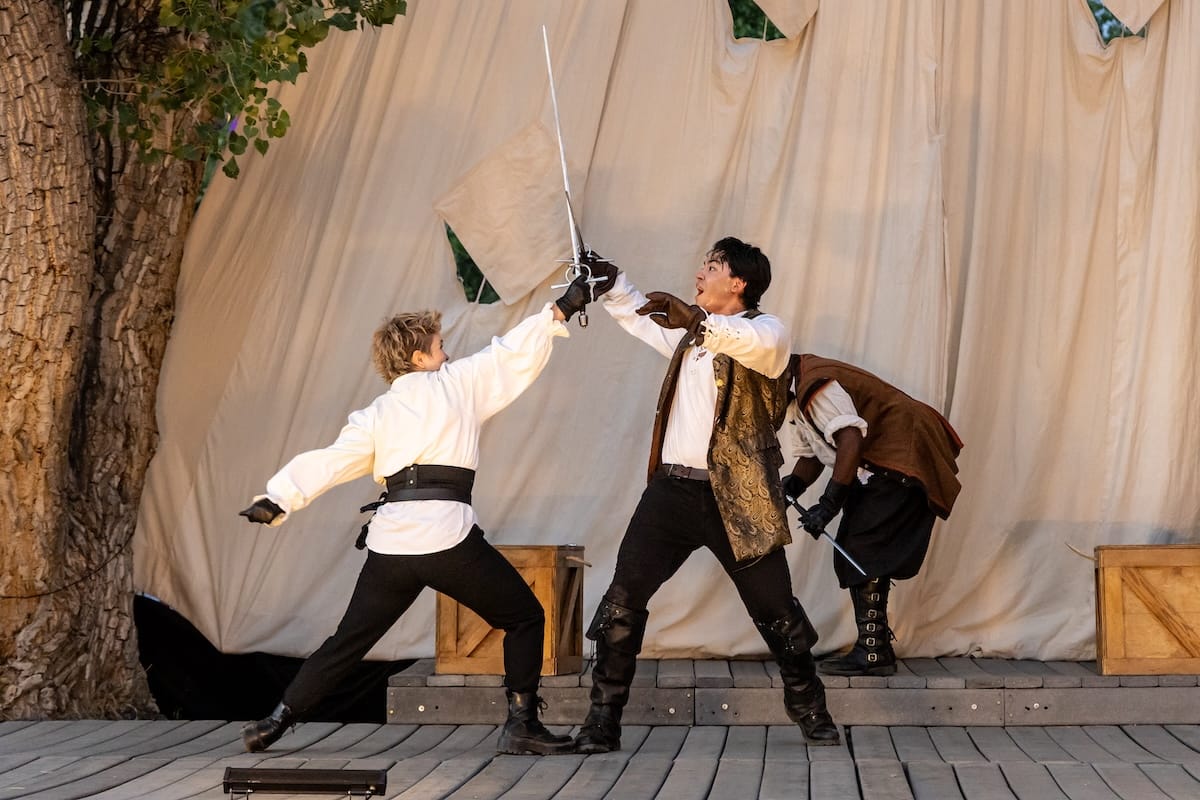
Action from last year’s production of ‘Romeo and Juliet.’ | Photo: RDGPhotography
Where do you draw your cast from?
Most of our folks are based in Denver. We’re a company of actors, and everyone who’s been involved with Shakespeare in the Wild in the past is always welcome to audition again, so you’ll see a lot of repeat faces in the cast, but new folks too. We open it up every year with open auditions, and a lot of the cast are professional actors from the Denver area.
Why The Comedy of Errors this year? Did you want another crowd-pleaser after Romeo and Juliet?
We had a lot of success last year with Romeo and Juliet — our numbers skyrocketed, and it was really exciting. Closing night we had about 650 people there. We wanted to keep that momentum with something family-friendly but with a very different tone and story. This year, people have been through a lot — there’s a lot going on in the world — and we wanted to present something silly and a little whimsical, something people can come together and laugh at. It’s a tight show, about an hour and 15 minutes, maybe even shorter. We want to keep the laughs flowing and give people something they can really escape into.
The press release mentions clown professional Nick Trotter. How has that been working into the production?
It’s been a great support for Director Aaron Vega, helping take his ideas into action and teaching the cast the basics of clowning. Our first week of rehearsal, we started with a two-day clown workshop that Nick led for all of us. It felt like being back in school for a week, and we also stepped into some viewpoints training. It was really about the timing, the physicality, the tension of clown, just learning the basics. Now that we’re blocking, it’s the moment-by-moment work — how do we play these beats, how do we keep things clean so we can keep the laughter rolling throughout the show? Nick’s been incredible with his expertise there.
Eleven performances this year — is that typical, or more than in past seasons?
We increased to three weekends about three years ago. The first two seasons we only did two weekends. Every year we do a debrief with the cast, and wanting another weekend of runs was one of the things that came up. That’s been really successful for us in growing audience attendance.
Shows start at 7 p.m. When should people show up to get a good lawn spot?
I’d say the earlier the better — 5:30, or definitely by 6:15 if you really want to get close. We do have speakers out there; the stage is mic’d, though not the actors themselves, and we have some mics on the floor so you can hear us even from the back. We’re still working on that, but because we’ve become more and more popular, I’d say around 6 is a good time to arrive.
Director Aaron Vega’s quote in the release mentions “so much being asked of audiences right now.” Any sense of what he meant?
I don’t want to speak for him, but my interpretation goes back to what I was saying earlier: It’s a heavier world right now, and that can carry into the theatre. There’s also an economic side to it: going to the theatre these days can be expensive, and that can add its own weight. If you’re looking to relax and be in the magic of theatre outside, that’s really what we’re trying to give people.
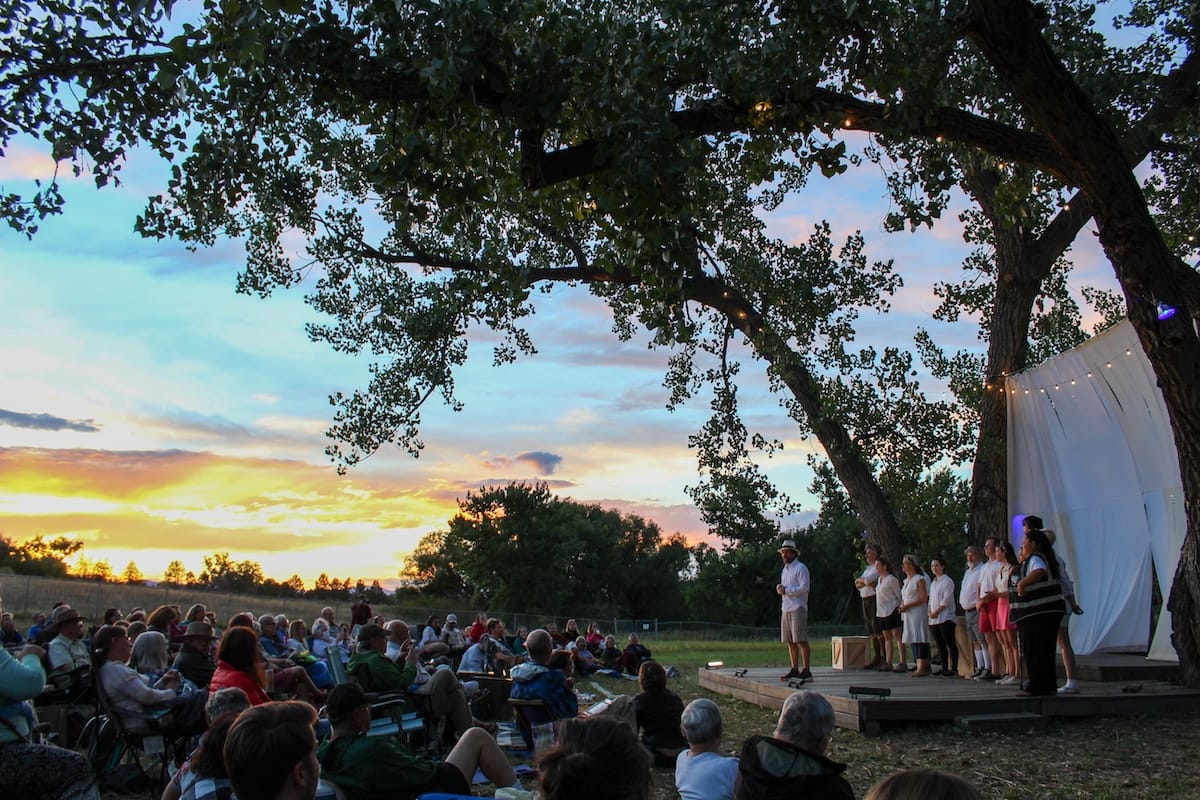
Photo courtesy Shakespeare in the Wild

Alex Miller is editor and publisher of OnStage Colorado. He has a long background in journalism, including stints as the top editor at the Vail Daily, Summit Daily News, Summit County Journal, Vail Trail and others. He’s also been an actor, director, playwright, artistic director and theatre board member and has been covering theatre in Colorado since 1995.

Leave A Comment