
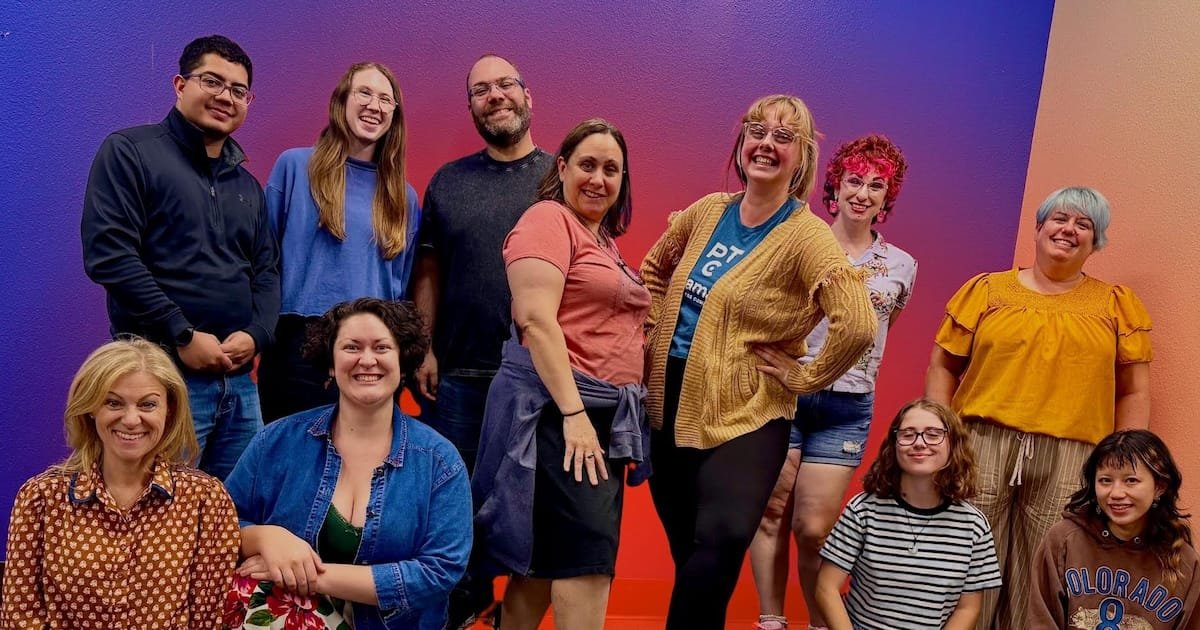
Cheryl Strayed’s advice columns become a global video mosaic in Phamaly’s intimate new stage adaptation.
Colorado audiences have probably encountered Tiny Beautiful Things before.
Maybe you’ve read Cheryl Strayed’s bestselling collection of advice columns. Perhaps you’ve caught one of the many local stage productions of Nia Vardalos’ adaptation at BETC, Theatre SilCo, Colorado Springs Fine Arts Center, Openstage Theatre & Company or Firehouse Theater. Or potentially you watched the 2023 Hulu series starring Kathryn Hahn.
Regardless, you have almost certainly never seen the story told like this.
Phamaly Theatre Company’s new production, running Oct. 8-18 at The People’s Building in Aurora, expands a play traditionally written for four performers into an international project featuring 125 disabled actors appearing on video alongside one live performer.

For Phamaly’s artistic director and the play’s media director, Ben Raanan, Tiny Beautiful Things had been sitting on his programming wish list for three years.
“To me, it’s chicken noodle soup, which is weird, because there’s actually a lot of intense content in it,” Raanan said. “It is a show that is very much what the community needs right now in terms of dealing with very real issues with love.”
But choosing the play also presented a problem for Raanan. Phamaly has long functioned as an unofficial ensemble, providing performance opportunities for disabled artists who may have few elsewhere. How could he justify programming a play with only four roles?
Operations manager Erin Bantoff offered a deceptively simple answer: Film all the letter writers.
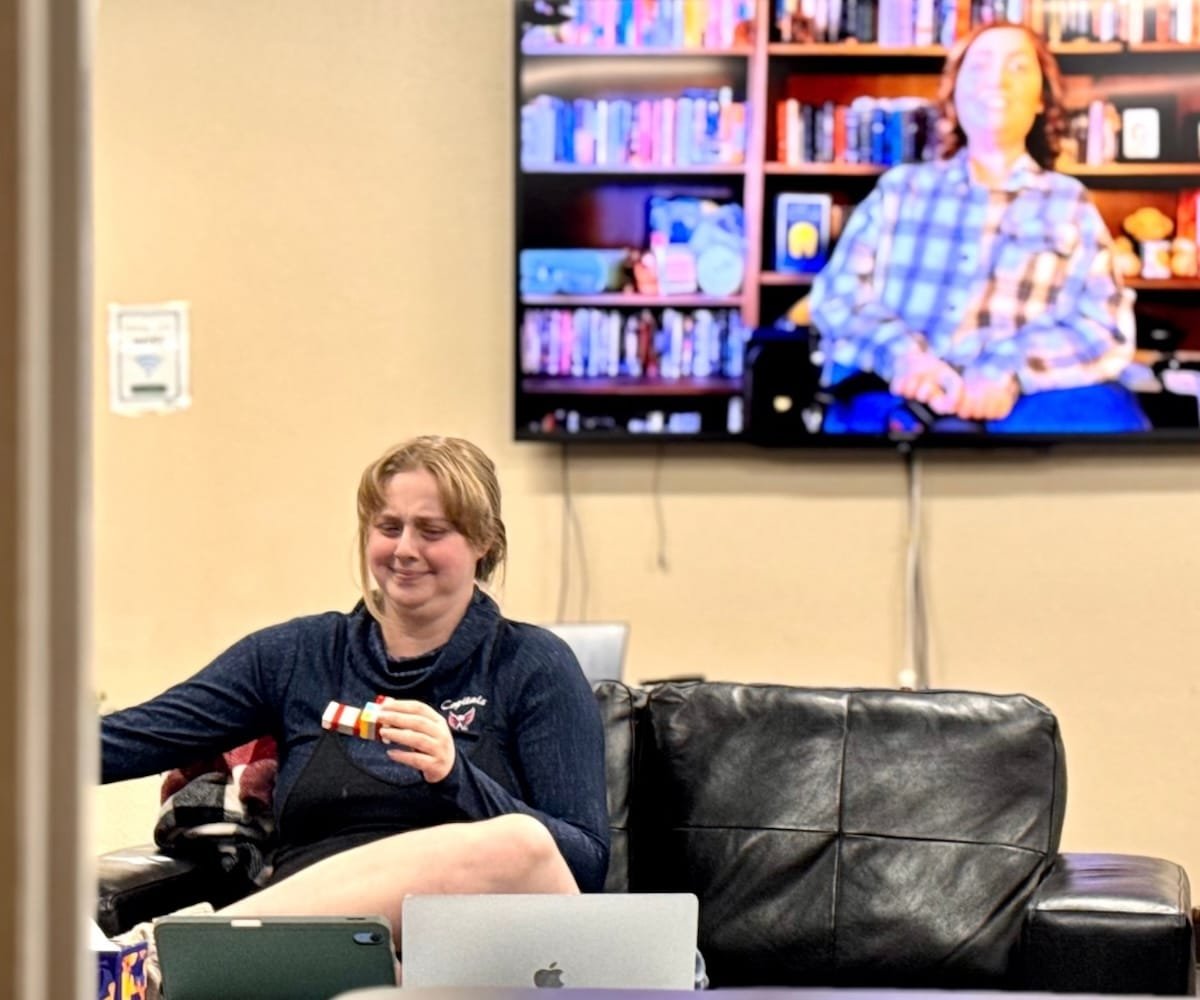
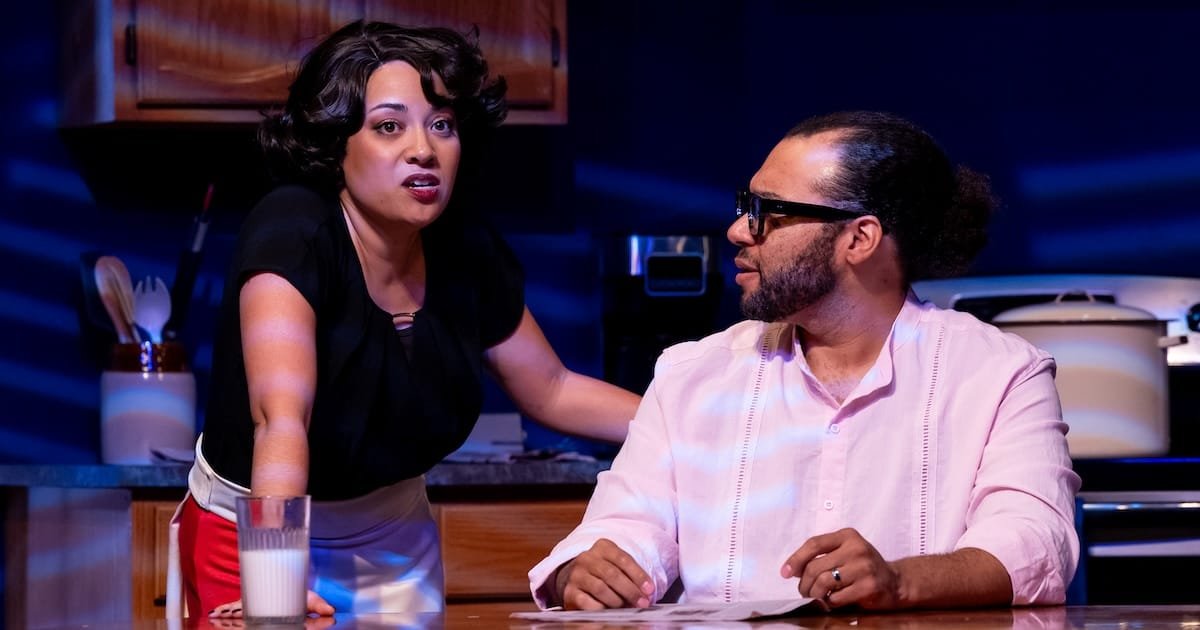
Jessica Swanson as Sugar in Tiny Beautiful Things. | Photo: Dallas Padoven
“It just seemed like the perfect solution as soon as I heard it,” Raanan said. “We actually, in the way Phamaly does, went from a deficit, which was, ‘Oh God, do we have enough actors?’ to ‘Let’s do the biggest thing ever.’”
The result includes roughly 125 performers recorded over the past year, including actors from Poland, Ireland, England, Japan and Mexico, as well as artists spanning decades of Phamaly’s history.
“In the videos, we’ve got people who were in Phamaly’s first show to people whose first show was 504: The Musical,” Raanan said.
Double the Sugar
Adapted by Vardalos from Strayed’s book, Tiny Beautiful Things follows Sugar as she responds to anonymous letters from people seeking advice about grief, relationships, addiction, sex, family and countless other messes of being alive.
Director Stacey D’Angelo oversees the live theatrical world, while Raanan directed the prerecorded performances. In this version, Sugar receives video messages throughout the night and responds to them as the audience watches the same projected footage she does.
“There is this magnitude of voices coming in,” D’Angelo said. “The letter writers, while they’re anonymous, they’re actually showing themselves in these videos, but they keep asking, ‘Who are you, Sugar?’”
Jessica Swanson and Adrienne Asterita alternate the character of Sugar. Swanson plays the role on Oct. 9, 11, 15 and 18, while Asterita performs on Oct. 8, 10, 16 and 17.
Both said the material requires them to strip away some of the larger performance instincts they developed through musical theater.
“Almost acting is the wrong choice with a lot of this material,” Swanson said. “It’s more about basic storytelling rather than doing a big, ‘I’m doing a monologue,’ performance like Shakespeare.”
Asterita described the process as “a little unsettling” because it demands so much vulnerability.
“You just have to be present and honest,” she said. “You have to do so little, because the words do so much for you.”
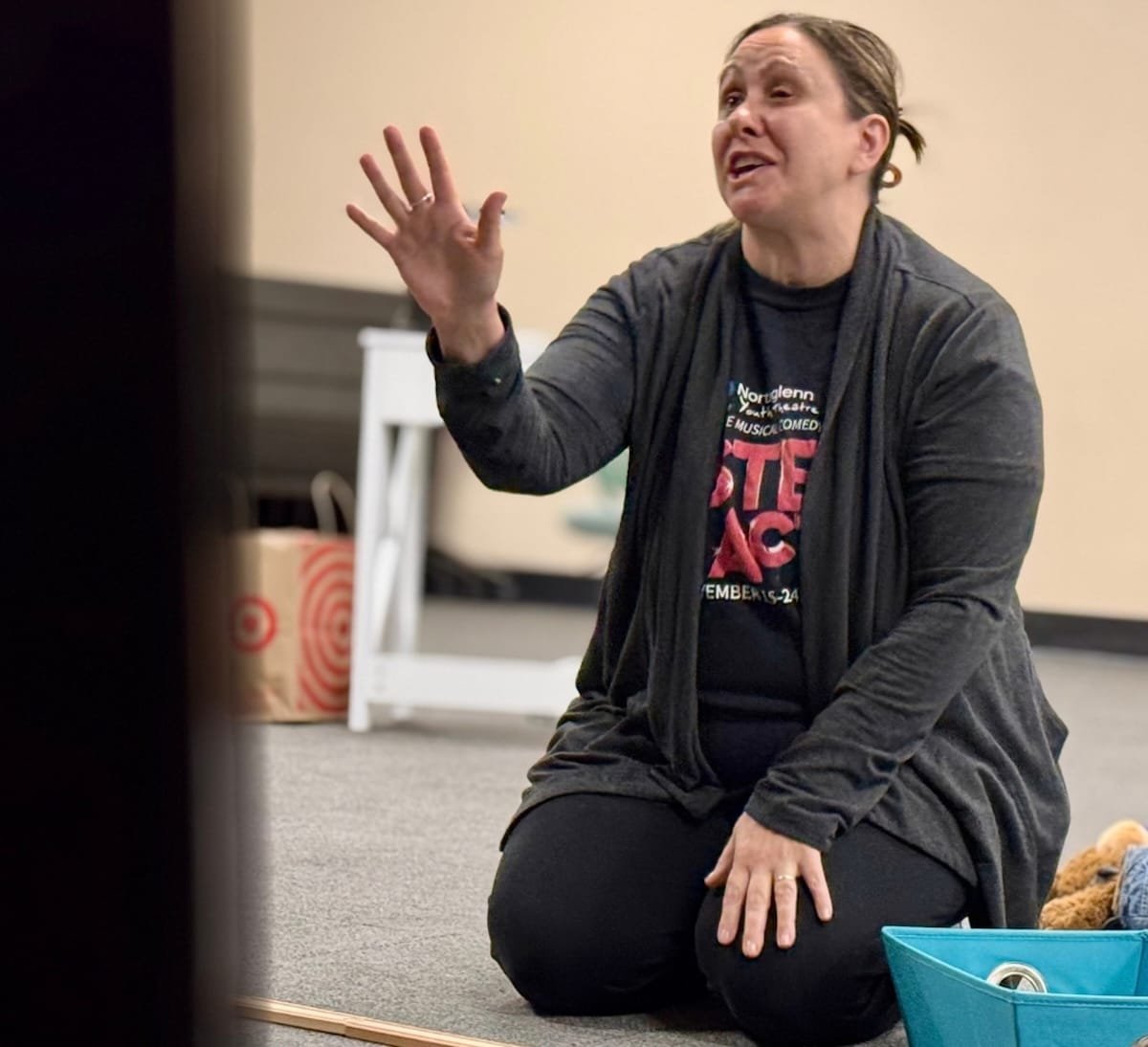
Adrienne Asterita as Sugar in Tiny Beautiful Things. | Photo: Dallas Padoven
Both directors say that Swanson and Asterita’s performances are not identical.
“When we were casting it, our goal wasn’t to find two people that were going to approach Sugar the same way,” Raanan said. “Jess and Adrienne are two very different people, so their performances aren’t a carbon copy. And from a producer’s standpoint, please buy two tickets. I’ll give people $5 off if they do; just call me.”
Who gets to belong at Phamaly?
Asked whether Sugar herself is disabled in this version, neither actor saw the question as central to the storytelling.
“I don’t see [disability] in the show at all,” Swanson said. “Everybody has feelings. Disabled, non-disabled, any ethnicity, race, anybody, everybody has feelings, which I think is the core of the show. So I feel like my Sugar is probably disabled in a similar way I am, which is invisible to a lot of people, but it’s very real to me. I also know that from an actor’s perspective, I don’t need to necessarily showcase that in order to connect with someone.”
Asterita agreed that disability is part of who she is without becoming something she needs to demonstrate through the role.
“It doesn’t help tell the story in any way,” she said. “Although we are disabled actors in our own ways – in different ways – it’s not something that we are bringing to the character itself.”
That question reaches beyond Tiny Beautiful Things to an ongoing conversation about who audiences expect to see at Phamaly, a company founded to provide theatrical opportunities for disabled performers.
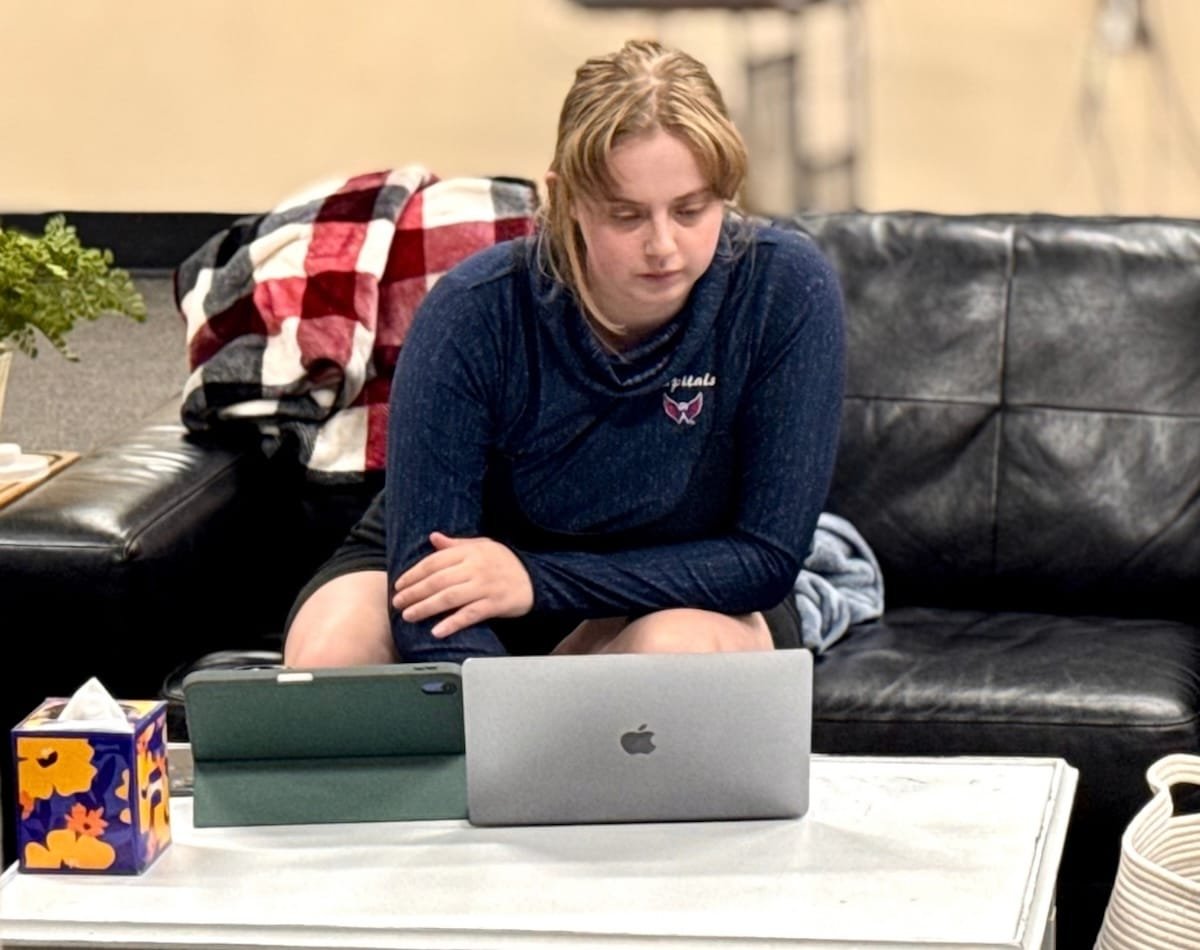
Jessica Swanson as Sugar in Tiny Beautiful Things. | Photo: Dallas Padoven
Raanan acknowledged that actors with invisible disabilities can still face skepticism from people expecting disability onstage to look a particular way.
“There’s a lot of people that sometimes look at this iteration of Phamaly and go, ‘Well, what’s that person doing onstage?’ because they don’t see a wheelchair or someone who is clearly blind,” he said.
Raanan said he has reached a point where he is no longer interested in defending those casting choices.
“I just don’t care anymore,” he said. “I’m ready to fight at any point. Both of these folks and all of our actors here with invisible disabilities belong here and need Phamaly as much as Phamaly needs them.”
Asterita said seeing Phamaly’s production of A Chorus Line before joining the company helped convince her there might be a place for her, too, particularly when she saw performers whose disabilities were not immediately apparent.
“I would see someone who I couldn’t tell what their disability was, and then I’d go, ‘Oh, look. They look like me,’” she said. “So maybe there is a place for me.”
That philosophy is embedded throughout Tiny Beautiful Things. Many of the performers on video never discuss disability at all. They are simply people asking Sugar about loneliness, heartbreak, mistakes, sex, grief and the rest of life.
As Raanan put it, disabled people do not “just sit in bed being sad about disabled things. We’re sad about other things, too.”

An award-winning Colorado arts and culture reporter originally from Mineola, Texas. Tresca is the chief theatre critic for OnStage Colorado and managing editor of OnScreen Colorado. He’s the editor of Bucket List Community News, a contributor to Denver Westword and Estes Valley Voice, a resident storyteller for the Bonfils-Stanton Foundation and the co-host of the OnStage Colorado Podcast.

Leave A Comment