
The events depicted in this regional premiere remain relevant 68 years later and 830 miles away.
The Su Teatro experience begins in the main lobby, where the audience enjoys a taste of Chicano culture in the art, décor, gift shop and concession stand (where tamales are among the offerings). This regional premiere of Culture Clash’s Chavez Ravine: An LA Ghost Story welcomes audiences to a sparsely set stage that permits easy travel through time and space. A large screen covering the back wall displays historical photographs that underscore the story throughout the production. Band members sit upstage right, waiting to begin.
For the casual audience member unfamiliar with the history of Dodger Stadium and the 300-acre canyon area of Chavez Ravine, or with the major figures in U.S. baseball, entertainment, and politics from 1941 to 1981, this show will likely feel like a whirlwind. The printed program, complete with a “Chavez Ravine Glossary,” is here to help. Even so, there is much to take in.
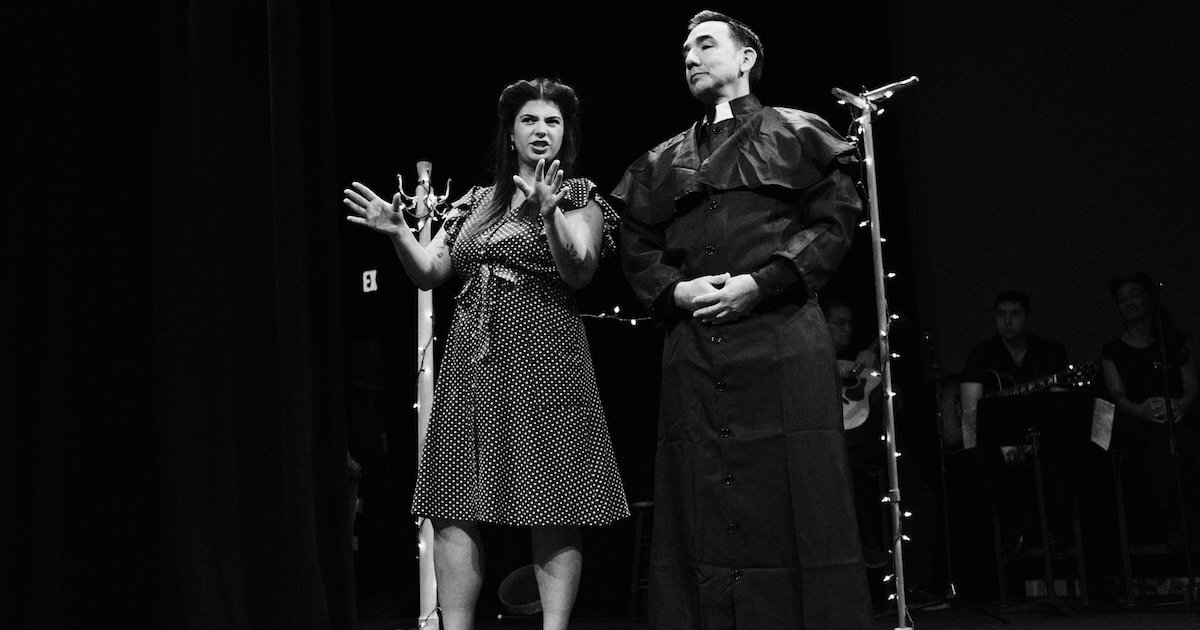
The lights come up on Dodger Stadium, with Mexican baseball hero Fernando Valenzuela (Davie Gonzalez) preparing to take the mound in the opening game of the 1981 season as Vin Scully (Lorenzo Gonzalez) commentates. Valenzuela becomes momentarily dazed, confusing Scully, as two ghosts of Chavez Ravine appear to the rookie pitcher. Henry Ruiz (Camilo Luera) and his sister Maria Ruiz (Gabriela Guevara) interrupt the game to tell their story and the history buried beneath the ballpark.
Written and first produced in Los Angeles in 2003, Chavez Ravine carries a message that remains frighteningly relevant more than 20 years later. That the show is long comes more from the script than from any real shortcoming of the cast or crew. The script has the slightly disjointed feel that comes when multiple writers bring their work together to form a single piece. There are several points when the pace slows a little too much. The transition blackouts are more about costume changes than set changes; luckily, the band is always there to keep the audience company.
Shatner-level pauses from Manazar the Narrator (Paul A. Zamora) rob him of some of his more powerful moments; the character’s frequent hesitations swallow several potentially dramatic line deliveries. Despite this, Zamora delivers clear, distinctive personas, making him difficult to recognize across roles.

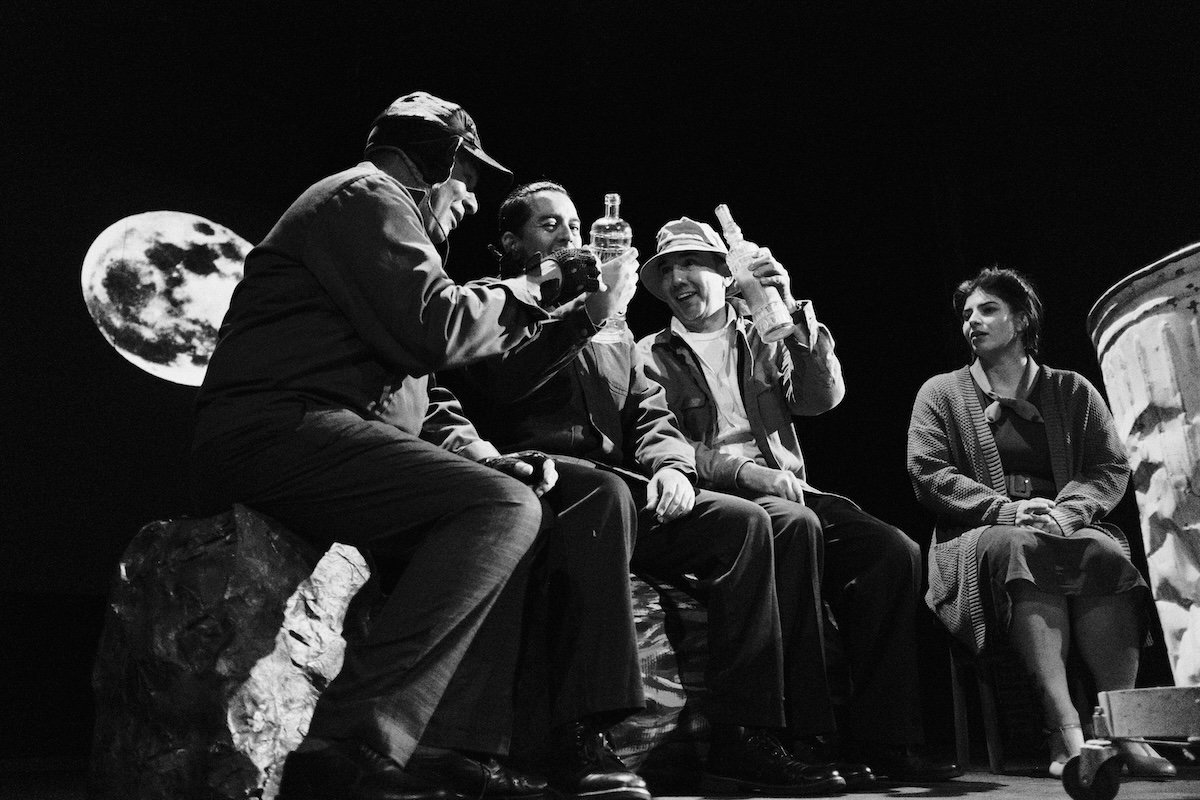
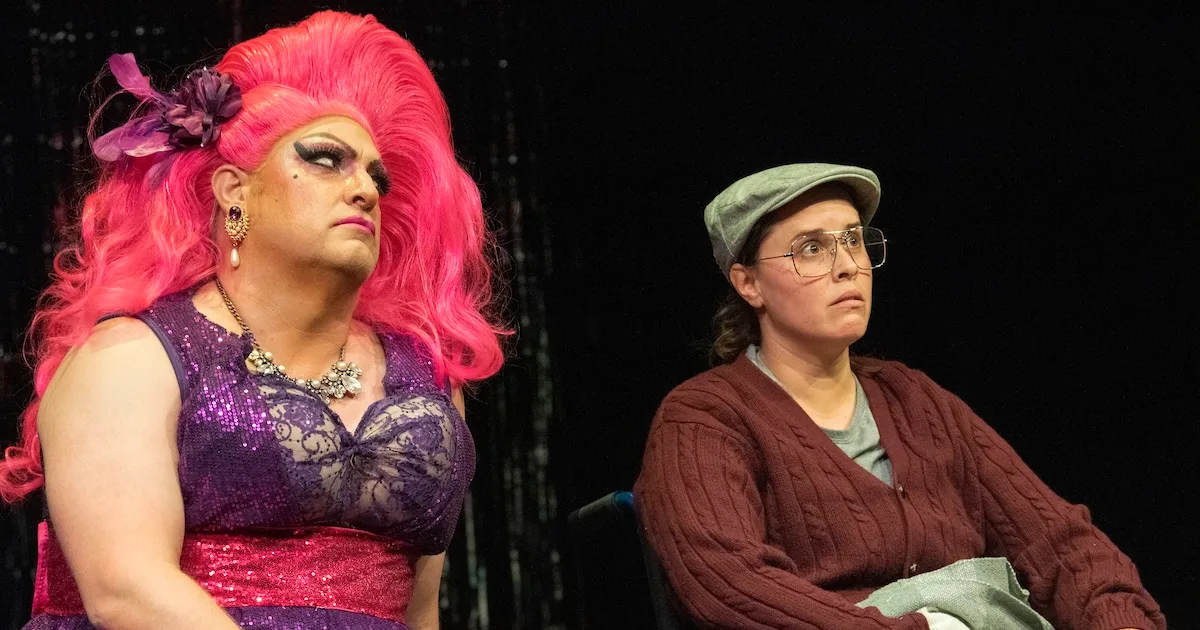
A scene from ‘Chavez Ravine’ at Su Teatro in Denver. | Photo: Juan Fuentes
Nine actors, 49 characters
Overall, this ensemble works seamlessly, with nine actors creating 49 characters. Mica Garcia de Benavidez designed simple yet effective costumes to bring these characters to life in rapid succession. Lorenzo Gonzalez’s portrayal of Lou Costello, an Austrian, a Russian and a Yiddish radio host (each with distinct and fitting accents), plus six other roles, is a delight and a highlight of the show.
His near-constant scene partner, Joaquin Aviña, moves between eight roles, including Bud Abbott and J. Edgar Hoover, and while he’s often trapped in a suit and tie, he provides a sturdy, heart-wrenching model of the people’s hero as Frank Wilkinson. So much so that I can even forgive him for shining his flashlight in my eyes while playing the Mover.
Camilo Luera sparkles across nine roles, embodying a range from frustration to anger, from joy to drunken stupor, and from power to political stooge. Gabriela Guevara spends 90 percent of the show as Maria Ruiz, a fictional representation of the women, families, and activists fighting for their rights at Chavez Ravine. Guevara holds the role with strength and audacity, making the audience want to know more about this woman who never actually existed. She makes Ruiz feel like a genuine historical figure.
Remember Chavez Ravine
The band members are my MVPs of Chavez Ravine. Beyond performing an eclectic collection of musical numbers, each one pops out of their chair every now and again to take center stage and fill a vital character role. Deborah Gallegos makes the audience laugh as the Fighting Lady and Señora, then delivers a complete emotional reversal as Mama and the Dodger Dog Girl. In addition to playing Valenzuela, Davie Gonzalez is the bandleader and plays three additional roles.
Greg Montaño plays guitar and joins the residents to protest eminent domain. Janner Hurtado, on percussion, appears suddenly from the back of the HOA group as Don Magdaleno and, with one short speech, convinces the town to sell. My Arizona Spanish got me through most of the show, though I had to ask for help on Don Magdaleno’s speech to make certain I did not miss anything.
Without Spanish, an audience member can understand the show without too much trouble. There is more than enough context. Director Anthony J. Garcia makes excellent use of the entire space. Arnold H. King’s sound and projection design significantly enhances the performance, and his stylistic lighting choices are interesting and creative, though some make it difficult to see the cast clearly. Then there was a perfect tech moment, set outside under the stars in Chavez Ravine on the night of the 1958 elections. Lighting, cast, and projector came together in one of those ideal moments that remind me why I love theater.
Chavez Ravine: An LA Ghost Story is an important piece of history that is too often repeated across the country and around the world. “Remember Chavez Ravine,” Maria Ruiz begs us, and we must.

Selena A. Naumoff holds a BA in Theatre Arts and two master's degrees. She teaches theatre, stage-manages, directs, writes plays and performs in theatre and film. She is active in all aspects of theatre, including lighting, properties and sound design. She reviews for the Jewish Book Council and has published both nonfiction and young adult fiction under her pen name.

Leave A Comment