
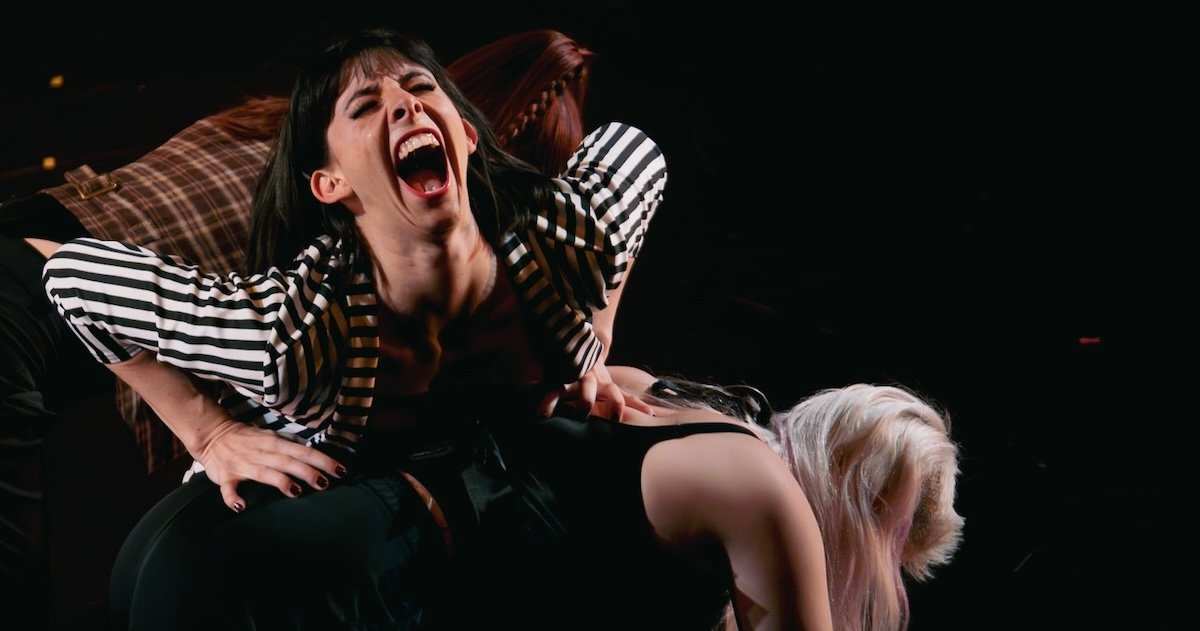
Lavender Sleaze’s psychedelic rock cabaret features provocative choreography and rebellious energy in an indulgent world premiere.
It’s a dance, dance revolution at Boulder’s Dairy Arts Center. In RIOT: A Subversive Rock Cabaret, an all-femme ensemble takes on the systems that condition people to conform, exploring what it takes to break free and imagine something better.
Artistic director Lavi McConaughey and choreographer Christiana Wheeler chart that uprising in a raunchy, psychedelic experiment, driven by an original, Pink Floyd-inspired score composed by Chantil Dukart. Even if it occasionally gets carried away with its own excesses, the production finds striking physical expressions of conformity, isolation and freedom.
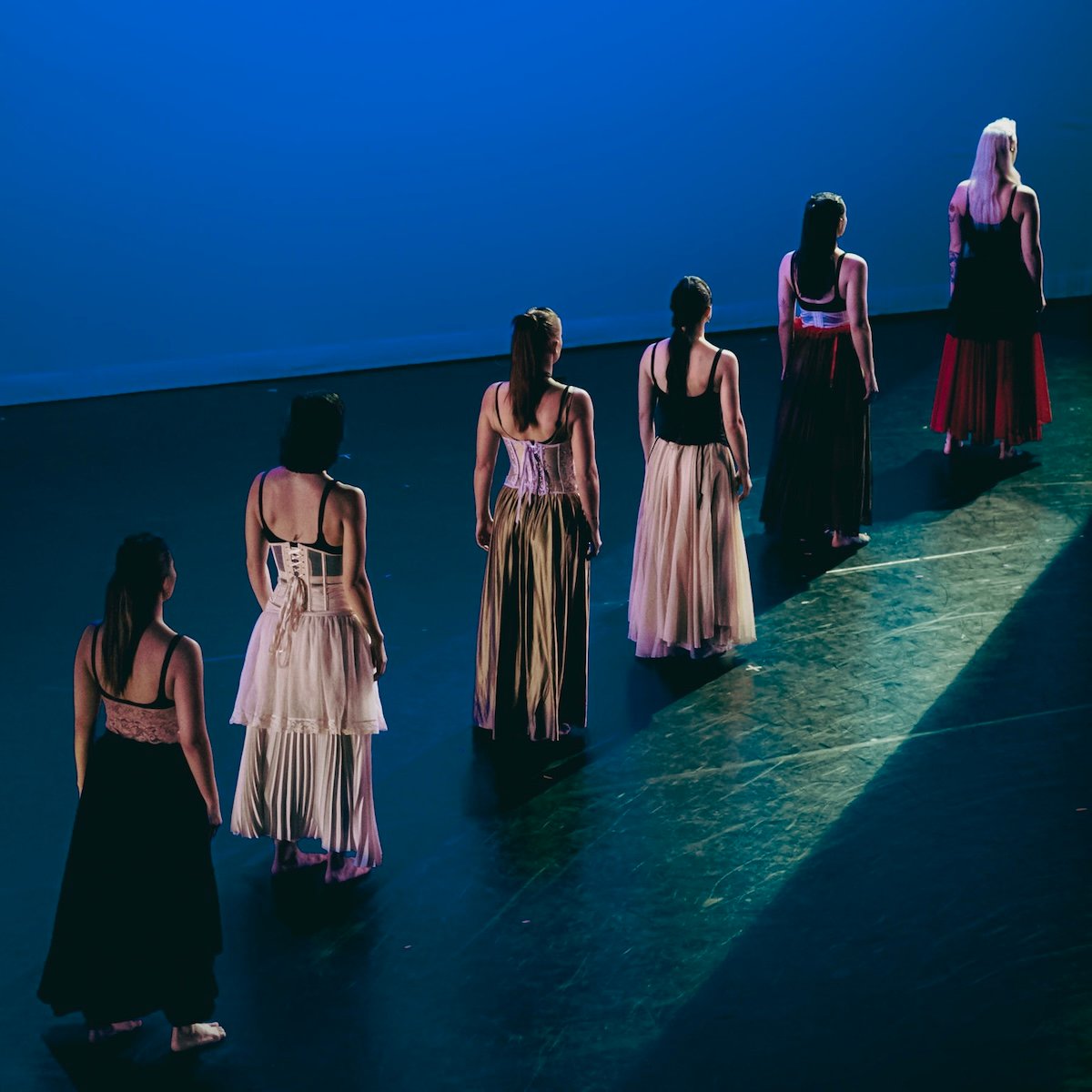
A dance from RIOT. | Photo: Alexis Bolton
RIOT unfolds in three distinct movements: collective conditioning, fracture and matriarch rising. The first movement is all hard rhythms and repetition. In “Cog in a Wheel,” dancers march in lockstep, briefly break free and get shoved right back into line. In “Transactional Shark Tank,” performers mime typing, become the hands of a clock and grind through workaday routines, looking dead behind the eyes. “Take a Choke” takes a decidedly more provocative approach: dancers in ties smoke cigars, straddle chairs and turn the trappings of corporate masculinity into a gleefully filthy cabaret number.
Wheeler’s choreography becomes more introspective during “Fracture.” In the especially evocative “Alone in the Universe,” Josephine Sackett, dressed in red, reaches desperately toward figures passing in black. As another dancer collapses and thrashes on the floor, Sackett remains frozen in an unanswered gesture of connection.

The final section, “Matriarch Rising,” trades synchronized conformity for something freer and stranger. During “Stardust,” the ensemble dances independently, at one point forming what looks like a mosh pit. Bodies hurtle toward each other but somehow never collide. It’s a thrilling image of collective freedom that doesn’t require everyone to move alike.
McConaughey’s projections, from a “Welcome to the Machine” montage of money, clocks and Donald Trump to the phrase “Divided We Stand,” help broaden the political implications of the movement. Dukart’s loud, swirling score, performed live gives the three sections musical continuity while allowing each a distinct identity.
An indulgent uprising
The premiere is also rough around the edges and could use a trim. Soapbox the Clown (Kalyn the Miller) periodically interrupts with anti-capitalist monologues about working, spending and surviving. One routine follows the endless cycle of getting a job to buy a car to drive to work to earn money to keep the car running. The point is clear enough, although the joke wears thin quickly.
These earnest, occasionally revealing routines rarely develop beyond their initial observations. The clown’s later personal reflections about sobriety add some welcome vulnerability, but the largely didactic monologues repeatedly slow the momentum. Their literal explanations feel particularly unnecessary when Wheeler’s choreography has already communicated those same frustrations more imaginatively.
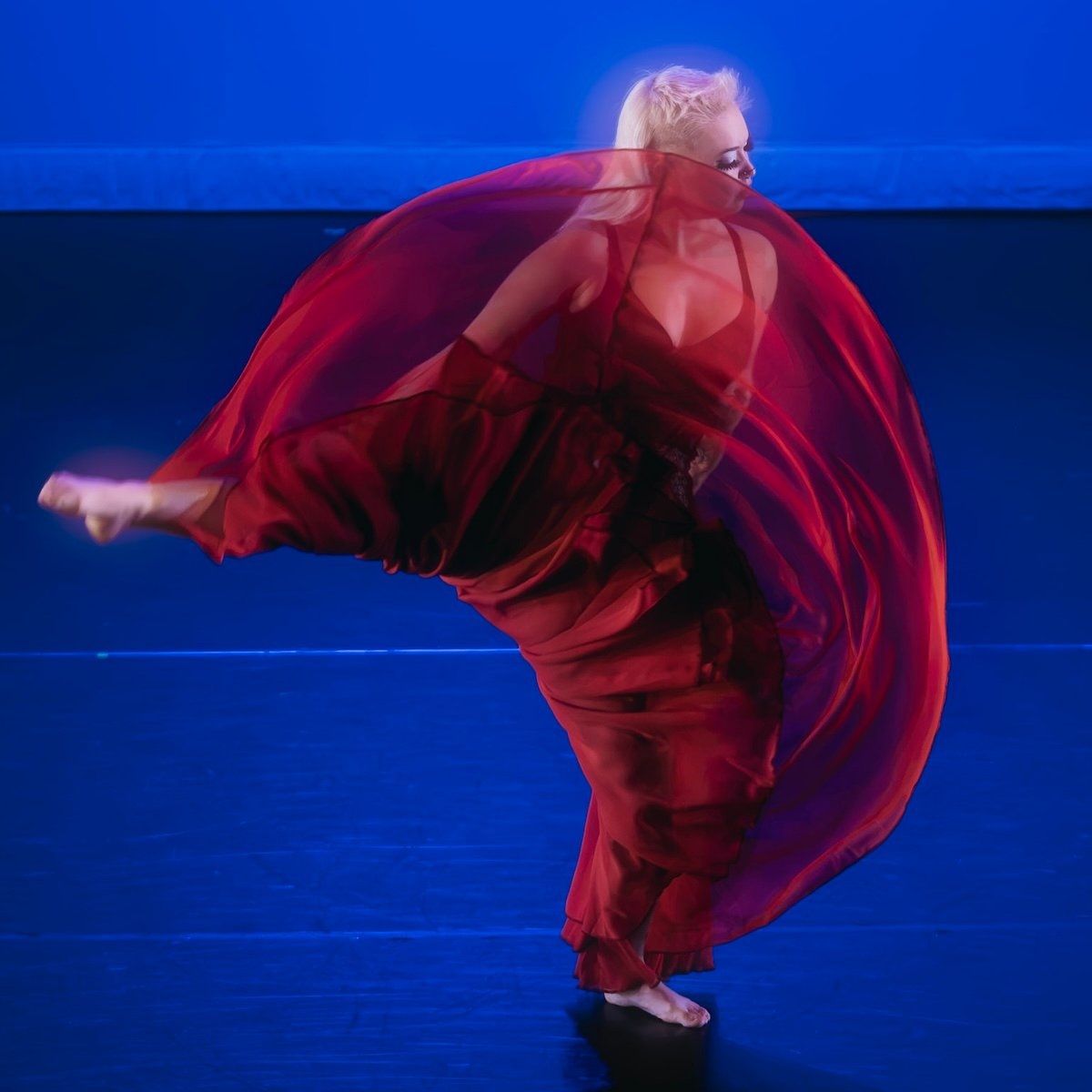
Max Wohlwend dances during a scene from RIOT. | Photo: Alexis Bolton
At roughly two hours with an intermission, RIOT would likely hit harder as a tighter, uninterrupted experience. The break after “Fracture” dissipates some of the tension that the dancers have worked so carefully to build. Visible crew movement and occasional unevenness in the sound mix also added to the sense of a young production still finding its footing.
Still, this is an exciting, gloriously indulgent swing: a dance piece for freaks, geeks and sickos, eager to be messy, provocative and political. Its strongest moments show what happens when bodies refuse to stay in line. The revolution could use some editing, but there’s real life in the rebellion.
Two encore performances are scheudled for 6 p.m. and 9 p.m. on Jan. 30, 2027, at Ophelia’s Electric Soapbox in Denver.

An award-winning Colorado arts and culture reporter originally from Mineola, Texas. Tresca is the chief theatre critic for OnStage Colorado and managing editor of OnScreen Colorado. He’s the editor of Bucket List Community News, a contributor to Denver Westword and Estes Valley Voice, a resident storyteller for the Bonfils-Stanton Foundation and the co-host of the OnStage Colorado Podcast.

Leave A Comment