
A fictional séance drama about psychologist William James and his wife has strong design and acting, but a slow script holds it back.
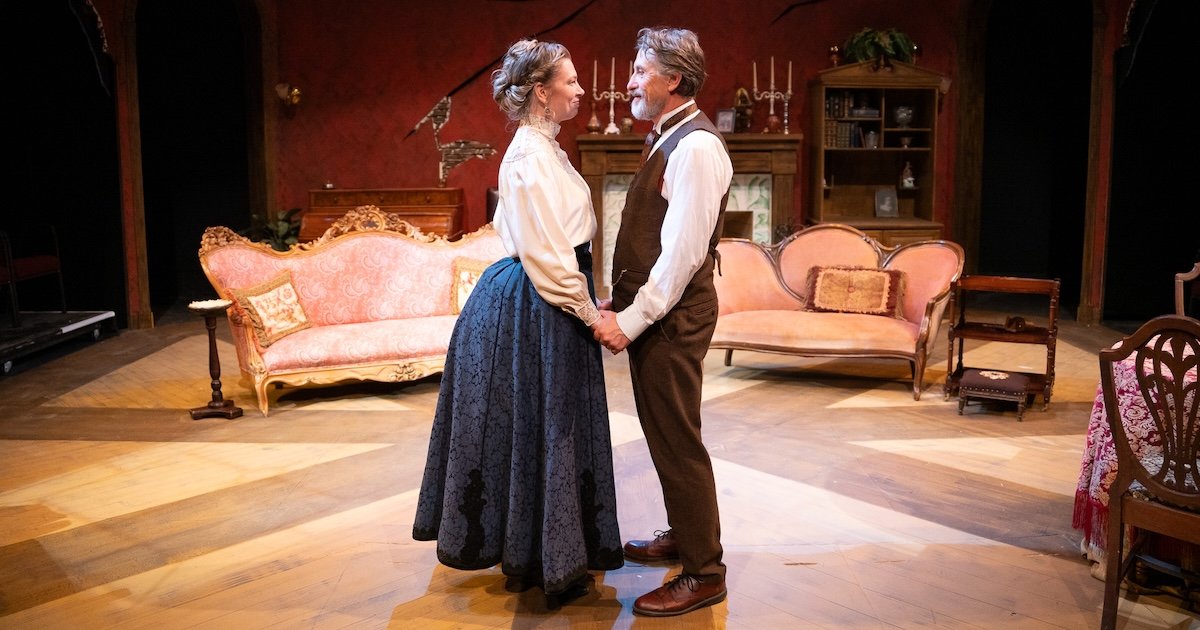
Carbondale’s Thunder River Theatre provides an intimate yet airy setting for the world premiere of Beyond Reason, a fictional story set in the 1880s about real-life psychologist William James (Timothy Ackerman) and his wife, Alice (Jaspen Mackin), as they investigate two psychics who claim to communicate with the dead.
Directed by Missy Moore, the production backs an intriguing premise inspired by real events and real people with solid acting, set design, costumes and lighting. However, two weaknesses held it back: uneven vocal projection and a script that falls short.
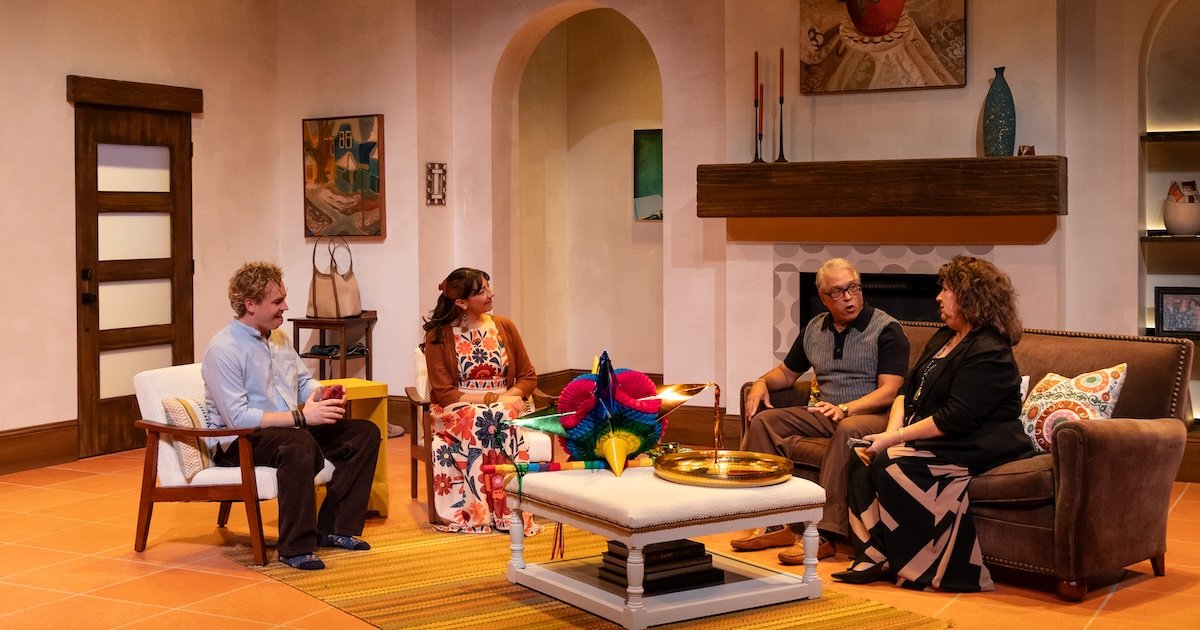
Staged in a thrust configuration, the three or four rows of seating create a cozy, immediate feel, and a brilliant set designed by Sean Jeffries reflects James’ Boston home in 1886. The backdrop — a fireplace, bookcase and piano against a burnt-red wall — includes a huge crack that comes into play later. Two corner pieces of the home hang from the ceiling on each end, masterfully depicting both the interior and exterior of the dwelling.
Furnishings — including a round table topped with a maroon-fringed jacquard linen, an ornately carved wood settee upholstered in pink and complementary chairs — convincingly complete the Victorian home.
Costumes designed by Sara Malloy elevate the production and include gorgeous, dark-toned formal dresses with black lace trim and James’ three-piece suit.

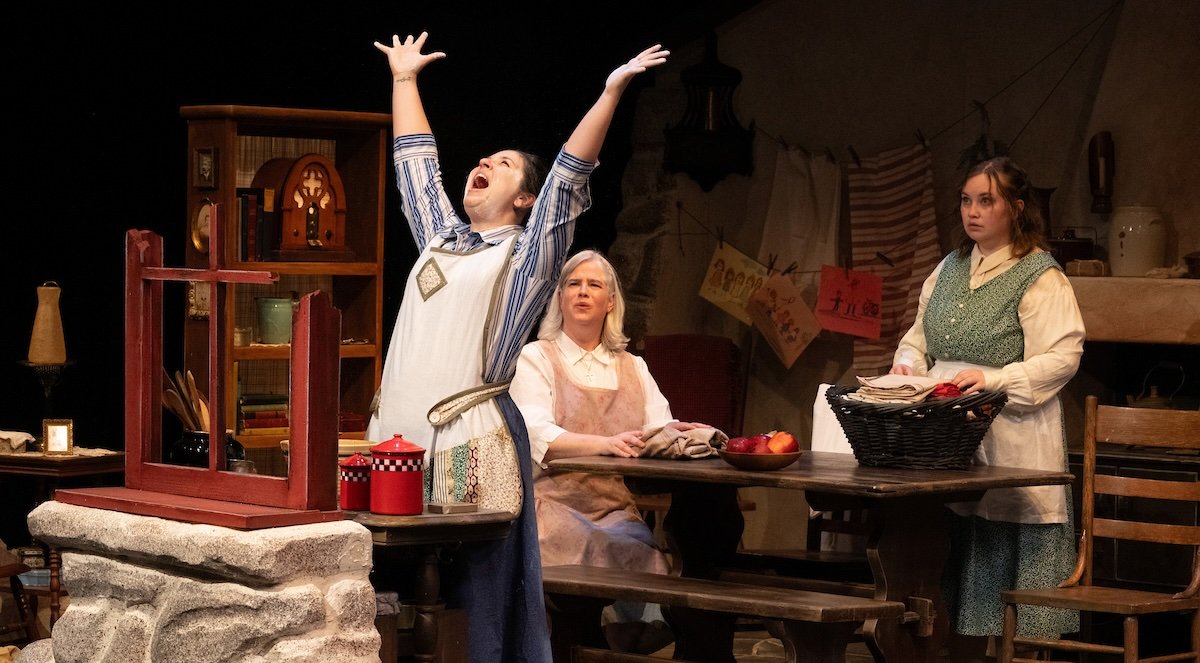
Meanwhile, the acting is solid. Brittany Crooke embodies seizure-like motions for minutes on end in a standout scene as her psychic character, Leonora Piper, falls into a trance.
Effective lighting sets moods, shifting in brightness and hue. It becomes especially compelling when it illuminates the wall’s crack in red during a dramatic séance. Fog streaming from the fireplace furthers the effect. Sound effects — including beautiful piano playing, thunder and the eerie creaking of a ghostly cradle from within the house, foreshadowing events — also enhance the production.
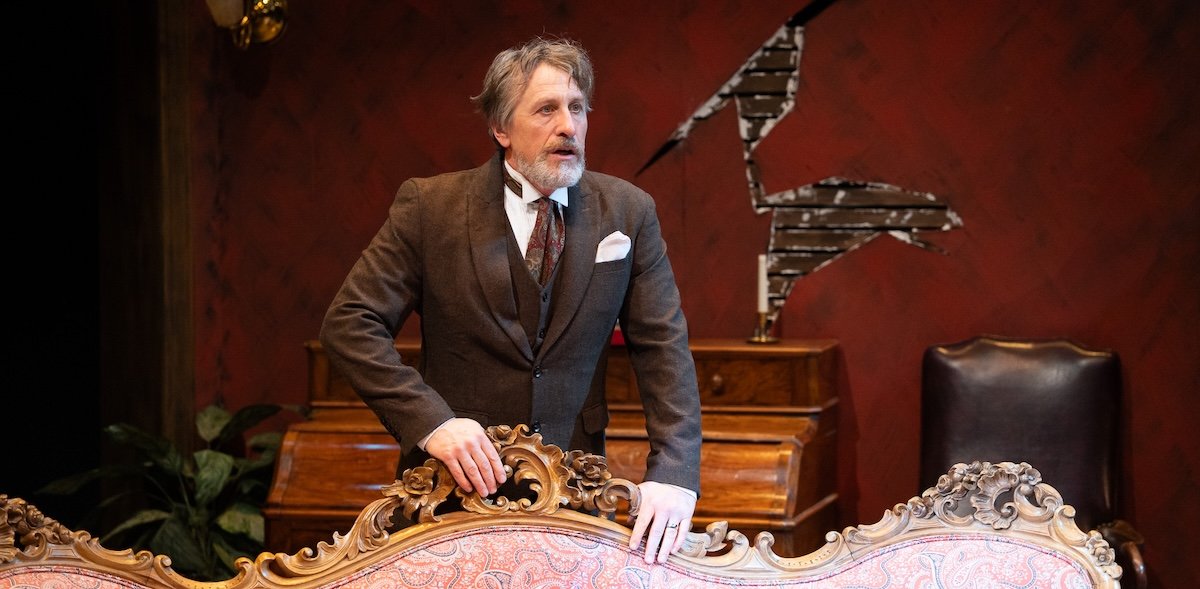
photo: Nik House Media
Hard to hear
But, especially in the first half, too many words got lost. Without mics, the cast needed more coaching on projection. Most of the actors weren’t loud enough to be heard clearly, particularly when they turned their backs to one section of the audience. It’s the show’s biggest flaw that Moore can fix.
The main exception was psychic Gianina Provontsky (Nina Gabianelli). Gianina is a naturally dramatic character, so Gabianelli’s voice carried consistently throughout the show. As the only man in Beyond Reason, Timothy Ackerman also projected adequately for the most part, though at times he could have been louder. I strained at times to hear much of the cast. The second half included more emotional scenes, so it was easier to hear nearly all the dialogue.
Slow start
While Thunder River’s production of Beyond Reason has so many strong elements, the script has some weaknesses. The first half started and continued at an extremely slow pace, as each character walked onstage and took their time introducing themselves, orienting the audience as if they couldn’t otherwise keep track of four very distinct female characters and James.
Though the revealed backstories felt incomplete, the psychics and Alice are interesting characters. But, in the bulk of the first half, very little happened beyond serving tea, hearing eerie, unexplained creaking and examining a suitcase for evidence the psychics were cheating. Over an hour passed before an actual séance, the event the entire story revolved around, began. Still, if you enjoy a slower pace of theatre, the acting and characters hold up. It’s worth seeing for the design and the Crooke trance scene, but bring patience.
When James enters the scene about 25 minutes into the play, he comes across as needy, gossipy, judgmental and jaded, and he makes an inappropriate but minor sexual gesture toward his young housemaid, which becomes part of the plot. As a result, I found his character somewhat one-sided. While I’m no expert on the real-life James, he’s described as the mercurial, brilliant, warm and deeply empathetic “father of American psychology,” who blended art, medicine, philosophy and science.
I experienced little, if any, of those qualities through his character in the first half. He was one of the first American scholars who systematically investigated mediumship, but his richness of character did not quite translate onstage. Then, in the second half, the script suddenly transforms him from emotionally shut down to a sobbing, grieving parent over the loss of their baby.
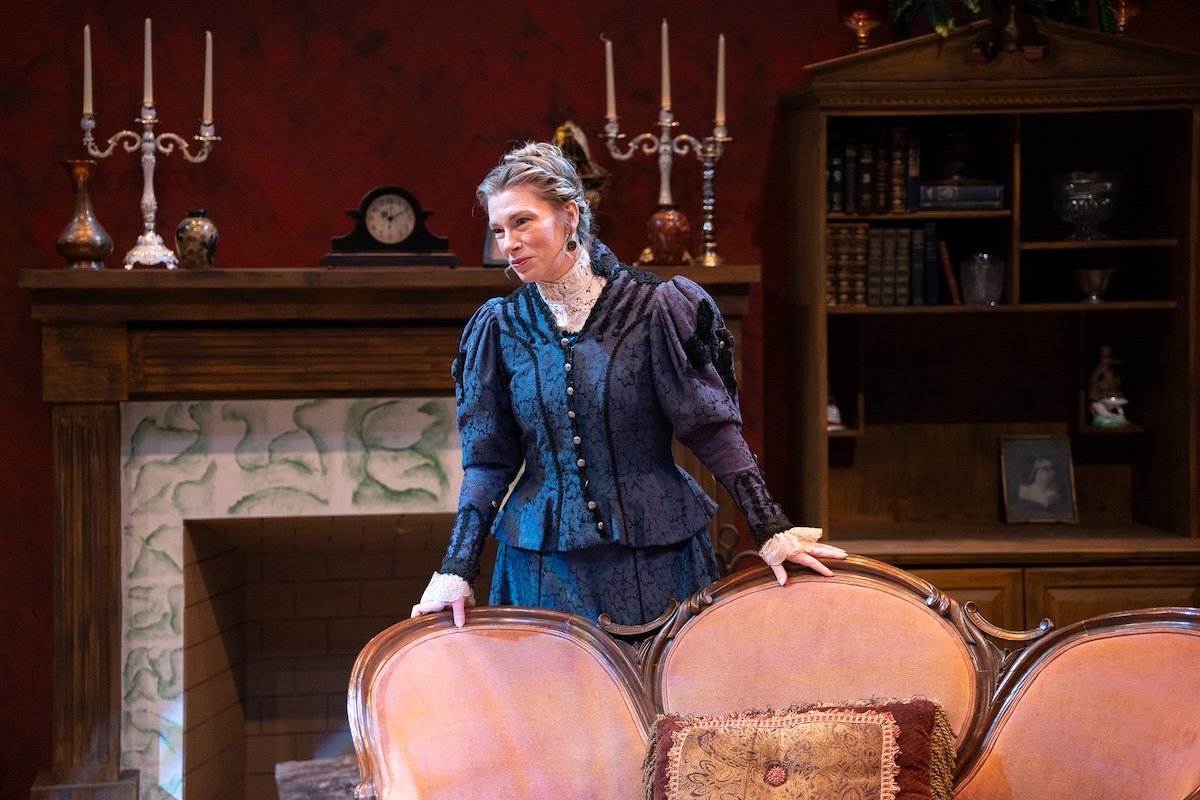
photo: Nik House Media
Origins
Local playwright Kristin (K.D.) Carlson was inspired to write Beyond Reason after “dipping in and out” of James’ collected works while “devouring” two books on early feminism, according to the playwright’s note in the program. Apparently, many early feminists also involved themselves in the Spiritualist movement. Through her script, Carlson aimed to “celebrate the spirited women who helped blaze a trail to expand women’s rights — and shine a spotlight on the cultural and socio-political forces that continue to impact the freedoms of women today.”
I felt the story could have developed the relationship between the psychics more deeply. It began with suspicion and later turned to confessions, as one ultimately empowered the other. The script could have delved more into the nuances of their authentic powers and the overly dramatic “shows” psychics delivered at the time to convey their messages effectively, which Carlson said often addressed social ills, challenged gender roles and called for more expansive civil rights.
Carlson has found a rich, overlooked corner of history: women who turned the séance table into a pulpit when no one would hand them another. Beyond Reason already has the premise, the cast and a gorgeous room to tell that story. A tighter draft could be something special.


Kimberly Nicoletti is an award-winning journalist, with accolades from the Colorado Press Association, Warren Miller/The Ski Journal, and Home Instead. Her work has allowed her to: interview international athletes, musicians, artists, chefs and entrepreneurs; write national travel pieces; review art, theater and dance; create he said/she said movie reviews; cover business and politics; and more.

Leave A Comment