

Alicia Keys’ jukebox musical features some stirring design elements and a predictable plot.
When audiences hear the title “Hell’s Kitchen,” it’s totally understandable if images of celebrity chef Gordon Ramsay barking at contestants on the reality cooking show Hell’s Kitchen come to mind.
But the musical Hell’s Kitchen, now touring through Denver’s Buell Theatre, has nothing to do with overcooked scallops or shouting chefs. Instead, it’s a jukebox musical built around Alicia Keys’ songs, telling a loosely autobiographical coming-of-age story about a mixed-race teenager growing up in 1990s Manhattan with her white mother.
The national touring production arrives with considerable pedigree. Directed by Michael Greif and featuring choreography by Camille A. Brown, the show pairs Keys’ catalog with a script by Kristoffer Diaz.
Hell’s Kitchen follows Ali (Marley Soleil, who took over for Maya Drake on opening night), a fiery 17-year-old living in the Manhattan Plaza artist housing complex with her overprotective single mother, Jersey (Kelsee Kimmel, who is filling in for Kennedy Caughell, who has been ill and is scheduled to return on April 21st, 2026). As Ali pushes against the limits of her mother’s rules, she finds guidance from a neighbor, the pianist Miss Liza Jane (Roz White), who helps her connect with music and her family’s artistic legacy.
The premise suggests a promising mix of personal history and musical nostalgia. In practice, the touring production lands somewhere in the middle. Keys’ songs are frequently used effectively, and the production has striking scenic design and energetic choreography, but a clunky first act, sound balance issues and a story built around familiar coming-of-age beats keep the musical from fully catching fire.

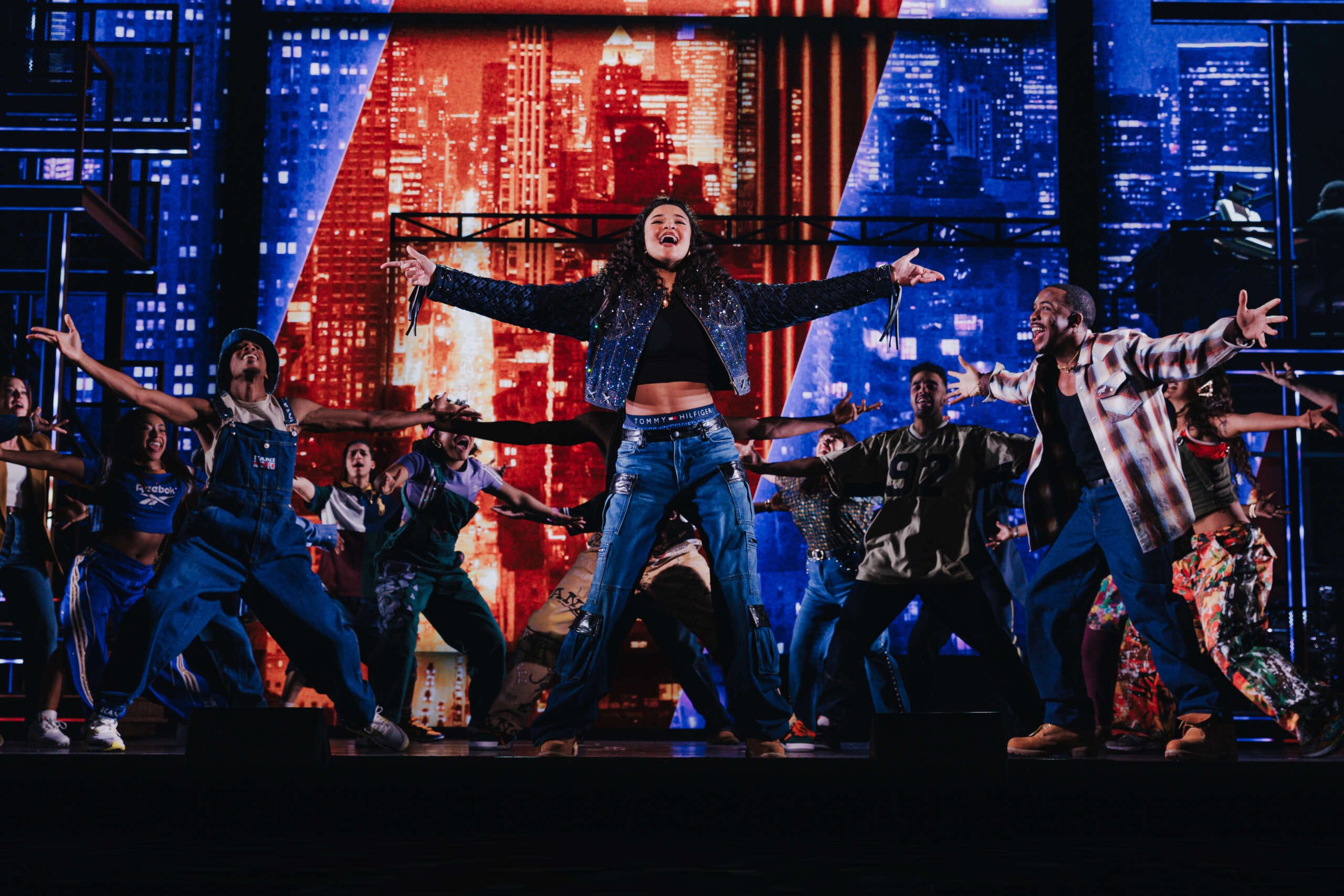
Maya Drake as Ali and the company of the North American Tour of Alicia Keys’ Hell’s Kitchen. | Photo: Marc J Franklin
Strong design and choreography create a dynamic stage
Where Hell’s Kitchen most consistently impresses is in its technical presentation. Scenic designer Robert Brill builds a flexible landscape of scaffolding and moving platforms that evokes a stylized version of Manhattan Plaza. Combined with projection design by Peter Nigrini, the set transforms into a shifting cityscape of storefronts, apartment windows and neighborhood textures.
The approach favors theatrical suggestion over literal realism. Scaffolding rotates and reconfigures to form apartments, rehearsal rooms and street corners, while projections add layers of urban detail. The result is a dynamic stage picture that keeps the world of Hell’s Kitchen in constant motion.
Choreography by Brown brings welcome energy to the production. Ensemble numbers blend street styles and breakdance-inspired movement with Broadway staging, giving the musical a rhythmic pulse that reflects Keys’ music.
At times, though, that constant motion works against the material. Intimate scenes — including Ali’s early piano lesson during “Kaleidoscope” and the romantic duet “Unthinkable (I’m Ready)” — unfold amid large-scale choreography that distracts from the characters at the center of them. Moments that might benefit from stillness are instead filled with spectacle, diluting their impact.
Sound balance also proves inconsistent. At times the orchestra, particularly the percussion and keyboards, overwhelms the vocals, making several lyrics difficult to catch, which is becoming a recurring challenge in touring productions at the Buell.
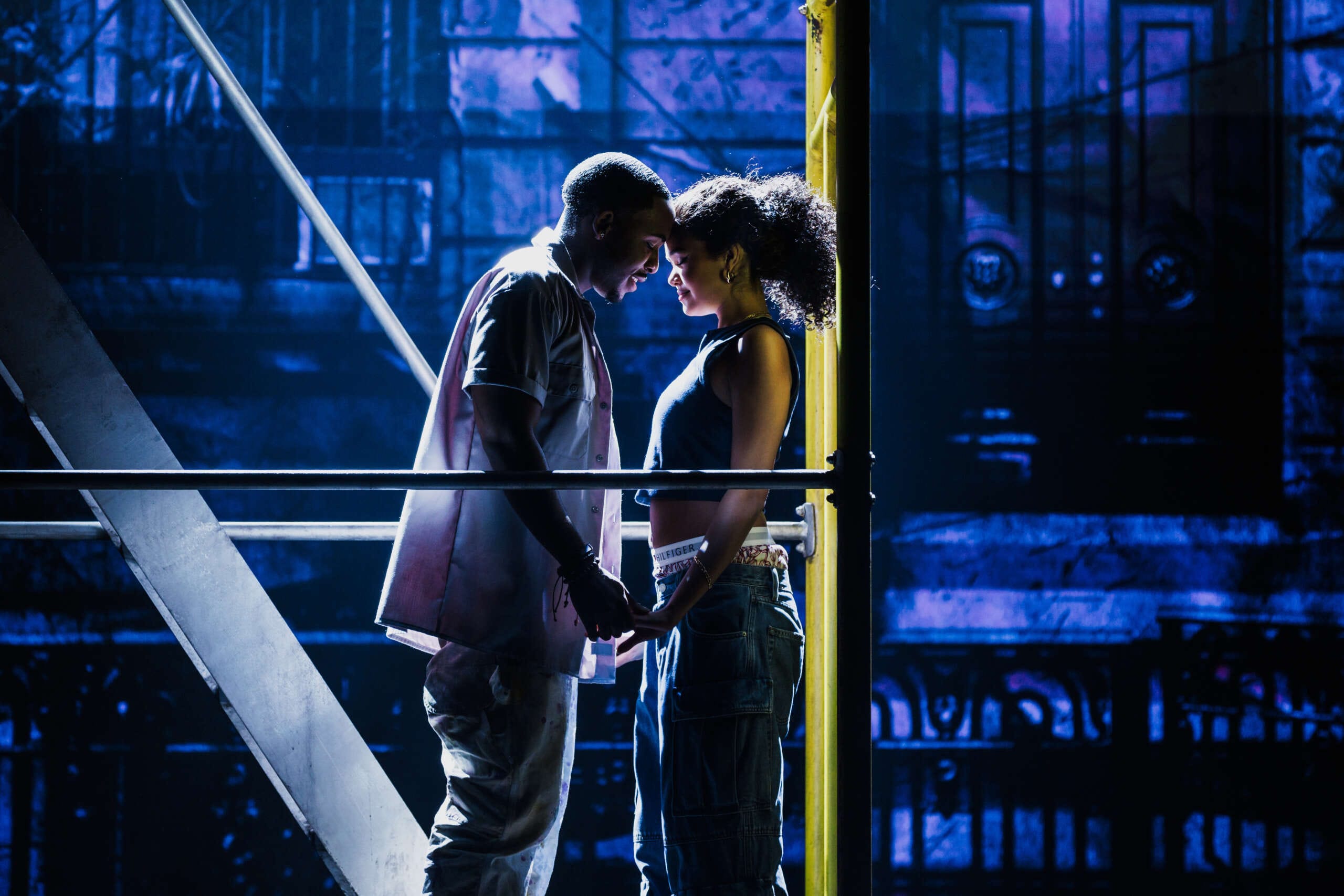
JonAvery Worrell as Knuck and Maya Drake as Ali in the North American Tour of Alicia Keys’ Hell’s Kitchen. | Photo: Marc J Franklin
Several outstanding performances
Among the cast, Kelsee Kimmel delivers the evening’s most compelling performance as Jersey. Having recently played the role on Broadway before the production closed earlier this year, Kimmel brings a layered mix of toughness, regret and fierce protectiveness to the character.
Her Act II solo, “Pawn It All,” is the show’s highlight. Bursting into her ex-partner Davis’ audition to confront the compromises that shaped her life, Jersey lays bare years of frustration and sacrifice. Kimmel’s voice cuts cleanly through the orchestra, and her emotional vulnerability keeps the production grounded when it threatens to drift.
Roz White also stands out as Miss Liza Jane, portraying Ali’s mentor with warmth and quiet authority. The character functions as both teacher and ancestral guide, encouraging Ali to see music not just as a talent but as a legacy passed down through generations.
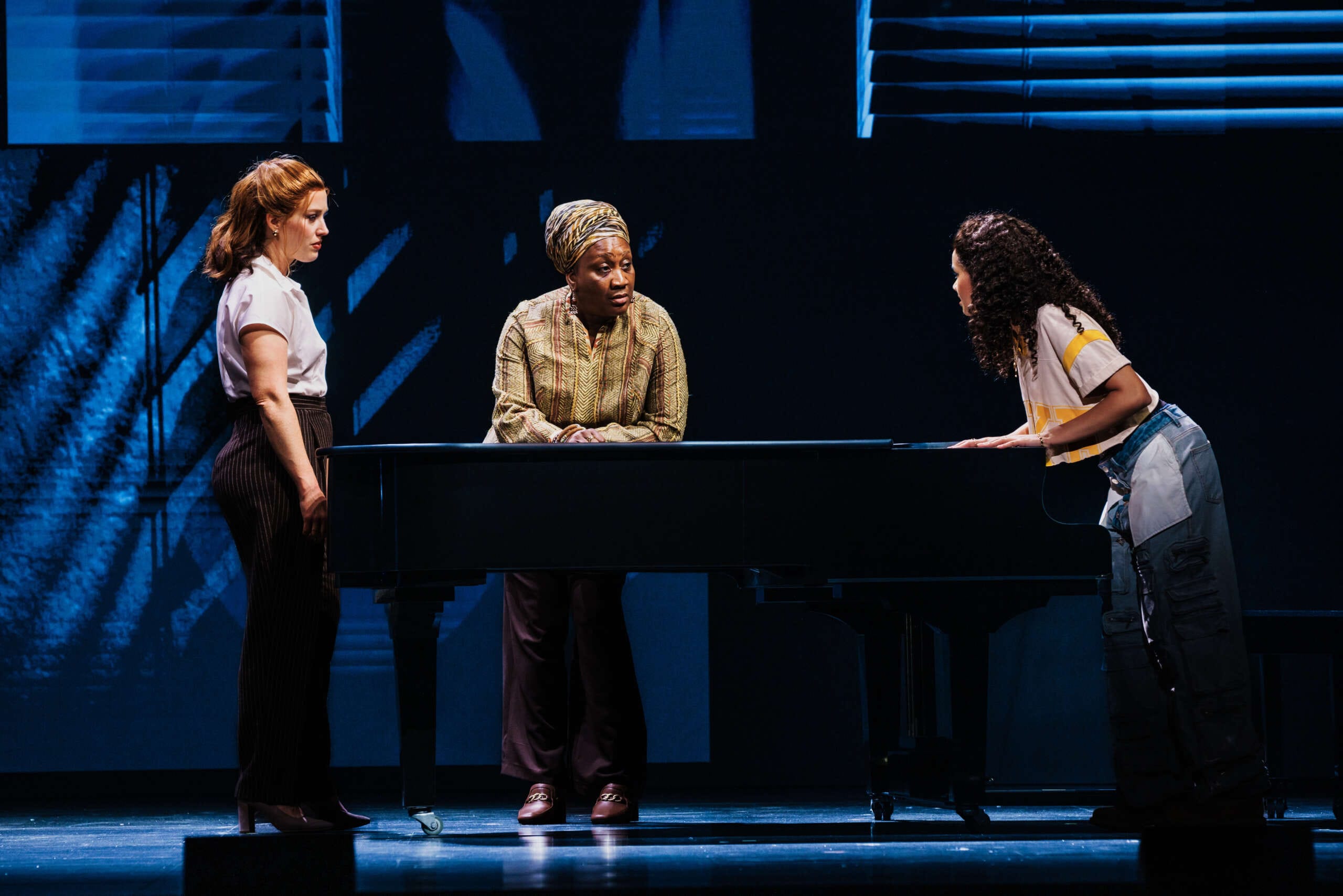
Kennedy Caughell as Jersey, Roz White as Miss Liza Jane and Maya Drake as Ali in the North American Tour of Alicia Keys’ Hell’s Kitchen. | Photo: Marc J Franklin
The central performance proves less persuasive. Marley Soleil captures Ali’s youthful humor and restless energy, particularly in scenes with her friends and in the early stages of her romance with Knuck (JonAvery Worrell). But the role asks for a deeper emotional presence as the story progresses, and the performance never fully settles into those moments.
Key reactions often play away from the audience, obscuring Ali’s internal journey during pivotal scenes. Combined with occasional articulation issues in faster musical passages, those issues make it difficult to follow the character’s journey. The production repeatedly asks the audience to invest in Ali’s transformation without always making that transformation visible.

Maya Drake as Ali and JonAvery Worrell as Knuck in the North American Tour of Alicia Keys’ Hell’s Kitchen. | Photo: Marc J Franklin
More focused second act
Much of the show’s trouble begins in the first act, which tries to establish an entire neighborhood’s worth of storylines at once. The musical introduces the bustling artist community of Manhattan Plaza, Ali’s rebellious streak, her mother’s anxieties, her romance with Knuck and the influence of Miss Liza Jane — all while cycling through a steady stream of Alicia Keys hits. Scenes arrive quickly and disappear just as fast, giving the act a scattered, montage-like quality.
The romance between Ali and Knuck becomes the act’s main dramatic engine, but it never develops enough depth to carry the weight placed on it. Their relationship unfolds through a series of musical numbers and quick encounters that suggest connection without fully building it. Meanwhile, supporting characters like Ali’s friends Tiny (GiGi Lewis) and Jessica (Sydney Townsend) appear sporadically but remain largely undefined.
By the end of the first act, with Knuck’s arrest and Miss Liza Jane’s reflective “Perfect Way to Die,” the musical has introduced a lot of concepts, but none of them really connect.
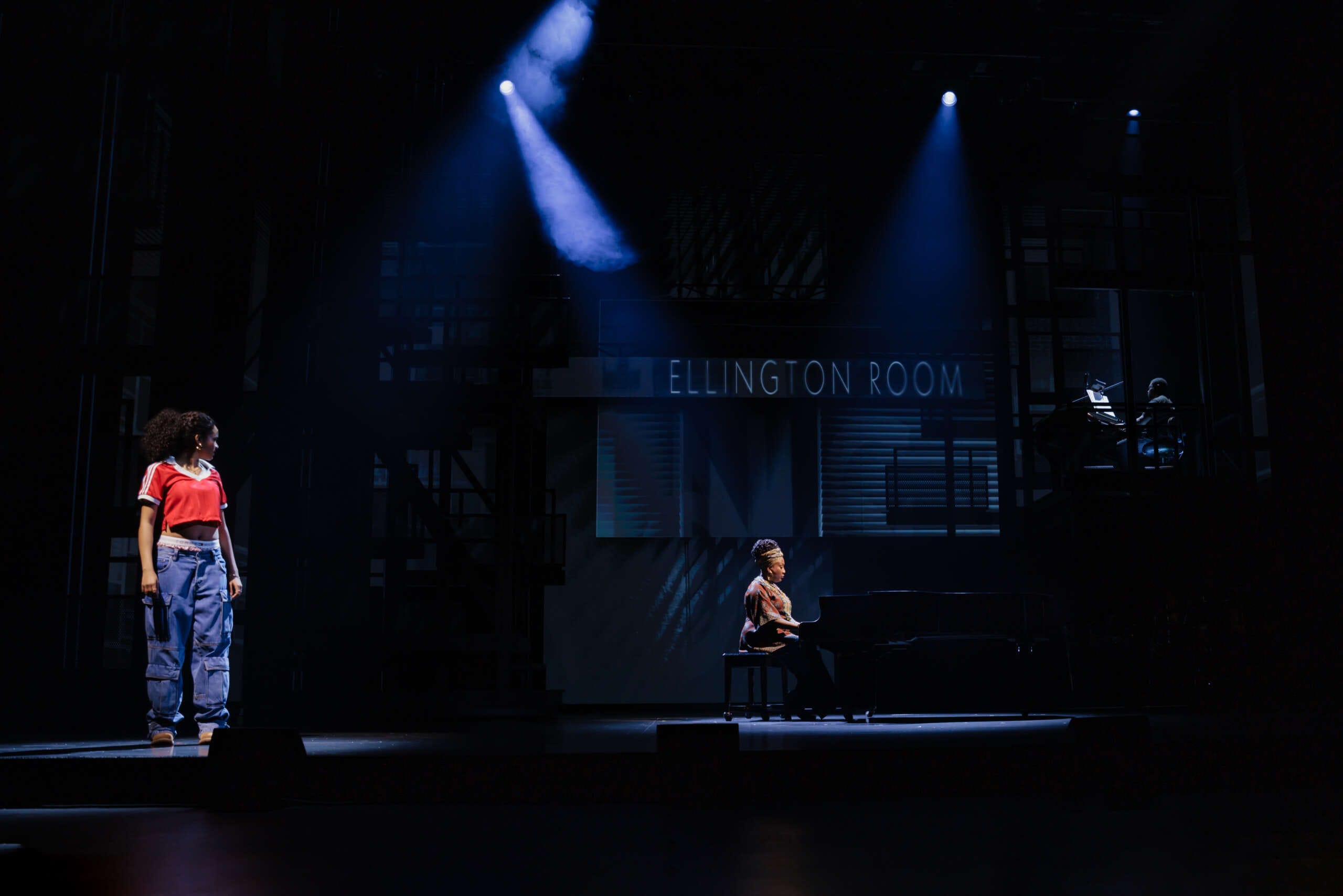
Maya Drake as Ali and Roz White as Miss Liza Jane in the North American Tour of Alicia Keys’ Hell’s Kitchen. | Photo: Marc J Franklin
The second act corrects course by narrowing its focus. With the world established, the story turns toward the strained relationship between Ali and Jersey and the lingering influence of Ali’s father, Davis (Desmond Sean Ellington). The musical becomes far more compelling once it begins to explore what children inherit from their parents, not just talent, but also absence, regret and unfulfilled dreams.
That tension plays out most clearly through the contrast between Ali’s parents. Jersey has stayed in her daughter’s life through years of struggle, even when her attempts to protect Ali lead to painful mistakes. Davis drifts in and out chasing musical ambitions, offering inspiration but little stability. The conflict between those two models of parenting gives the story a complexity that the first act struggles to achieve.
The emotional center lands most clearly after Miss Liza Jane’s death, when Ali confronts both her grief and the musical legacy she has inherited. From there, the show moves toward the inevitable arrival of “Empire State of Mind,” transforming Ali’s personal awakening into a celebratory ensemble finale that sends the audience out on a high note.
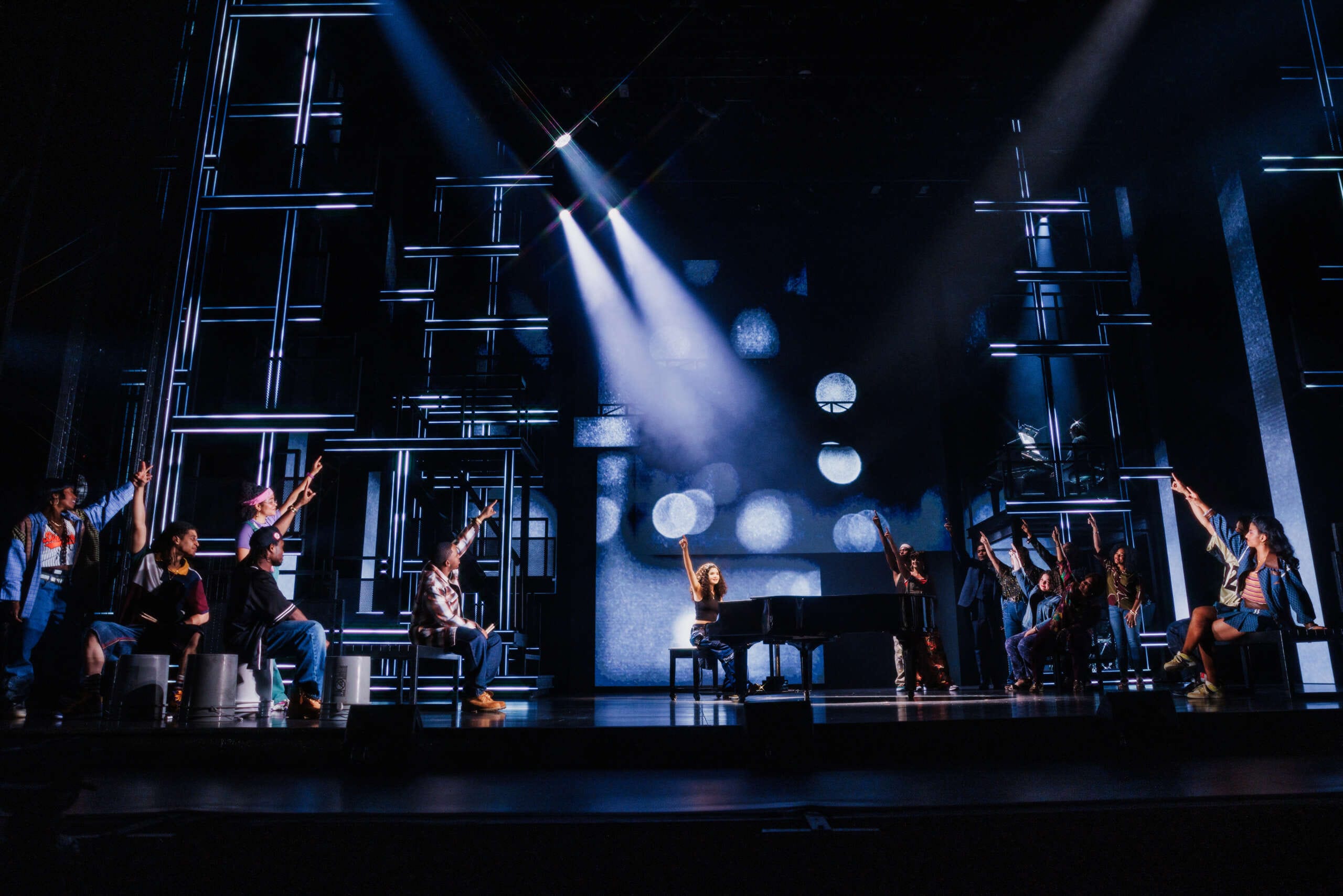
The company of the North American Tour of Alicia Keys’ Hell’s Kitchen. | Photo: Marc J Franklin
Lively tribute with a familiar framework
At two hours and 35 minutes, Hell’s Kitchen would benefit from a tighter first act and a more adventurous script. Several songs still feel inserted rather than organically woven into the narrative, a reminder that the show ultimately remains a jukebox musical built around a preexisting catalog.
Even so, the production delivers plenty to enjoy. The scenic design and projections create a striking theatrical environment, Brown’s choreography keeps the stage energized and Kimmel’s commanding performance includes numerous magnificent vocal moments.
For fans of Keys, the musical functions as a lively tribute to her music and to the New York neighborhood that shaped it. The story may follow familiar paths, but the production’s energy, visual imagination and standout supporting performances keep the journey engaging.
For theatergoers looking for a more original, sharply written musical, the experience is less enjoyable. Still, when Hell’s Kitchen finds its rhythm, particularly in its exploration of family, legacy and artistic identity, it reminds audiences why those songs connected with so many listeners in the first place.

An award-winning Colorado arts and culture reporter originally from Mineola, Texas. Tresca is the chief theatre critic for OnStage Colorado and managing editor of OnScreen Colorado. He’s the editor of Bucket List Community News, a contributor to Denver Westword and Estes Valley Voice, a resident storyteller for the Bonfils-Stanton Foundation and the co-host of the OnStage Colorado Podcast.

I do not agree with your review of this phenomenal musical. I saw it last night, and as someone who has actually lived in New York, I doubt you have any understanding of it. And as a white man from Colorado it seems you would try to have a deeper dive into the subjects of the musical and not only compliment the one white woman.