
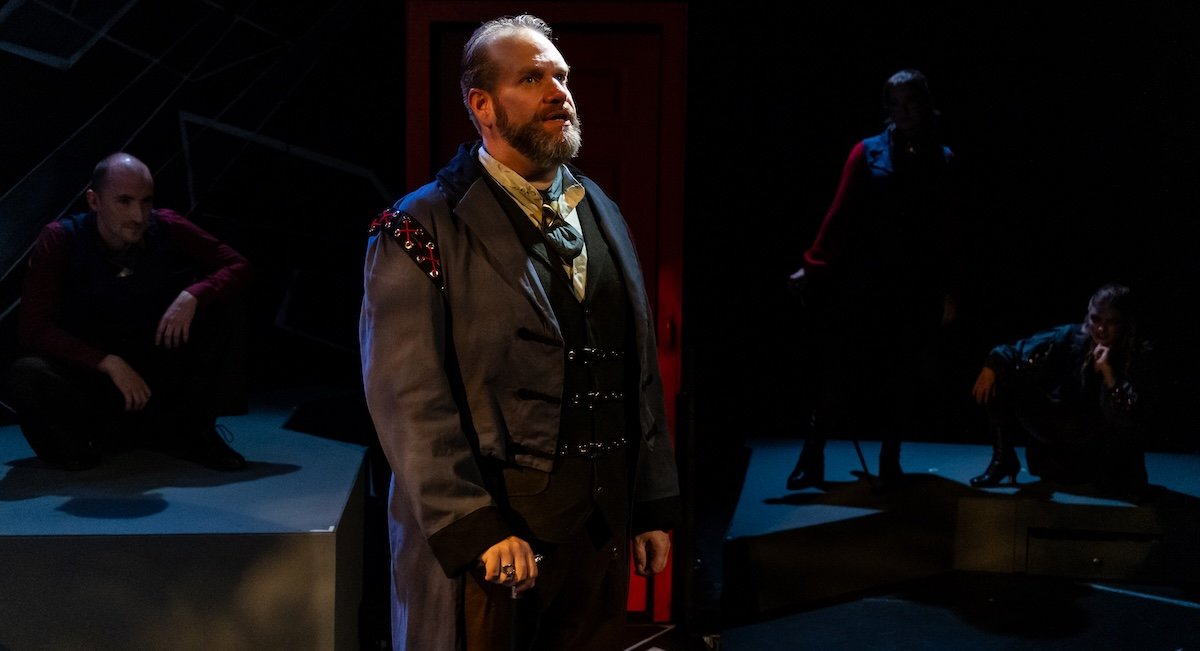
Vintage Theatre’s gothic thriller is entertaining spooky season fare, despite a sluggish first act.
Dr. Henry Jekyll has created a monster. Actually, he’s created four, and none of them seems particularly interested in behaving.
That multiplicity is the most intriguing idea in Dr. Jekyll & Mr. Hyde, Jeffrey Hatcher’s adaptation of Robert Louis Stevenson’s novella currently running at Vintage Theatre. Rather than neatly dividing humanity into good and evil, the script splinters Hyde among four actors, exposing competing appetites for violence, love, control and freedom.
Kathryn Gourley’s production finds genuinely unsettling ways to exploit the conceit, even if it takes a bit to really get going.
Luke Rahmsdorff-Terry plays Jekyll, a brilliant physician whose experiments on human nature have yielded terrifying results. The first act spends considerable time on arguments about scientific ethics. These debates give the story intellectual heft, particularly its questions about who gets to bear the consequences of a discovery, though Hatcher spends so much time explaining the science and debating its implications that the actual horrors are left waiting in the wings for too long.
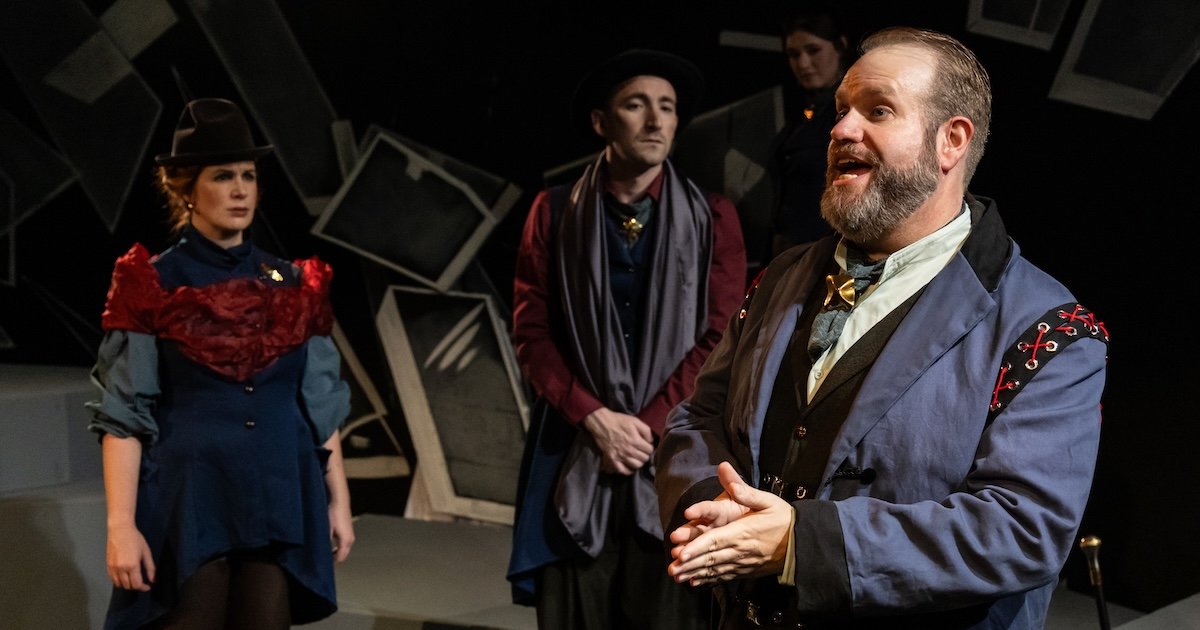
Vintage Theatre’s production of Dr. Jekyll & Mr. Hyde. | Photo: RDGPhotography
The monster has company
Fortunately, once the Hydes begin fighting for control, the production comes alive. In a chilling second-act sequence, Kelly Alayne Dwyer, Erik Thurston, Malea Kinnison and Siena Widen encircle Jekyll, bombarding him with accusations and temptations. Rahmsdorff-Terry looks increasingly desperate as the four performers close in, each pushing him toward a different breaking point. It’s one of the production’s most effective moments, capturing the terrifying realization that Jekyll may no longer have any say over what happens next.
Thurston is the ensemble’s most versatile performer. His Hyde is a hunched, gremlin-like creature, sharply distinct from the pompous physician, rough-edged investigator and softer-spoken policeman he also plays. Jasper Day’s economical costumes, mostly blue with red accents, use simple additions like hats and scarves to distinguish the characters, helping the company make these transitions legible without much fuss.
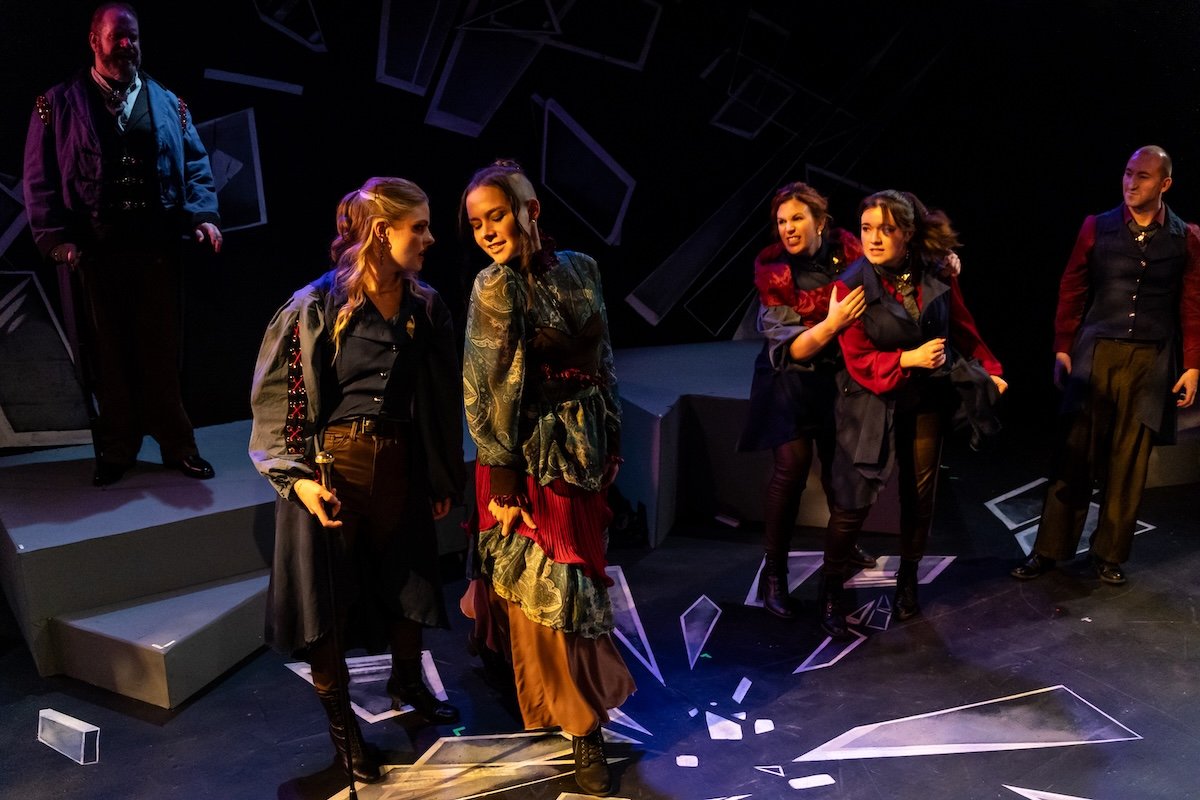
Vintage Theatre’s production of Dr. Jekyll & Mr. Hyde. | Photo: RDGPhotography
If Kinnison represents Hyde at his most romantic, then Widen’s Hyde is the most overtly vicious, constantly pushing Jekyll toward increasingly violent impulses. Yet not every incarnation has such a coherent identity. Dwyer and Thurston are appropriately menacing, but Gourley’s direction doesn’t make it entirely clear what distinguishes their particular manifestations of Hyde.
The four performers also linger at the edges of other scenes, occasionally responding so animatedly that they sometimes pull attention away from the dialogue. The staging seems deliberate: Jekyll can’t escape his creations. Still, the device works better when their presence sharpens the drama rather than competing with it.
Rahmsdorff-Terry is a steady center, although the script confines Jekyll to lengthy explanations and stoic reactions while his alter egos get the juicier material. His occasional flashes of anger hint at a more complicated man beneath the respectable exterior.
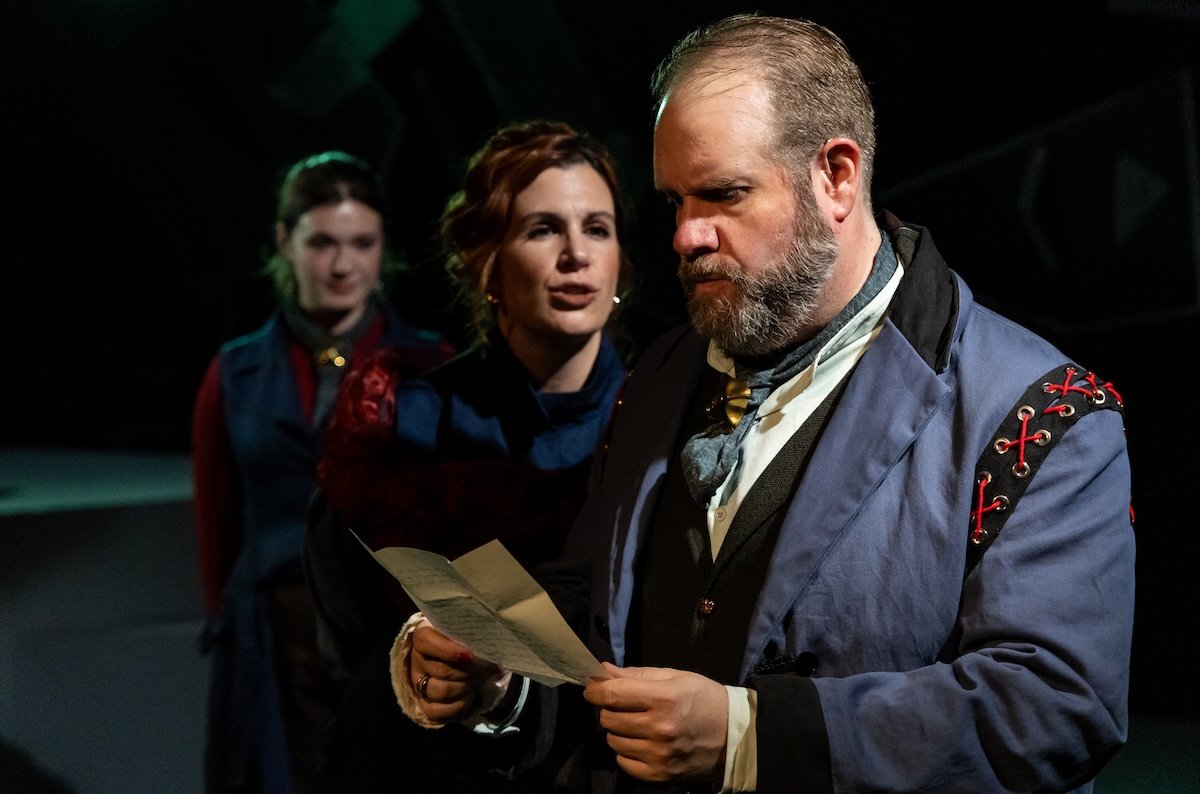
Vintage Theatre’s production of Dr. Jekyll & Mr. Hyde. | Photo: RDGPhotography
Atmosphere in need of momentum
The black-and-white set, with its splintered-glass backdrop, gives the evening a striking gothic look. Ryan Stauffer’s eerie, violin-driven original score establishes the mood before the play even starts and sustains it through transitions.
Those transitions, however, are a problem. Gourley repeatedly has the cast reposition a two-sided red-and-black door that doubles as a laboratory table, slowing an already talk-heavy first act. A production this comfortable with actors switching identities in plain sight hardly needs such deliberate resets between locations.
Vintage’s Dr. Jekyll & Mr. Hyde is not consistently as frightening or fleet-footed as its best scenes suggest. Yet its strongest performances, gothic atmosphere and questions about the evils we choose to excuse make it a satisfying spooky-season outing.

An award-winning Colorado arts and culture reporter originally from Mineola, Texas. Tresca is the chief theatre critic for OnStage Colorado and managing editor of OnScreen Colorado. He’s the editor of Bucket List Community News, a contributor to Denver Westword and Estes Valley Voice, a resident storyteller for the Bonfils-Stanton Foundation and the co-host of the OnStage Colorado Podcast.

Leave A Comment