
Strong young performers and inventive staging lift Candlelight’s Matilda, though broad comedy slows the show.
Near the beginning of Candlelight’s Matilda the Musical, the titular character balances atop a block and tells an enraptured librarian the opening of a story she has invented.
Above them, the Escapologist and the Acrobat — played by Carter Edward Smith and Chloe Wheeler — silently give shape to her words on a raised platform. The Acrobat flips, the Escapologist hoists her even higher and, as Matilda’s tale becomes vivid enough to take on a life of its own, the two add their voices to hers.
The sequence captures what director Steve Wilson’s production does best. Candlelight’s Matilda is mesmerizing when it pares down the musical to a few versatile objects and embraces the piece’s sentimentality. Elsewhere, overstated comedy, unconvincing illusions and a nearly three-hour running time undercut the danger of Matilda’s world and the urgency of her rebellion.
A scene from Matilda the Musical at Candlelight in Johnstown, Colo. | Photo: Cohagen Wilkinson
A story worth telling
Adapted from Roald Dahl’s 1988 novel, Matilda follows a brilliant, British, book-loving girl whose parents regard her intelligence as an inconvenience. School offers little refuge. Although her teacher, Miss Honey, recognizes Matilda’s abilities, the institution is controlled by the bullying headmistress Agatha Trunchbull.
Dennis Kelly’s book and Tim Minchin’s music and lyrics turn Matilda’s resistance into an argument for the power of language. Words allow her to identify injustice, imagine alternatives and eventually change her circumstances.
Candlelight alternates between “blue” and “green” youth casts. At the matinee reviewed on Thursday, July 16, Khloe Trainor led the blue cast with an earnest performance that never loses sight of Matilda’s loneliness. From “Naughty,” she uses Candlelight’s expansive stage to establish the perspective of a child forced into self-reliance who has not surrendered her belief that the world can be made fairer. Her clear singing and easy rapport with the adults around her keep Matilda’s point of view intact as other performances grow more exaggerated.
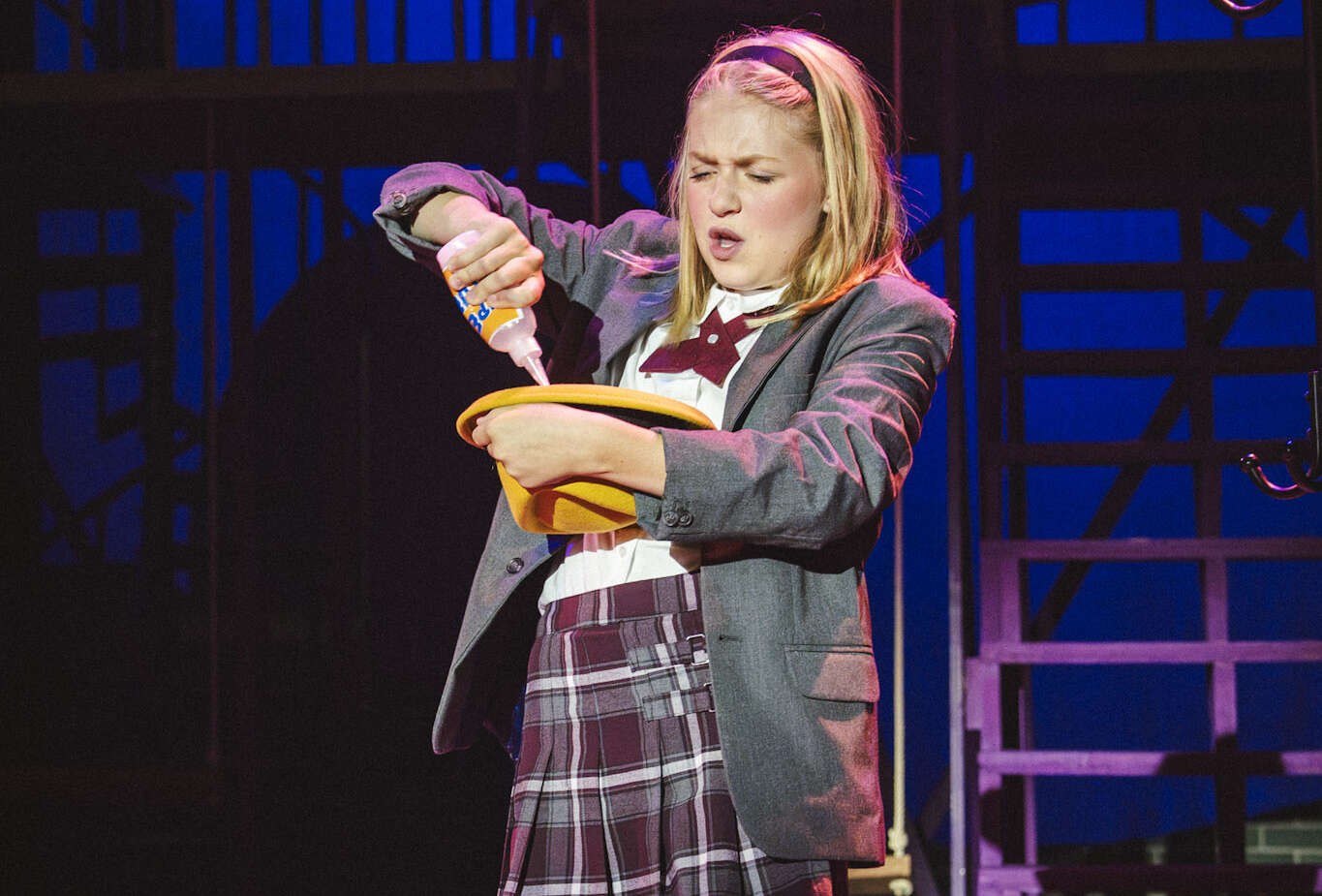
In Matilda the Musical, the titular character puts glue in her father’s hat. | Photo: Cohagen Wilkinson
Gracie Wu appeared as Miss Honey in place of Megan Schraeder. Wu brings warmth and a strong voice to the role. Her most affecting moment comes during “When I Grow Up,” when she sits on a swing and quietly joins the children in imagining adulthood. The moment suggests that growing older does not mean one has finished growing.
Minchin’s lyrics arrive rapidly, packed with intricate phrasing and dense internal rhymes. Zerek Dodson’s live band handles the score’s sharp stylistic turns with crispness and momentum. While the solo numbers are largely intelligible, ensemble songs such as “School Song” and “Revolting Children” require listeners to stop chasing every syllable and simply let the Britishness wash over them.
The production faces a greater obstacle in its length. The performance lasted approximately three hours, including a 20-minute intermission. Kelly’s crowded book bears much of the responsibility, juggling Matilda’s family, school life, emerging powers and continuing story about the Escapologist and Acrobat.
Wilson, scenic designer Ranae Selmeyer and choreographer Carrie Colton work efficiently to keep that narrative moving, folding the rearrangement of lettered blocks, furniture and other scenic elements into the action. Their efforts cannot disguise how long the material takes to reach its conclusion.
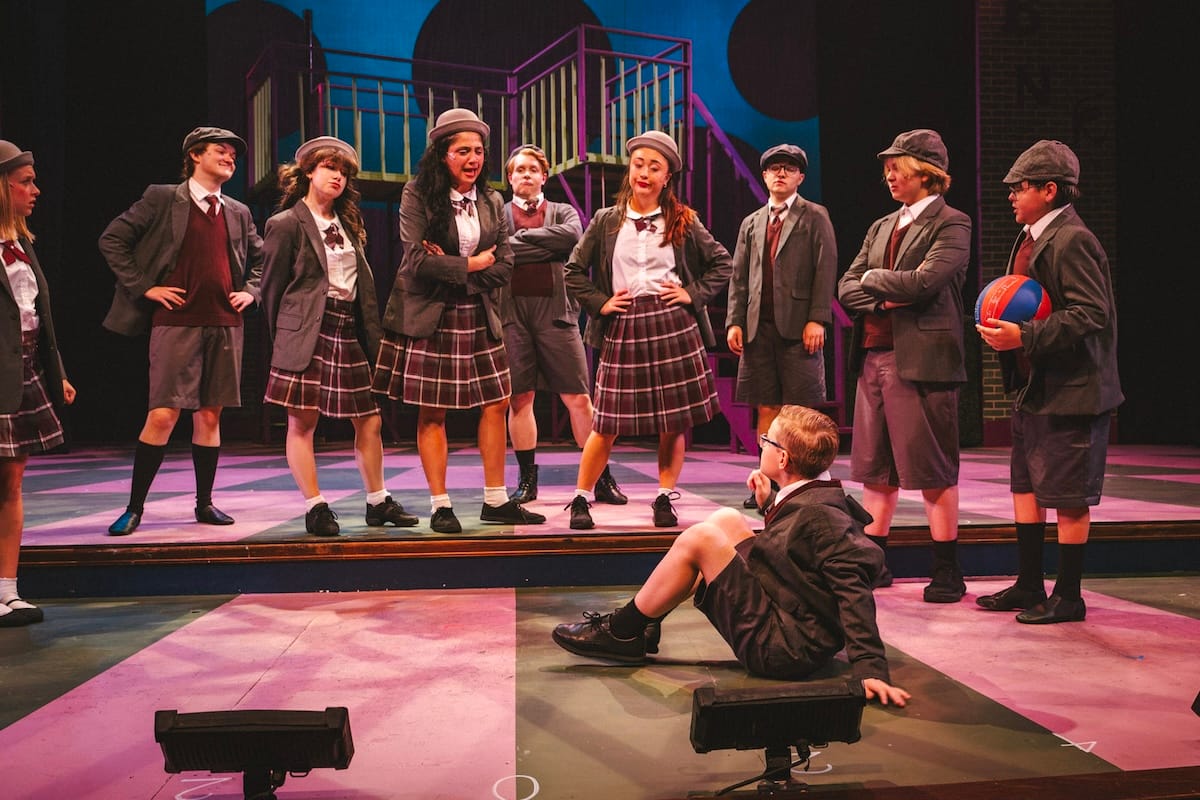
Matilda the Musical at Candlelight in Johnstown, Colo. | Photo: Cohagen Wilkinson
When more becomes less
The pacing problems become harder to excuse when the production adds material. Before the second act, Stephen Charles Turner, who plays Mr. Wormwood, delivers an extended improvisational introduction involving crowd work, a Netflix joke and promotion of Candlelight’s upcoming season. Turner handles the assignment gamely, but Wilson lets the routine continue long after its premise has run dry. It delays one of the act’s funniest sequences: Mr. Wormwood’s tap-dancing televisions in “All I Know.”
That indulgence reflects a larger tonal issue. Wilson often pushes Dahl’s grotesque comedy toward camp, even when the story needs its adults to present a credible threat.
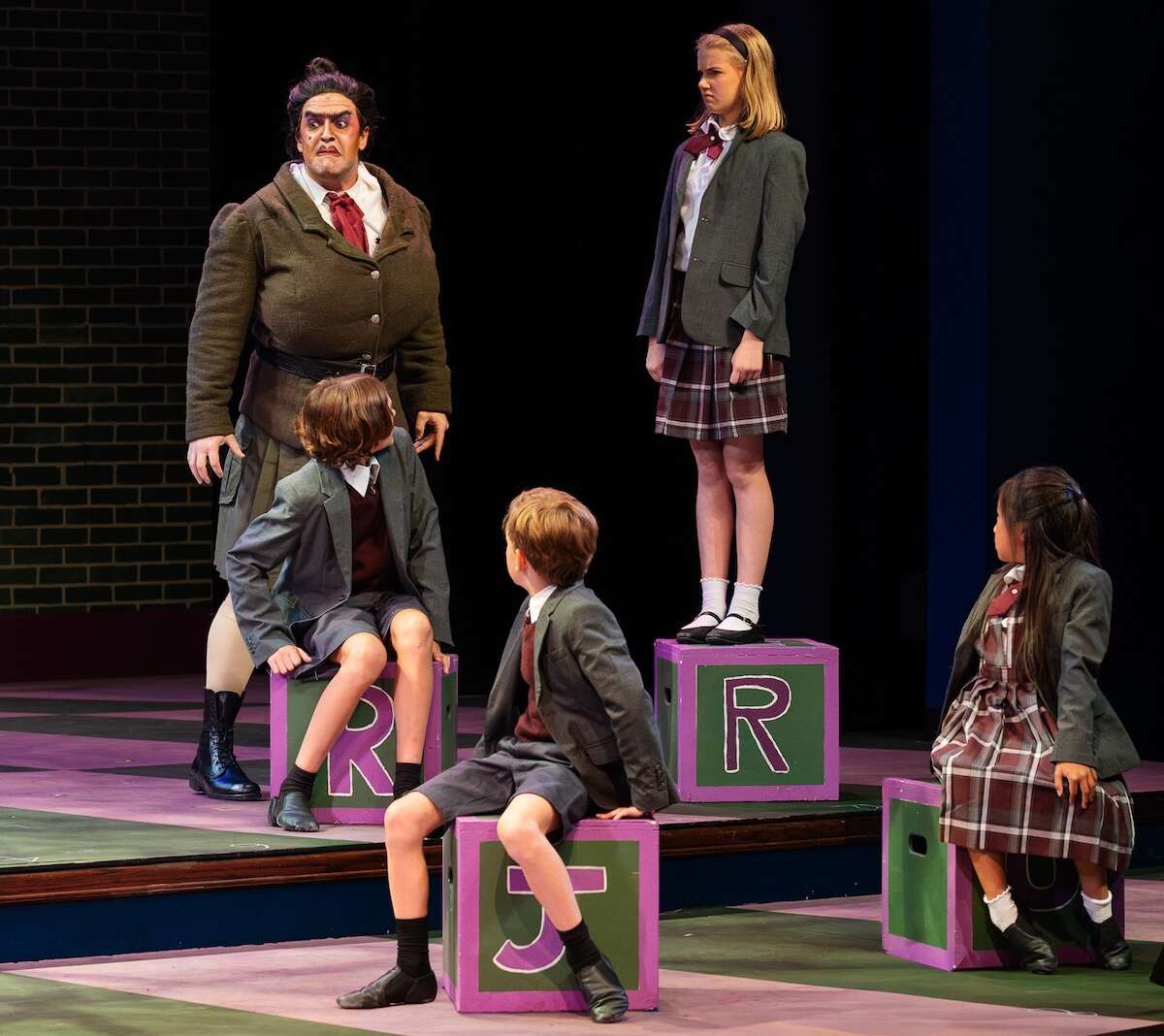
Patric Case gives a technically formidable performance as Trunchbull. He articulates Minchin’s knotty lyrics with precision, sings powerfully and turns “The Smell of Rebellion” into an athletic feat, maintaining vocal control while navigating a balance beam and trampoline. Yet Wilson steers Case’s performance so heavily toward silly physical comedy that Trunchbull rarely feels dangerous. The jokes frequently land, but without a credible threat, Matilda’s rebellion feels easier than it should.
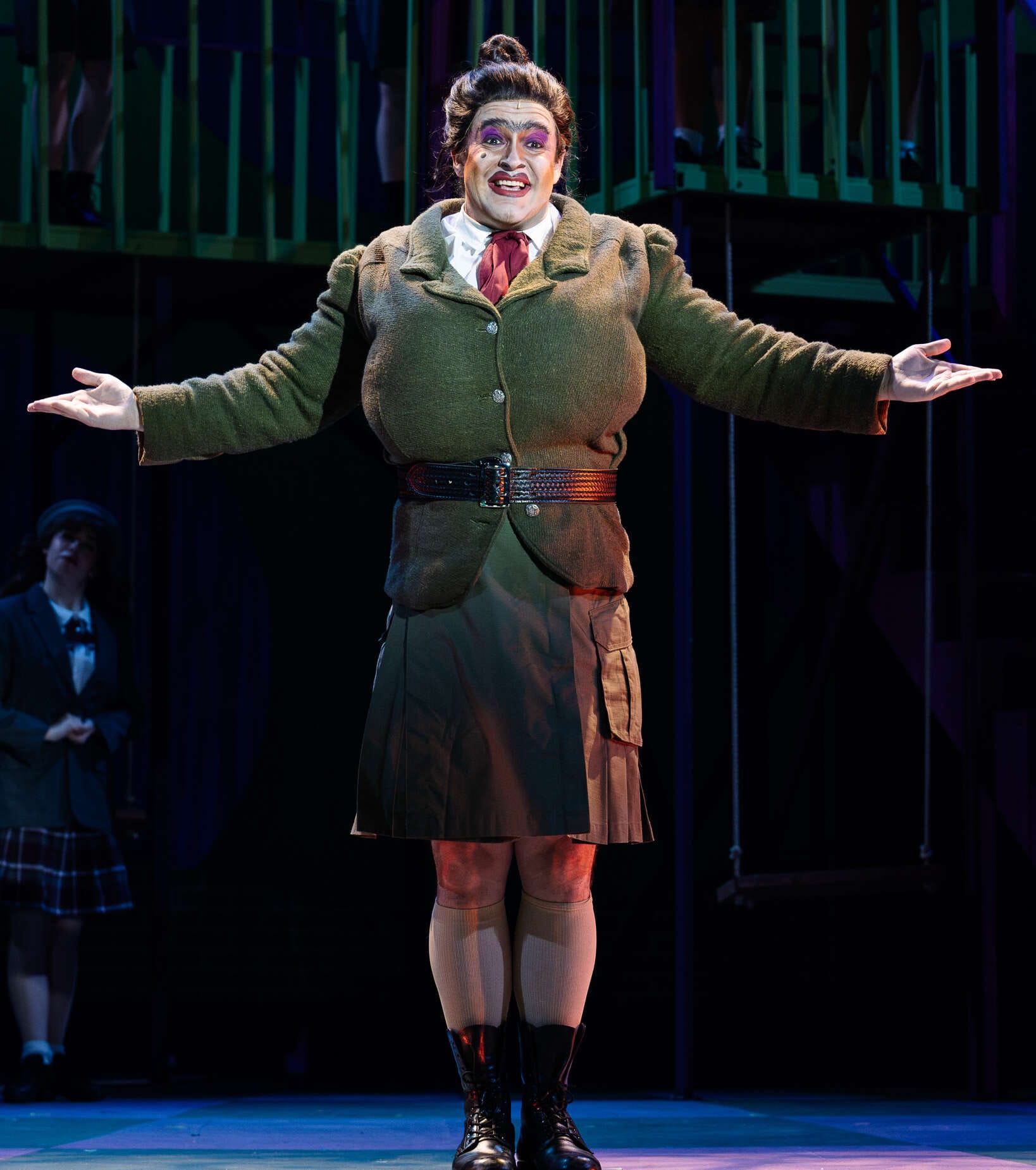
Patric Case as Miss Agatha Trunchbull. | Photo: Cohagen Wilkinson
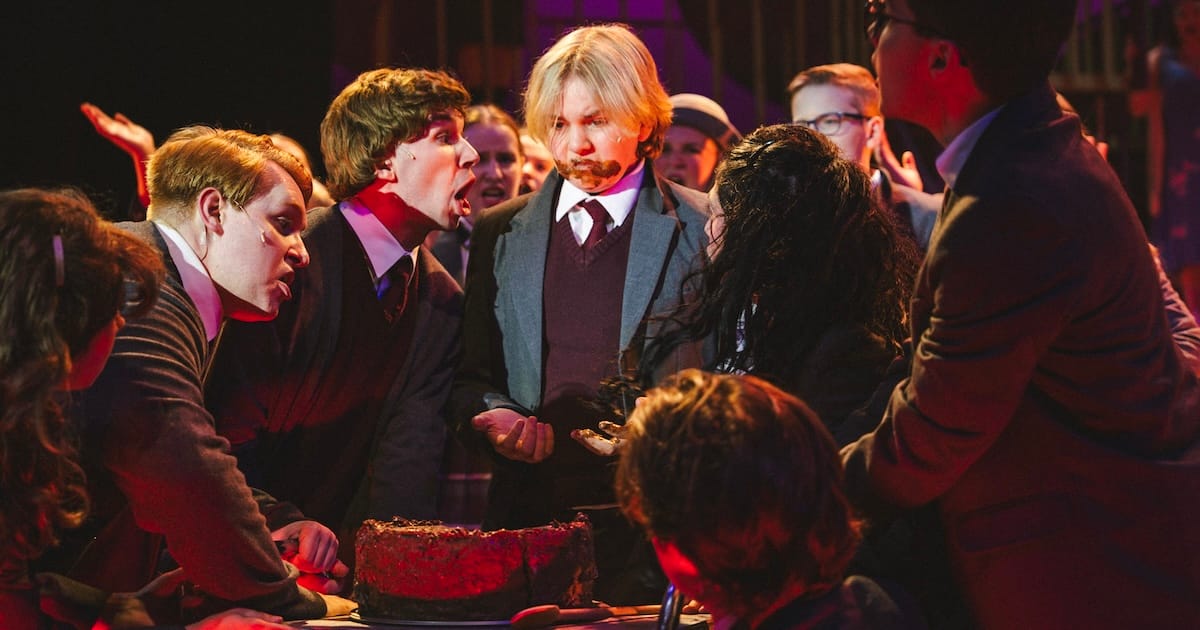
The production’s more elaborate effects also prove less persuasive than its simplest images. A clearly artificial doll stands in for a child swung by her pigtails, the chocolate cake sequence exposes too much of its mechanics and projections cannot give the Escapologist story’s climax the immediacy of its earlier appearances or convincingly render the climactic chalkboard scene. The telekinetic tipping of a cup works by contrast because the effect is subtle but plausibly part of the physical world.
For all its splendid trappings — and there is much to love — Wilson’s production casts its clearest spell when it trusts the same thing Matilda does: that words, spoken with enough conviction, can reshape the world around her.

An award-winning Colorado arts and culture reporter originally from Mineola, Texas. Tresca is the chief theatre critic for OnStage Colorado and managing editor of OnScreen Colorado. He’s the editor of Bucket List Community News, a contributor to Denver Westword and Estes Valley Voice, a resident storyteller for the Bonfils-Stanton Foundation and the co-host of the OnStage Colorado Podcast.

Leave A Comment