
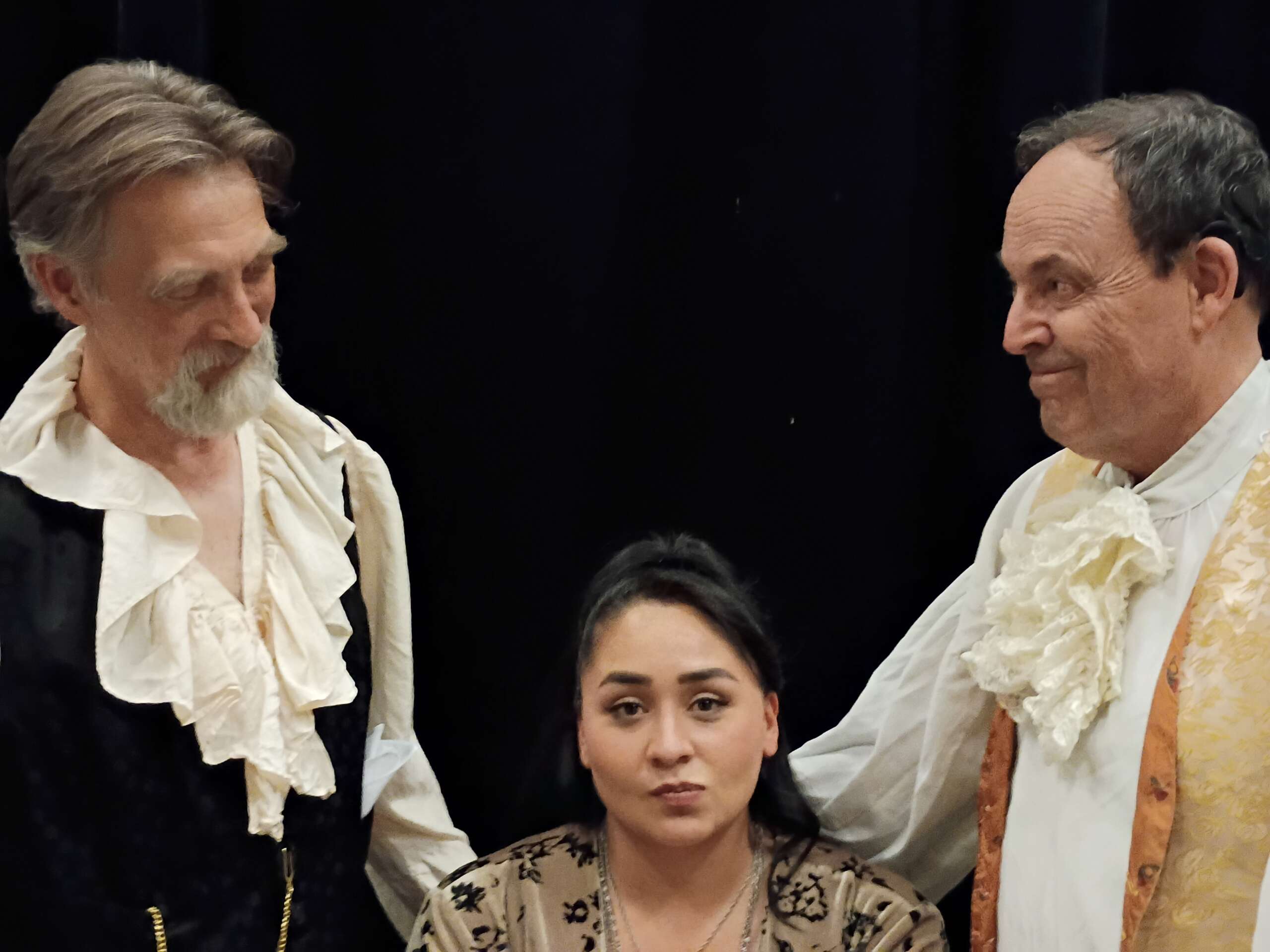
A stripped-down Tartuffe in Boulder has strong comic turns but struggles with pacing and cohesion.
At a moment when public figures cloaked in moral authority feel especially recognizable, Tartuffe remains a sharp satirical instrument. First staged in 1664, Molière’s comedy about a conman posing as a man of faith was controversial enough to be banned shortly after its debut, suppressed under pressure from religious authorities who saw too much of themselves in its comedy.
Directed by Maru Garcia, this production leans on accessibility. The contemporary English adaptation makes the plot easy to follow as Orgon, played by Chris Brown, becomes infatuated with the pious-seeming Tartuffe, played by Mark Bradford. Despite repeated warnings from his family, Orgon allows the impostor to embed himself in the household, even going so far as to promise his daughter Mariane in marriage while Tartuffe secretly pursues Orgon’s wife Elmire.
That accessibility helps ground a text built on long speeches and intricate reversals; however, it also puts pressure on pacing and performance to carry the evening, and that’s where this production proves inconsistent. Strong individual moments surface throughout, but they are separated by stretches that feel underpowered or loosely shaped.

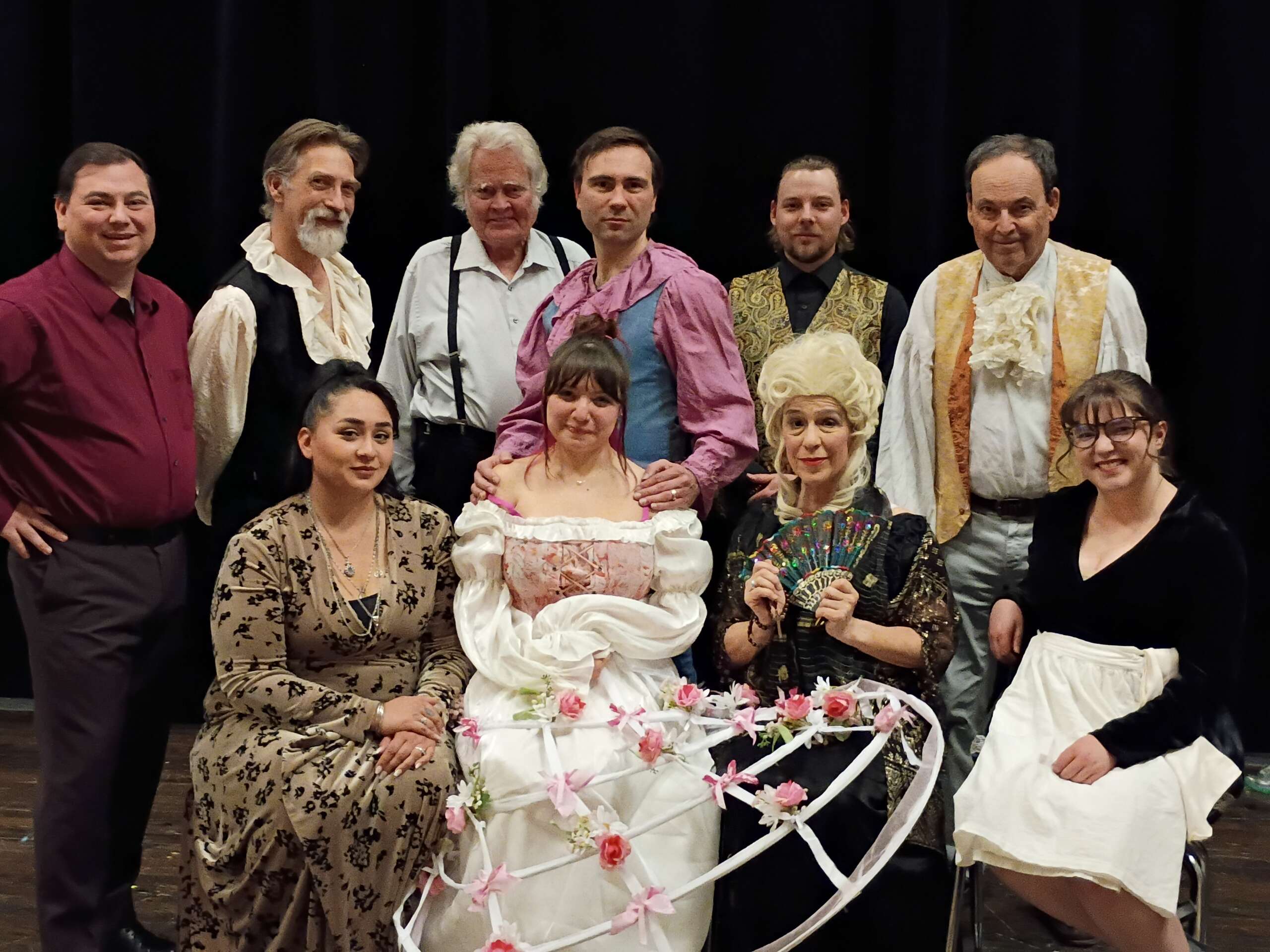
The cast of Upstart Crow’s Tartuffe. | Photo: Maru Garcia
Slow build until the comedy clicks
The early portion of the play spends significant time circling Tartuffe without actually bringing him onstage. Much of the first act is devoted to Orgon’s family arguing about him, with the lengthy opening scene involving Madame Pernelle (Susan Conceicao), Orgon’s mother, defending Tartuffe’s virtue while the rest of the household insists he is a fraud. That structure can build anticipation, but here it slows the momentum.
Conceicao drives the opening confrontation, but the scene moves slowly and some lines are difficult to understand due to her high-pitch vocal affectation. The same issue carries into Louis Clark’s Cleante, whose role is to articulate the difference between true faith and hypocrisy. His extended speeches explain the play’s ideas clearly, but they do not always generate dramatic tension, and the pacing dips as a result.
The energy shifts noticeably once Brittny Daboll’s Dorine takes charge. As the quick-witted maid who sees through Tartuffe from the start, she brings precision, agility and a sharp sense of timing. Her scenes with Brianna Meza-Sauzameda’s Mariane and Brandon Price’s Valère are highlights, particularly a delightfully exaggerated lovers’ quarrel that escalates into farce before Dorine snaps it back into place.
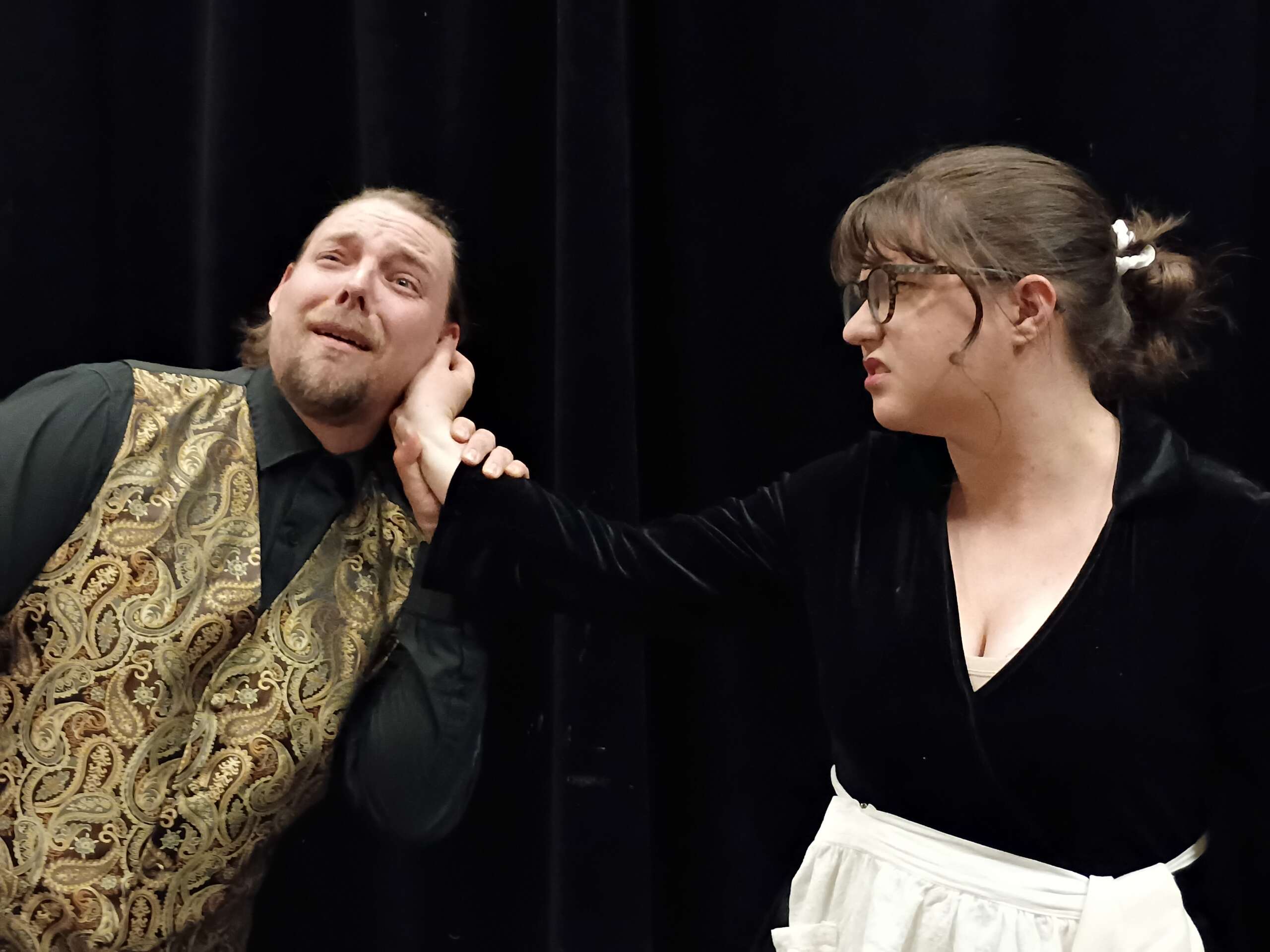
Jake Langlois and Brittny Daboll in Upstart Crow’s Tartuffe. | Photo: Maru Garcia
Meza-Sauzameda leans into Mariane’s emotional swings, toggling between melodrama and sincerity with impressive control. Price matches her energy, giving their relationship just enough volatility to make their reconciliation satisfying.
Chris Brown’s Orgon settles into a strong comic groove as a man so devoted to Tartuffe that he ignores everything happening in his own home. His repeated insistence on Tartuffe’s well-being, even when told that Elmire is ill, lands with increasing precision because Brown plays the sincerity rather than pushing for laughs.
Jordan Hull’s Elmire becomes central as the family shifts tactics from arguing with Orgon to proving Tartuffe’s deception. Tasked with exposing Tartuffe, she navigates the role’s discomfort and strategy with care, particularly in the extended seduction scenes that force her to outmaneuver him.
Mark Bradford’s Tartuffe emphasizes charm over menace, suggesting how easily Orgon could be taken in. It’s an effective approach, though the performance remains relatively even throughout; when Tartuffe’s scheme begins to collapse, a sharper shift in intensity might have heightened the payoff.
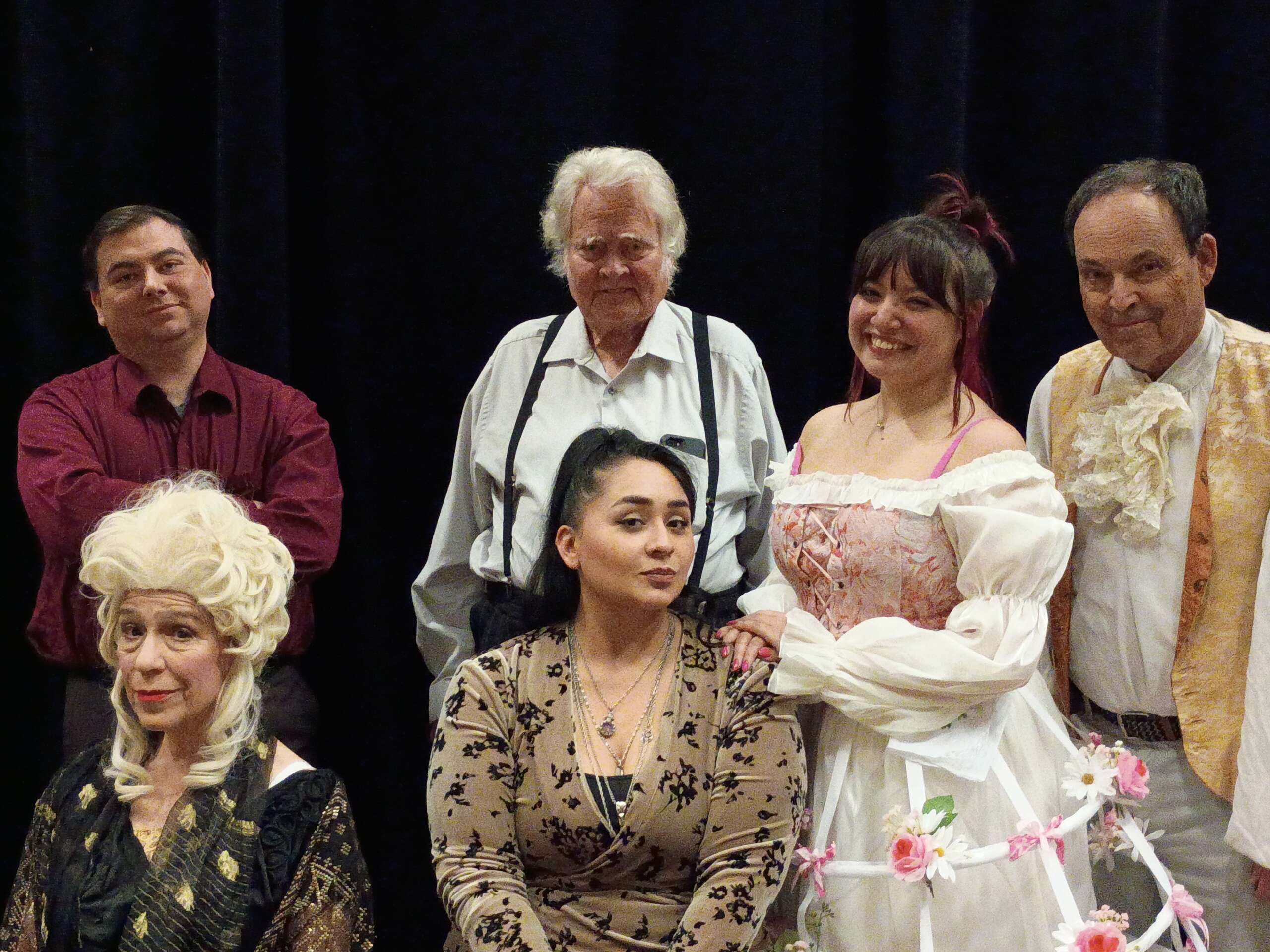
Some of the cast of Upstart Crow’s Tartuffe. | Photo: Maru Garcia
A clean staging with room to refine
Garcia keeps the staging simple, working with minimal scenic elements. The set consists of a few furniture pieces and a raised platform, with no defined backdrop, creating a flexible but visually sparse environment. That simplicity places more weight on staging choices, which do not always feel fully resolved.
In the key scene where Elmire draws Tartuffe into confessing his desires, Orgon hides under a table to overhear the exchange. Here, added bits of business, including repeated movement to and from a liquor cabinet, pull focus away from the tension that should be driving the moment. The same joke is repeated by several other characters throughout the second act, including Elmire and Dorine, with each iteration becoming more noticeable and less funny.
The costumes also lack a unifying logic, mixing elements that suggest different time periods without clearly establishing a cohesive world. While some of the individual pieces, such as Mariane’s eye-catching hooped dress, work well, a stronger visual framework could help define the production’s tone.
Even with those challenges, the second half benefits from clearer stakes and more direct action. Once the family shifts from arguing about Tartuffe to actively exposing him, the structure tightens and the humor lands more consistently.
Upstart Crow’s Tartuffe does not fully smooth out its rougher edges, particularly in its early pacing and visual cohesion. Still, once it reaches the heart of the play’s farce, it delivers enough sharp performances and well-timed comedy to remind you why Molière’s satire continues to resonate.

An award-winning Colorado arts and culture reporter originally from Mineola, Texas. Tresca is the chief theatre critic for OnStage Colorado and managing editor of OnScreen Colorado. He’s the editor of Bucket List Community News, a contributor to Denver Westword and Estes Valley Voice, a resident storyteller for the Bonfils-Stanton Foundation and the co-host of the OnStage Colorado Podcast.

Leave A Comment