
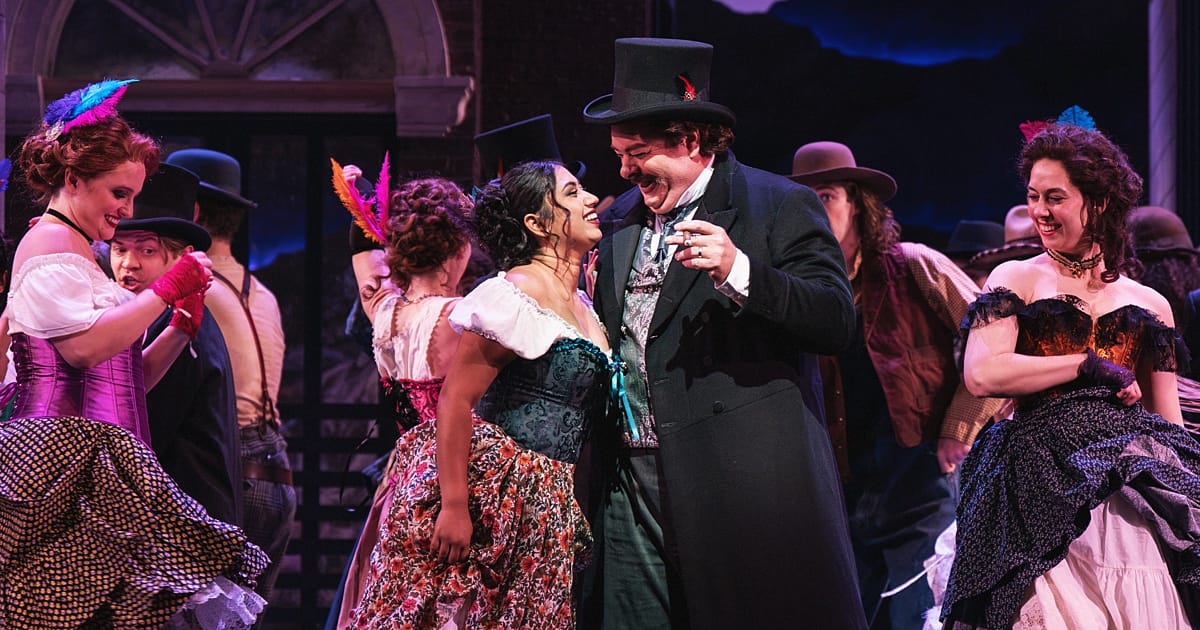
Douglas Moore’s telling of the Tabor saga returns to the house where it premiered in 1956.
Performing the opera The Ballad of Baby Doe is a 70-year-old tradition at Central City Opera. It’s repeated there every 10 years on the anniversary of its 1956 world premiere by the company and draws repeat audiences every time.
The opera is based on the life of Baby Doe Tabor, who led an existence of operatic proportions — first in Central City, then Leadville, later Denver and for a time in Washington, D.C., when her husband Horace Tabor became a U.S. senator.
Baby Doe’s story is classic rags-to-riches-to-rags. Raised in Oshkosh, Wisc., she and her first husband moved to Central City, where they fell on hard times. After divorcing, she moved to Leadville, where she soon met the much older silver-mining magnate Horace Tabor. They fell passionately in love and began a scandalous affair, marrying after Tabor divorced his loyal wife, Augusta. But the scandal followed them even after they left Leadville, generating national press coverage.
Both Baby Doe’s and Horace’s names continued to live in infamy thanks to the affair and the dramatic arc of their lives. Tabor lost his fortune in the silver crash of 1893, and both Tabors died in poverty, 36 years apart. Horace died in Baby Doe’s arms in 1899, while Baby Doe died in 1935, alone and frozen to death in her cabin at the site of Tabor’s Matchless Mine.
The story — or at least the names — of Baby Doe and Horace are legend in Colorado, but thanks to composer Douglas Moore’s opera, audiences at regional and national opera companies have learned about the Tabors and their dramatic tale.
Not surprisingly, The Ballad of Baby Doe gets great attention every time Central City performs it, thanks partly to its Colorado connections. One special gift is the historical significance of seeing it in the opera house where Baby Doe herself might have attended a show; another is the chance to visit — or have visited — some of the other sites in the opera.
One minor point about the slightly misleading title of the opera: Although the character of Baby Doe certainly has a significant place in this telling, Horace has the larger role. He’s in more scenes, and consequently his actions, more than Baby Doe’s, motivate more of the opera’s dramatic thrust. A friend of mine who has conducted the opera twice — including at New York City Opera — maintains that it should be called The Ballad of Horace Tabor. This may be going a little too far, but he has a point to my mind.
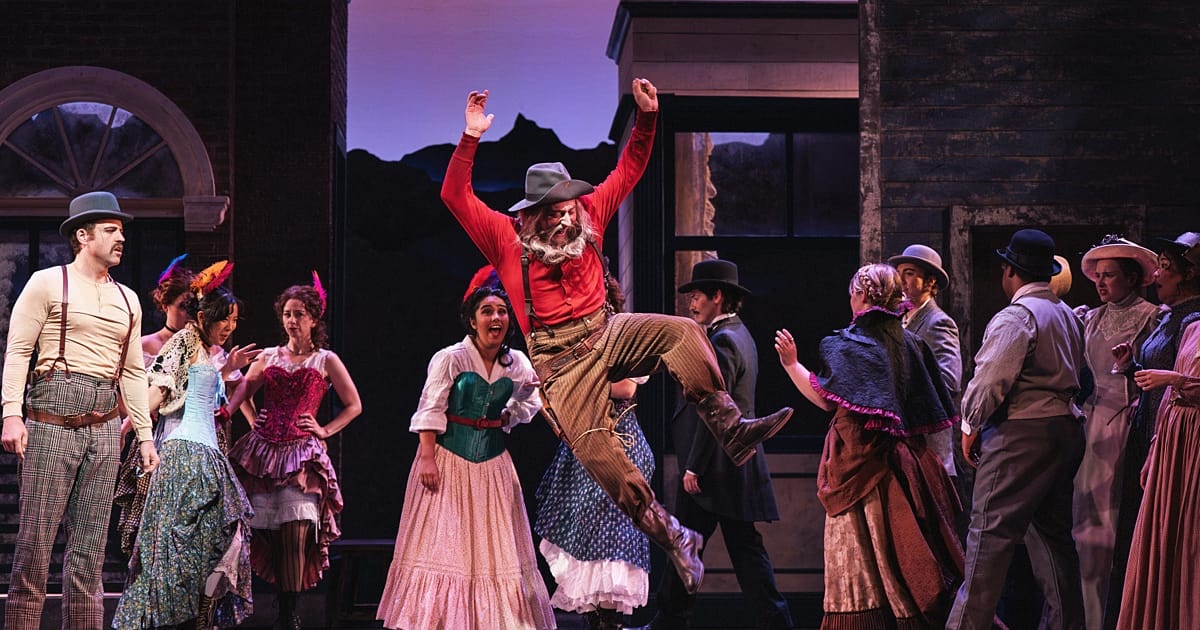
Photo: Amanda Tipton Photography
An opera on the cusp
One of the most noteworthy aspects of Ballad is that it appeared on the cusp of a new trend in contemporary American opera. Moore wrote it at a time when American operas were beginning to include elements of American musical theater (think Leonard Bernstein’s Candide, written in the same year as Ballad with the same librettist). Musical theater, meanwhile, would grow more operatic in the decades that followed (Stephen Sondheim’s A Little Night Music and Sweeney Todd). In fact, in seeing Ballad for the first time, I thought it felt, and was staged, much more like a Broadway production than a traditional, classical opera.
Ballad also feels influenced by the arioso style of classical opera. This is a conversational style — the start of the finale of the first act of Mozart’s The Magic Flute is a good example — that doesn’t use many arias. In Ballad there are fewer than 10 in this two-and-a-half-hour production, and the singers deliver the libretto in a natural, almost talking style that conveys deep emotional resonance.
For those who prefer operas with melodic music and flowing songs, Ballad can pose a bit of a challenge. To them, this opera may feel and sound more like a play in which the text, rather than the music, is the primary theatrical element. Instead of having the music provide the main dramatic thrust to the action, as is so often the case in classic opera, it sometimes seems as though that function is carried by the text.
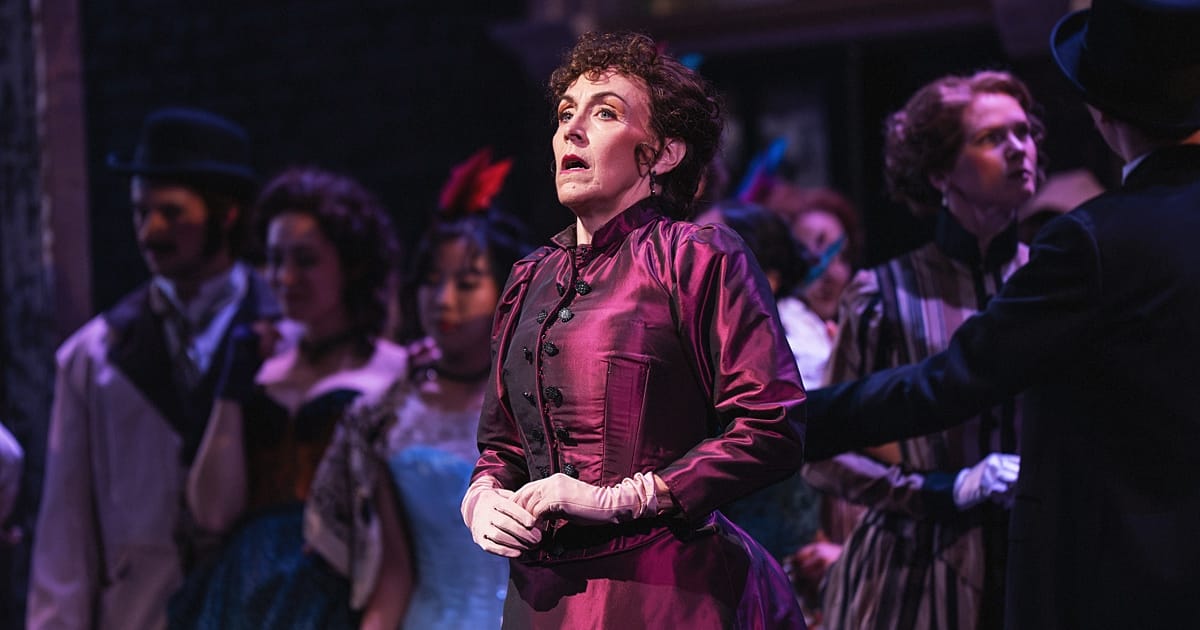
Photo: Amanda Tipton Photography
Voices rise to the occasion
Given these qualities of Ballad, Central City’s talented singers — starting with the superb soprano Virginia Mims as Baby Doe — are to be congratulated for mastering both the vocal and acting requirements of their respective roles. Mims is a talented actor, and her final aria, which closes the opera, is beautiful and deeply touching.
As Horace Tabor, baritone Weston Hurt reflects powerfully on his life in his memorable aria “Warm Is the Autumn Light.” Hurt uses his rich baritone to convincingly convey nostalgia for his previous life in Vermont and his newfound love for Baby Doe. As Tabor’s first wife Augusta, mezzo-soprano Emily Pulley brings gravitas and inner strength both to her solo arias and to her interactions with Baby Doe.
Director Cynthia Lawrence does her best moving the singers around on the Central City Opera House’s limited stage space. Unlike this year’s large sets for Figaro, these — by Lawrence E. Moten III — make the stage look cramped. With 11 different scenes, Ballad requires many set changes. Moten’s solution is to use relatively small set pieces in generally dark colors. Although Moten easily takes us through the diverse locations in the story, his design reduces the scale of the narrative rather than opening our eyes, hearts and minds to the unfolding drama.
On the other hand, Lynly A. Saunders’ elaborate costumes are perfect for the era and locations in the opera, from the rough attire of the miners to the sparkling, elegant ball gowns of the ladies of Washington, D.C. Especially noteworthy is Baby Doe’s wedding dress; it’s an almost identical match for the one she actually wore, thanks to the cooperation of Denver’s Center for Colorado Women’s History, which owns the original.
Under the direction of conductor Aaron Breid, the company orchestra beautifully plays the few arias and the instrumental interludes between scene and act changes. The company chorus under director Tyler Tucker is uniformly strong and energetic in the variety of roles its members are called upon to enact.
Despite the excellent singing, The Ballad of Baby Doe doesn’t catch fire for me. Whether it’s the lack of physical chemistry between Mims and Hurt, the lack of melody in most of the music or the fact that the libretto doesn’t fully capture the ultimate tragedy of Baby Doe and Horace — this opera leaves me wanting more.
This is obviously a minority view, at least at Central City Opera. The applause was thunderous at the conclusion of Saturday night’s performance. And it’s clear the company’s administration is justifiably proud not only of its history with The Ballad of Baby Doe but also that it has led to productions large and small at a number of other companies.
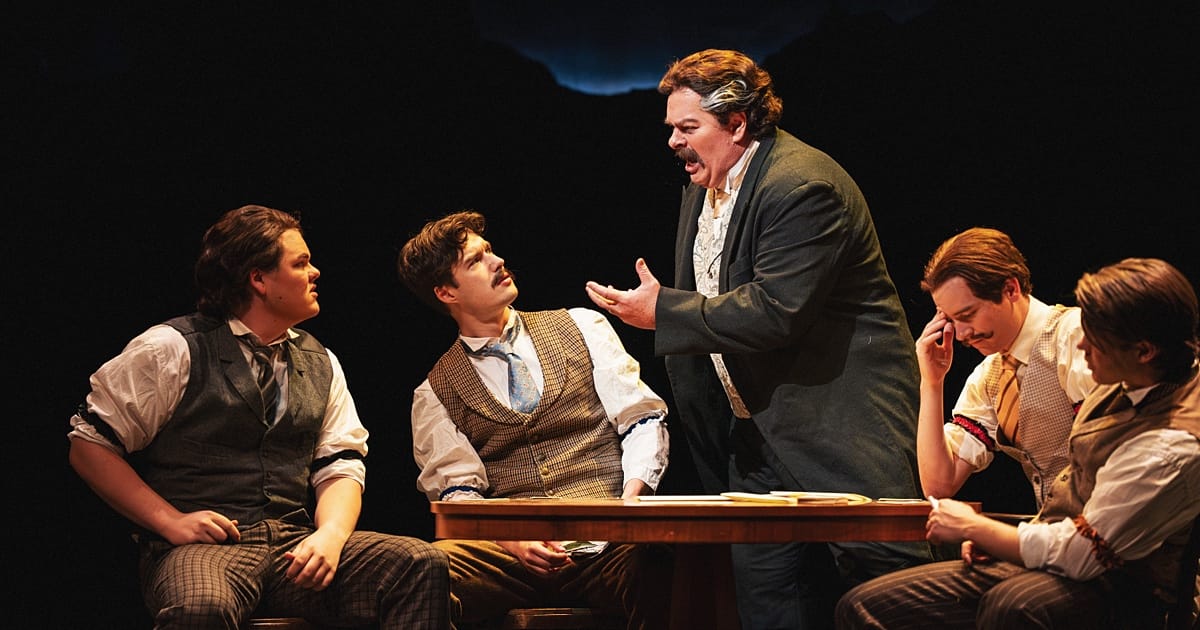
Photo: Amanda Tipton Photography

Alice Kaderlan is a long-time dance and theatre critic and general arts writer. She has written for newspapers and online news sites in Seattle, Washington D.C., Pittsburgh and other cities for more than 40 years. She has also appeared on various public radio stations including WAMU-FM in D.C. and KUOW in Seattle and covered arts for NPR. She currently lives and writes in Denver.

Leave A Comment