
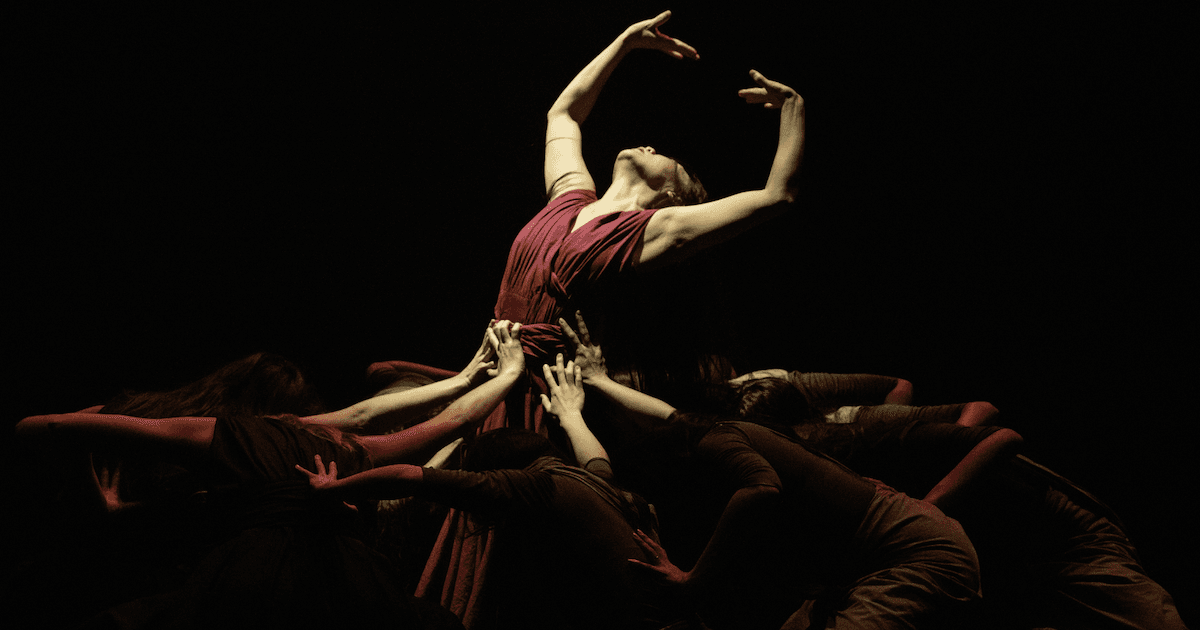
The ritual power of Akram Khan Company’s final touring production does not need to be fully decoded to be felt.
About midway through Thikra: Night of Remembering, an elder whips a woman in white around by her hair at first and then seems to take control over her body. The younger dancer has no choice but to follow. Though she resists and buckles, she always gets pulled back into the ritual’s orbit. That’s also how the piece feels to watch: You may not understand all its rules, but it drags you into its strange ceremonial world anyway.
That sensation of being tugged along before you fully understand what’s going on gives Akram Khan Company’s return to Jacob’s Pillow its unsettling force. Performed at the Ted Shawn Theatre just days after its U.S. premiere at Lincoln Center, Thikra is the company’s final touring production after 25 years, and Khan does not go gently into that good night. He has made a challenging work rooted in collective memory.
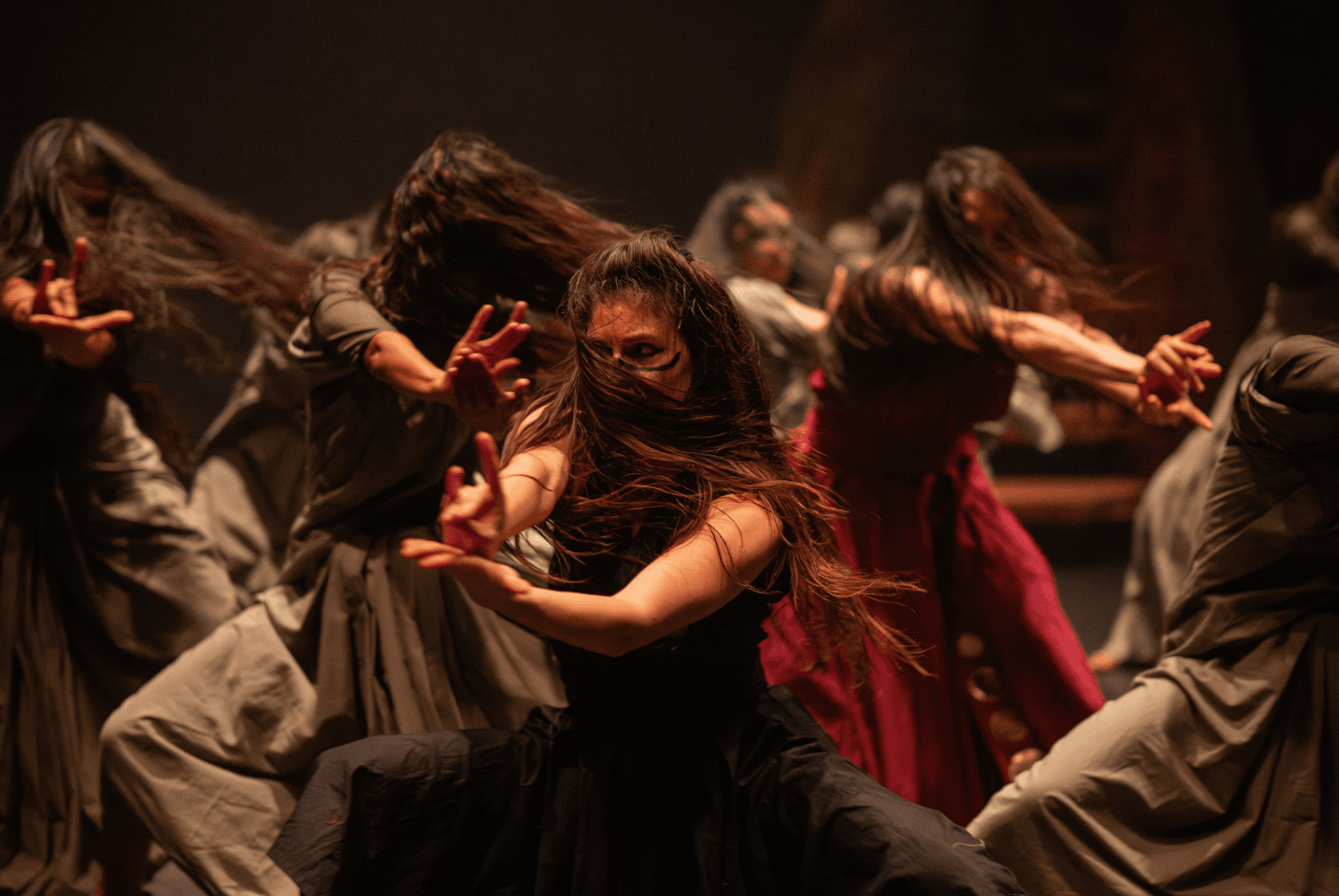
The Thikra: Night of Remembering dance ensemble. | Photo: Akram Khan Company

Feminine power drives the evening
Choreographed and directed by British Bangladeshi choreographer Akram Khan, with visual direction, scenography and costume design by Saudi Arabian contemporary artist Manal AlDowayan, the 65-minute work imagines a tribe of women gathering for one night to awaken the spirits of those who came before them. The set is a rocky, cave-like landscape that gives off both ancient-ritual and sci-fi-future energy, as if the dancers have entered a ceremony that has happened before and will happen again.
The story is there, but it does not move in a straight line. A woman in white serves as a vessel and sacrifice. An older woman in black presides. Other women’s roles, denoted by different colors for principals and grey for the group, are revealed through movement: who pulls, yields, observes and is absorbed back into the group. The power in this world is female and communal, as they are the figures who we see pass down memory.
Khan’s choreography is most compelling when it stages the push-pull between the individual and the group. Early on, the ten women onstage move together in forceful unison, their feet striking the floor against a score of dense drumming and voices that seem to rise out of the desert. Their hair flies outward as they turn, drop and rebound, making the body feel bigger than itself. The movement is thrilling because it looks like belonging. Then, as the woman in white tries to break away, belonging starts to look like control.
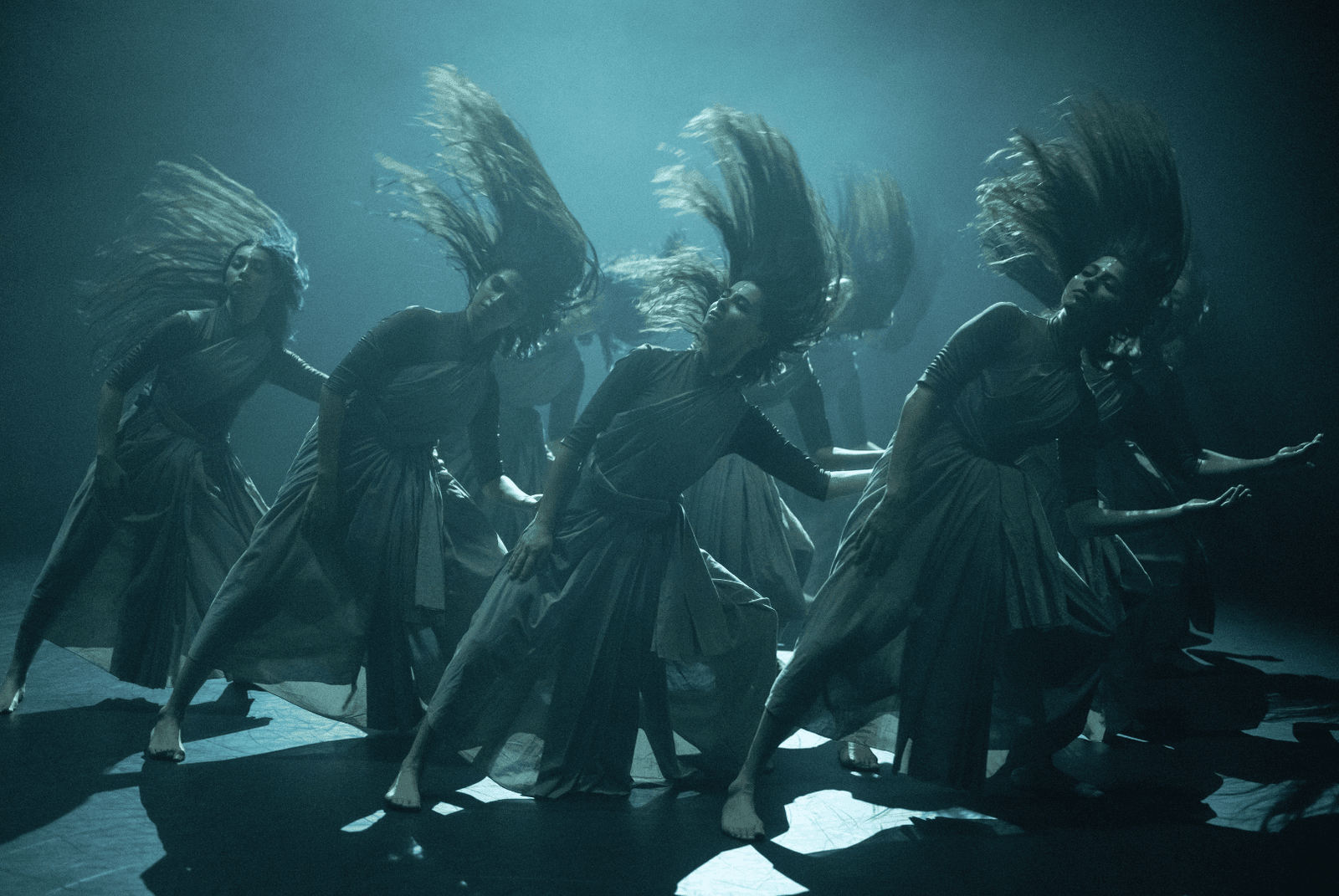
The ensemble whips their hair in Thikra: Night of Remembering. | Photo: Akram Khan Company
Hair becomes one of the production’s most unforgettable collaborators. It swishes, lashes, hides, binds and draws each turn through the air. At one point, several women move their hands through the woman in white’s hair as if braiding knowledge into her. The image begins as inheritance and turns into capture. That is the show in miniature: care and coercion braided together so tightly they become hard to separate.
The act of watching also becomes part of the ritual. During some of the most controlling passages, figures sit or stand nearby, observing without joining in. Khan makes spectatorship impossible to ignore. The women onstage watch a body submit to the ritual, while we sit in the dark watching them watch. The piece asks whether witnessing is neutral, or whether outsiders help give the ritual its power.
The score is loud enough that the earplugs offered before the performance are worth accepting. Percussion pulses through the room, especially when the group tightens around a dancer who seems to want out. The quieter opening, full of natural sounds, eases the audience into the landscape before the ritual takes over. The lighting does similar work, letting bodies emerge slowly before cutting them into silhouettes that look possessed and sculptural.
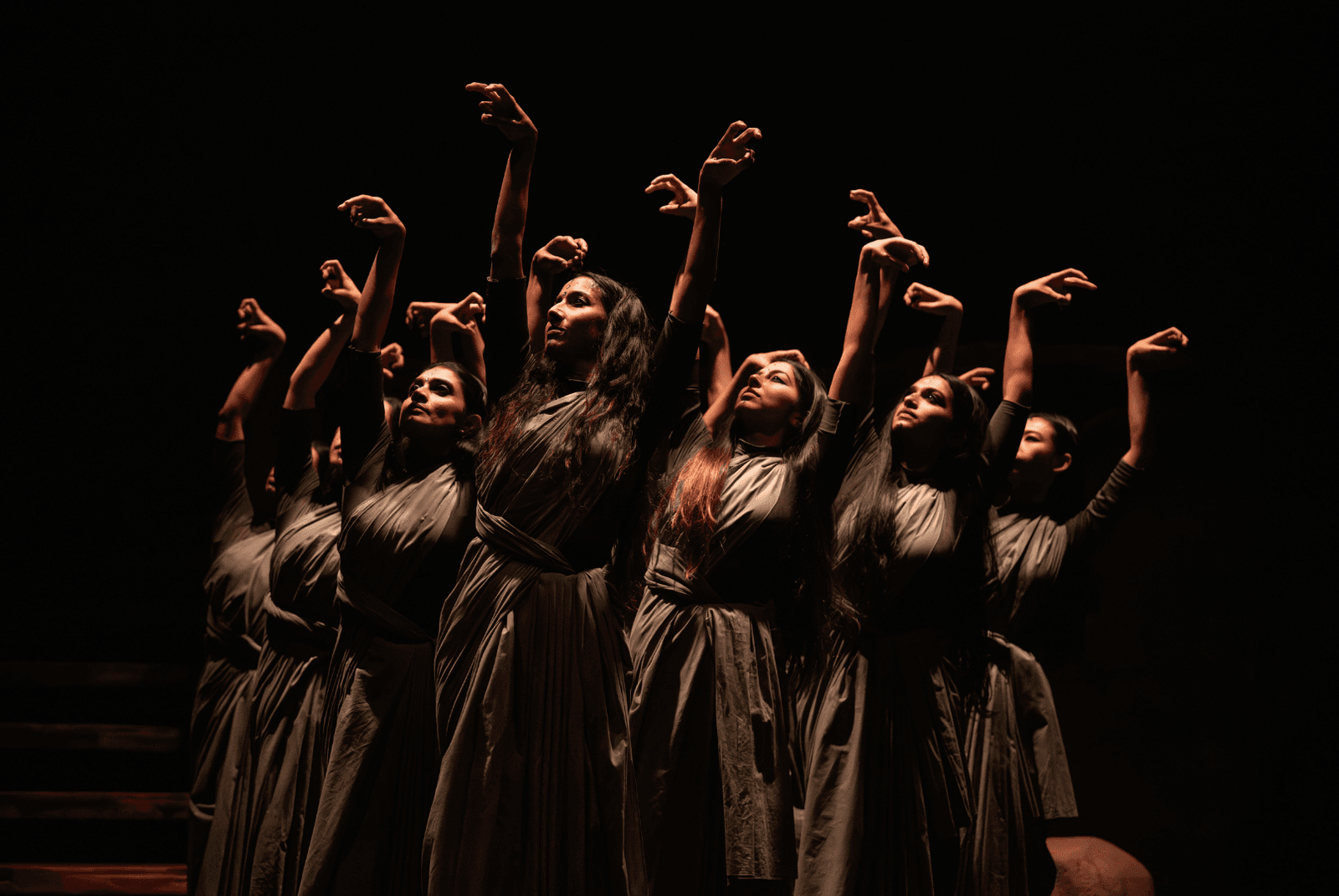
The dancers of Thikra: Night of Remembering. | Photo: Akram Khan Company
Final tour worth traveling for — if you’re a dance superfan
If you’re wondering why I am reviewing an East Coast dance production, this review is being written while I am at the National Critics Institute, where I’ve been honing my criticism of theater, dance, film and food since July 1. Though Thikra is currently being performed in Massachusetts, it is heading west this fall, with its closest stop for Colorado readers at the Lensic Performing Arts Center in Santa Fe, New Mexico, on Oct. 14. The tour will also make California stops at UCLA, UC Santa Barbara and the Mondavi Center. For serious dance fans, it is worth considering the trip.
Thikra may not satisfy attendees looking for a straightforward story. At the performance I attended, one audience member left loudly asking, “What the fuck did I just watch?” Another told me as we shuffled together toward the exit that she “needed a drink after that.” Honestly, both reactions made sense. The work is dense, heady and opaque.
But the piece is never dull because it keeps moving with the force of the ritual it depicts. Even when the symbols keep shifting, the dancers pull you forward: a head snaps back, two bodies rise by pressing their backs together, an ensemble suddenly moves like one organism. Thikra does not need to be fully decoded to be felt. Its power lies in the surrender it demands, the same surrender asked of the woman in white as she is pulled, released and pulled back again.

A Colorado-based arts reporter originally from Mineola, Texas, who writes about the changing world of theater and culture, with a focus on the financial realities of art production, emerging forms and arts leadership. He’s the Managing Editor of Bucket List Community News, a contributor to Denver Westword and Estes Valley Voice, resident storyteller for the Bonfils-Stanton Foundation and co-host of the OnStage Colorado Podcast. A member of the American Association of Theatre Critics, he holds an MBA and an MA in Theatre & Performance Studies from CU Boulder.

Leave A Comment