
Localized production of Working is a heartfelt hometown tribute to Creede hampered by laborious scene changes.
Before Creede Repertory Theatre’s Working: A Musical, I ate dinner at Kip’s Grill on Main Street, watching servers weave between tables with tacos, drinks and checks. Little did I know I was getting a preview of what would appear onstage later that evening.
During “It’s an Art,” Sydney Wilson’s exuberant Creede Hotel waitress revels in the theatricality of service while celebrating the skill required to keep a dining room moving. After her solo, performers representing servers from Kip’s, Tommyknocker Tavern, Old Miners Inn and Big Doug’s BBQ join her, extending that pride across restaurants throughout Creede. Each familiar name draws another burst of laughter and applause from an audience delighted to see the places and people that structure their daily lives swept onto the stage.
That overlap between daily life and theatrical representation animates director Jenni Harbour’s production. Adapted by Nina Faso and Stephen Schwartz from Studs Terkel’s oral-history book, with a localized format conceived by Daniel C. Levine, Working assembles monologues and songs about teachers, miners, servers, truckers and caregivers. Creede Rep adds interviews with local workers, transforming the musical into a sincere love letter to the people who keep this mountain town running.

Those local voices give the production its purpose and strongest material. They cannot solve the musical’s structural problem: A plotless sequence of interviews and songs rarely builds enough momentum to sustain 95 minutes. Harbour stages the material with muscular invention, yet her emphasis on visible labor also produces transitions that make the evening feel longer than its runtime.

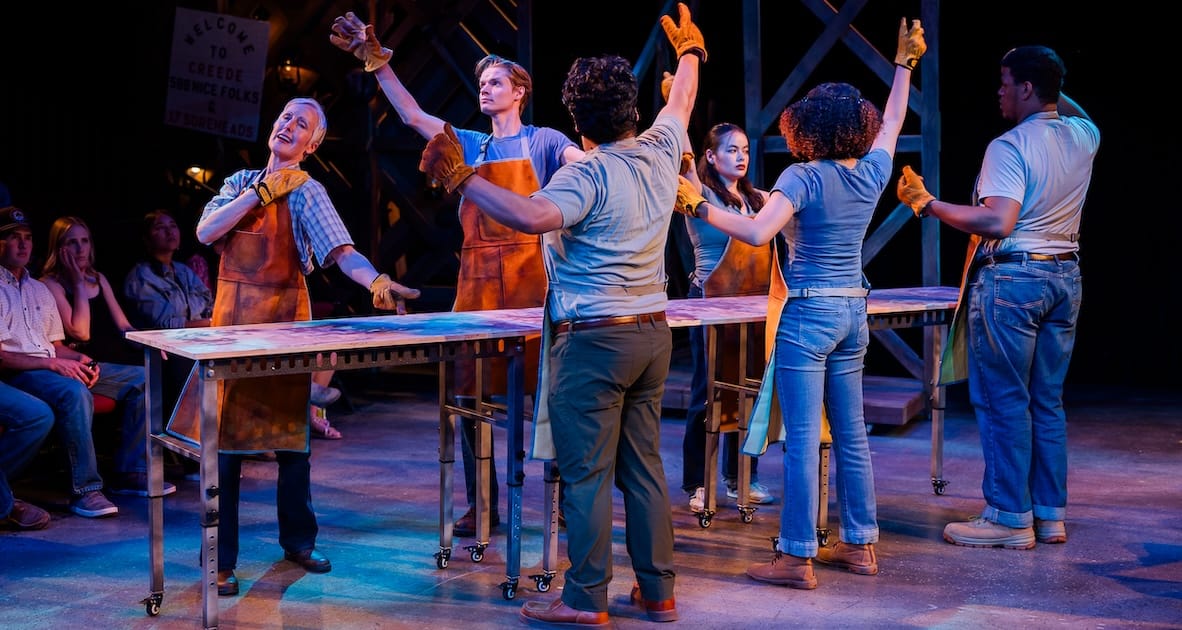
The cast of Working: A Musical at Creede Repertory Theatre. | Photo: Brooke Ashlee Photography
Small town sees itself onstage
The Creede-specific passages deepen a musical that otherwise settles for generalized tributes to honest work. Clark Destin Jones plays a miner remembering when the town was “alive,” carrying the grief of someone who has outlasted the industry that once defined his community. Jones holds the man’s emotion behind a hardened posture, allowing brief cracks to suggest stories he cannot bring himself to tell.
Other interviews reveal how labor shapes identity in a place where everyone lives in close proximity. McKinley Carter portrays a fourth-grade teacher responsible for seven students, capturing the intimacy of that classroom and the anxiety surrounding technology. A Parks and Recreation employee describes how caregiving, pregnancy and circumstance redirected an earlier ambition toward public service. A firefighter explains that he left policing for work that offered a clearer sense of purpose and a more tangible way to help people.
That specificity also gives Harbour room to be playful. In a number anchored by Julian Ibarra as a delivery worker at The Yard, Brenda Perez de Tejada’s choreography turns takeout bags into the building blocks of a miniature musical-theatre spectacle. Performers assemble a bicycle from their bodies and the bags, then sweep them through synchronized arcs modeled on the feather-fan choreography of a classical revue. The sequence celebrates the ingenuity and exertion involved in service work without making its subject the butt of the joke.
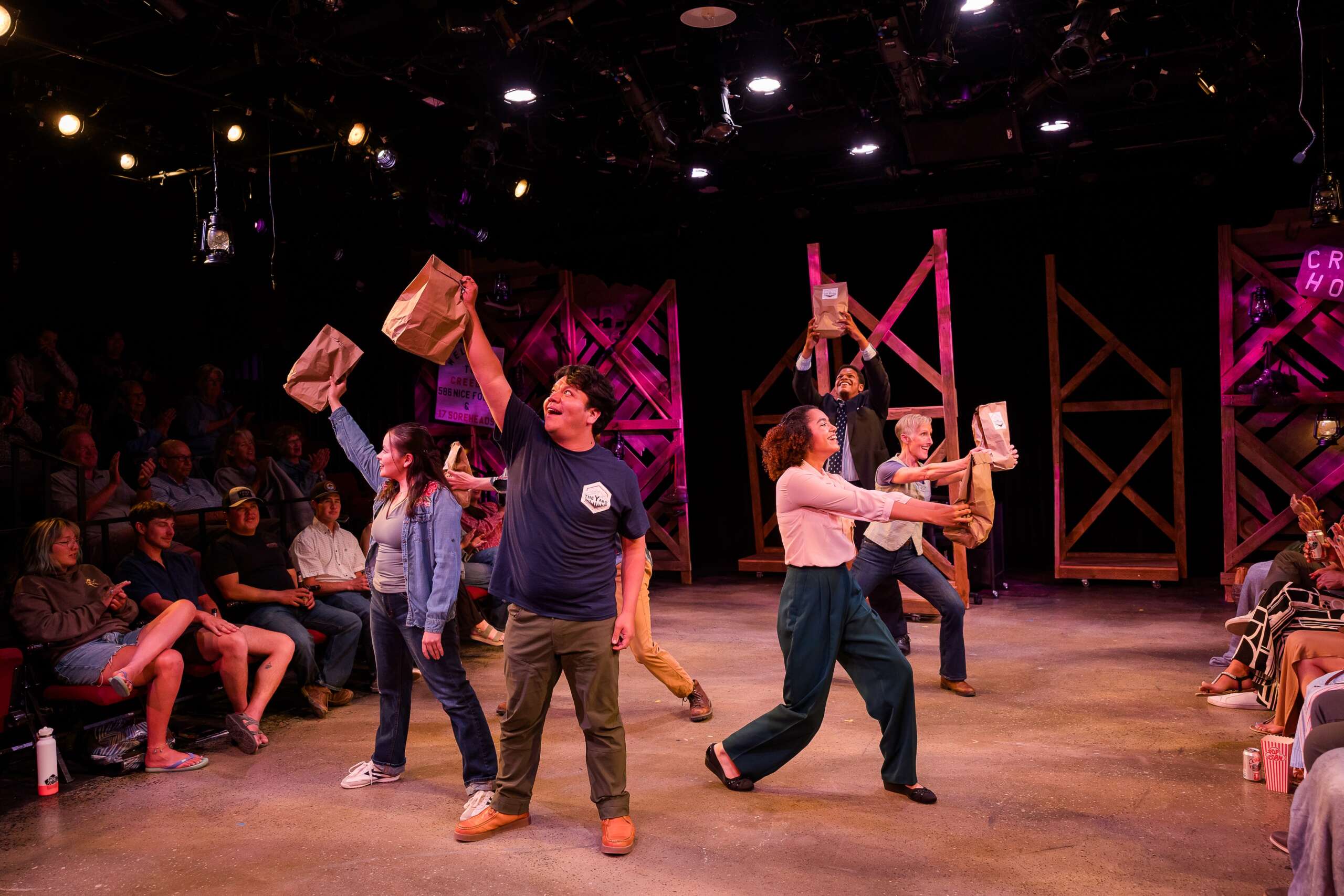
The cast of Working: A Musical at Creede Repertory Theatre. | Photo: Brooke Ashlee Photography
Labor on display
Jon Young’s scenic design gives Harbour a flexible vocabulary. Three slatted wooden units roll together into buildings, separate into seats or become vehicles propelled by the ensemble. Upstage, a Creede Hotel sign hangs beside another that declares, “Welcome to Creede: 586 nice folks + 17 soreheads.” Downstage, near the audience at the thrust’s center, music director Alec Steinhorn underscores many of the interviews at the piano.
Before the opening speech, the stage management team audibly calls the theatre to order while performers push scenery into place, foregrounding the physical effort behind the production. The framing is smart, but Harbour returns to it too often. Long, deliberate scene changes repeatedly halt the flow rather than smoothly transitioning from one worker’s testimony to the next.
The six-person ensemble — Wilson, Maya Tanaka Allwardt, Carter, Jones, Ibarra and Richaun Stewart — rarely stops moving as its members cycle through costumes, instruments and occupations. The characterizations, however, vary in definition. Stewart creates the clearest contrasts, sharply shifting from an officious money manager to an older laborer reminiscing about his younger self. Jones finds guarded emotion in the miner, but his trucker and firefighter remain in much the same solemn register.
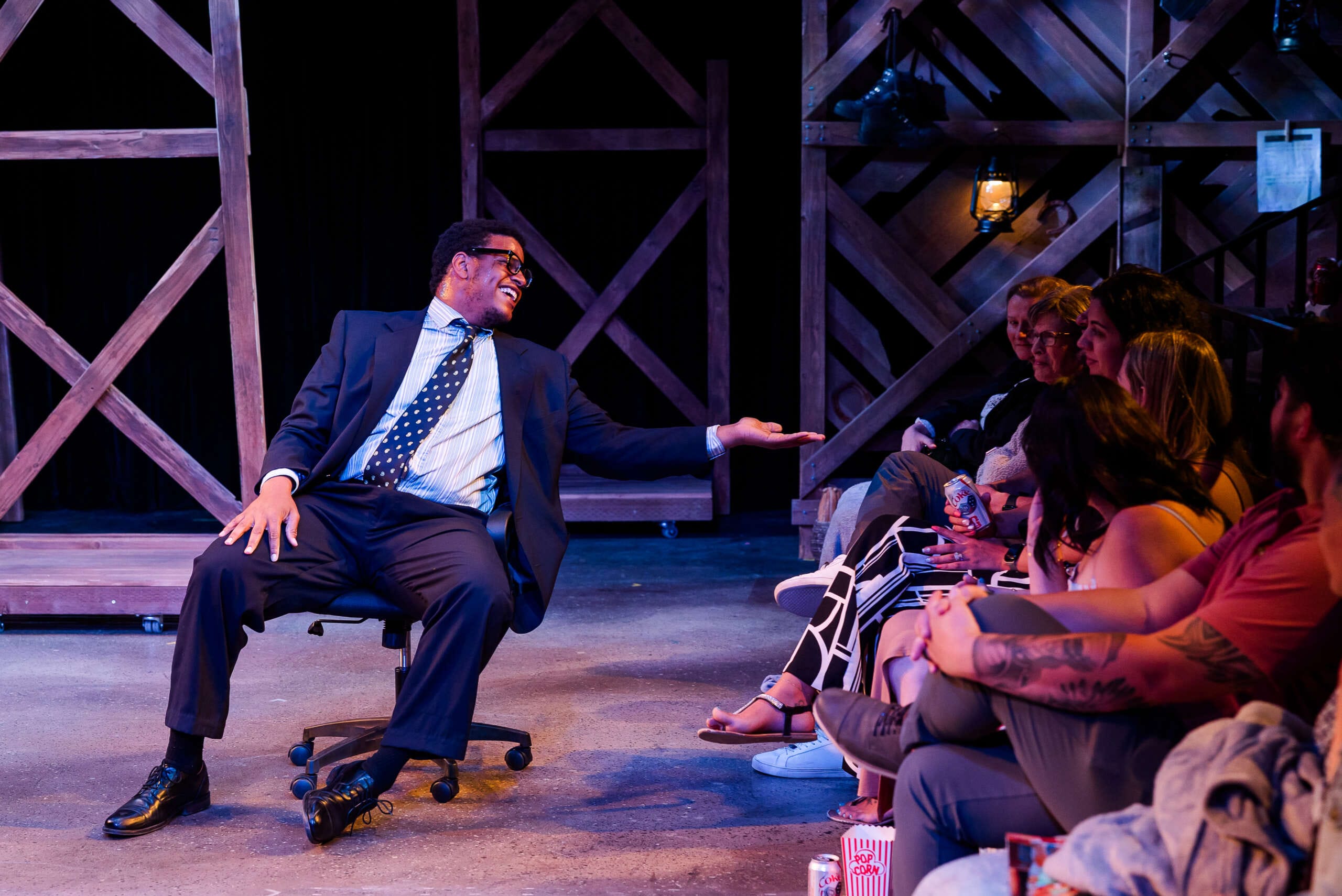
Richaun Stewart in Working: A Musical at Creede Repertory Theatre. | Photo: Brooke Ashlee Photography
The local interviews offer ample material for greater variation, with each worker bringing a particular history, temperament and relationship to labor. More contrast in rhythm, posture and vocal energy would help their testimonies register as separate lives rather than entries in the same anthology. Even if some of those people blend together in performance, the sum of their stories gives the evening a purpose beyond dramatic momentum.
Creede’s artists, patrons and workers cross paths in the same public spaces, leaving little distance between the stories onstage and the community outside. Working does not always turn that intimacy into compelling theatre, but it returns audiences to Main Street more attentive to the people whose labor holds the community together.

An award-winning Colorado arts and culture reporter originally from Mineola, Texas. Tresca is the chief theatre critic for OnStage Colorado and managing editor of OnScreen Colorado. He’s the editor of Bucket List Community News, a contributor to Denver Westword and Estes Valley Voice, a resident storyteller for the Bonfils-Stanton Foundation and the co-host of the OnStage Colorado Podcast.

Leave A Comment