
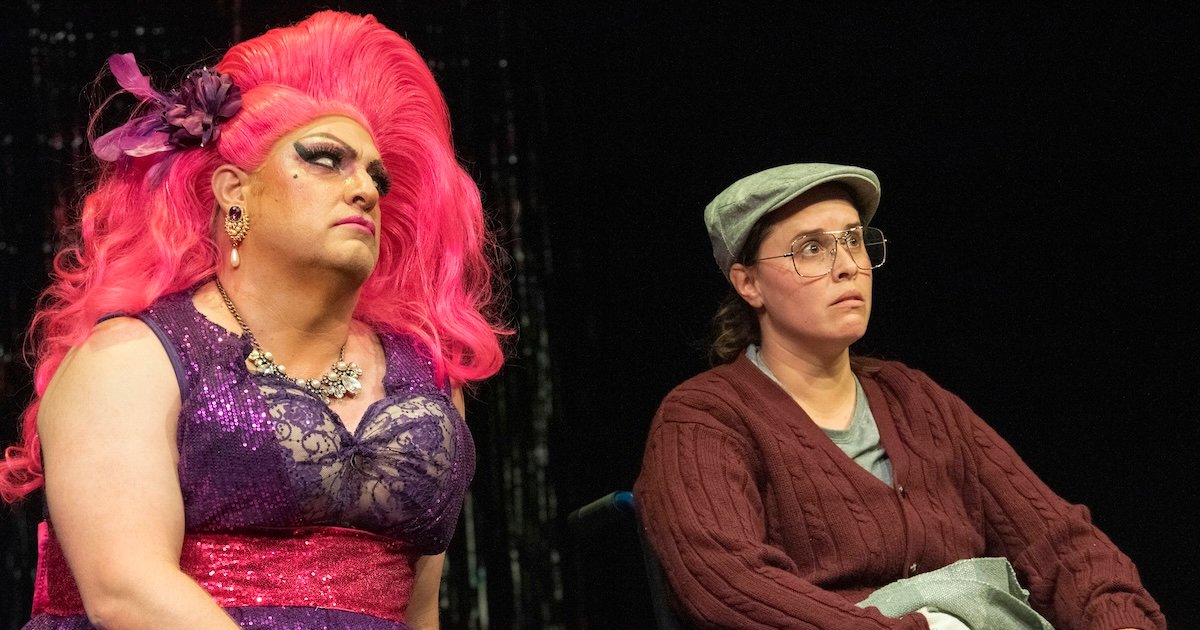
Ian August’s manic new time-loop comedy is packed with sharp jokes, though its human relationships remain underdeveloped.
What do you get when you throw the plot of Groundhog Day, two drag performances and a woman named Nancy into a blender?
Drag Queen Magic, apparently.
Ian August’s new comedy, produced by Local Theater Company at the Dairy Arts Center as part of the National New Play Network Rolling World Premiere, is packed with jokes out the wazoo. Many are clever rather than laugh-out-loud funny, but director M. Graham Smith keeps the evening moving with enough madcap energy to make its roughly 105 minutes an enjoyable ride.
The problem is that the farce comes at the expense of the emotional payoff the play clearly wants.
August’s full title — D.Q.M. or Drag Queen Magic or The Torturous Purgatorial Experience of One Miss Letta Celebrate — suggests that Letta Celebrate, played by Steven J. Burge, will be our central character. Instead, the play centers Nancy (Cicely Galm), a lovable basket case enduring the worst day of her life.
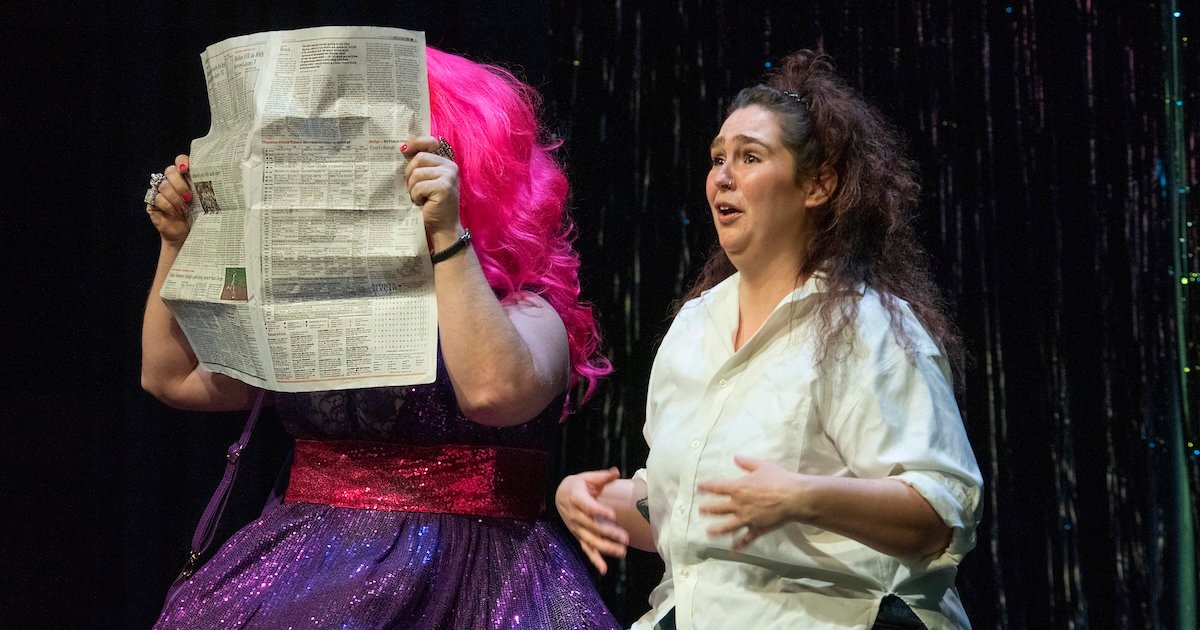
Steven J. Burge as Letta and Cicely Galm as Nancy in Local Theater Company’s production of Drag Queen Magic. | Photo: Michael Ensminger Photography
She has been dumped, fired from her perfume job and evicted when she encounters Letta at a bus stop and comes to believe this drag queen is the answer to her problems. After another encounter at a grocery store, Nancy follows Letta to an eight-year-old’s birthday party and promptly chokes to death on cake.
Comedy on repeat
That establishes the play’s central device. Nancy keeps dying in increasingly ridiculous ways, the day resets and Letta, unlike Nancy, remembers everything. When the two meet again, Nancy makes her expectations explicit: “You’re here to save me.”
That line captures the dynamic August spends the rest of the play complicating.
Along the way, August finds plenty of comedy, often in pithy one-liners. Nancy keeps her cash “in a pouch in my cheek.” Letta calls Nancy “greener than Glenn Close at a Meryl Streep Oscar party.”
Yet the production’s most reliable comic weapon is Mary Quinn as Everyone Else.
Quinn cycles through Nancy’s landlord, ex-boyfriend, boss, an existential child, an intense chef and several others. Her quick-change work is arguably the show’s most impressive drag act, particularly when she carries on extended conversations with herself.
Whenever Quinn is onstage, the production is firing on all cylinders.
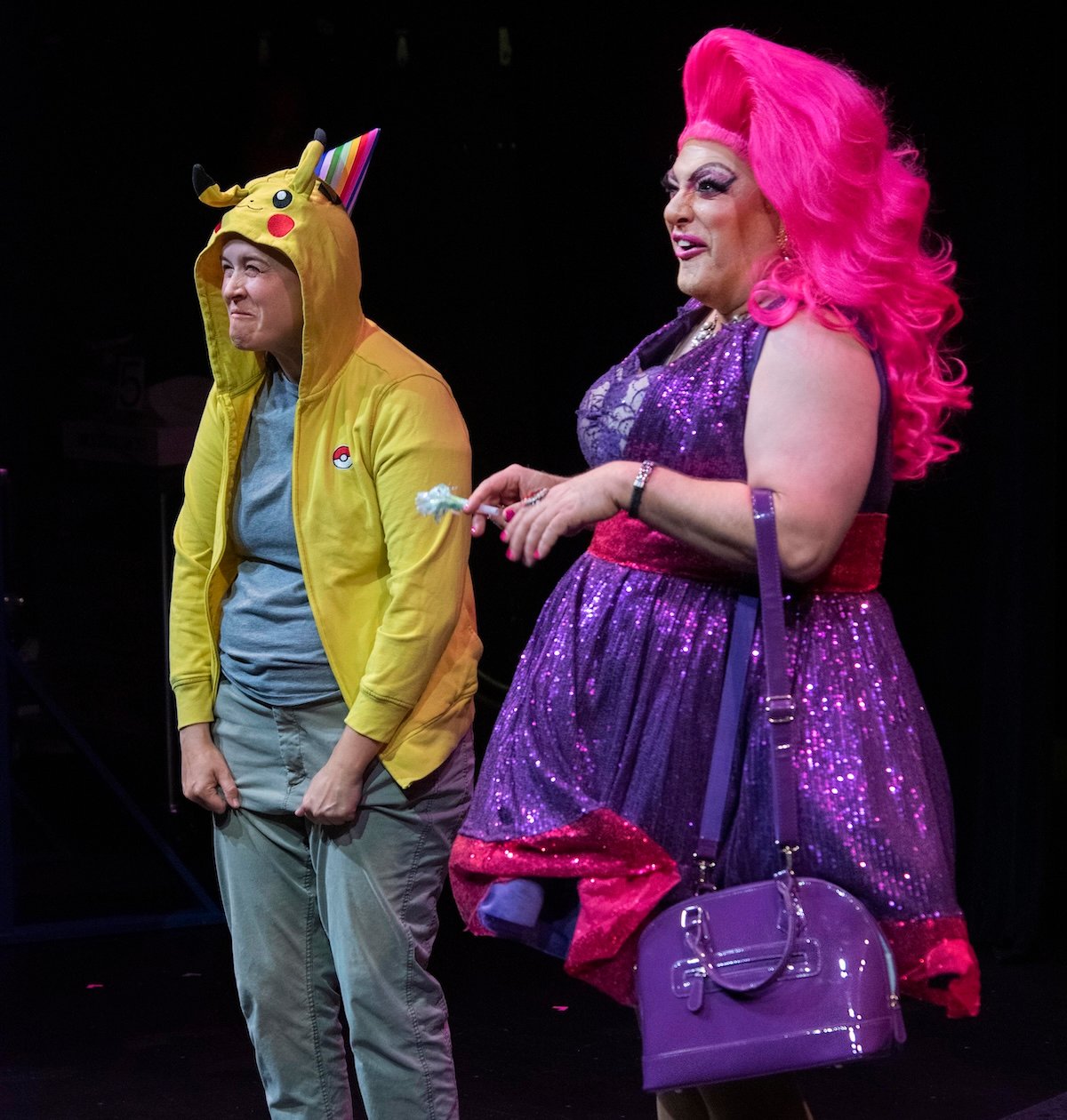
Mary Quinn and Steven J. Burge in Local Theater Company’s production of Drag Queen Magic. | Photo: Michael Ensminger Photography
By contrast, the developing relationship between Nancy and Letta remains surprisingly surface level. Nancy desperately latches onto Letta, while Letta spends much of the evening being understandably dismissive before gradually agreeing to help her.
August eventually arrives at the play’s most interesting idea. Letta tells Nancy that “to them, I’m the devil; to you, I’m an angel. But in real life, I’m sort of a minor demon with prescription painkillers and an ass that won’t quit.”
That observation raises compelling questions about the ways queer people, and particularly drag performers, can be demonized on one side and romanticized into magical symbols on the other. August eventually confronts those ideas directly but largely saves that reckoning for the final stretch.
By then, the play has spent so much time racing toward the next bit that the emotional revelation has more explaining to do than the relationship itself has prepared us to feel.
Where the magic stops
The script’s emphasis on farce shapes the lead performances in different ways. Burge is an undeniably skilled comic actor who nails Letta’s catty line readings. He is even better when the script finally gives him space to drop the defenses. Late in the play, when Letta removes her wig and explains who she is beyond Nancy’s assumptions, Burge finds a vulnerability that suddenly opens the character up. It is one of the production’s strongest moments.
Nancy presents a different issue. Galm keeps her in such a heightened, frazzled state that the character rarely feels fully grounded. Some of that is built into August’s writing, which repeatedly makes Nancy the setup or punchline, but Smith’s direction pushes the performance further toward caricature. Galm often seems to be playing the joke rather than living through Nancy’s predicament. More genuine desperation underneath the chaos could make both the comedy and her eventual friendship with Letta land harder.
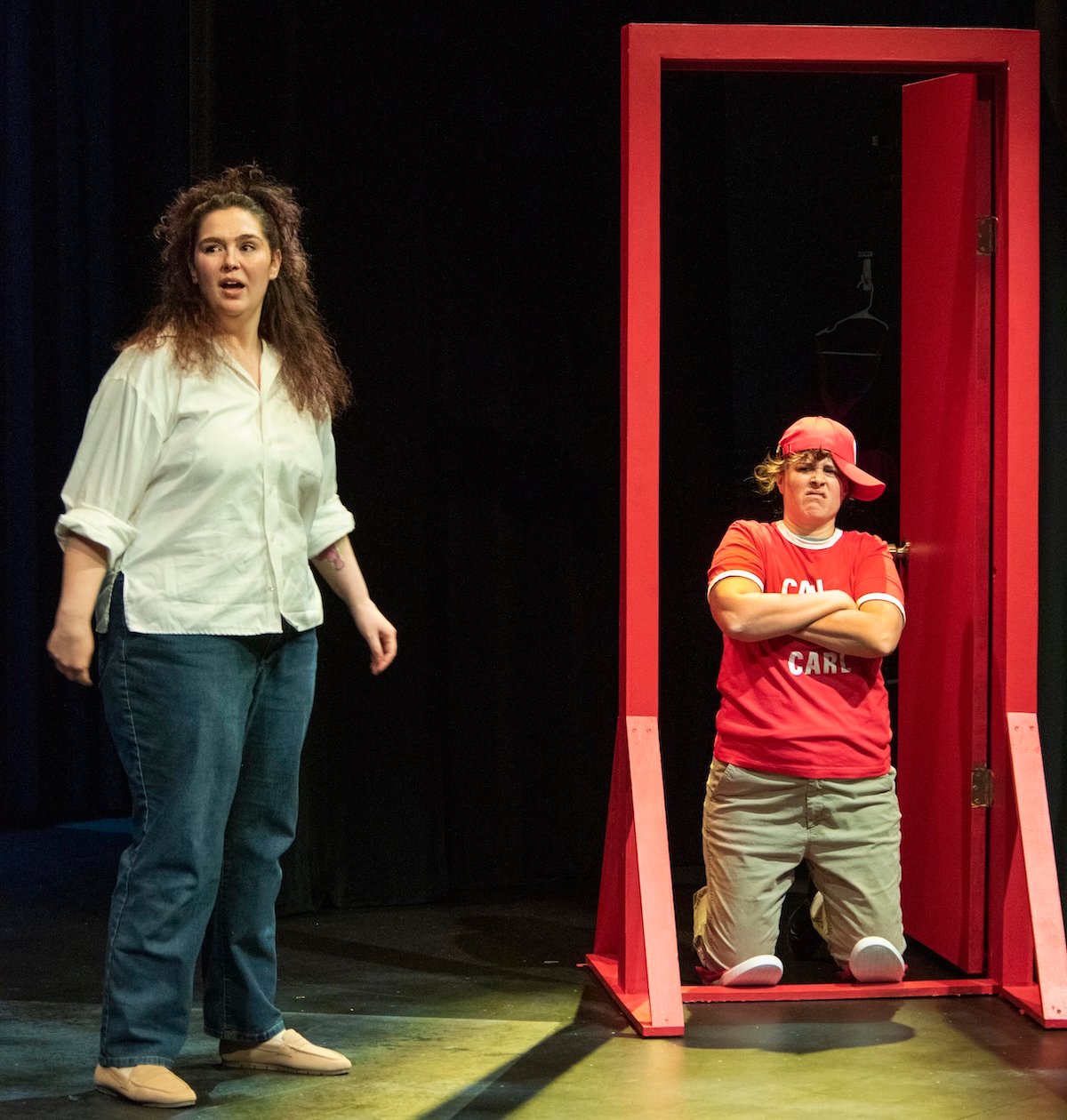
Cicely Galm and Mary Quinn in Local Theater Company’s production of Drag Queen Magic. | Photo: Michael Ensminger Photography
Smith’s production otherwise moves fluidly across Maya Linke’s spare scenic design, centered on a bench, shimmering curtain and illuminated overhead square that helps visualize the time-loop resets. Brett Maughan’s lighting and Alex Billman’s sound reinforce the cartoon logic without overcomplicating it.
Drag Queen Magic has the jokes. What this world premiere needs now is a little more humanity between them.


An award-winning Colorado arts and culture reporter originally from Mineola, Texas. Tresca is the chief theatre critic for OnStage Colorado and managing editor of OnScreen Colorado. He’s the editor of Bucket List Community News, a contributor to Denver Westword and Estes Valley Voice, a resident storyteller for the Bonfils-Stanton Foundation and the co-host of the OnStage Colorado Podcast.

Leave A Comment