
CSF reopens Boulder’s Mary Rippon with sharp performances, lush design and a few pacing bumps.
It’s alive! After two years of extensive renovations, the Mary Rippon Outdoor Theatre and the surrounding Hellems Arts and Sciences building have reopened, and on a perfect June evening in Boulder, it was difficult not to feel a special pleasure in returning to Shakespeare under the stars.
The bones of the beloved outdoor space remain familiar, though the experience around it has been noticeably polished. The seating has been slightly improved and the previously creaky Hellems Building has been renovated with a sleeker lobby, a permanent cafe and a gift shop. Overall, the operation feels more sophisticated while still exuding the breezy charm of a summer night on the CU Boulder campus.
For its first production back in the Rippon, the Colorado Shakespeare Festival has chosen Twelfth Night, one of Shakespeare’s great comedies of music, mistaken identity, grief, cross-dressed courtship and drunken chaos. It is a smart pick for the occasion. The play has enough romance to float through a warm evening, enough foolery to fill the outdoor space and enough melancholy to remind us that most of Shakespeare’s happiest endings arrive with bruises.
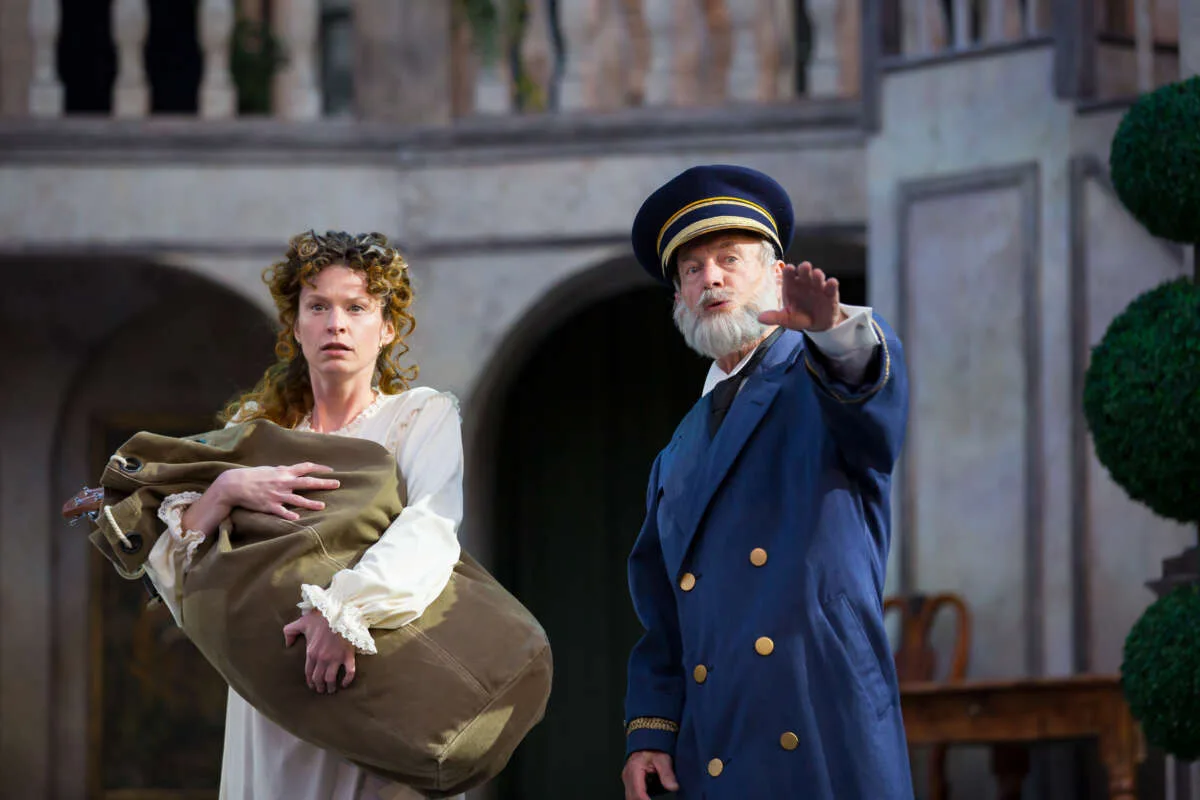
Meg Rodgers (Viola) and Sam Sandoe (Sea Captain) in Twelfth Night. | Photo: Jennifer Koskinen
A handsome world that’s slow to start
The plot revolves around twins Viola (Meg Rodgers) and Sebastian (Kenny Fedorko), who are separated in a shipwreck. Believing her brother is dead, Viola disguises herself as a young man named Cesario and joins the service of Duke Orsino (Brandon Carter), who is hopelessly in love with the Countess Olivia (Nisi Sturgis). Olivia, meanwhile, is mourning her own brother and wants nothing to do with romance — until she meets Cesario and promptly falls for him.
Viola then finds herself trapped in a comic tangle: she loves Orsino, Orsino loves Olivia and Olivia loves the disguised Viola. Around them swirl a collection of servants, fools, drunkards and schemers whose pranks and misunderstandings make the confusion even worse before everything finally sorts itself out.
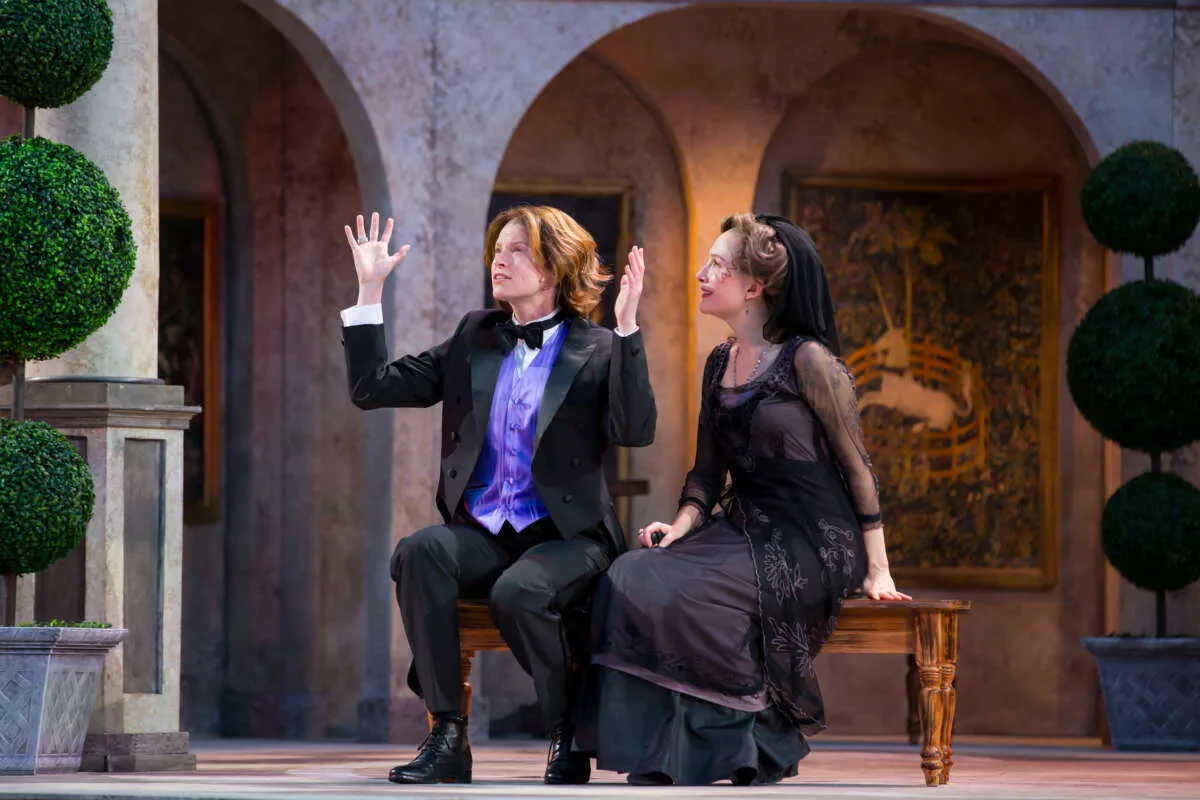
Meg Rodgers (Viola/Cesario) and Nisi Sturgis (Olivia) in Twelfth Night. | Photo: Jennifer Koskinen
Directed by Kevin Rich, this Twelfth Night imagines Illyria with an early-20th-century, upstairs-downstairs sensibility. Meghan Anderson Doyle’s costumes do a great deal of storytelling, making class legible before anyone opens their mouth. For example, Orsino lounges in a floral robe with the dramatic sensitivity of a man who has never had to prepare his own breakfast, whereas Malvolio’s (Brik Berkes) stiff butler attire tells you everything you need to know about the character.
Rich begins with an added wordless funeral for Olivia’s brother, then stages the shipwreck that separates Viola and Sebastian. In concept, the choice makes sense. Twelfth Night is full of mourning that the text mostly reports rather than shows, and the sight of Olivia grieving helps ground the comedy in real loss. In practice, the sequence slows the evening before it has found its pulse. Shakespeare gives the play one of the great openings in Orsino’s “If music be the food of love, play on,” and delaying that entrance blunts its force.
That is especially frustrating because Carter’s Orsino is a delight from the start. Carter plays him as a gloriously self-involved romantic. His melancholy has flair, and his attraction to Cesario has a fizzy, homoerotic charge. In one especially funny scene, Orsino places himself between Cesario’s legs while listening to music, turning courtly longing into something much more physically ridiculous and revealing.
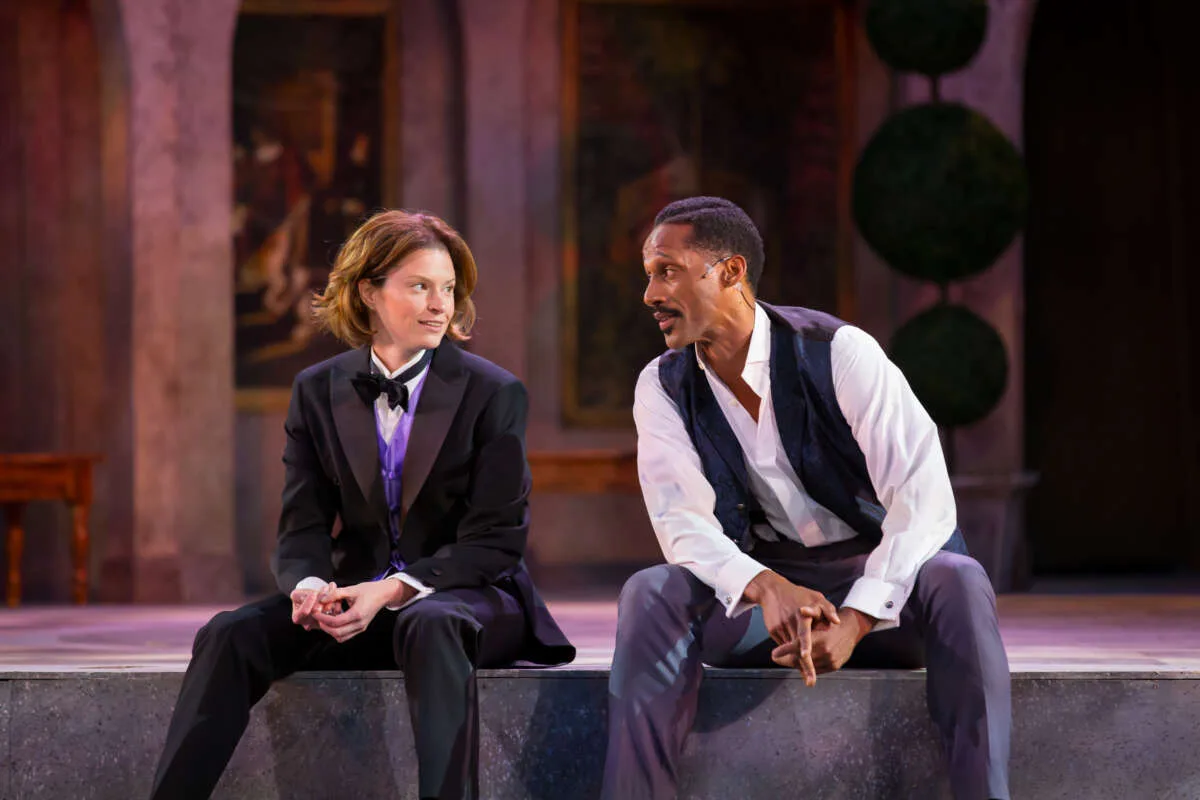
Meg Rodgers (Viola/Cesario) and Brandon Carter (Orsino) in Twelfth Night. | Photo: Jennifer Koskinen
Wooing, drinking and bad ideas
Rodgers gives the production its emotional center as Viola. She begins in grief before blossoming into a quick, assured Cesario who appears both liberated and threatened by the disguise. Rodgers is especially strong opposite Sturgis’ Olivia, whose attraction to Cesario builds with delicious comic precision. Their wooing scenes are among the evening’s best, with Olivia practically inventing reasons for the messenger to stay while Viola tries to escape a romantic triangle she did not mean to create.
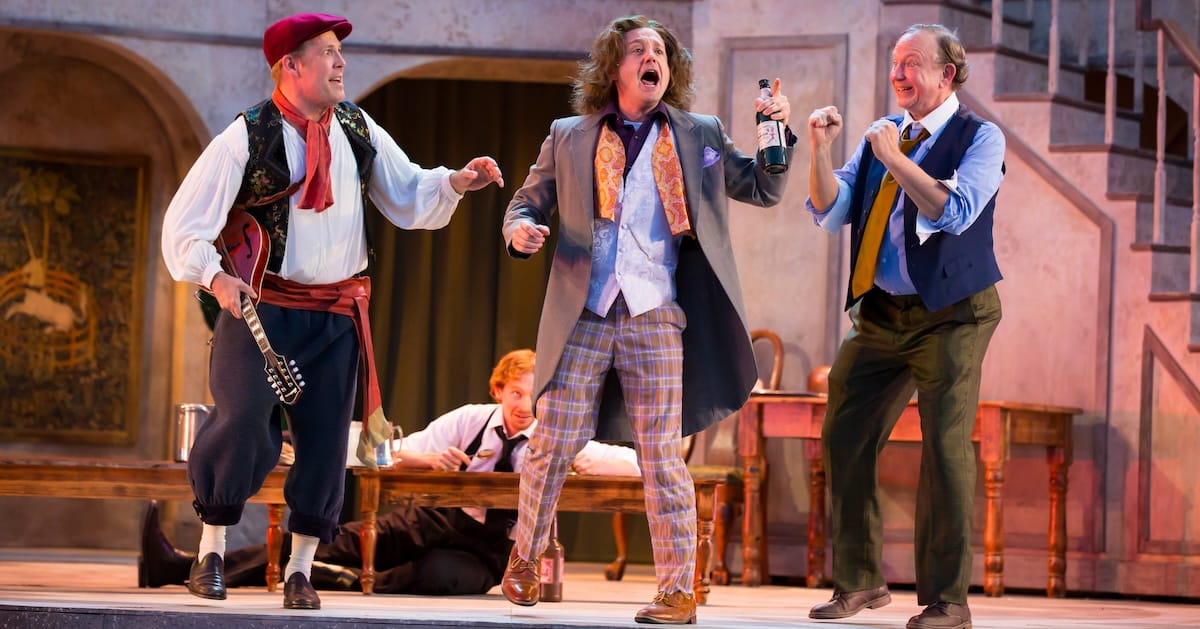
The chief source of comic energy is Schneck’s Sir Toby Belch, who enters as if alcohol has been hidden in every shrub for his personal convenience. Indeed, in his first scene, it appears that every shrub does! Schneck finds the pleasure in Toby’s appetite without sanding down the character’s cruelty. His Toby is outgoing, charming and a little dangerous. His late turn against Sir Andrew Aguecheek lands with surprising force, revealing the ugliness beneath the revelry.
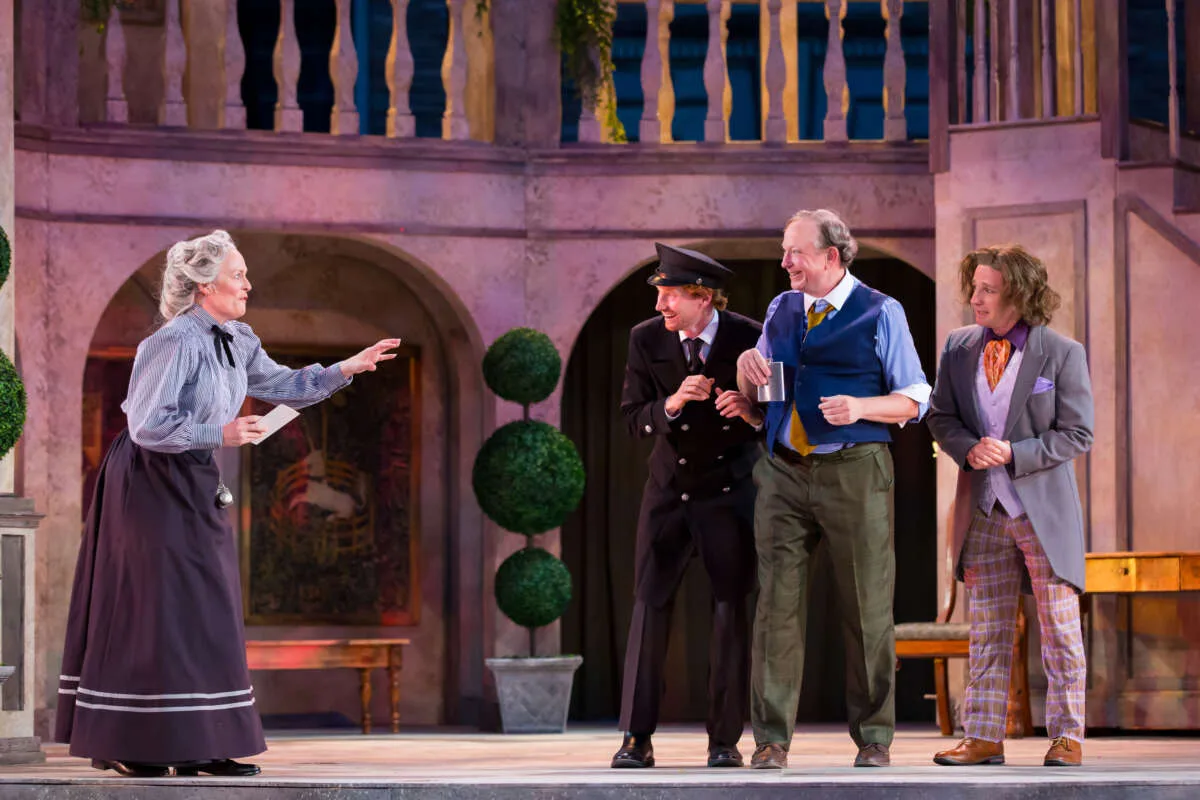
Tara Falk (Maria), Nate Cushing (Fabian), Matthew Schneck (Toby) and Sean Scrutchins (Sir Andrew) in Twelfth Night. | Photo: Jennifer Koskinen
Sean Scrutchins earns big laughs as Sir Andrew, with his floppy hair, foolish confidence and unsteady swagger. His physical comedy is sharp, especially in the botched duel with Cesario, but Scrutchins’ drunken dialect occasionally muddies the language. Tara Falk also makes a strong impression as Maria, the servant who sees through nearly everyone and helps engineer the revenge on Malvolio. Falk and Schneck have an easy comic chemistry that makes Maria and Toby’s eventual pairing feel like the natural outcome of mutually enabled bad behavior.
As Malvolio, Brik Berkes is wonderfully rigid. He employs fussy turns, pained contempt and an inflated sense of moral superiority to turn restraint into a comic weapon. His discovery of the forged letter is beautifully calibrated, as he allows the possibility of Olivia’s love to crack open his self-serious exterior. When he appears smiling in yellow stockings, the production hits one of the play’s most reliable comic highs.
The trouble comes later, when the prank curdles into confinement and psychological abuse. Some productions lean into Malvolio’s suffering, forcing the audience to sit with the cruelty of a comedy that denies him a happy ending. Others heighten the absurdity until the darkness becomes part of the joke. Rich’s production mostly plays the scene as written, which leaves it stranded between laughter and discomfort.
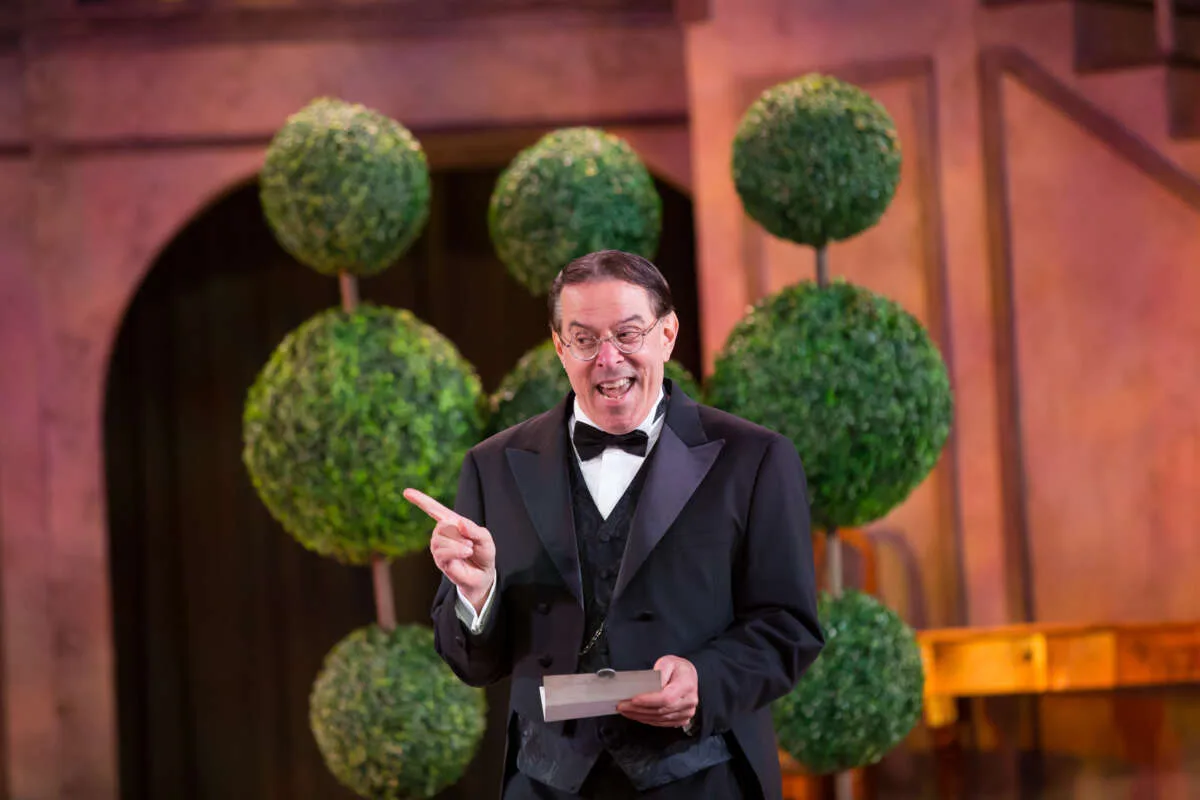
Brik Berkes as Malvolio in Twelfth Night. | Photo: Jennifer Koskinen
Jordan Coughtry’s Feste, disguised as Sir Topas, attacks the scene with a broad comic voice, yet the audience on Sunday did not seem especially eager to laugh at Malvolio’s torment. The revenge motive also feels underdeveloped. Malvolio’s earlier insult to Feste should sting enough to echo later; here, it barely registers, making Feste’s participation in the cruelty feel more convenient than personal.
Coughtry fares better musically than dramatically. As composer and performer, he helps give the evening its shifting atmosphere. The music begins with a more classical texture, then grows looser and more contemporary as Illyria spins out of control. His second-act opener, built around a playful hat gag with the audience, is one of his funniest moments. In the first act, though, some of Feste’s lines get swallowed, and his jokes do not always land.
Topsy-turvy world
Visually, the production is lovely. Matthew S. Crane’s scenic design provides a two-level playground with platforms, entrances and movable shrubs that the comic ensemble uses to strong effect. The set gives the actors room to hide, spy, lounge and erupt. Shannon McKinney’s lighting makes excellent use of the renovated outdoor theater’s new capabilities, adding rain effects, color and atmosphere as daylight fades. Max Silverman’s sound design supports the world without overwhelming it, and the final song has a wistful beauty as the cast drifts through vignettes of what comes next.
That ending is more effective than the added opening. As couples form and plans for marriage take shape, the production lets us glimpse the aftermath: Toby and Maria dancing together, Olivia and Sebastian settling into their strange sudden match, Orsino and Viola moving toward whatever their future may be, and Andrew quietly leaving Illyria with his suitcase. It is a graceful reminder that comedy resolves some lives while pushing others out the door.
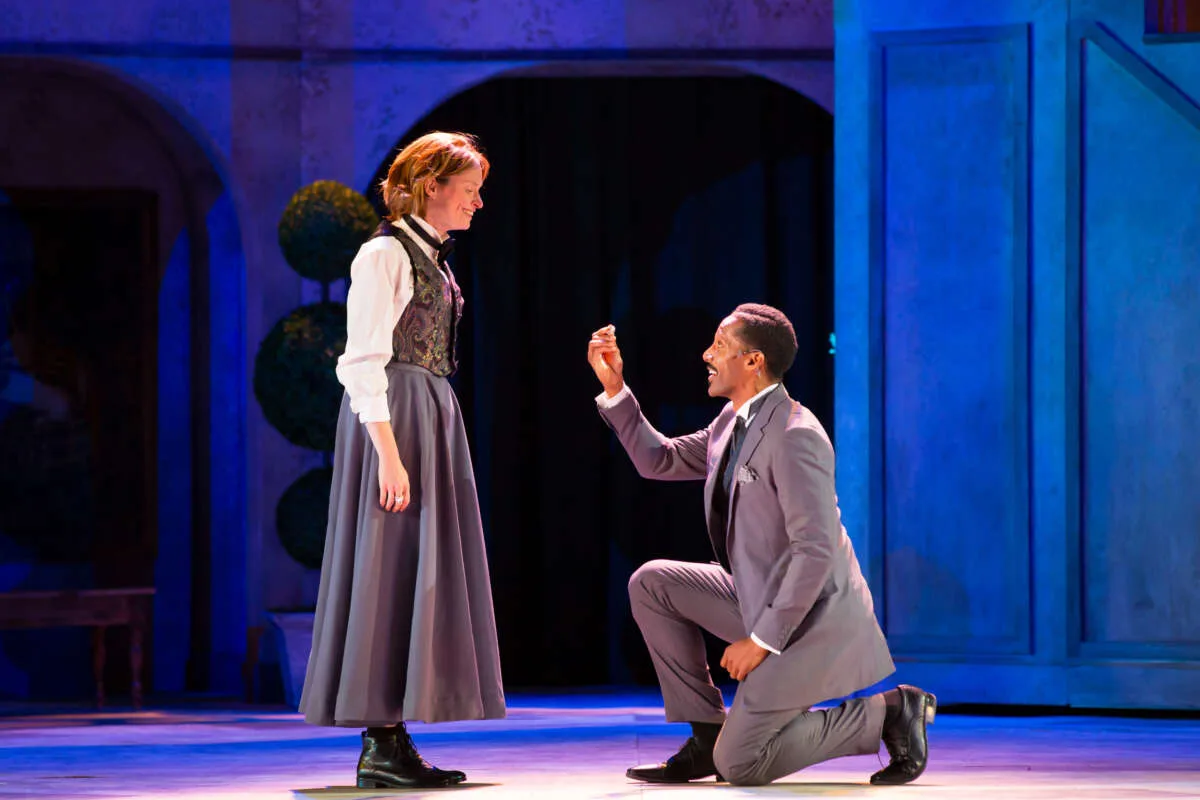
Meg Rodgers (Viola) and Brandon Carter (Orsino) in Twelfth Night. | Photo: Jennifer Koskinen
This Twelfth Night runs a bit long at two hours and 45 minutes with intermission, and the pacing occasionally sags when the production lingers over material that could move with more snap. Even so, there is plenty to enjoy: Rodgers’ nimble Viola, Carter’s flamboyantly lovesick Orsino, Sturgis’ radiant Olivia, Schneck’s sharp-edged Toby, Berkes’ finely drawn Malvolio, the handsome design and the pleasure of seeing CSF back outside where summer Shakespeare belongs.
The result is a solid, entertaining return to the Rippon, full of music, moonlight, mischief and a few bruises that do not fade quite as easily as the laughter.

An award-winning Colorado arts and culture reporter originally from Mineola, Texas. Tresca is the chief theatre critic for OnStage Colorado and managing editor of OnScreen Colorado. He’s the editor of Bucket List Community News, a contributor to Denver Westword and Estes Valley Voice, a resident storyteller for the Bonfils-Stanton Foundation and the co-host of the OnStage Colorado Podcast.

Leave A Comment